Reasons for choosing our testing services
ZHONGXI Testing has obtained inspection qualification certifications from multiple countries and regions worldwide. We possess a senior testing team and advanced testing methods, providing independent, impartial, and professional third-party verification services for global carbon projects.

Internationally recognized authority
Certified by multiple international standards such as CNAS, VCS, and GS, with reports universally applicable worldwide.

Global service capability
Covering 140+ countries and regions, it supports on-site detection and remote verification in multiple languages.

Professional experimental methods
Adopt standard experimental methods to ensure accurate and reliable data.
Glass Material Testing Services: Comprehensive Solutions for Quality & Compliance
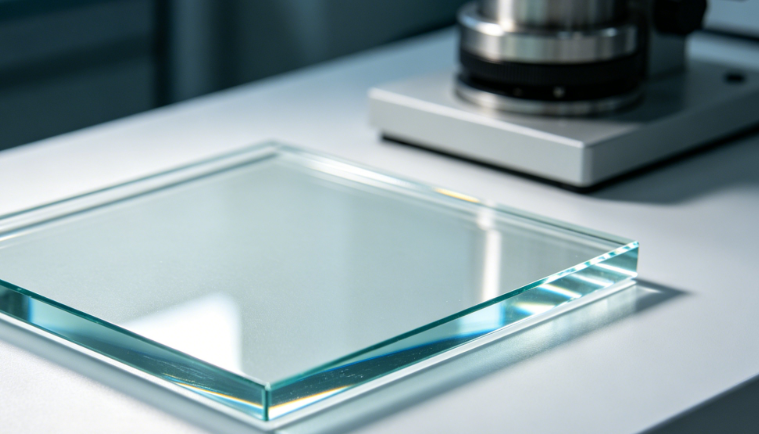
As a professional third-party testing service provider, we help manufacturers, suppliers, construction companies, and automotive industries verify the quality, safety, and performance of their glass materials. Glass is widely used in architecture (windows, facades, doors), automotive (windshields, side windows), electronics (display screens, cover glass), packaging (bottles, containers), and specialty applications (laboratory glassware, optical glass, solar panels). Our accredited laboratory performs a full range of tests according to international standards (ISO, ASTM, EN, GB, DIN). This article outlines our glass material testing capabilities – including scope, key test items, and standard test methods – to help you select the right services for your products.
1. Our Testing Scope for Glass Materials
We cover virtually all types of glass products and glass-based materials:
By glass type: Float glass, tempered (toughened) glass, laminated glass, insulated glass units (IGU), wired glass, patterned glass, borosilicate glass, soda-lime glass, lead crystal, glass-ceramics, quartz glass, optical glass, specialty glass (electrochromic, self-cleaning).
By product form: Flat glass (sheets, panels), hollow glass (bottles, jars, containers), glass fibers, glass tubing, glassware (tableware, cookware), laboratory glass, automotive glass, display cover glass, photovoltaic glass (solar panels).
By industry application: Construction & architecture, automotive & transportation, electronics & displays, packaging, solar energy, medical & pharmaceutical, household appliances, optical instruments.
2. Key Test Items We Perform
Our glass testing services are grouped into seven main categories. Each category addresses specific quality and safety requirements.
2.1 Mechanical Properties
Flexural strength (modulus of rupture) – essential for flat glass and architectural panels.
impact resistance – using steel ball drop or pendulum methods for safety glass.
Surface hardness – scratch resistance (Mohs, Knoop, or Vickers).
Fracture toughness – resistance to crack propagation.
Young’s modulus (elastic modulus) – measured via resonance or ultrasonic method.
Weibull strength analysis – statistical reliability for brittle glass.
2.2 Thermal Properties
Thermal shock resistance – ability to withstand sudden temperature changes (e.g., for cookware or fire-resistant glass).
Softening point, annealing point, and strain point – key for glass forming processes.
Coefficient of thermal expansion (CTE) – measured by dilatometry.
Thermal conductivity – important for insulating glass units (IGU) and solar glass.
Heat resistance (maximum service temperature) – for laboratory and industrial glass.
2.3 Optical Properties
Light transmittance (visible, UV, IR) – using spectrophotometer.
Haze and clarity – for display glass and glazing.
Refractive index and Abbe number – for optical glass.
Color coordinates (CIELAB) and color uniformity – for architectural and decorative glass.
Reflectance and gloss – for coated glass.
Solar heat gain coefficient (SHGC) and light-to-solar gain ratio (LSG) – for energy-efficient glazing.
2.4 Chemical Durability & Resistance
Hydrolytic resistance (water resistance) – ISO 719 (granules) or ISO 720 (grains) for pharmaceutical glass.
Acid resistance – ISO 1776, DIN 12116.
Alkali resistance – ISO 695.
Weathering resistance (salt spray, humidity, UV aging) – for architectural glass.
Leaching of heavy metals (lead, cadmium) – for crystal glass and food-contact glassware (e.g., ISO 7086, EN 1388).
2.5 Safety & Fragmentation Performance
tempered glass fragmentation test – number of particles in a 50×50 mm area after breakage (EN 12150, ASTM C1048).
Laminated glass adhesion and pummel test – resistance to interlayer adhesion (PVB, EVA, SGP).
Bullet resistance – UL 752, EN 1063, ASTM F1233.
Fire resistance (integrity and insulation) – for fire-rated glass (EN 13541, BS 476).
impact resistance for safety glazing – EN 12600 (pendulum), ANSI Z97.1.
Shot bag impact test for laminated glass – ASTM E997.
2.6 Dimensional & Surface Quality
Thickness, flatness, and bow/warp – for architectural flat glass.
Surface stress measurement (birefringence) – for tempered glass using polariscope.
Edge quality and chip detection.
Roller wave and waviness – for float glass.
Measurement of hole dimensions and countersink depth.
2.7 Specialized Glass Testing
Borosilicate glass specific tests – thermal endurance, coefficient of linear expansion (≈3.3×10⁻⁶/K).
Glass fiber tensile strength and Young’s modulus – for reinforcement applications.
Photovoltaic glass tests – transmittance after UV exposure, mechanical load test, damp heat test (IEC 61215).
Display cover glass (chemically strengthened) – indentation fracture resistance, ring-on-ring test, four-point bending.
Glass packaging (bottles, jars) – vertical load strength, internal pressure resistance, thermal shock of containers (ISO 7459).
3. Standard Test Methods We Apply
All tests are performed according to internationally recognized standards. Our laboratory is equipped with modern instrumentation and staffed by experienced engineers. Below is a list of common methods per property area.
3.1 Mechanical Test Methods
Flexural strength (four-point / three-point bending): ISO 1288, EN 1288, ASTM C158.
impact resistance (steel ball drop): EN 12150-1, ASTM E1038 (for safety glass).
Hardness (Knoop/Vickers): ASTM C1326, ISO 9385 (Knoop for glass).
Fracture toughness (KIC): ASTM C1421 (chevron notch).
Young’s modulus (resonant frequency): ASTM C1198, ISO 12680-1.
Weibull analysis: ASTM C1239.
3.2 Thermal Test Methods
Thermal shock resistance: EN 12150-1 (annex B), ISO 718 (lab glassware).
Softening point (fiber elongation): ASTM C338, ISO 7884-6.
Annealing & strain point (beam bending): ASTM C336, C598.
Coefficient of thermal expansion (dilatometry): ASTM E228, ISO 7991.
Thermal conductivity (guarded hot plate or laser flash): ASTM C177, ASTM E1461.
3.3 Optical Test Methods
Light transmittance and haze: ISO 9050, ASTM D1003, EN 410.
Refractive index (refractometer or prism coupling): ISO 12123.
Color measurement (spectrophotometry): ISO 11664, ASTM E308.
Solar optical properties (SHGC, LSG): ISO 9050, NFRC 300.
Gloss: ASTM D523, ISO 2813.
3.4 Chemical Durability Methods
Hydrolytic resistance (water resistance) – grains or granules: ISO 720 (Type I), ISO 719 (Type III), USP <660>.
Acid resistance: DIN 12116, ISO 1776.
Alkali resistance: ISO 695.
Lead & cadmium leaching: ISO 7086 (glass hollowware), EN 1388, FDA CPG 7117.06.
Salt spray resistance (corrosion): ASTM B117, ISO 9227.
3.5 Safety & Fragmentation Methods
tempered glass fragmentation particle count: EN 12150-1, ASTM C1048.
Pummel test (laminated glass adhesion): ASTM C1898, EN ISO 12543.
Bullet resistance classification: EN 1063, UL 752.
Fire resistance of glass: EN 13541, BS 476-22, ASTM E119.
Pendulum impact test for safety glazing: EN 12600 (class 1, 2, or 3), ANSI Z97.1.
Shot bag impact (large missile test): ASTM E997, ASTM E1996.
3.6 Dimensional & Surface Methods
Thickness and flatness: EN 12150-1, ISO 11455.
Surface stress (polariscope with compensator): ASTM C1279 (for tempered glass).
Edge inspection (visual or automated): EN 1096-4 (for coated glass).
Roller wave measurement (amplitude and wavelength): EN 14179-1.
3.7 Specialized Standards for Glass Types
Photovoltaic (PV) glass: IEC 61215, IEC 61730 (mechanical load, damp heat, UV preconditioning).
Automotive safety glass (windshield): ECE R43, ANSI Z26.1, ISO 3536 (abrasion resistance), ISO 3537 (impact).
Glass containers (bottles, jars): ISO 7459 (thermal shock), ISO 8113 (vertical load), ISO 8105 (internal pressure).
Laboratory glassware: ISO 3585 (borosilicate 3.3), ISO 3819 (beakers), ISO 4142 (test tubes).
4. Why Choose Our Third-Party Glass Testing Services?
As an independent laboratory, we offer unbiased, accurate, and legally defensible results. Our key advantages include:
Accredited quality system – CMA (China Metrology Accreditation) and CNAS (China National Accreditation Service for Conformity Assessment) accredited, and aligned with ISO/IEC 17025.
Wide standard coverage – ISO, ASTM, EN, GB, DIN, JIS, AS/NZS – we test according to your market requirements.
Fast turnaround and competitive pricing – with dedicated project managers to expedite urgent orders.
Customized testing plans – not only standard tests but also tailor-made programs for R&D, failure analysis, and product certification.
Comprehensive reports – detailed test results, graphs, and compliance statements accepted by global supply chains.
Confidentiality – strict protection of your intellectual property and proprietary data.
Whether you need to qualify a new glass supplier, verify incoming material, obtain product certification (CE, UL, SGCC, ANSI), or investigate a field failure, our glass testing experts are ready to assist. We serve clients in construction glazing, automotive OEMs, electronics display manufacturers, solar panel producers, and glass packaging companies.
Get Started with Your Glass Testing Project
Contact our team with your glass type, applicable standard, and desired test items. We will provide you with a detailed quotation, sampling guidance, and testing timeline. Let us help you ensure that your glass products are safe, durable, and compliant with all relevant regulations.
This article provides an overview of our glass material testing capabilities. For specific test standards and pricing, please request a customized service proposal.