Reasons for choosing our testing services
ZHONGXI Testing has obtained inspection qualification certifications from multiple countries and regions worldwide. We possess a senior testing team and advanced testing methods, providing independent, impartial, and professional third-party verification services for global carbon projects.

Internationally recognized authority
Certified by multiple international standards such as CNAS, VCS, and GS, with reports universally applicable worldwide.

Global service capability
Covering 140+ countries and regions, it supports on-site detection and remote verification in multiple languages.

Professional experimental methods
Adopt standard experimental methods to ensure accurate and reliable data.
High‑Sensitivity Serine Detection and Quantification Services for Metabolic Research, Clinical Diagnostics, and Bioprocess Monitoring
Serine is a non‑essential amino acid that plays a central role in one‑carbon metabolism, amino acid biosynthesis, neurotransmitter production, and phospholipid synthesis. Its levels in biological fluids and tissues are closely linked to cancer metabolism, neurological disorders (e.g., Alzheimer's, schizophrenia), and metabolic diseases such as diabetes. The accurate and reliable measurement of serine—including its enantiomeric forms (L‑serine and D‑serine)—is therefore critical for basic research, diagnostic biomarker discovery, therapeutic monitoring, and quality control of cell culture media and biopharmaceutical products. Our specialised detection platform provides a fully validated suite of analytical methods, including UHPLC‑MS/MS, chiral GC‑MS, and enzymatic colorimetric assays, delivering unparalleled sensitivity, specificity, and matrix versatility. Whether the client is a pharmaceutical company, a clinical laboratory, a research institution, or a biotechnology manufacturer, our service offers the precise, regulatory‑ready data required to advance scientific understanding and ensure product quality.
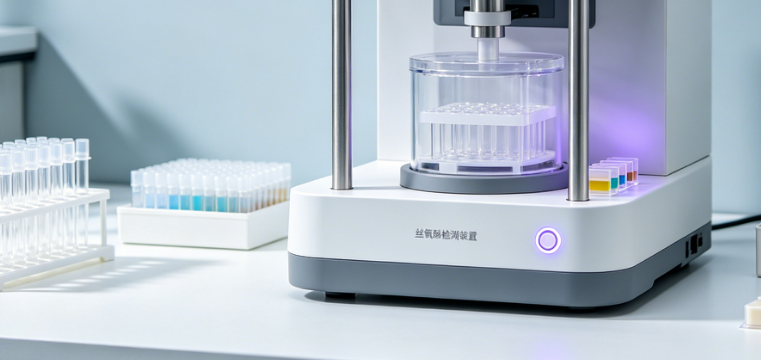
Scientific and Clinical Rationale for Serine Analysis
Clients seeking serine detection services are motivated by a range of critical objectives. In metabolic research, quantifying serine levels in cells, tissues, and biofluids helps to elucidate its role in one‑carbon metabolism, nucleotide synthesis, and redox balance. In clinical diagnostics, measuring D‑serine (an endogenous N‑methyl‑D‑aspartate (NMDA) receptor co‑agonist) is essential for understanding neuropsychiatric conditions, while L‑serine is monitored in inborn errors of metabolism and serine deficiency disorders. In cancer research, increased serine synthesis is a hallmark of many tumours, making serine quantification a valuable tool for evaluating metabolic reprogramming and drug response. In biopharmaceutical manufacturing, monitoring serine in cell culture media ensures optimal growth and productivity, and in final drug products, it is a critical quality attribute for purity and consistency. In nutritional and food science, serine content is an indicator of protein quality and added value in functional foods. In regulatory submissions, validated serine quantification data are required for novel food ingredient approvals and pharmaceutical dossier filings. Our service is architected to address these diverse needs with a flexible, ISO 17025‑accredited analytical framework that adapts to the specific sample matrix (serum, plasma, urine, cerebrospinal fluid, tissue homogenates, cell culture supernatants, and food extracts) and the client's research or regulatory context.
Integrated Analytical Pipeline for High‑Fidelity Serine Profiling
Our analytical platform is organised into three interconnected modules that collectively ensure reliable and reproducible serine quantification. The Sample Preparation Module employs optimised deproteinisation, derivatisation (for GC‑MS), and solid‑phase extraction protocols tailored to the matrix, with isotopically labelled internal standards (e.g., 13C3‑15N‑serine) to correct for extraction losses and matrix effects. We achieve recoveries of 95–102% with relative standard deviations (RSD) < 2%. The Chromatographic and Detection Module offers a choice of primary analytical platforms: ultra‑high‑performance liquid chromatography‑tandem mass spectrometry (UHPLC‑MS/MS) in positive electrospray ionisation (ESI) mode with multiple reaction monitoring (MRM) transitions (m/z 106→60 for L‑serine, and m/z 106→44 for D‑serine), providing LOQs as low as 0.1 nM in plasma and 0.05 nM in buffer, with inter‑day precision < 3% RSD and accuracy of 96–104%. For chiral resolution, we use a chiral derivatisation followed by GC‑MS or a chiral stationary phase column (e.g., Chirobiotic T) to separate and quantify L‑ and D‑serine individually. For high‑throughput screening, we offer an enzymatic colorimetric assay with a LOQ of 1 µM and linearity up to 100 µM. The Data Validation Module includes system suitability tests (retention time, peak symmetry, signal‑to‑noise ratio), matrix‑matched calibration to eliminate ion suppression, and regular participation in international proficiency testing (e.g., EQAS, FAPAS) to ensure ongoing accuracy. All methods are validated according to ICH Q2(R1) and FDA Bioanalytical Method Validation guidelines, and we provide full validation dossiers including specificity, linearity, accuracy, precision, LOD, LOQ, recovery, matrix effect, and stability.
Unmatched Sensitivity, Selectivity, and Chiral Resolution
Our platform routinely delivers performance that surpasses regulatory and typical research requirements. The UHPLC‑MS/MS method provides a dynamic linear range spanning five orders of magnitude (0.1 nM to 10 µM), enabling the quantitation of both basal and pathological serine levels in a single run. The MRM transitions are highly specific, with no detectable interference from isobaric compounds (e.g., alanine, threonine) or endogenous matrix components. For chiral separation, our GC‑MS method achieves baseline resolution of L‑ and D‑serine (resolution Rs > 2.0) with quantification limits as low as 0.5 nM for each enantiomer. We also offer simultaneous quantification of serine with other key metabolites (e.g., glycine, alanine, glutamate) in a single injection, providing a comprehensive metabolic profile. Our automated sample handling and high‑throughput capability allow processing of up to 384 samples per day, making our service ideal for large‑scale clinical studies, pharmacokinetic monitoring, or industrial process control. This depth and breadth of analysis ensure that our clients receive not only a concentration value but also a rich metabolic context for their samples.
Distinctive Advantages of Our Serine Detection Service
Our service offers several unique benefits that directly address client challenges. First, we provide customised method selection and development—clients can choose between our standard high‑throughput MS/MS assay, a chiral separation for enantiomer‑specific quantification, or a cost‑effective enzymatic assay for routine screening. Second, we maintain a comprehensive in‑house library of certified reference materials for serine and its stable isotope‑labelled analogues, ensuring accurate quantification and reducing the burden on clients to source these reagents. Third, we offer a rapid turnaround service for urgent clinical or pharmacokinetic samples, with results available within 24 hours of sample receipt. Fourth, our stability studies evaluate the degradation of serine under various storage and handling conditions (temperature, pH, freeze‑thaw), providing evidence‑based recommendations for sample collection and preservation. Fifth, we provide comprehensive data interpretation and statistical analysis, including comparison with control groups, fold‑change calculations, and multivariate visualisation (PCA, heatmaps) to help clients extract meaningful biological insights. Sixth, all our methods are accredited under ISO/IEC 17025 and comply with GLP guidelines, and we participate in international proficiency testing schemes to continuously verify our accuracy. Our team of metabolomics specialists and analytical chemists provides consultative support, assisting clients in experimental design, data interpretation, and troubleshooting.
Advanced Data Integration, Predictive Modeling, and Reporting
We understand that analytical data must inform scientific and clinical decision‑making. Our final reports are structured to deliver three levels of information: (i) a certificate of analysis (CoA) presenting the serine concentration (with measurement uncertainty) and, where applicable, the L‑serine/D‑serine ratio, with a clear comparison to the client's specified reference range or acceptance criteria; (ii) a detailed analytical report containing raw chromatograms, calibration curves, quality control data, sample preparation details, and instrument parameters; and (iii) an interpretive summary that places the results in the context of the client's objectives—for example, explaining how an elevated D‑serine level may indicate NMDA receptor dysfunction, or how a decline in total serine in a bioprocess stream could signal nutrient depletion. For clients with multiple time‑points or treatment groups, we perform statistical analysis (t‑tests, ANOVA) and provide trend plots to visualise changes over time. We also offer predictive modeling of disease progression or bioprocess performance based on serine kinetics, using our internally developed algorithms. All raw data files (e.g., .raw, .csv, .dx) are supplied for full transparency and re‑analysis.
Broad Applications Across Drug Discovery, Clinical Research, and Biotechnology
The versatility of our serine detection service makes it invaluable across multiple sectors. In drug discovery and pharmacology, our assays support target validation, mechanistic studies of drugs affecting serine metabolism (e.g., inhibitors of serine synthesis), and pharmacokinetic monitoring. In clinical research and diagnostics, we quantify serine in patient‑derived samples (plasma, urine, CSF) to support studies on neurological disorders, cancer, and metabolic diseases. In nutrition and dietary intervention, our measurements inform studies on amino acid supplementation and nutritional status. In biopharmaceutical manufacturing, we monitor serine levels in cell cultures to optimise media formulations and ensure product quality. In food and feed analysis, we verify the serine content of protein‑based ingredients. Our ability to adapt the analytical approach to the specific matrix, throughput, and regulatory environment ensures that we serve a diverse clientele with efficiency and expertise.
Commitment to Innovation, Quality, and Client Partnership
We are dedicated to maintaining leadership in amino acid analytics through continuous technological advancement and a culture of scientific excellence. Our current R&D includes the development of microfluidic chip‑based devices for near‑real‑time serine monitoring in bioreactors, and the integration of machine learning algorithms to predict metabolic flux from serine and other metabolite levels. We actively participate in standardisation working groups (e.g., Metabolomics Standards Initiative) and contribute to the development of reference materials and best practices. Our quality management system is ISO 17025 and ISO 9001 certified, and we undergo regular external audits. We offer flexible service models—from single‑sample analysis to long‑term collaborative projects—with dedicated account management, volume‑based pricing, and priority handling for urgent requests. Our global logistics network provides sample kits with preservatives and clear instructions to ensure serine stability during transport. Turnaround times are typically 3–5 business days for standard MS/MS analysis and 5–7 business days for chiral or comprehensive profiling, with expedited options available. We maintain open, transparent communication, providing preliminary results upon request and final reports with full documentation. Our success is measured by the confidence our clients have in their data, enabling them to make sound scientific and commercial decisions. We invite you to partner with us for precise, reliable, and insightful serine detection services.
In summary, our serine detection service delivers a comprehensive, precise, and regulation‑ready analytical solution that combines state‑of‑the‑art UHPLC‑MS/MS, chiral separation, and enzymatic assays, rigorous quality assurance, and expert interpretative support. By offering unmatched sensitivity, selectivity, and adaptability across all relevant sample types, we empower our clients to advance metabolic research, accelerate drug development, and ensure product quality. We look forward to supporting your serine analysis needs with our unwavering commitment to quality.