Reasons for choosing our testing services
ZHONGXI Testing has obtained inspection qualification certifications from multiple countries and regions worldwide. We possess a senior testing team and advanced testing methods, providing independent, impartial, and professional third-party verification services for global carbon projects.

Internationally recognized authority
Certified by multiple international standards such as CNAS, VCS, and GS, with reports universally applicable worldwide.

Global service capability
Covering 140+ countries and regions, it supports on-site detection and remote verification in multiple languages.

Professional experimental methods
Adopt standard experimental methods to ensure accurate and reliable data.
High-Sensitivity Sialidase (Neuraminidase) Detection and Activity Profiling for Antiviral Research, Vaccine Development, and Clinical Diagnostics
Sialidase (neuraminidase; EC 3.2.1.18) is a glycoside hydrolase that catalyses the cleavage of terminal sialic acid residues from glycoconjugates, playing a critical role in the pathogenesis of influenza viruses, parainfluenza viruses, and certain bacterial infections. As a major surface antigen of influenza viruses, neuraminidase is the primary target of antiviral drugs such as oseltamivir, zanamivir, and peramivir, and its activity is a key measure of viral yield and vaccine potency. The accurate and sensitive detection of sialidase activity, combined with comprehensive inhibition profiling against drug candidates and emerging resistant variants, is essential for antiviral drug discovery, influenza surveillance, vaccine quality control, and the development of diagnostic tools for infectious diseases. Our specialised analytical platform offers a fully validated suite of biochemical and biophysical assays for the precise characterisation of sialidase activity, kinetic parameters, substrate specificity, and inhibitor potency, delivering high-quality, regulatory-ready data to support your research, development, and clinical programmes.
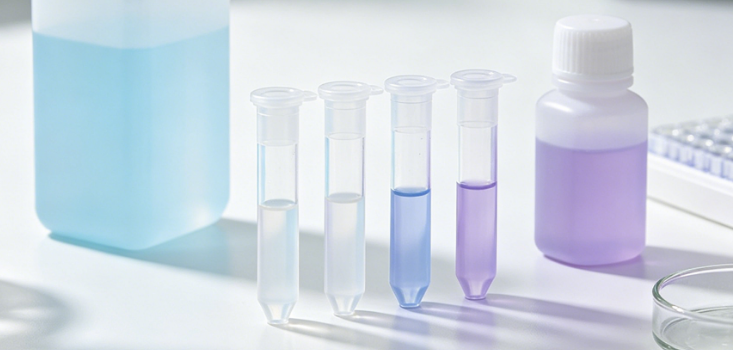
Scientific and Clinical Rationale for Sialidase Analysis
Clients seeking sialidase detection services are driven by a range of critical objectives. In antiviral drug discovery and development, the primary need is to quantify sialidase activity and to evaluate the inhibitory potency of novel compounds, enabling the identification of lead candidates with high efficacy and favourable selectivity profiles against both wild-type and drug-resistant strains. In influenza surveillance and vaccine production, sialidase activity is a key measure of viral yield and vaccine potency, and its quantification is essential for lot release testing, for monitoring antigenic drift, and for ensuring compliance with regulatory standards. In clinical research and diagnostics, measuring sialidase activity in patient samples (e.g., respiratory swabs, serum, or cerebrospinal fluid) can provide insights into disease severity, the emergence of drug-resistant viral strains, and the efficacy of antiviral therapy. In quality control of biological reagents, verifying the activity of recombinant sialidase standards is essential for assay development, diagnostic kit production, and reference material use. In regulatory submissions, comprehensive data on enzyme activity, inhibitor selectivity, and stability are required for the approval of novel antiviral agents, vaccines, and diagnostic devices. Our service is architected to address these diverse needs with a flexible, ISO 17025‑accredited analytical framework that adapts to the specific virus subtype (e.g., N1, N2, N3, N9), sample matrix (viral culture supernatants, clinical specimens, recombinant proteins), and client's research, industrial, or regulatory context.
Integrated Analytical Platform for Holistic Sialidase Characterisation
Our analytical platform comprises four interconnected modules that collectively deliver a comprehensive evaluation of sialidase quality and performance. The Activity Quantification Module employs a highly sensitive fluorometric assay using the widely accepted substrate 2′-(4-methylumbelliferyl)-α-D-N-acetylneuraminic acid (MUNANA), which is cleaved to release the fluorescent 4-methylumbelliferone (MU) product. We meticulously optimise assay conditions (pH, ionic strength, temperature, and detergent concentrations) for each neuraminidase subtype and sample matrix, ensuring maximal activity and specificity. We determine the specific activity (U/mg protein) with precision within ±2% RSD and a limit of detection (LOD) as low as 0.001 U/mL. The assay is performed in a 96‑well or 384‑well microplate format, enabling high‑throughput screening of large compound libraries or multiple clinical samples. For detailed kinetic characterisation, we calculate Michaelis‑Menten parameters (Km, Vmax, kcat) for the MUNANA substrate and, where relevant, for physiological glycoprotein substrates (e.g., fetuin, mucin), with 95% confidence intervals typically within ±5%.
The Inhibition and Resistance Profiling Module evaluates the effect of test compounds on sialidase activity, providing IC50 values, mechanism‑of‑action analysis (competitive, uncompetitive, or mixed), and binding affinity measurements by surface plasmon resonance (SPR) or biolayer interferometry (BLI), with KD values in the low nM range. We perform full dose‑response curves with at least 8 concentrations in triplicate, and we provide Dixon plots and Cornish‑Bowden analyses to determine the mechanism of inhibition. For resistance studies, we assess the activity against a panel of inhibitor‑resistant mutant enzymes (e.g., H274Y, E119V) to evaluate cross‑resistance and to guide the selection of next‑generation compounds. The Substrate Specificity and Strain Profiling Module uses a custom panel of sialylated substrates, including 2′-(4-methylumbelliferyl)-α-D-N-acetylneuraminic acid (MUNANA), 4‑methylumbelliferyl‑α‑D‑N‑glycolylneuraminic acid, and physiological glycoproteins, to generate a specificity fingerprint that distinguishes between neuraminidase subtypes (e.g., N1, N2, N3) and reveals potential off‑target effects. For clients working with complex biological matrices, we use UHPLC‑MS/MS to directly quantify the release of sialic acid products, providing mass accuracy < 2 ppm and enabling the detection of even trace levels of activity. The Stability and Formulation Module subjects the enzyme to accelerated aging conditions (temperatures from 2°C to 45°C, pH 4‑9, and various ionic strengths) and monitors residual activity, aggregation (by SEC‑HPLC), and conformational integrity (by CD spectroscopy) over time. Using Arrhenius modelling and deactivation kinetics, we predict shelf‑life and identify critical degradation pathways (e.g., deamidation, oxidation, aggregation). All modules are validated with reference sialidase standards (e.g., recombinant N1, N2, or from viral sources) and include rigorous quality controls (system suitability, blank subtraction, and replicate analyses).
Unmatched Analytical Sensitivity, Specificity, and Throughput
Our platform consistently delivers performance that surpasses typical industry and academic standards. In activity assays, we achieve signal‑to‑noise ratios > 300:1 at the LOD, with linearity over four orders of magnitude and Z’‑factors consistently > 0.8, making our assays highly robust for high‑throughput screening. Our kinetic fitting software uses global non‑linear regression to provide precise estimates of Km and Vmax, with residual errors < 2%. In inhibitor studies, we perform full dose‑response curves with at least 8 concentrations in triplicate, and we provide statistical analysis including 95% confidence intervals for IC50 and Ki. For protein quantitation and strain discrimination, we offer targeted proteomics (PRM) with stable isotope‑labelled peptide standards, achieving LOQs in the low fmol range and enabling the simultaneous quantitation of multiple neuraminidase subtypes in a single sample. Additionally, we offer isothermal titration calorimetry (ITC) to measure the binding thermodynamics of inhibitors, providing ΔH, ΔS, and binding stoichiometry with precision within ±2%.
Distinctive Advantages of Our Sialidase Detection Service
Our service provides several unique benefits that directly address client challenges. First, we have developed matrix‑specific sample preparation protocols for a wide variety of sialidase sources—including viral culture supernatants, recombinant proteins, clinical respiratory swabs, and serum/plasma—that effectively preserve enzyme activity and protein integrity, achieving recoveries > 95% for all tested matrices. Second, we maintain a comprehensive reference library of neuraminidase subtypes (N1, N2, N3, N4, N5, N6, N7, N8, N9) and their known inhibitor profiles, enabling rapid method setup and confident benchmarking. Third, we offer a rapid screening service using a microplate‑based fluorogenic assay that provides semi‑quantitative activity data within 30 minutes of sample receipt—ideal for high‑throughput screening of compound libraries or clinical samples. Fourth, our customised kinetic and inhibition studies can be tailored to simulate physiological conditions, including the presence of serum proteins, mucus, and relevant cofactors. Fifth, we provide integrated data interpretation that links enzyme activity, inhibitor potency, and stability to biological or clinical outcomes (e.g., antiviral efficacy, vaccine potency, drug resistance), enabling clients to make informed decisions on candidate selection and application. Sixth, all our methods comply with ICH M10, FDA, and EMA guidelines on bioanalytical method validation, and we supply full validation dossiers (specificity, linearity, accuracy, precision, LOD, LOQ, robustness) along with detailed SOPs, ensuring that our data are readily accepted by regulatory authorities. Our team of virologists, enzymologists, and clinical researchers provides consultative interpretation, helping clients to design follow‑up experiments, predict in vivo efficacy, and support regulatory submissions.
Advanced Data Integration, Predictive Modeling, and Reporting
Our reporting transforms analytical data into strategic decision‑making knowledge. We deliver a comprehensive final report that includes: (i) an executive dashboard with key metrics (specific activity, Km, IC50, Ki, subtype specificity, and stability half‑life) presented as concise scorecards; (ii) a detailed analytical section containing raw data, calibration curves, kinetic fits, and sensorgrams; (iii) a statistical comparison of samples against reference standards or historical data, with p‑values and confidence intervals; and (iv) an interpretive narrative that contextualises the results—for example, explaining how a low IC50 indicates a potent and selective inhibitor, or how a shift in substrate specificity may signal a novel virus variant. For clients with multiple compounds, strains, or patient samples, we provide multivariate analysis (PCA, PLS‑DA) to identify the most influential parameters and to guide selection. We also offer predictive models that estimate in vivo antiviral efficacy or vaccine potency based on in vitro enzyme data, using our internally developed algorithms. All raw data files (e.g., .xlsx, .raw, .cdf) are supplied to ensure full transparency and re‑analysis capability.
Broad Applications Across Antiviral Drug Discovery, Vaccine Quality Control, and Clinical Diagnostics
The versatility of our sialidase detection service spans a wide range of sectors. In antiviral drug discovery, our assays are critical for target validation, lead optimisation, and selectivity profiling of novel neuraminidase inhibitors. In influenza vaccine quality control, we quantify sialidase activity to ensure lot‑to‑lot consistency and potency, supporting regulatory submissions and market release. In clinical research and diagnostics, we measure sialidase activity in patient samples to monitor viral shedding, drug resistance, and disease progression. In academic research, our comprehensive profiling supports publication‑quality studies on enzyme mechanism, structure‑function relationships, and viral pathogenesis. In contract research organisations (CROs), our services provide robust data to support regulatory submissions. Our ability to tailor the analytical package to the specific virus subtype, sample type, and regulatory framework ensures that we serve a diverse global clientele with scientific rigour and practical relevance.
Commitment to Innovation, Quality, and Client Partnership
We are dedicated to advancing sialidase analytics through continuous technological improvement. Our current R&D includes the development of microfluidic‑based single‑enzyme activity assays for ultra‑sensitive detection, and the application of machine learning algorithms to predict inhibitor potency from chemical structure. We actively participate in inter‑laboratory proficiency testing for enzyme activity and protein analysis, and we contribute to the development of reference standards for neuraminidase. Our quality management system is ISO 9001 and ISO 17025 certified, and we follow GLP for all regulatory studies. We offer flexible engagement models—from single‑sample analysis to multi‑year collaborative projects—with dedicated project managers, volume discounts, and priority handling for time‑sensitive samples. Our global logistics provide specialised shipping kits (with stabilising buffers and temperature control) to preserve enzyme activity during transit. Turnaround times range from 1 business day for rapid screening to 10 business days for comprehensive kinetic, proteomic, and inhibition profiling. We maintain open communication, providing preliminary results upon request and final reports with expert commentary. Our success is measured by the confidence our clients have in their data and their ability to advance research, drug development, and public health. We invite you to partner with us to unlock the full potential of your sialidase research.
In summary, our sialidase detection service delivers a comprehensive, precise, and application‑oriented analytical solution that integrates activity quantification, kinetic and inhibition profiling, substrate specificity assessment, and stability evaluation. By combining advanced instrumentation with deep expertise in viral enzymology and translational science, we empower our clients to accelerate drug discovery, ensure vaccine quality, and improve clinical outcomes. We look forward to supporting your sialidase analysis needs with our state‑of‑the‑art analytical platform.