Reasons for choosing our testing services
ZHONGXI Testing has obtained inspection qualification certifications from multiple countries and regions worldwide. We possess a senior testing team and advanced testing methods, providing independent, impartial, and professional third-party verification services for global carbon projects.

Internationally recognized authority
Certified by multiple international standards such as CNAS, VCS, and GS, with reports universally applicable worldwide.

Global service capability
Covering 140+ countries and regions, it supports on-site detection and remote verification in multiple languages.

Professional experimental methods
Adopt standard experimental methods to ensure accurate and reliable data.
Comprehensive Fibrinolytic Peptide Detection and Activity Profiling Services for Quality Control, Bioassay, and Therapeutic Development
Fibrinolytic peptides and proteins—including tissue plasminogen activator (tPA), urokinase (uPA), streptokinase, staphylokinase, nattokinase, lumbrokinase, and various engineered variants—are essential biotherapeutics and dietary supplements for managing thrombotic disorders. The accurate and reliable quantification of their fibrinolytic activity is not merely a quality control requirement; it is a fundamental measure of product potency, safety, and clinical efficacy. Our specialized detection platform offers a fully validated suite of analytical and bioactivity assays tailored to fibrinolytic agents, delivering the high‑precision, regulation‑ready data required to ensure product integrity, optimize manufacturing processes, and support regulatory submissions.
Scientific and Clinical Rationale for Fibrinolytic Activity Assessment
Fibrinolytic activity is the direct measure of a thrombolytic agent's ability to dissolve fibrin clots—the primary therapeutic target in acute myocardial infarction, ischemic stroke, and pulmonary embolism. However, the activity of these agents is influenced by a multitude of factors, including molecular conformation, glycosylation, formulation excipients, and the presence of inhibitors or degradation products. Consequently, single‑parameter assays are insufficient to capture the full functional profile of a fibrinolytic peptide. Our approach integrates multiple orthogonal methods to provide a comprehensive picture of activity, specificity, and stability, enabling clients to distinguish between active, partially active, and inactive variants with confidence.
Our Advanced Analytical Platform for Fibrinolytic Activity Quantification
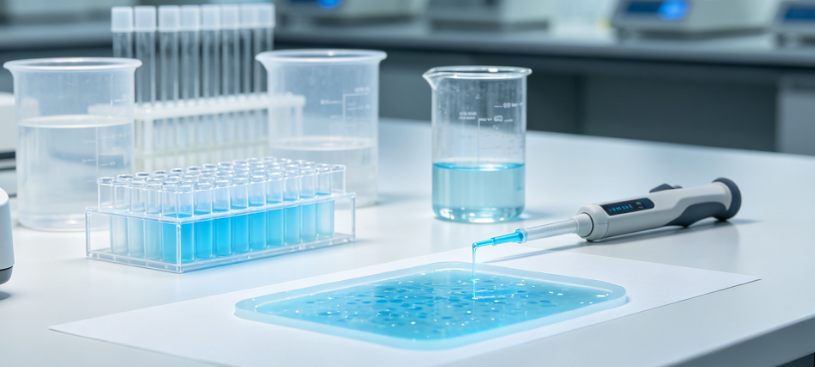
Our analytical platform is built upon a tiered strategy that combines classical pharmacopoeial methods with cutting‑edge biochemical and biophysical techniques. The cornerstone of our service is the fibrin plate assay, performed under strictly controlled conditions using standardized human fibrinogen and thrombin, which provides a direct, visual measure of clot‑lysis activity. We augment this with chromogenic substrate assays (e.g., S‑2288, S‑2444) that quantify the amidolytic activity of the peptide, offering a high‑throughput, quantitative measure of enzymatic potency. For advanced characterization, we employ kinetic turbidimetric clot lysis assays, which generate detailed lysis curves and allow the calculation of key parameters such as lysis time (t50), rate of lysis, and the area under the lysis curve (AUC). These parameters provide a more nuanced understanding of the peptide's fibrinolytic profile than simple endpoint measurements.
To differentiate between direct fibrinolysis and plasminogen activation, we conduct specificity profiling using plasminogen‑depleted fibrin plates and by measuring the generation of plasmin via a coupled chromogenic assay. We also perform inhibition studies with selective serine protease inhibitors (e.g., aprotinin, PAI‑1) to identify the mechanism of action and to detect the presence of contaminating or interfering proteases. For complex formulations, we use size‑exclusion chromatography (SEC‑HPLC) to separate and quantify active aggregates, fragments, or degradation products that may affect activity. All assays are validated against WHO international standards (e.g., for tPA, streptokinase) and are performed in compliance with ICH Q2(R1) and USP <1032> guidelines, ensuring that our data are defensible and globally comparable.
Unmatched Analytical Depth, Sensitivity, and Specificity
Our platform routinely achieves a limit of quantification (LOQ) of 0.1 IU/mL for tPA‑like activity in plasma and 0.5 IU/mL in complex formulations, with inter‑day precision < 3% RSD and recoveries of 96‑103% across a wide range of matrices. In kinetic clot lysis assays, we achieve a detection limit of 0.05 IU/mL and can resolve lysis profiles that differ by as little as 5% in t50. Our specificity profiling can distinguish between tissue‑type, urokinase‑type, and non‑plasminogen‑dependent fibrinolytic activities, providing a unique fingerprint that is critical for biosimilar comparability and for identifying batch‑to‑batch variability. Additionally, we offer accelerated stability studies under ICH conditions (40°C/75% RH, 25°C/60% RH) with time‑course activity monitoring, enabling the prediction of shelf‑life with a typical uncertainty of ±10% using Arrhenius modeling. This depth of analysis ensures that our clients receive not just a potency value, but a comprehensive understanding of their molecule's functional integrity and degradation pathways.
Distinctive Advantages of Our Fibrinolytic Peptide Detection Service
Our service is distinguished by several key advantages that directly address the needs of biopharmaceutical and nutraceutical developers. First, we maintain a comprehensive library of validated substrates, inhibitors, and reference standards, enabling us to rapidly deploy assays for virtually any fibrinolytic agent without the need for lengthy method development. Second, we provide customized method validation and transfer protocols, ensuring that our assays are seamlessly integrated into your quality control workflows. Third, our regulatory expertise spans the USP, EP, and FDA guidelines, and we offer full validation dossiers including specificity, linearity, accuracy, precision, LOD, LOQ, and robustness, making our data ready for IND, BLA, and ANDA submissions. Fourth, we offer rapid turnaround times—as short as 3 business days for standard activity panels—and expedited options for urgent project milestones. Fifth, our global sample logistics network ensures the safe and temperature‑controlled transport of your valuable samples, with detailed stability‑indicating protocols to preserve activity during transit.
Furthermore, our team of PhD‑level scientists provides dedicated consultative support, assisting you in experimental design, data interpretation, and troubleshooting. We help you distinguish between true potency loss and assay artifacts, identify the root causes of batch‑to‑batch variability, and develop robust specifications for product release. Our commitment is to provide not just data, but actionable insights that accelerate your development timelines and enhance your product quality.
Applications Across Pharmaceutical, Nutraceutical, and Research Sectors
Our fibrinolytic peptide activity testing services are applicable across the entire product lifecycle. In biopharmaceutical development, we support the characterization of novel thrombolytics, the comparability of biosimilars, and the stability monitoring of drug substance and drug product. In nutraceutical manufacturing, we provide the rigorous activity data needed to substantiate label claims for nattokinase, lumbrokinase, and other dietary supplements. In clinical research, we quantify fibrinolytic activity in plasma samples to assess the pharmacodynamics of investigational agents. In quality control and batch release, our validated assays ensure that every lot meets your predefined potency specifications. Our ability to handle a wide range of sample matrices—from purified proteins and formulated liquids to lyophilized powders and biological fluids—makes us the partner of choice for organizations of all sizes.
Commitment to Scientific Excellence and Client Partnership
We are dedicated to maintaining the highest standards of scientific integrity and operational excellence. Our quality management system is ISO/IEC 17025 accredited, and we participate in inter‑laboratory proficiency testing schemes to continuously benchmark our performance. Our investment in state‑of‑the‑art instrumentation, including automated clot lysis analyzers, high‑throughput plate readers, and UHPLC‑MS/MS for purity characterization, ensures that we remain at the forefront of fibrinolytic analytics. We view each engagement as a collaborative partnership, offering transparent communication, flexible service models, and a relentless focus on delivering the precise, reliable, and interpretable data that you need to succeed. We invite you to discuss your specific analytical requirements with us and to experience the confidence that comes from partnering with a world‑class analytical laboratory.