Reasons for choosing our testing services
ZHONGXI Testing has obtained inspection qualification certifications from multiple countries and regions worldwide. We possess a senior testing team and advanced testing methods, providing independent, impartial, and professional third-party verification services for global carbon projects.

Internationally recognized authority
Certified by multiple international standards such as CNAS, VCS, and GS, with reports universally applicable worldwide.

Global service capability
Covering 140+ countries and regions, it supports on-site detection and remote verification in multiple languages.

Professional experimental methods
Adopt standard experimental methods to ensure accurate and reliable data.
Comprehensive Drug Residue Testing Services for Pharmaceutical, Environmental, and Biological Matrices
In the contemporary landscape of pharmaceutical development, environmental monitoring, and clinical toxicology, the precise identification and quantification of drug residues have become paramount. Drug residue testing is no longer a supplementary quality control measure but a critical regulatory and scientific imperative. Whether the objective is to ensure patient safety, comply with stringent international pharmacopoeial standards, or investigate environmental contamination, the underlying demand is unequivocal: the need for a robust, validated, and highly sensitive analytical methodology. Our laboratory addresses this exigency by offering a comprehensive suite of drug residue detection services, engineered to meet the most exacting scientific and regulatory benchmarks.
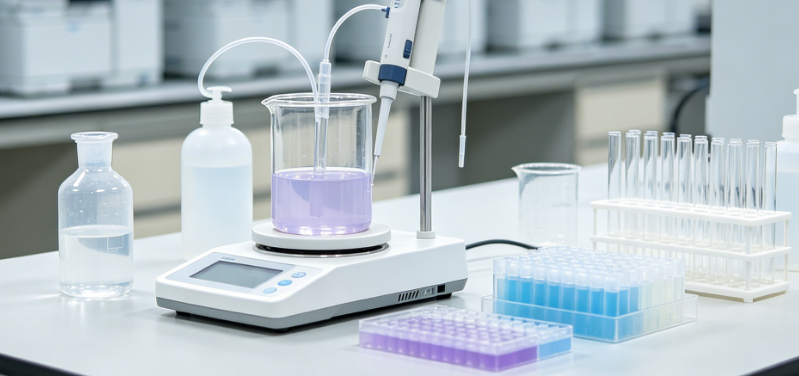
The Scientific Imperative of Advanced Drug Residue Analysis
The detection of drug residues encompasses a diverse array of matrices, including but not limited to active pharmaceutical ingredients (APIs) in manufacturing equipment, residual solvents in final drug products, pesticide residues in botanical raw materials, and veterinary drug metabolites in food products. The complexity of these matrices, coupled with the often ultra-trace concentrations of the target analytes, necessitates a sophisticated analytical strategy. Our approach integrates advanced sample preparation techniques with state-of-the-art chromatographic and mass spectrometric detection, ensuring that even the most challenging residues are identified with unparalleled specificity and sensitivity.
Our Analytical Capabilities: Depth and Breadth of Detection
We deploy a multi-tiered analytical platform that is meticulously calibrated to address the diverse physicochemical properties of drug residues. Our primary workhorses are ultra-high-performance liquid chromatography (UHPLC) and high-resolution gas chromatography (HRGC), both coupled with tandem mass spectrometry (MS/MS) and high-resolution accurate mass (HRAM) spectrometry. This configuration enables us to achieve limits of quantification (LOQs) in the parts-per-trillion (ppt) to low parts-per-billion (ppb) range, depending on the analyte-matrix combination. For non-volatile and polar compounds, we employ hydrophilic interaction liquid chromatography (HILIC) and ion-pair chromatography to enhance retention and resolution, while for thermolabile and high-molecular-weight residues, we utilize ambient ionization techniques such as direct analysis in real time (DART) coupled to HRAM-MS for rapid screening.
Beyond routine targeted analysis, our capabilities extend to untargeted screening and metabolomic profiling. Using full-scan high-resolution mass spectrometry and advanced data processing algorithms, we can detect unexpected or unknown drug-related substances, degradation products, and process impurities. This is particularly critical in forced degradation studies and stability-indicating method development, where the identification of all possible degradation pathways is a regulatory prerequisite. Our library of more than 5,000 pharmaceutical compounds and their fragmentation patterns allows for rapid spectral matching, while our in-house developed machine-learning models facilitate the prediction of retention times and fragmentation behavior for novel entities.
Regulatory Compliance and Method Validation
Our entire analytical workflow is designed to be fully compliant with the current Good Manufacturing Practice (cGMP) guidelines, ICH Q2(R1) validation principles, and the specific requirements of the USP chapters < 467 >, < 621 >, and < 1225 >. We pride ourselves on the rigorous validation of every analytical method we develop or adapt, ensuring that each procedure demonstrates the requisite specificity, linearity, accuracy, precision, and robustness. For methods intended for regulatory submission, we provide comprehensive validation reports, including detailed assessment of the limit of detection (LOD), limit of quantitation (LOQ), matrix effects, recovery studies, and stability of the analytes in the sample matrix. Our quality system is audited regularly and maintains certifications under ISO/IEC 17025, assuring clients of the international acceptance of our data.
Our Distinctive Advantages in Drug Residue Testing
Our laboratory distinguishes itself through a combination of technological superiority, scientific expertise, and a client-centric operational philosophy. Firstly, our instrumentation park is among the most advanced globally, featuring Orbitrap™ and Q-TOF mass spectrometers with sub-ppm mass accuracy, enabling unequivocal identification of residues even in the presence of high-background matrix interferences. Secondly, our team of analytical scientists comprises PhD-level specialists with decades of combined experience in pharmaceutical analysis, environmental chemistry, and toxicology, allowing us to develop customized solutions for unique and emerging challenges.
Thirdly, we offer a seamless, integrated service model that encompasses sample collection protocol design, rapid method development, full-scale validation, and routine batch analysis, all under a single quality management umbrella. This integrated approach minimizes data variability and accelerates project timelines. Moreover, our proprietary advanced data integrity system employs blockchain technology for audit trail encryption, ensuring that all raw data, metadata, and processing parameters are tamper-proof and fully traceable—a feature that exceeds current regulatory expectations and provides an additional layer of security for our clients.
Sample Matrices and Application Domains
Our drug residue testing services are applicable across a wide spectrum of sample types:
Pharmaceutical Manufacturing: Swab and rinse samples for cleaning validation, in-process materials, bulk APIs, and final dosage forms (tablets, capsules, injectables, and topical formulations). We detect residues of potent compounds, including hormones, cytotoxic agents, and beta-lactam antibiotics, at sub-ppm levels.
Environmental and Water Analysis: Surface water, groundwater, wastewater, and potable water samples for contamination with pharmaceutical active compounds, endocrine-disrupting chemicals, and personal care products. Our methods comply with the EU Watch List and US EPA guidelines.
Food and Animal Products: Meat, milk, eggs, honey, and aquaculture products for residues of veterinary drugs (e.g., sulfonamides, fluoroquinolones, and tetracyclines) and agrochemicals. We provide accredited results for export-oriented food safety compliance.
Clinical and Forensic Toxicology: Biological matrices such as blood, plasma, urine, and hair for therapeutic drug monitoring, drug abuse screening, and forensic investigations. Our chiral separations allow for the distinction of enantiomeric drug forms, which is crucial in clinical pharmacology.
Emerging Technologies and Continuous Innovation
Recognizing that the field of drug residue analysis is in a state of constant evolution, we invest significantly in research and development. Our current focus areas include the implementation of ambient mass spectrometry imaging (MSI) for the spatial distribution analysis of residues in tissue and surface samples, and the use of ion mobility spectrometry (IMS) coupled with MS for the separation of isobaric compounds that are unresolvable by conventional chromatography. Additionally, we are pioneering the use of automated online solid-phase extraction (SPE) coupled directly to LC-HRMS, which reduces manual handling, minimizes solvent consumption, and significantly enhances throughput for large-scale studies.
We are also at the forefront of developing green analytical chemistry (GAC) protocols, replacing acetonitrile and methanol with less hazardous alternatives where possible, and employing microflow LC systems to reduce the environmental footprint of our analyses without compromising sensitivity or resolution. This commitment to sustainability, combined with our technical excellence, positions us as the preferred partner for environmentally conscious clients seeking reliable and ethically sound analytical services.
Client Engagement and Collaborative Problem Solving
We understand that each drug residue testing project presents a unique set of challenges, from matrix complexity to regulatory stringency and project timelines. Our engagement model is founded on active collaboration and transparent communication. Upon project initiation, we assign a dedicated project manager and a scientific lead who work closely with the client's team to define the precise objectives, establish the sampling strategy, and tailor the analytical approach to the specific needs of the project. We provide interim progress reports and real-time access to data via our secure client portal, ensuring that our clients have full visibility into the analytical workflow at every stage.
For projects involving novel or proprietary compounds, we execute a rigorous method development and optimization phase, during which multiple chromatographic conditions and mass spectrometric parameters are systematically evaluated. We also conduct thorough method transfer and cross-validations to ensure seamless integration with our clients' in-house laboratories, if required. Our commitment to on-time delivery without compromising data quality has earned us long-term partnerships with leading pharmaceutical corporations, regulatory agencies, and academic institutions worldwide.
Conclusion: A Strategic Partner for Drug Residue Analysis
In summary, drug residue testing is a mission-critical activity that demands the highest levels of analytical rigor, scientific insight, and regulatory acumen. Our laboratory is uniquely positioned to meet these demands, combining cutting-edge instrumentation, expert scientific staff, comprehensive validation protocols, and a collaborative client service model that prioritizes accuracy, integrity, and reproducibility. Whether the requirement is for single-sample confirmatory analysis or the execution of a large-scale, multi-site monitoring program, we deliver results that are scientifically robust, legally defensible, and internationally recognized.
We invite you to partner with us for your drug residue testing needs. Our experienced team is ready to develop a customized analytical strategy that addresses your specific questions, meets your regulatory obligations, and advances your scientific objectives. With our unwavering commitment to excellence and innovation, we ensure that the detection of drug residues, no matter how minute or complex, is conducted with the utmost precision and confidence.