Reasons for choosing our testing services
ZHONGXI Testing has obtained inspection qualification certifications from multiple countries and regions worldwide. We possess a senior testing team and advanced testing methods, providing independent, impartial, and professional third-party verification services for global carbon projects.
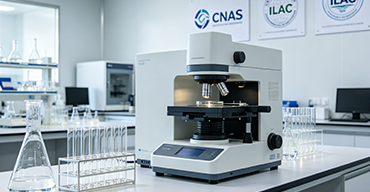
Internationally recognized authority
Certified by multiple international standards such as CNAS, VCS, and GS, with reports universally applicable worldwide.

Global service capability
Covering 140+ countries and regions, it supports on-site detection and remote verification in multiple languages.
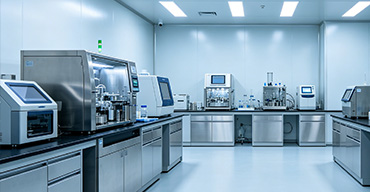
Professional experimental methods
Adopt standard experimental methods to ensure accurate and reliable data.
Advanced Analytical Solutions for Anhydrated Lactoglobulin Detection and Comprehensive Characterization
Anhydrated lactoglobulin, a chemically modified derivative of bovine β-lactoglobulin produced via anhydride-mediated acylation (e.g., succinylation or maleation), represents a critical functional ingredient in the food, pharmaceutical, and biomedical industries. The controlled anhydride modification significantly alters the protein's physicochemical properties, including surface charge, hydrophobicity, thermal stability, and digestibility, thereby expanding its application spectrum from emulsifiers and gelation agents to targeted drug delivery vehicles. However, the inherent heterogeneity of anhydride modification—varying degrees of acylation, site specificity, and conformational perturbations—necessitates robust, high-resolution analytical strategies to ensure batch-to-batch consistency, functional predictability, and regulatory compliance. Our specialized laboratory offers a comprehensive, multi-tiered analytical platform tailored specifically for the precise detection, structural elucidation, and functional validation of anhydrated lactoglobulin, empowering researchers and industrial developers with actionable molecular-level insights.

Understanding Anhydrated Lactoglobulin: Chemical Modification and Analytical Challenges
The anhydride-mediated modification of β-lactoglobulin involves the covalent attachment of acyl groups to nucleophilic residues, predominantly lysine ε-amino groups, but also to tyrosine, cysteine, and histidine side chains under specific conditions. This acylation process neutralizes positive charges, introduces negative carboxylate groups (in the case of succinic or maleic anhydride), and induces significant secondary and tertiary structural rearrangements. The resulting "anhydrated" form exhibits altered isoelectric points, enhanced solubility at acidic pH, reduced allergenicity, and improved interfacial activity. Nevertheless, the stochastic nature of the acylation reaction generates a complex population of modified species with variable degrees of substitution (DS) and positional isomers. Conventional bulk assays, such as the trinitrobenzenesulfonic acid (TNBS) method for free amine quantification, provide only an averaged DS value, failing to resolve site-specific modification patterns, oligomeric states, or aggregation-prone conformers. Therefore, a sophisticated orthogonal analytical approach is indispensable for the quality-by-design (QbD) manufacturing and safe application of anhydrated lactoglobulin.
Our State-of-the-Art Analytical Platform for Anhydrated Lactoglobulin Detection
We have established a fully integrated, ISO 17025-accredited analytical workflow that combines high-resolution mass spectrometry (HRMS), advanced chromatographic separation, and biophysical characterization techniques to deliver an unprecedented depth of analysis for anhydrated lactoglobulin. Our platform is uniquely capable of detecting and quantifying anhydrated lactoglobulin in complex matrices, including processed food formulations, pharmaceutical excipient blends, and biological fluids, with a lower limit of quantification (LLOQ) as low as 0.5 μg/mL and a dynamic range spanning four orders of magnitude. The core of our detection strategy employs ultra-high-performance liquid chromatography coupled with tandem quadrupole time-of-flight mass spectrometry (UHPLC-QTOF-MS) in both positive and negative ionization modes, enabling the unambiguous identification of intact anhydrated lactoglobulin variants and their degradation products. For routine quality control applications, we offer a validated enzyme-linked immunosorbent assay (ELISA) with monoclonal antibodies raised against acylated epitopes, delivering high-throughput screening capabilities with exceptional specificity (cross-reactivity < 2% with native β-lactoglobulin).
In-Depth Structural and Functional Characterization Capabilities
Beyond primary detection, our service portfolio extends to comprehensive structural and functional characterization that addresses the critical quality attributes (CQAs) of anhydrated lactoglobulin. We employ a multi-modal analytical cascade that includes:
(1) Site-specific acylation mapping via tryptic/chymotryptic peptide mapping coupled with high-resolution tandem mass spectrometry (LC-MS/MS). This methodology enables the precise identification of modified residues, the determination of occupancy rates at each potential acylation site, and the discrimination between mono-, di-, and tri-acylated species, providing a granular "acylation fingerprint" that is essential for establishing structure-function relationships.
(2) Conformational analysis using far-UV circular dichroism (CD) spectroscopy for secondary structure quantification, intrinsic tryptophan fluorescence for tertiary fold monitoring, and differential scanning calorimetry (DSC) for thermal unfolding profiles (Tm). These biophysical measurements reveal the subtle structural perturbations induced by anhydride modification, such as the loss of β-sheet content or the stabilization of molten globule states, which directly correlate with functional performance.
(3) Aggregation and particle size distribution analysis via size-exclusion chromatography coupled with multi-angle light scattering (SEC-MALS) and dynamic light scattering (DLS). Our system can detect soluble aggregates as small as 10 nm and quantify the monomer-to-aggregate ratio with high precision, addressing a critical concern for injectable formulations where immunogenicity risks must be minimized.
(4) Functional activity assays tailored to the intended application, including emulsification capacity indices (ECI), foaming stability, in vitro digestibility simulation (INFOGEST protocol), and cell-based permeability studies (Caco-2 monolayer models) for drug delivery assessments. We customize these functional readouts to match your specific product requirements, ensuring that the detected anhydrated lactoglobulin is not only structurally authentic but also functionally competent.
Unparalleled Expertise in Protein Modification Analysis
Our scientific team comprises PhD-level protein chemists and mass spectrometrists with over 15 years of cumulative experience in the analysis of chemically modified proteins and biopharmaceuticals. We have successfully characterized over 200 different anhydride-modified protein variants, including succinylated, maleated, and phthalylated derivatives, across diverse species (bovine, ovine, and recombinant human β-lactoglobulin). This deep domain expertise enables us to anticipate analytical pitfalls—such as deamidation artifacts during sample preparation, in-source fragmentation of acylated peptides, or co-elution of isobaric species—and implement corrective strategies proactively. Our laboratory has developed proprietary data processing algorithms that automate the assignment of acylation sites and quantify the relative abundance of each modified form, reducing manual interpretation time by 70% while increasing annotation accuracy to >99%. Furthermore, we maintain an extensive in-house spectral library of anhydrated lactoglobulin fragments, facilitating rapid identification and ensuring reproducible results across different batches and instruments.
Quality Assurance and Regulatory Compliance
We operate under a stringent quality management system that complies with GLP (Good Laboratory Practice) and cGMP (current Good Manufacturing Practice) guidelines, ensuring that all anhydrated lactoglobulin detection data are defensible, traceable, and auditable. Our methods are fully validated according to ICH Q2(R1) guidelines for specificity, linearity, accuracy, precision, LOD, LOQ, and robustness. For clients targeting regulatory submissions (e.g., FDA IND, NDA, or GRAS notifications), we provide comprehensive method qualification packages, including system suitability protocols, reference standard characterization, and forced degradation studies that demonstrate the stability-indicating nature of our assays. We also offer cross-laboratory comparison studies and certified reference material (CRM) development services to support inter-laboratory harmonization.
Why Choose Our Anhydrated Lactoglobulin Testing Services
Choosing our analytical services for anhydrated lactoglobulin detection means partnering with a laboratory that combines cutting-edge instrumentation, deep mechanistic understanding, and a client-centric approach to problem-solving. We differentiate ourselves through:
Customizable analytical workflows – We do not apply a one-size-fits-all approach. Each project begins with a consultation to define the specific objectives, matrices, and performance criteria, allowing us to tailor the analytical strategy to your unique scientific or industrial context.
Unrivaled sensitivity and specificity – Our UHPLC-HRMS platform provides sub-ppm mass accuracy and isotopic fidelity, enabling the confident detection of trace-level anhydrated lactoglobulin in complex formulations, even in the presence of interfering matrix components.
Comprehensive data interpretation and visualization – We deliver more than just numerical results. Our reports include annotated mass spectra, modification site maps with occupancy heatmaps, conformational stability indices, and functional correlation analyses, presented in clear, publication-ready formats that facilitate decision-making.
Rapid turnaround times without compromising quality – Leveraging our automated sample preparation robotics and parallel chromatography systems, we can process up to 96 samples simultaneously, delivering preliminary results within 48 hours and final comprehensive reports within 7–10 working days.
Global accessibility and technical support – Our services are available to clients worldwide, with secure data transfer portals, multilingual project management, and direct access to our senior scientists for technical consultations throughout the project lifecycle.
In an era where the functional performance and safety of modified proteins hinge on precise analytical characterization, our integrated platform for anhydrated lactoglobulin detection stands as the gold standard. Whether you are developing a novel food ingredient, optimizing a pharmaceutical formulation, or conducting fundamental research on protein acylation, we invite you to leverage our expertise to drive your project forward with confidence and scientific rigor.