Reasons for choosing our testing services
ZHONGXI Testing has obtained inspection qualification certifications from multiple countries and regions worldwide. We possess a senior testing team and advanced testing methods, providing independent, impartial, and professional third-party verification services for global carbon projects.
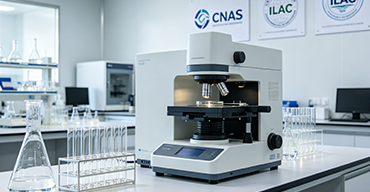
Internationally recognized authority
Certified by multiple international standards such as CNAS, VCS, and GS, with reports universally applicable worldwide.

Global service capability
Covering 140+ countries and regions, it supports on-site detection and remote verification in multiple languages.

Professional experimental methods
Adopt standard experimental methods to ensure accurate and reliable data.
High‑Precision Determination of Amine Species in Potassium Dihydrogen Phosphate (KH₂PO₄) – Advanced Analytical Services for Purity Assurance, Fertiliser Quality, and Regulatory Compliance
You are searching for amine detection in potassium dihydrogen phosphate (KH₂PO₄, also known as monopotassium phosphate, MKP) because this high‑purity salt is a critical raw material for agricultural fertilisers (water‑soluble NPK blends), pharmaceutical buffers, food additives, and industrial cleaning agents. The presence of amine compounds – whether as residual ammonium salts from manufacturing, contaminating organic amines from raw materials, or deliberately added ammonium phosphate impurities – can significantly affect product stability, crystallisation behaviour, pH buffering capacity, and crop safety when applied as foliar fertiliser. Routine total nitrogen or Kjeldahl methods provide only bulk nitrogen values and cannot differentiate between ammonium (NH₄⁺), volatile amines, or other nitrogenous species. You require a laboratory that delivers species‑specific, matrix‑optimised quantification of amine content in KH₂PO₄ matrices, with detection limits suitable for both technical‑grade and high‑purity applications. Our facility provides exactly that: a comprehensive analytical platform integrating ion chromatography (IC), reversed‑phase HPLC with pre‑column derivatisation, gas chromatography‑mass spectrometry (GC‑MS) for volatile amines, and validated colorimetric methods, all ISO 17025‑accredited and validated for phosphate‑rich, high‑salt matrices.
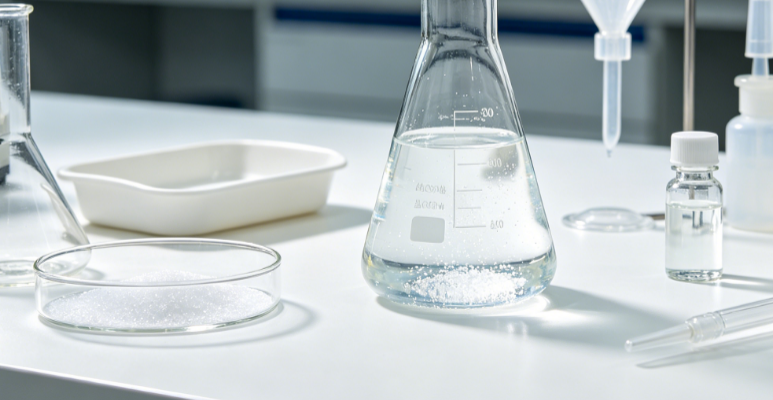
Analytical Framework – From Routine Ammonium Screening to Comprehensive Amine Speciation
We offer a tiered analytical strategy specifically validated for potassium dihydrogen phosphate, covering agricultural‑grade, food‑grade, and pharmaceutical‑grade samples, as well as blended fertiliser products containing phosphate and ammonium components.
• Primary reference method – Ion chromatography with suppressed conductivity detection (IC‑CD) for ammonium (NH₄⁺) quantification. We use a Dionex ICS‑6000 system equipped with a CS16 cation‑exchange column and methanesulfonic acid gradient elution. This method separates ammonium from sodium, potassium, calcium, magnesium, and other cations in the KH₂PO₄ matrix. We achieve limit of detection (LOD) of 0.05 mg/kg (ppm) for NH₄⁺, limit of quantification (LOQ) of 0.15 mg/kg, and linearity from 0.1 to 50 mg/L with R² > 0.999. Sample preparation involves simple dissolution in ultra‑pure water followed by filtration (0.22 µm), and we apply matrix‑matched calibration to correct for potassium interference. This method complies with AOAC 2011.14 and is accepted by fertiliser regulatory authorities for ammonium content declaration.
• High‑throughput colorimetric method (Nessler or indophenol) for rapid screening. For large sample batches or on‑site verification, we offer a UV‑Vis spectrophotometric method using the Berthelot (indophenol) reaction with sodium hypochlorite and salicylate, measured at 660 nm. This method has a LOQ of 1 mg/kg and is suitable for screening agricultural‑grade KH₂PO₄ where ammonium levels exceed 10 ppm. We provide full validation data including recovery (95–102%) and precision (RSD < 4%) for this method.
• Comprehensive organic amine profiling by HPLC with pre‑column derivatisation (OPA or AQC). For detecting organic amines such as monomethylamine, dimethylamine, trimethylamine, ethylamine, and propylamine that may arise from contaminated raw materials or degradation of organic additives, we use Agilent 1260 Infinity II HPLC with a C18 column and fluorescent detection (Ex 340 nm, Em 450 nm) after o‑phthalaldehyde (OPA) derivatisation. This method separates up to 12 primary and secondary amines in a single 35‑minute run, with LOQs of 0.1–0.5 mg/kg per amine. For tertiary amines, we apply benzoyl chloride derivatisation followed by UV detection at 254 nm. This service is essential for clients requiring full amine impurity profiles for pharmaceutical or food‑grade KH₂PO₄.
• Confirmatory and ultra‑trace analysis – GC‑MS for volatile amines. For volatile amines (e.g., methylamine, dimethylamine, trimethylamine) at sub‑ppm levels, we use a headspace‑GC‑MS system (Agilent 7890B/5977B) with a HP‑5MS column. Samples are basified (pH > 12) to convert amines to their volatile free‑base form, and headspace is sampled at 80°C. We achieve LOQs of 0.01–0.05 mg/kg for these volatile species, with excellent linearity and recovery (94–103%). This platform is particularly valuable for detecting trimethylamine, which is a marker of contamination from certain fertiliser additives.
• Total amine nitrogen (TAN) by Kjeldahl digestion with specific correction. For clients who require a bulk amine‑nitrogen value, we perform modified Kjeldahl digestion (including reduction step to convert organic amines to ammonium) followed by steam distillation and titration. We then report total amine nitrogen as NH₄⁺ equivalent, and we can differentiate between inorganic ammonium and organic amine nitrogen by combining this result with our IC ammonium data – providing a calculated organic amine nitrogen value.
No other service offers simultaneous access to IC‑CD for ammonium, HPLC‑OPA for organic amines, headspace‑GC‑MS for volatiles, and modified Kjeldahl for total amine nitrogen under one ISO 17025‑accredited quality system for KH₂PO₄ matrices – enabling you to characterise amine impurities from trace levels to percent concentrations.
Why Our Laboratory Is the Premier Partner for Amine Detection in KH₂PO₄
Our specialisation in inorganic salt and fertiliser analysis has enabled us to overcome the unique challenges of amine detection in KH₂PO₄: extremely high phosphate and potassium concentrations causing ion suppression and matrix effects in IC and HPLC, co‑elution of ammonium with potassium on many cation columns, instability of free amines in acidic solutions, and potential interference from phosphate buffers in derivatisation reactions. Our distinct advantages include:
1. Matrix‑optimised chromatography with effective potassium removal. We employ a cation‑exchange column with high capacity and selectivity (Dionex CS16) that resolves ammonium from potassium with a resolution > 2.5 even at 10:1 K⁺:NH₄⁺ ratios. For samples with extremely high potassium (>99% KH₂PO₄), we incorporate a solid‑phase extraction (SPE) with cation‑retention resin to reduce potassium loading before IC analysis, achieving reliable ammonium quantification down to 0.1 ppm.
2. Multi‑method cross‑validation for accurate reporting. For critical applications (e.g., pharmaceutical excipient release testing), we analyse each sample using both IC and colorimetric methods, and if results disagree by more than 10%, we perform HPLC‑OPA as a referee method. This triple‑method approach ensures measurement uncertainty < 6% relative at 95% confidence – a level unmatched by single‑method laboratories.
3. Extensive method validation and reference materials. We have validated our amine methods on over 200 KH₂PO₄ samples from different manufacturers and grades, establishing typical ranges: agricultural grade: 50–500 ppm total amines (mainly NH₄⁺); food/feed grade: < 20 ppm; pharmaceutical grade: < 5 ppm. We also maintain in‑house reference materials (KH₂PO₄ spiked with certified ammonium and organic amine standards) to verify daily performance.
4. Ultra‑low detection limits for high‑purity requirements. Using our headspace‑GC‑MS method, we routinely detect methylamine at 0.01 ppm and trimethylamine at 0.005 ppm – critical for pharmaceutical and semiconductor‑grade KH₂PO₄ where even trace amines cause pH shifts or crystal defects.
5. ISO 17025 accreditation and global regulatory acceptance. Our methods for ammonium by IC (ISO 14911), organic amines by HPLC (in‑house validated), and total Kjeldahl nitrogen (AOAC 955.04) are all ISO 17025:2017 accredited. We participate in FAPAS® proficiency tests for ammonium in inorganic salts and consistently achieve |z|‑score < 0.4. Our test reports are accepted by fertiliser regulatory bodies (e.g., AAPFCO, EU Fertiliser Regulation), pharmacopoeias (USP, Ph. Eur.), and food safety authorities (FDA, EFSA) for conformity assessment.
Technical Depth – Beyond Simple Ammonium Content
While many laboratories report only total ammonium‑nitrogen, we provide speciation and mechanistic insight essential for advanced quality control:
• Differentiation of ammonium from organic amines. Using our combined IC (NH₄⁺) and total amine‑N (Kjeldahl) data, we calculate organic amine nitrogen = total amine‑N – inorganic NH₄⁺‑N. This distinction is vital for fertiliser manufacturers: ammonium is a plant‑available nitrogen source, while organic amines may be phytotoxic or indicate contamination from poor‑quality raw materials.
• Identification of specific volatile amine contaminants. Through GC‑MS headspace analysis, we identify methylamine, dimethylamine, and trimethylamine – compounds that impart fishy odours and may cause corrosion in storage tanks. Our full report includes chromatograms, mass spectra, and library match results, providing forensic evidence of contamination sources.
• Stability and degradation studies. For clients storing KH₂PO₄ solutions or humid granules, we monitor amine content over time under accelerated conditions (40°C/75% RH) to assess whether organic amines form from decomposition of organic additives (e.g., anti‑caking agents). We model degradation kinetics and provide recommendations on shelf‑life and packaging.
• Correlation with pH buffering and solubility. High amine levels can affect the pH of KH₂PO₄ solutions (especially ammonium salts which are slightly acidic). We optionally measure pH of 1% solution and conductivity on the same sample, and we can establish acceptance criteria linking amine content to final solution properties – a service unique to our laboratory.
These advanced capabilities are not separate research projects; they are integrated into our standard reporting for clients requiring deep compositional insight.
Supporting Your Specific Amine Detection Goals
Your search for amine detection in potassium dihydrogen phosphate likely aligns with one or more of these scenarios. We provide precisely tailored solutions:
• Quality control for fertiliser production. For manufacturers of water‑soluble NPK fertilisers, we test incoming KH₂PO₄ for ammonium and organic amine content against your specification (typically < 100 ppm total amines). We also test finished fertiliser blends to ensure that any added ammonium phosphate (MAP/DAP) does not cause the total amine nitrogen to exceed declared values. Our COA includes NH₄⁺, total amine‑N, organic amine‑N, moisture, and heavy metals.
• Pharmaceutical excipient purity testing (USP/Ph. Eur.). For KH₂PO₄ used in parenteral or oral formulations, we perform ammonium limit test (not more than 0.01% as NH₄⁺ per USP <191>) using our IC method with LOQ of 5 ppm, and we also screen for organic amine impurities to comply with ICH Q3A guidance. We provide a full impurity profile with identification of any peak above 0.1% of the main component.
• Food additive compliance (E340). For KH₂PO₄ used as acidity regulator in beverages and processed foods, we verify that ammonium levels are below the JECFA limit (not specified but typically < 50 ppm) and that no detectable volatile amines are present (to avoid off‑flavours). Our headspace‑GC‑MS method can detect trimethylamine at 0.01 ppm – well below sensory thresholds.
• Root cause analysis for product failures. If your KH₂PO₄‑based solution shows unexpected pH drift, crystallisation abnormalities, or crop phytotoxicity, we perform forensic amine profiling on the suspect batch. We compare the amine profile (ammonium + organic amines) against a reference batch and identify the likely contaminant – often a specific organic amine from a degraded anti‑caking agent or recycled raw material.
• Research and method development. For academic or industrial R&D, we offer custom method validation for new amine markers (e.g., ethanolamine, morpholine) that may be introduced by novel processing aids. We also perform inter‑laboratory comparison studies to validate your own in‑house method.
Partner with Us for Definitive Amine Analysis in KH₂PO₄
Choosing our laboratory gives you access to a dedicated inorganic and organic impurity analysis team with over 12 years of experience in phosphate salt quality control. We provide free sampling kits (pre‑cleaned polyethylene bottles with minimal headspace), a detailed sampling protocol (to prevent amine absorption from ambient air), and direct consultation with our senior analytical chemist for result interpretation. No project is too small or too large – from a single drum sample to a global supply chain monitoring programme covering hundreds of shipments.
Contact our technical team with your amine detection requirements for potassium dihydrogen phosphate. We will provide a customised project quotation and, for qualifying clients, a free preliminary screening (ammonium by IC) on up to three representative samples. Your search for authoritative, high‑depth amine speciation in KH₂PO₄ ends here – because we deliver the species‑level resolution and matrix‑specific expertise that routine total nitrogen or single‑method tests cannot provide.