Reasons for choosing our testing services
ZHONGXI Testing has obtained inspection qualification certifications from multiple countries and regions worldwide. We possess a senior testing team and advanced testing methods, providing independent, impartial, and professional third-party verification services for global carbon projects.

Internationally recognized authority
Certified by multiple international standards such as CNAS, VCS, and GS, with reports universally applicable worldwide.

Global service capability
Covering 140+ countries and regions, it supports on-site detection and remote verification in multiple languages.

Professional experimental methods
Adopt standard experimental methods to ensure accurate and reliable data.
Professional Sulfate-Reducing Bacteria (SRB) Activity Testing Service
We understand that you are searching for an SRB activity test because you need to monitor, control, or harness these microorganisms. Whether your goal is to prevent corrosion in oil and gas pipelines, optimize bioremediation of acid mine drainage, evaluate biocide efficacy, or enhance sulfate reduction in anaerobic digesters, our comprehensive SRB activity testing service delivers far more than a simple yes/no answer. We provide quantitative, multi‑parameter assessment of SRB metabolic function, growth kinetics, and community-level activity in any environmental or engineered sample.
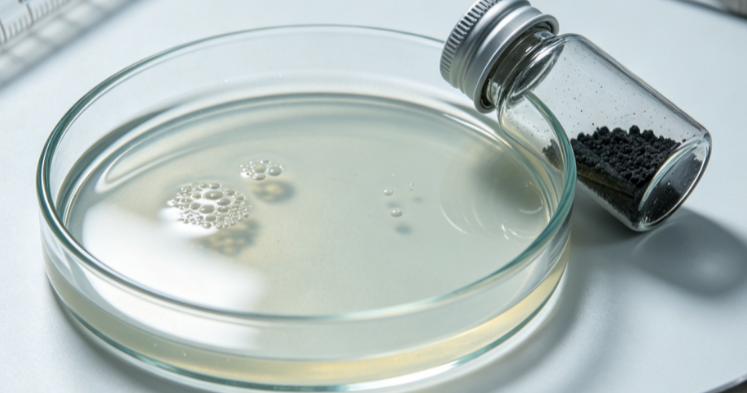
What We Measure – Beyond Traditional MPN and H2S Detection
Standard methods such as most probable number (MPN) or lead acetate strips only detect the presence of sulfide production, not true activity. Our platform integrates real‑time sulfate depletion monitoring via ion chromatography, sulfide quantification using methylene blue spectrophotometry (detection limit 0.1 µM), volatile fatty acid consumption profiling, and hydrogenase enzyme activity assays. We also measure electron transfer efficiency using electrochemical microsensors for direct determination of SRB respiratory rates. For complex samples, we distinguish between dissimilatory sulfate reduction and other sulfur transformations (e.g., thiosulfate reduction, sulfite oxidation).
Advanced Capabilities for Any Sample Type
We accept produced water, biofilms from pipelines, soil, sediment, sludge, corrosion deposits, and enrichment cultures. Our anaerobic chamber maintains strict oxic‑free conditions (<1 ppm O₂) throughout processing. We perform isotope fractionation analysis (δ³⁴S) using IRMS to confirm active dissimilatory reduction even when sulfide levels are low. For highly inhibitory environments (high salinity, extreme pH, presence of biocides), we measure intracellular ATP and NADH/NAD⁺ ratios to quantify sublethal metabolic stress. Our microcalorimetry system tracks heat flow from SRB cultures in real time, providing continuous activity data without sampling.
What You Receive – Actionable Activity Metrics
Your final report includes: specific sulfate reduction rate (mmol SO₄²⁻/g biomass/h), maximum sulfide production rate, lag phase duration before activity onset, substrate affinity constant (Km) for sulfate, and the proportion of electron donors (lactate, hydrogen, acetate) actually consumed by SRB vs. competing microbes. In mixed communities, we use qPCR targeting dsrB and aprA genes to normalize activity to SRB cell numbers, giving you a per‑cell activity index. For kinetic studies, we provide Monod parameters (μmax, Ks) under your specific temperature, pH, and salinity conditions.
Our Distinct Advantages in SRB Activity Testing
1. High throughput and automation: We can run 96‑well microplate assays with optical sulfide detection for rapid screening of biocide efficacy or nutrient stimulation, delivering results in 48 hours. 2. Biofilm-specific activity: Using our rotating disk bioreactors and flow cells, we measure SRB activity in real biofilms under shear stress – mimicking pipeline or filter conditions. 3. Low detection limits: Our micro‑sulfide sensor can detect activity from as few as 10² SRB cells/mL, orders of magnitude below traditional MPN. 4. Inhibition profiling: We test up to 20 biocides or inhibitors simultaneously against your field isolate or mixed community, providing IC₅₀ and MIC values with statistical confidence. 5. Field‑to‑lab correlation: We provide pre‑sampling kits with oxygen‑free vials and preservatives to ensure activity is preserved during shipping.
Why You Should Choose Our Service
Many labs only tell you if SRB are present. We tell you how active they are, under which conditions they accelerate or stop, and what specific metabolic pathways (complete vs. incomplete oxidation) are operating. Our team has worked with oil & gas, water treatment, mining, and biogas industries, helping clients predict corrosion risk, optimise biocide dosing intervals, and design sulfate‑removing bioreactors. We provide statistical rigor (triplicate assays, positive and negative controls, blanks) and a fully transparent report with raw data and interpretation. No hidden fees for high‑end analytics.
Get Your SRB Activity Quantified with Confidence
Don’t rely on guesswork or slow culturing methods. Contact us today to discuss your sample type, environmental conditions, and key questions. We offer a free consultation and a discounted trial for first‑time clients. Whether you need a one‑time activity snapshot or long‑term monitoring, our SRB activity test will give you the precise, actionable data you need to control, leverage, or eliminate sulfate‑reducing bacteria.