Reasons for choosing our testing services
ZHONGXI Testing has obtained inspection qualification certifications from multiple countries and regions worldwide. We possess a senior testing team and advanced testing methods, providing independent, impartial, and professional third-party verification services for global carbon projects.

Internationally recognized authority
Certified by multiple international standards such as CNAS, VCS, and GS, with reports universally applicable worldwide.

Global service capability
Covering 140+ countries and regions, it supports on-site detection and remote verification in multiple languages.

Professional experimental methods
Adopt standard experimental methods to ensure accurate and reliable data.
Professional Acrylonitrile Hydratase Activity Analysis Service
We understand that you are searching for acrylonitrile hydratase (ANHase) activity analysis because you need to evaluate, optimize, or validate this critical enzyme for industrial acrylamide production, bioremediation, or biocatalytic processes. Our specialized enzyme kinetics and activity profiling service goes far beyond simple product detection. We provide a comprehensive, quantitative assessment of ANHase function under simulated process conditions, enabling you to predict performance, troubleshoot production batches, or screen for superior enzyme variants.
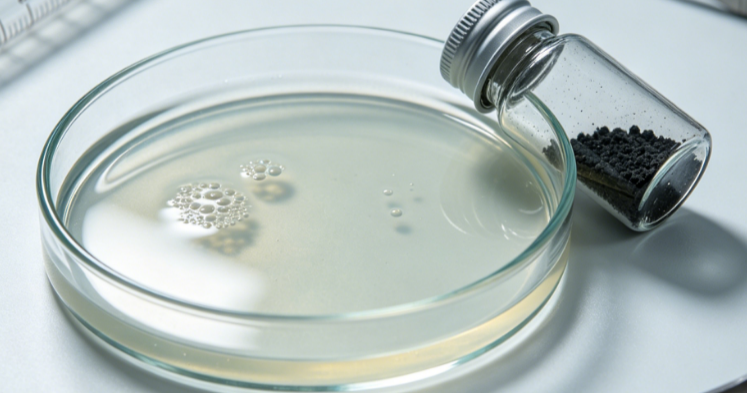
What We Measure – From Basic Activity to Full Kinetic Characterization
Our standard ANHase activity assay quantifies the conversion of acrylonitrile to acrylamide using high‑performance liquid chromatography (HPLC) with UV detection at 210 nm, achieving a detection limit of 0.5 µM acrylamide. We also offer gas chromatography‑mass spectrometry (GC‑MS) for simultaneous monitoring of substrate depletion and product formation in complex matrices. For in‑depth characterization, we determine Michaelis‑Menten parameters (Km, Vmax, kcat, and catalytic efficiency kcat/Km) under controlled pH, temperature, and cofactor conditions. We can evaluate substrate specificity against aliphatic and aromatic nitriles (e.g., propionitrile, benzonitrile) and measure inhibition constants (Ki) for potential inhibitors such as amides or heavy metals.
Advanced Capabilities for Demanding Applications
We work with all forms of ANHase: purified recombinant enzyme, crude cell lysates, whole resting cells, immobilized biocatalysts, and even environmental samples (soil, wastewater). Our platform includes stopped‑flow spectrophotometry to capture pre‑steady‑state kinetics (millisecond timescale), revealing rapid binding and catalytic steps. For thermostability assessment, we perform thermal inactivation profiling (half‑life t1/2 at 25–60°C) and differential scanning fluorimetry (DSF) to determine melting temperature (Tm). In continuous processes, we simulate operational stability under substrate feed conditions using our automated micro‑bioreactor system, measuring activity decay over 24‑72 hours. We can also detect post‑translational modifications (e.g., phosphorylation, glycosylation) that influence activity via LC‑MS/MS peptide mapping.
What You Receive – Actionable Enzyme Performance Data
Your final report includes: specific activity (U/mg protein or U/g dry cell weight), reaction progress curves, pH and temperature optima profiles, kinetic constants with 95% confidence intervals, and a stability assessment under storage or process conditions. For whole‑cell catalysts, we differentiate between intrinsic enzyme activity vs. mass transfer limitations using permeabilization and substrate diffusion modelling. In side‑by‑side comparisons (mutant screening or lot release), we provide statistical significance testing (ANOVA, t‑tests) and a benchmark against reference ANHase (e.g., from Pseudomonas chlororaphis B23). We also calculate productivity (g product/g enzyme/h) and turnover number per active site for industrial scaling.
Our Distinct Advantages in Acrylonitrile Hydratase Testing
1. Specialised safety and handling: Acrylonitrile is toxic and volatile. Our team operates in a dedicated fume hood/enclosed system with real‑time air monitoring, ensuring analyst safety and preventing cross‑contamination. 2. High throughput screening: We can run 96‑well microplate assays with robotic liquid handling, screening up to 200 samples per day for activity or inhibition – ideal for directed evolution campaigns. 3. Low substrate consumption: Our micro‑scale assays use as little as 50 µL reaction volume, preserving precious enzyme or cell samples. 4. Cofactor and metal analysis: ANHase is a Fe‑ or Co‑dependent enzyme. We provide ICP‑MS metal quantification and electron paramagnetic resonance (EPR) spectroscopy to correlate metal loading with activity. 5. Regulatory support: Our data packages meet GMP‑like standards for enzyme characterization in biopharma or food ingredient applications.
Why Choose Us Over Routine Labs
Most contract labs offer only endpoint assays with basic colorimetric detection, missing kinetic details and operational relevance. We give you the full dynamic picture – how fast the enzyme works, how long it lasts, what stops it, and how it performs under your exact process conditions (temperature, substrate concentration, presence of by‑products). Our scientists have published peer‑reviewed work on nitrile hydratases and understand the nuances of metal‑centre stability and substrate inhibition. We provide one‑on‑one expert interpretation and, if needed, recommend enzyme engineering or process adjustments.
Ready to Quantify Your Acrylonitrile Hydratase Activity with Precision?
Don’t rely on incomplete or inaccurate assays that misrepresent your enzyme’s true potential. Contact us today to discuss your sample type, intended application (acrylamide production, bioremediation, or research), and specific analytical needs. We offer a free preliminary consultation and a discounted pilot run for first‑time clients. With our deep analytical toolbox and enzyme expertise, we will deliver the reliable, high‑resolution activity data you need to advance your project.