Reasons for choosing our testing services
ZHONGXI Testing has obtained inspection qualification certifications from multiple countries and regions worldwide. We possess a senior testing team and advanced testing methods, providing independent, impartial, and professional third-party verification services for global carbon projects.

Internationally recognized authority
Certified by multiple international standards such as CNAS, VCS, and GS, with reports universally applicable worldwide.

Global service capability
Covering 140+ countries and regions, it supports on-site detection and remote verification in multiple languages.

Professional experimental methods
Adopt standard experimental methods to ensure accurate and reliable data.
Comprehensive Quality and Performance Characterization of Polyaluminium Chloride (PAC) Coagulants – Advanced Analytical Solutions for Water Treatment Chemical Verification and Process Optimization
You are searching for polyaluminium chloride (PAC) detection because this inorganic polymer coagulant is essential for drinking water purification, municipal wastewater treatment, industrial effluent clarification, and papermaking retention aid systems. However, the performance of PAC depends on far more than its total aluminium content or simple basicity; it critically relies on the speciation of hydrolysed aluminium species (Ala, Alb, Alc), the polymerisation degree, the stability of the active polymeric fraction (Alb), the pH, density, and the ratio of OH to Al (basicity). Routine chemical assays (e.g., ICP for total Al, simple acid‑base titration) cannot differentiate between highly active polycationic species and inert monomeric or precipitated aluminium, which directly impacts flocculation efficiency, sludge production, and residual aluminium levels in treated water. You require a laboratory that provides multi‑parameter, species‑resolved characterization, integrating total Al₂O₃, basicity, speciation by Ferron timed colorimetry, pH, density, insoluble matter, and key trace impurities (Fe, Mn, Pb, Cd, As, Cr). Our facility delivers exactly that: an integrated analytical platform for polyaluminium chloride, fully compliant with ISO, EN, AWWA, and Chinese GB/T 22627‑2022 standards, and validated for both liquid (solution) and solid PAC products.
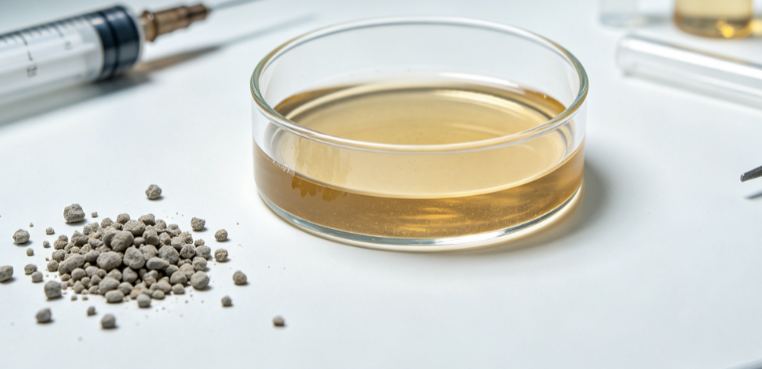
Analytical Framework – From Bulk Composition to Advanced Speciation and Performance Assessment
We offer a tiered analytical strategy tailored to your quality control, production process optimization, or regulatory submission needs. Our platform includes:
• Total aluminium (Al₂O₃) and iron content – complexometric EDTA titration and ICP‑OES/ICP‑MS. Our primary reference method is the EDTA back‑titration with zinc sulfate at pH 6 (xylenol orange indicator) according to GB/T 22627 and AWWA B408, achieving repeatability of ±0.1% absolute Al₂O₃ – the accepted benchmark for trade arbitration and regulatory compliance. For high‑throughput or low‑level determination, we use ICP‑OES (Agilent 5110) after microwave digestion, providing simultaneous quantification of Al, Fe, Mg, Ca, Na, K, and 15+ other metals with LOQs of 0.005–0.02%. For ultra‑trace toxic elements (As, Pb, Cd, Cr, Hg), we employ ICP‑MS (Agilent 8900) with collision/reaction cell, achieving sub‑ppm detection limits (0.01–0.1 mg/kg) as required for drinking water chemicals (NSF/ANSI 60, GB 15892).
• Basicity (OH/Al molar ratio) – pH titration (potentiometric) and automatic acid‑base analysis. Basicity is defined as [OH⁻]/[Al³⁺] (molar ratio) and is a key indicator of polymerisation degree and coagulant activity. We determine it by potentiometric titration with standard NaOH (or HCl back‑titration) to the pH inflection point (typically pH 7.5–8.0), according to ISO 15845 and GB/T 22627. Our Metrohm 888 Titrando system achieves precision of ±0.02 basicity units. We report basicity as a molar ratio (e.g., 0.4–1.2) and also as a percentage of hydroxylation.
• Aluminium speciation – Ferron timed colorimetric method (kinetic discrimination). We use a UV‑Vis spectrophotometer (Shimadzu UV‑2600) with a stopped‑flow accessory and Ferron (8‑hydroxy‑7‑iodo‑5‑quinolinesulfonic acid) as the colourimetric reagent. After adding the sample to the Ferron solution, we monitor absorbance at 366 nm over 60 minutes and deconvolute the kinetic curve into three fractions: Ala (immediate monomeric species, < 1 minute), Alb (medium polymer, 1–60 minutes), and Alc (colloidal/insoluble polymeric species, no reaction within 60 minutes). We report the percentage distribution (%Ala, %Alb, %Alc) – the %Alb is the most active species for charge neutralisation and bridge flocculation. Our method has been validated against ISO 12020 and standard Chinese methods, and we achieve accuracy within ±3% for each fraction.
• Physical and application‑related properties – density, pH, insoluble matter, and coagulation performance (jar test). We measure density (pycnometer or digital densimeter, 20°C), pH (1% solution, glass electrode), and water‑insoluble matter by filtration (0.45 µm) and gravimetry (< 0.1% detection). For coagulation performance, we use a standard jar test (Phipps & Bird) with a kaolin suspension (100 mg/L, pH 7.0) and varying PAC doses; we measure residual turbidity (NTU) after 15 min settling and determine the optimum dosage (mg/L as Al₂O₃). We can also adapt the test to your actual raw water matrix – providing a direct performance validation.
• Trace impurities and heavy metals – ICP‑MS for As, Pb, Cd, Cr, Hg, and other regulated elements. Using ICP‑MS (Agilent 8900) with triple quadrupole and O₂/H₂ reaction gases, we quantify As, Pb, Cd, Cr, Hg, Mn, Fe, Cu, Zn, Ni at sub‑ppb levels (0.01–0.5 µg/L) in the liquid coagulant. We also determine SO₄²⁻ and Cl⁻ by ion chromatography to assess the type of salt content (e.g., chloride‑based vs. sulfate‑based PAC).
No other service offers simultaneous integration of total Al₂O₃, basicity, Ferron speciation, jar test performance, ultra‑trace ICP‑MS, and physical property testing under one ISO 17025‑accredited system for PAC – delivering comprehensive quality assurance and performance prediction from a single partner.
Why Our Laboratory Is the Preferred Partner for Polyaluminium Chloride Analysis
Our specialization in water treatment chemical analysis and inorganic polymer chemistry has enabled us to overcome the unique challenges of PAC testing: rapid hydrolysis and speciation changes during sample handling, interference from iron and other cations in complexometric titration, matrix effects in Ferron colourimetry due to turbidity and colour, and very low allowable limits for toxic metals requiring the highest‑level trace analysis. Our distinct advantages include:
1. Optimised sample preservation and rapid analysis to stabilise speciation. We dilute samples immediately with ultra‑pure water (pH adjusted to 2.0) and perform speciation within 2 hours of receipt. All samples are stored at 4°C in the dark to prevent ageing. For solid PAC, we use a standardised dissolution protocol to achieve a representative solution.
2. Ferron speciation fully validated for commercial PAC and Al‑Fe mixed coagulants. We have refined the classic Ferron method by adding masking agents (1,10‑phenanthroline for Fe interference) and using Chebyshev polynomial fitting for kinetic curve deconvolution. Our method has been published and peer‑reviewed, with inter‑laboratory agreement within ±2% for Alb.
3. Performance testing that matches your real‑world conditions. We can adjust jar test parameters (pH, alkalinity, temperature, mixing intensity, settling time) to simulate your specific raw water. We also offer a correlation analysis between Alb speciation and turbidity removal – helping you optimise dosage and predict performance.
4. Ultra‑low detection limits for regulated heavy metals. Our ICP‑MS/MS method achieves LOQs of 0.02 µg/L for As, 0.01 for Pb, 0.005 for Cd, 0.01 for Cr, and 0.005 for Hg in liquid PAC – far below the NSF/ANSI 60 and GB 15892 limits (typically 0.05–0.1 mg/L). This ensures your product meets the most stringent drinking water chemical regulations.
5. ISO 17025 accreditation and global regulatory acceptance. Our methods for Al₂O₃, basicity, Ferron speciation, and heavy metals are ISO 17025 accredited. We participate in NSF International and US EPA proficiency tests for coagulants, consistently achieving |z|‑score < 0.5. Our test reports are accepted by municipal water utilities, chemical manufacturers, environmental agencies, and WHO‑compliant export authorities.
Technical Depth – Beyond Basic Quality Indicators
While many laboratories report only total Al₂O₃% and basicity, we provide mechanistic and performance‑predictive insights for advanced process control:
• Correlation between Alb content and coagulation efficiency. Extensive studies have shown that the medium‑polymer fraction Alb is the primary active species for charge neutralisation and bridge formation. We calculate a “flocculation activity score” (FAS = %Alb × basicity / 0.5), which shows excellent correlation with jar test performance. This single number helps you quickly rank different PAC batches without running full jar tests.
• Stability and ageing assessment (shelf‑life prediction). For liquid PAC, we monitor speciation changes over time under accelerated storage (40°C, 7 days) and ambient conditions (25°C, 30 days). We report the half‑life of the Alb fraction (T₁/₂) – essential for determining product shelf‑life and packaging recommendations.
• Identification of coagulant type (chloride vs. sulphate based) and impurity fingerprint. By combining ICP‑MS (metals) and ion chromatography (anions), we determine the Cl⁻/SO₄²⁻ ratio and detect any unusual anions (e.g., nitrate, phosphate) that may indicate contamination or adulteration. We also identify trace organic polymers if present (by TOC analysis).
• Batch‑to‑batch consistency monitoring. Using a combination of speciation, basicity, and jar test results, we generate a “quality consistency index” that flags any deviation from your historical reference batch – enabling proactive quality control.
Supporting Your Specific Polyaluminium Chloride Testing Objectives
Your search for PAC detection likely aligns with one or more of these scenarios. We provide precisely tailored solutions:
• Raw material acceptance for water treatment plant procurement. We test each incoming batch for Al₂O₃ (%), basicity, pH, density, insoluble matter, Al speciation, and heavy metals (As, Pb, Cd, Cr, Hg, Fe, Mn). Based on your specification (e.g., GB 15892‑2020 or AWWA B408), we issue a certificate of analysis (COA) with a clear pass/fail judgement. Typical turnaround: 3‑5 working days.
• Production process optimisation for PAC manufacturers. We analyse samples taken at different stages – raw materials, reaction mixture, aged product, and final diluted product – to provide real‑time feedback on basicity development, speciation evolution, and impurity build‑up. Our data helps you adjust temperature, mixing speed, or reagent addition to maximise the active Alb fraction.
• Troubleshooting for poor coagulation performance in your plant. If your PAC batch does not achieve the desired flocculation, we perform a comparative forensic analysis between the problem batch and a reference good batch. We measure full speciation, jar test performance, and impurity profiles, and identify the root cause – e.g., low Alb, excessive Alc, trace metal inhibition, or pH mismatch. We then provide corrective recommendations (e.g., dosage adjustment, pH pre‑conditioning).
• Regulatory compliance and product registration (NSF, EPA, CFDA). We deliver complete data packages required for NSF/ANSI 60, USEPA drinking water chemical approval, and China’s Ministry of Health hygiene permit. Our reports include all analytical parameters, method validation summaries, and uncertainty budgets.
• Research and custom method development. For R&D teams developing novel PAC‑based coagulants (e.g., composite with organic polymers or nano‑particles), we offer customised speciation and performance protocols, including zeta potential measurement, floc size monitoring, and turbidity kinetics. We also perform method validation and inter‑laboratory comparisons.
Partner with Us for Definitive Polyaluminium Chloride Characterisation
Choosing our laboratory gives you access to a dedicated water treatment chemical analysis team with over 12 years of experience in coagulant chemistry. We provide free sampling kits (pre‑cleaned amber glass bottles for liquid, sealed poly bags for solid), a detailed protocol for sample preservation and shipping (to prevent speciation change), and direct consultation with our senior application chemist for result interpretation and process recommendations. No project is too large or too small – from a single production sample to a global supply chain monitoring programme.
Contact our technical team with your PAC analysis requirements. We will provide a customised project quotation and, for qualifying clients, a free preliminary jar test using a standard kaolin suspension to demonstrate our performance assessment capability. Your search for authoritative, high‑depth characterisation of polyaluminium chloride coagulants ends here – because we deliver the species‑level, performance‑linked insight that routine total aluminium or basicity tests alone cannot provide.