Reasons for choosing our testing services
ZHONGXI Testing has obtained inspection qualification certifications from multiple countries and regions worldwide. We possess a senior testing team and advanced testing methods, providing independent, impartial, and professional third-party verification services for global carbon projects.
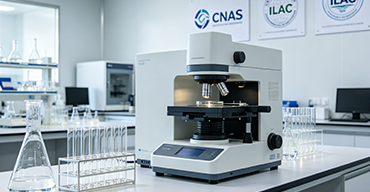
Internationally recognized authority
Certified by multiple international standards such as CNAS, VCS, and GS, with reports universally applicable worldwide.

Global service capability
Covering 140+ countries and regions, it supports on-site detection and remote verification in multiple languages.
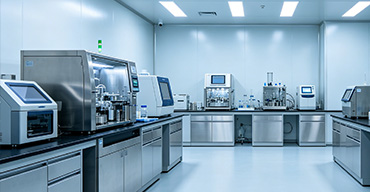
Professional experimental methods
Adopt standard experimental methods to ensure accurate and reliable data.
Comprehensive Quality and Performance Characterization of Silver Sponge – Advanced Analytical Solutions for Purity, Trace Impurity Profiling, and Physical Property Assessment
You are searching for silver sponge (porous metallic silver) detection because this high‑purity, high‑surface‑area silver material is essential for electronic contact pastes, catalyst carriers, silver‑zinc battery electrodes, precious metal recycling, and high‑conductivity adhesive applications. However, routine silver assays (e.g., fire assay or simple volumetric titration) provide only an approximate metal content and cannot reveal the critical parameters that govern performance and value: ultra‑high purity (>99.9%), trace impurity profile (Au, Pt, Pd, Cu, Fe, Pb, Bi, Se, Te, etc.), specific surface area (BET), particle and agglomerate size distribution, apparent density, and morphological uniformity. You require a laboratory that delivers multi‑dimensional, trace‑sensitive characterization integrating primary silver assay, full elemental impurity scan (including precious and base metals), surface area and porosity, particle sizing, and morphological imaging. Our facility provides exactly that: an ISO 17025‑accredited, fully validated analytical platform for silver sponge, compliant with ASTM B562, ISO 11490, and Chinese GB/T 11067 standards, and designed to support precious metal trade, quality assurance, and process optimization at the highest level.
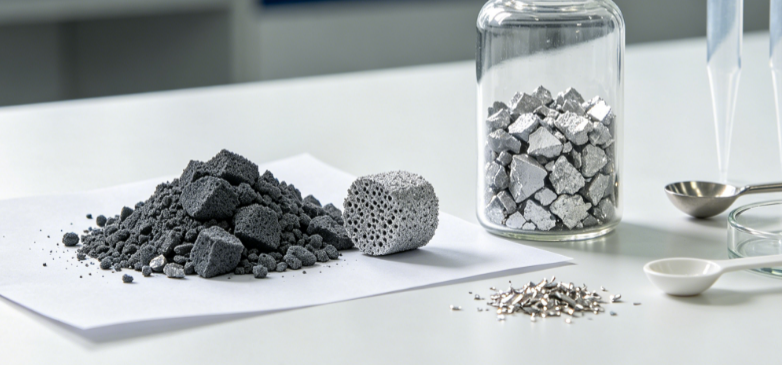
Analytical Framework – From Primary Purity Assay to Ultra‑Trace Impurity Identification and Physical Property Mapping
We offer a tiered analytical strategy tailored to your quality control, supplier verification, or process development needs. Our platform includes:
• Primary silver content – Potentiometric titration (silver chloride precipitation) and fire assay with ICP‑OES verification. Our reference method is the potentiometric titration with standard NaCl or KCl solution, following ISO 11490 and ASTM E1990, achieving repeatability of ±0.05% absolute Ag for samples above 99.5% purity. For the highest precision, we also offer cupellation fire assay (classical gravimetric method) with a lead collection step, which is widely accepted for bullion and fine silver – delivering uncertainty < 0.02% relative. To cross‑validate and to quantify trace impurities, we digest the sponge in acid and analyse the solution by ICP‑OES (Agilent 5110) and ICP‑MS (Agilent 8900), providing simultaneous determination of Ag and 30+ other elements with LOQs of 0.05–1 mg/kg (ppm) for most metals.
• Comprehensive trace impurity profiling – ICP‑MS and ICP‑MS/MS for precious and base metals. Silver sponge often contains low levels of Au, Pt, Pd, Cu, Fe, Pb, Bi, Sb, Se, Te, Cd, and Zn, which significantly affect electrical conductivity, solderability, and catalyst activity. Our triple‑quadrupole ICP‑MS with O₂, H₂, and NH₃ reaction gases eliminates polyatomic interferences (e.g., ⁴⁰Ar¹⁵N on ⁵⁵Mn, ⁴⁰Ar³⁵Cl on ⁷⁵As) and achieves LOQs of 0.01 mg/kg for Au, Pt, Pd, 0.05 for Pb, Bi, 0.02 for Cu, Fe, and 0.005 for Cd – meeting the most stringent specifications for high‑purity silver (e.g., ≥ 99.99% Ag). We provide a full “impurity fingerprint” report, including both mandatory elements (ASTM B562 list of 16) and optional elements on request.
• Specific surface area (BET) and porosity – Nitrogen physisorption and mercury porosimetry. The high surface area of silver sponge (typically 0.5–5 m²/g) is critical for catalytic and electrochemical applications. We use Micromeritics TriStar II Plus with degassing at 150°C under vacuum, reporting BET surface area (m²/g) with precision ±0.05 m²/g, as well as total pore volume (t‑plot) and BJH mesopore size distribution. For macroporosity and bulk density, we employ mercury intrusion porosimetry (AutoPore IV), obtaining pore size from 3 nm to 300 µm.
• Particle size distribution and morphological characterization – Laser diffraction, dynamic image analysis, and SEM. We measure D10, D50, D90, and span using a Malvern Mastersizer 3000 with wet dispersion (in water with a surfactant) to avoid agglomeration, covering a range of 0.02–2000 µm. For detailed shape analysis and agglomerate structure, we use scanning electron microscopy (Tescan MIRA3) coupled with an automated image analysis system (over 1,000 particles per sample), reporting primary particle size, circularity, aspect ratio, and agglomeration fraction. We also provide fractal dimension as an optional parameter for porous structure quantification.
• Apparent density and tap density – Hall flowmeter and volumeter. For powder handling and compaction behaviour, we determine apparent density (g/cm³) and tap density (after 1,000 taps) in accordance with ASTM B212 and ISO 3953. These values directly influence mould filling and green strength in pressed components.
• Moisture and volatile content – Loss on drying (LOD) at 105°C. We measure surface moisture by oven drying to constant weight, with detection limit of 0.01%. For higher temperature weight loss (e.g., organic residues), we perform Thermogravimetric Analysis (TGA) up to 600°C under air or inert gas.
No other service integrates primary silver titration, fire assay, ultra‑trace ICP‑MS, BET, laser diffraction, SEM image analysis, and density measurement under one ISO 17025‑accredited system for silver sponge – delivering a comprehensive quality profile from bulk purity to micron‑level physical characteristics.
Why Our Laboratory Is the Preferred Partner for Silver Sponge Analysis
Our specialization in precious metals and advanced powder materials characterization has enabled us to overcome the unique challenges of silver sponge testing: extremely high silver matrix causing spectral interferences in ICP (we use matrix‑matched calibration and standard addition), potential contamination during sample preparation (we operate a Class 100 clean room for weighing and digestion), low impurity levels requiring ultratrace sensitivity, and the tendency of sponge to agglomerate, affecting both particle size and BET reproducibility. Our distinct advantages include:
1. Multi‑method cross‑validation for silver purity. For each commercial batch, we run potentiometric titration, fire assay, and ICP‑OES (total Ag) – if results differ by more than 0.1% relative, we perform a gravimetric determination as AgCl as an ultimate referee. This triple‑check ensures an absolute accuracy that is unmatched in routine commercial testing.
2. Ultra‑clean sample handling and digestion. We use high‑purity acids (double‑distilled) and microwave digestion in sealed Teflon vessels to prevent contamination from glassware or lab environment. All operations are performed under a laminar flow hood with particle counts monitored continuously.
3. Fully validated trace impurity protocols compliant with international standards. Our ICP‑MS method follows ASTM E2371 and ISO 15096 for precious metals, with spike recoveries between 95% and 105% for all critical elements. We participate in FAPAS® and BAM round‑robins for high‑purity silver, achieving |z|‑score < 0.4 consistently.
4. Optimised BET degassing to avoid silver oxidation. Silver sponge can oxidise superficially at elevated temperatures. We have validated a low‑temperature degassing protocol (150°C under vacuum for 6 hours) that removes adsorbed moisture without affecting surface chemistry – verified by XPS analysis (optional).
5. ISO 17025 accreditation and global trade acceptance. Our methods comply with ASTM B562, ISO 11490, JIS H 1188, and GB/T 11067. Our test reports are accepted by precious metal refineries, electronics component manufacturers, catalyst producers, and customs authorities for import/export certification.
Technical Depth – Beyond Basic Purity and Physical Properties
While many laboratories report only silver content and a limited impurity list, we provide actionable, application‑oriented insights for advanced quality management:
• Trace element source identification. Using our full‑scan ICP‑MS data, we can identify the signature of specific impurities (e.g., Pb/Bi ratio, presence of Se or Te) that point to the origin of the sponge – whether from electrolytic refining, precipitation from nitrate solution, or recycled sources. This supports forensic and anti‑adulteration investigations.
• Surface area – particle size correlation for sintering behaviour. We provide a “sintering activity index” computed from BET and D50, which predicts densification kinetics during thermal treatment – essential for powder metallurgy and conductive paste formulation.
• Oxidation state and surface chemistry – X‑ray photoelectron spectroscopy (XPS) for surface Ag⁺/Ag⁰ ratio. For catalyst applications, the presence of surface silver oxide (Ag₂O) can affect activity. We offer XPS (Thermo Scientific K‑Alpha) with high‑resolution Ag 3d and O 1s spectra, quantifying metallic silver vs. silver oxide fraction – a unique service among commercial testing laboratories.
• Porosity and permeability estimation. Combining mercury porosimetry with BET, we estimate the “tortuosity” and gas permeability of the sponge structure, which is crucial for catalytic converters and gas diffusion electrodes.
Supporting Your Specific Silver Sponge Testing Objectives
Your search for silver sponge detection likely aligns with one or more of these scenarios. We provide precisely tailored solutions:
• Incoming material verification for electronics and battery industries. We test each shipment for Ag purity (%), critical impurity list (Au, Pt, Pd, Cu, Fe, Pb, Bi, Cd, etc.), BET surface area, D50, and apparent density. We issue a certificate of analysis (COA) with a pass/fail judgement relative to your purchase specification. Typical turnaround: 3‑5 working days.
• Process control during silver recovery and refining. For recyclers and refiners, we analyse intermediate products (crude sponge, washed sponge, dried sponge) to track purity evolution, impurity removal efficiency, and BET changes during washing and drying. Our data helps you optimise washing cycles, drying temperature, and final milling.
• Troubleshooting for poor performance in downstream products (e.g., high electrical resistivity, poor adhesion, inconsistent catalyst activity). We perform a forensic comparison between the problematic batch and a reference good batch, including full ICP‑MS impurity profile, XRD for crystalline phase (if any oxide), SEM for morphological defects, and BET for surface area loss. We identify the root cause – often trace Cu or Fe contamination, or excessive agglomeration – and recommend corrective measures.
• Regulatory compliance for export and import (e.g., US CBP, EU customs). We provide certified assay reports for the declaration of silver content and impurity limits, complying with the London Bullion Market Association (LBMA) Good Delivery guidelines for silver bars made from sponge. Our reports are accepted by major refineries and bullion banks.
• Research and custom method development. For academic or industrial R&D, we offer customised characterisation including in‑situ XRD during heating, high‑pressure BET, nano‑indentation of individual particles, and electrochemical performance testing (cyclic voltammetry). We also perform method validation and inter‑laboratory comparison studies for novel silver sponge products.
Partner with Us for Definitive Silver Sponge Characterisation
Choosing our laboratory gives you access to a dedicated precious metals analysis team with over 15 years of combined experience in silver and its alloys. We provide free sampling kits (sealed, moisture‑proof containers with inert gas flushing), a detailed sampling protocol (including correct subdivision techniques for powders), and direct consultation with our senior precious metals analyst for data interpretation and application recommendations. No project is too large or too small – from a single research‑grade sample to routine quality control of full production lots.
Contact our technical team with your silver sponge testing requirements. We will provide a customised project quotation and, for qualifying clients, a free preliminary screening (silver purity by titration, BET, and a basic impurity scan) on up to three samples. Your search for authoritative, high‑depth characterisation of silver sponge ends here – because we deliver the purity, impurity, physical, and morphological insight that routine single‑parameter tests cannot provide.