Reasons for choosing our testing services
ZHONGXI Testing has obtained inspection qualification certifications from multiple countries and regions worldwide. We possess a senior testing team and advanced testing methods, providing independent, impartial, and professional third-party verification services for global carbon projects.
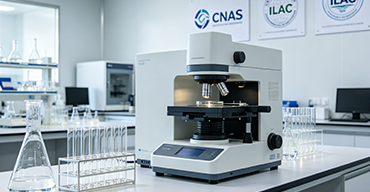
Internationally recognized authority
Certified by multiple international standards such as CNAS, VCS, and GS, with reports universally applicable worldwide.

Global service capability
Covering 140+ countries and regions, it supports on-site detection and remote verification in multiple languages.
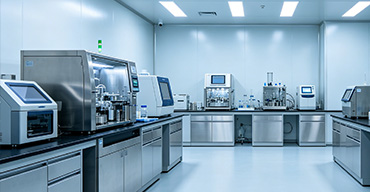
Professional experimental methods
Adopt standard experimental methods to ensure accurate and reliable data.
High‑Precision Analytical Solutions for Sodium Fluorosilicate – Comprehensive Quality, Purity, and Trace Contaminant Profiling
You are searching for sodium fluorosilicate (Na₂SiF₆) detection because this inorganic salt is essential in water fluoridation, glass and ceramic manufacture, wood preservatives, and insecticide formulations. The functional performance of Na₂SiF₆ depends on strict control of purity (assay), free acidity, moisture, loss on ignition, and trace impurities (Fe, Al, Pb, As, chloride, sulfate) as well as its crystalline form and thermal behaviour. Routine titrimetric or gravimetric methods for “fluoride” or “silica” often fail to distinguish between the desired compound and by‑products such as sodium silicofluoride hydrates, free silica, or residual hydrofluoric acid. You require a laboratory that delivers multi‑parameter, validated characterisation covering exact Na₂SiF₆ content, free acid, water‑soluble and acid‑insoluble residues, trace metals, anion impurities, and thermal stability. Our facility provides exactly that: an ISO 17025‑accredited analytical platform for sodium fluorosilicate, compliant with ISO 1691, ASTM D7168, and Chinese GB/T 23941 standards, and validated for both technical‑grade and high‑purity materials.
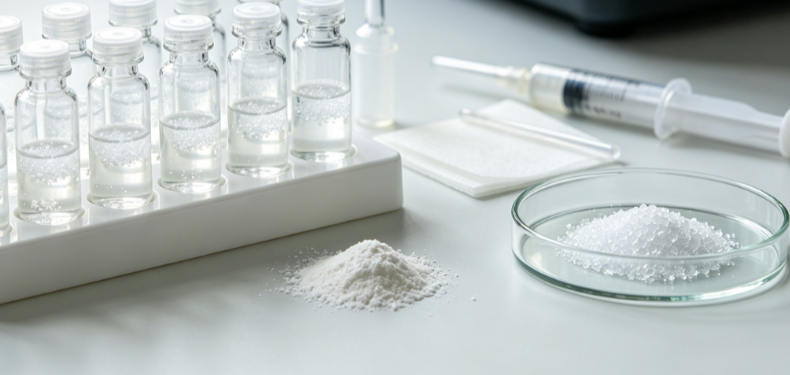
Analytical Framework – From Primary Assay to Advanced Impurity Speciation and Thermal Profiling
We offer a tiered analytical strategy tailored to your quality control, procurement, or regulatory filing needs. Our platform includes:
• Sodium fluorosilicate assay (Na₂SiF₆) – potentiometric fluoride titration and gravimetric silica determination. Our primary method is the potentiometric titration with lanthanum nitrate or the thorium nitrate – alizarin S endpoint after acid digestion, which directly measures the fluoride content. Combining this with a gravimetric silica (SiO₂) determination by precipitation and ignition, we calculate the stoichiometric Na₂SiF₆ content, achieving repeatability of ±0.2% absolute. For cross‑validation, we use ion‑selective electrode (ISE) and ion chromatography (IC) for fluoride. This is the reference method accepted by most trade specifications.
• Free acidity (as HF or H₂SiF₆) and pH – potentiometric titration. We determine free acid content by titrating an aqueous solution with standard NaOH to pH 7.0, reporting the result as % HF or % H₂SiF₆ with precision of ±0.01%. This parameter is critical because excess acidity can cause corrosion in processing equipment or affect subsequent reactions.
• Loss on ignition (LOI) and moisture – Thermogravimetric Analysis (TGA) and oven drying. We measure free moisture at 105°C and loss on ignition at 600°C and 1000°C to differentiate between adsorbed water, volatile fluorides, and decomposition products. Our simultaneous TGA‑DSC (Netzsch STA 449) provides a detailed thermal fingerprint, identifying the melting point (~ 400°C) and decomposition steps that release SiF₄ and NaF – essential for quality control and process safety.
• Trace impurities – ICP‑MS for metals and IC for anions. Using Agilent 8900 ICP‑MS/MS after microwave digestion (HCl + HNO₃), we quantify Fe, Al, Pb, As, Cd, Cr, Cu, Mn, Zn at sub‑ppm levels (LOQ 0.01–0.05 mg/kg). For anions, we use ion chromatography (Dionex ICS‑5000) to determine chloride (Cl⁻), sulfate (SO₄²⁻), and phosphate (PO₄³⁻) with LOQ of 0.005%. These impurity profiles are vital for compliance with drinking water chemical standards (e.g., ANSI/NSF 60) and pharmaceutical-grade specifications.
• Water‑insoluble and acid‑insoluble residues – gravimetric determination. We filter a dissolved sample through a 0.45 µm membrane, dry, and weigh to report water‑insoluble matter (typically quartz, silicates) with detection limit of 0.01%. An acid‑insoluble residue test (using HCl) further identifies silica or other refractory impurities.
• Crystalline phase and purity – X‑ray diffraction (XRD). We record a PANalytical X’Pert Pro pattern and identify the characteristic peaks of sodium fluorosilicate (trisodium hexafluorosilicate structure). We detect foreign crystalline phases (e.g., NaF, SiO₂, Na₂Si₂O₅) and provide a semi‑quantitative estimation of phase purity, using Rietveld refinement when required.
• Particle size distribution (PSD) – laser diffraction. For powdered sodium fluorosilicate, we measure D10, D50, D90, and span using a Malvern Mastersizer 3000 with dry dispersion – important for dissolution rate and handling properties in tablet or powder‑blend applications.
No other service integrates potentiometric assay, TGA, ICP‑MS, IC, XRD, and PSD under one ISO 17025‑accredited system for sodium fluorosilicate – delivering a complete quality profile from bulk assay to micro‑contaminant and structural analysis.
Why Our Laboratory Is the Preferred Partner for Sodium Fluorosilicate Testing
Our specialisation in fluorine and silicon chemistry analysis has enabled us to overcome the unique challenges of sodium fluorosilicate testing: interference from complex fluoride matrices in potentiometry (we use a robust ionic strength adjuster and standard addition), volatility of fluoride during acid digestion (we use sealed microwave vessels), corrosive nature of HF‑containing solutions (we use specialised fluoropolymer consumables), and the need to distinguish water‑soluble fluoride from silicofluoride species (we apply selective leaching and speciation methods). Our distinct advantages include:
1. Multi‑method cross‑validation for assay. For each batch, we cross‑check the Na₂SiF₆ content from fluoride titration, silica gravimetry, and chloride‑free mass balance – if results differ by more than 0.3%, we perform a high‑temperature hydrolysis (distillation of fluoride as H₂SiF₆) to resolve the discrepancy, ensuring the most accurate value.
2. Ultra‑low detection limits for toxic impurities. Our ICP‑MS/MS with O₂ and H₂ reaction gases eliminates polyatomic interferences (e.g., ⁴⁰Ar³⁵Cl on ⁷⁵As, ⁴⁰Ar¹⁶O on ⁵⁶Fe) and achieves LOQs of 0.01 mg/kg for Pb, As, Cd, and 0.02 mg/kg for Fe, Al – below the strict limits of drinking water chemical standards.
3. Specialised thermal analysis for decomposition behaviour. We provide detailed TGA‑DSC curves with evolved gas analysis (EGA) by mass spectrometry to identify the exact decomposition pathway – a service rarely offered and critical for high‑temperature process design.
4. Compliance with global regulatory standards. Our methods comply with ISO 1691, ASTM D7168, US EPA method 300.0, and Chinese GB/T 23941. Our test reports are accepted by drinking water treatment chemical suppliers, ceramic frit manufacturers, and pesticide producers worldwide.
Technical Depth – Beyond Basic Assay Values
While many laboratories report only assay and moisture, we provide actionable insights for advanced quality management:
• Speciation of free fluoride vs. hexafluorosilicate. Using a selective ion‑exchange technique combined with ISE, we quantify the free fluoride ion (F⁻) and complex silicofluoride species (SiF₆²⁻) separately. This is crucial for controlling the reactivity in water fluoridation and glass etching processes.
• Hydrate and polymorph identification. Sodium fluorosilicate can exist as anhydrous or as hydrates (e.g., Na₂SiF₆·2H₂O). Our XRD and TGA identify the exact hydrate form and its stability range – essential for product consistency.
• Surface adsorption and moisture uptake. We measure dynamic vapour sorption (DVS) to determine the critical relative humidity at which the product begins to absorb moisture and cake, guiding packaging and storage recommendations.
• Batch‑to‑batch uniformity assessment. Using a combination of XRD, PSD, and assay, we generate a “quality consistency index” that flags any deviation from your historical reference profile – enabling proactive process control.
Supporting Your Specific Sodium Fluorosilicate Testing Objectives
Your search for sodium fluorosilicate detection likely aligns with one or more of these scenarios. We provide precisely tailored solutions:
• Raw material acceptance for water treatment plants. We test each incoming lot for Na₂SiF₆ assay, free acidity, moisture, water‑insoluble matter, and toxic impurities (Pb, As, Cd, Fe, Al). We issue a certificate of analysis (COA) with a clear pass/fail judgement relative to ANSI/NSF 60 or AWWA B701. Typical turnaround: 3‑5 working days.
• Quality control during production (crystallisation, drying, and grinding). We analyse intermediate and final products to monitor assay, moisture, particle size, and impurity build‑up, providing feedback to optimise reaction yield and washing efficiency.
• Troubleshooting for off‑spec product (e.g., high insoluble matter, low assay, or colour change). We perform a forensic investigation including XRD for phase identification, SEM‑EDS for morphology and elemental mapping, and ICP‑MS for trace contamination, identifying the root cause (e.g., unreacted silica, corrosion products, or process contamination).
• Regulatory compliance for export (EU, US, China). We provide comprehensive data packages for REACH, TSCA, and China GB, including full impurity profiles and classification documentation for hazardous transport.
• Research and custom method development. For academic or industrial R&D, we offer customised characterisation such as high‑temperature X‑ray diffraction (in‑situ), dissolution kinetics, and zeta potential for novel formulations.
Partner with Us for Definitive Sodium Fluorosilicate Characterisation
Choosing our laboratory gives you access to a dedicated industrial chemistry analysis team with over 12 years of experience in fluoride and silicate materials. We provide free sampling kits (fluoropolymer‑lined containers), a detailed sampling protocol (to avoid moisture absorption and segregation), and direct consultation with our senior analytical chemist for data interpretation. No project is too large or too small – from a single research sample to routine quality control of full production lots.
Contact our technical team with your sodium fluorosilicate testing requirements. We will provide a customised project quotation and, for qualifying clients, a free preliminary screening (assay, moisture, and a basic impurity scan) on up to three samples. Your search for authoritative, high‑depth characterisation of sodium fluorosilicate ends here – because we deliver the chemical, physical, and thermal insight that routine single‑parameter tests cannot provide.