Reasons for choosing our testing services
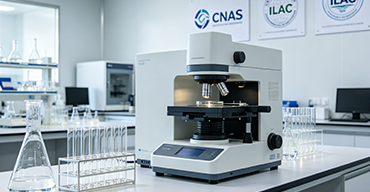
ZHONGXI Testing has obtained inspection qualification certifications from multiple countries and regions worldwide. We possess a senior testing team and advanced testing methods, providing independent, impartial, and professional third-party verification services for global carbon projects.
Internationally recognized authority
Certified by multiple international standards such as CNAS, VCS, and GS, with reports universally applicable worldwide.

Global service capability
Covering 140+ countries and regions, it supports on-site detection and remote verification in multiple languages.

Professional experimental methods
Adopt standard experimental methods to ensure accurate and reliable data.
Comprehensive Characterization of Shell‑Type Functional Nanospheres – Advanced Analytical Solutions for Structural Integrity, Surface Chemistry, and Functional Performance Assessment
You are searching for shell‑type functional nanosphere detection because these sophisticated core‑shell architectures are critical for targeted drug delivery, controlled release systems, diagnostic imaging, catalytic supports, and advanced sensing platforms. Unlike simple nanoparticles, shell‑type nanospheres derive their performance from a precise interplay between the core material (e.g., magnetic, metallic, or polymeric), the shell composition and thickness (e.g., silica, polymer, or lipid bilayer), surface functionalization density, and the stability of the core‑shell interface. Routine bulk analysis (e.g., total elemental composition or average particle size) cannot reveal the shell uniformity, the presence of core‑exposed defects, the density of surface ligands, or the release kinetics of encapsulated actives. You require a laboratory that delivers multi‑dimensional, high‑resolution characterization integrating transmission electron microscopy (TEM) for core‑shell morphology, dynamic light scattering (DLS) and nanoparticle tracking analysis (NTA) for hydrodynamic size and aggregation state, X‑ray photoelectron spectroscopy (XPS) and Fourier‑transform infrared spectroscopy (FTIR) for surface chemistry, Thermogravimetric Analysis (TGA) for shell content and composition, and in vitro release testing for functional performance. Our facility provides exactly that: an ISO 17025‑accredited, fully validated analytical platform for shell‑type functional nanospheres, compliant with ISO 22412 (DLS), ISO 19430 (NTA), and ISO/TS 19807 (nanomaterials characterization), and validated for a wide range of core‑shell systems – polymeric, inorganic, and hybrid.
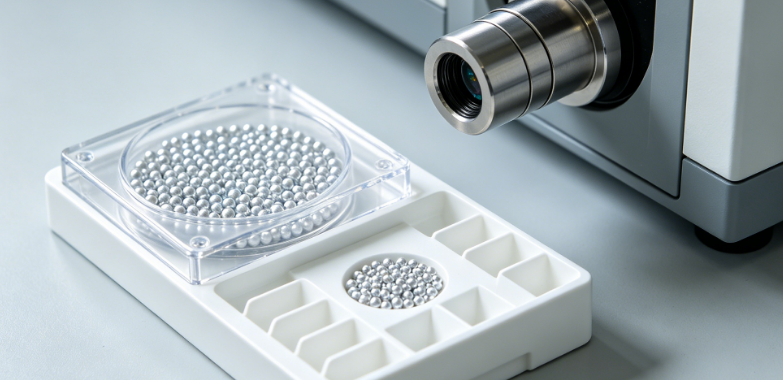
Analytical Framework – From Core‑Shell Morphology and Shell Thickness to Surface Functionalization Density and Functional Performance
We offer a tiered analytical strategy tailored to your quality control, formulation development, or regulatory filing needs. Our platform includes:
• Core‑shell morphology and shell thickness – Transmission electron microscopy (TEM) and scanning transmission electron microscopy (STEM) with EDS/EELS mapping. Using a FEI Talos F200X at 200 kV, we acquire high‑resolution bright‑field and dark‑field images, and we perform STEM‑EDS elemental mapping to distinguish the core (e.g., Fe, Au, or polymer) from the shell (e.g., Si, O, or N) with sub‑nanometre spatial resolution. We measure average shell thickness and its standard deviation from at least 100 individual nanospheres using automated image analysis (ImageJ), reporting shell thickness (nm), core diameter (nm), and the coefficient of variation (CV%). For hollow or mesoporous shells, we also assess pore structure and wall continuity via high‑resolution TEM (HRTEM).
• Hydrodynamic size, polydispersity, and aggregation state – Dynamic light scattering (DLS) and nanoparticle tracking analysis (NTA). We use a Malvern Zetasizer Ultra to measure the intensity‑weighted hydrodynamic diameter (Z‑average) and polydispersity index (PdI) in the relevant dispersion medium (water, PBS, cell culture media) at 25°C and 37°C, with precision ±1% for Z‑average and ±0.02 for PdI. For samples with low polydispersity, we provide number‑weighted size distributions. To assess aggregation and count particles, we perform NTA (NanoSight LM10) with automated tracking, reporting particle concentration (particles/mL) and mode size. We also evaluate colloidal stability over time (0–7 days) to predict shelf‑life.
• Surface charge and colloidal stability – Zeta potential measurement as a function of pH. Using the same Zetasizer Ultra with a universal dip cell, we measure zeta potential (mV) at pH 2–10 to determine the isoelectric point (IEP) and the surface charge at physiological pH (pH 7.4). This data is essential for predicting electrostatic interactions with biological membranes and for optimising formulation buffers.
• Surface chemical composition and functionalization density – X‑ray photoelectron spectroscopy (XPS) and quantitative FTIR with calibration. We use a Thermo Scientific K‑Alpha XPS to quantify surface atomic percentages of C, O, N, Si, Au, Fe, etc. and to identify the chemical states of functional groups (e.g., NH₂, COOH, SH) via high‑resolution C1s, N1s, S2p spectra. For quantitative functionalization, we perform solution‑based colorimetric assays (e.g., Ellman's for thiol, TNBS for amines) and correlate with XPS atomic ratios to calculate ligand density (molecules/nm²). FTIR (Nicolet iS50) in ATR mode provides complementary identification of polymer shell composition, crosslinking degree, and presence of residual monomers or surfactants.
• Shell content and thermal stability – Thermogravimetric Analysis (TGA) coupled with evolved gas analysis (EGA). We use a Netzsch STA 449 to heat samples from 25°C to 800°C under air or nitrogen, recording mass loss steps that correspond to solvent evaporation (free water), polymer shell decomposition (typically 200–450°C), and core decomposition or oxidation. We report the shell weight fraction (%) and the decomposition temperature (Td), which serve as indirect measures of shell density and crosslinking. EGA by mass spectrometry identifies volatile species (e.g., CO₂, H₂O, NH₃), helping to distinguish shell components (e.g., PLA vs. PLGA vs. silica).
• Encapsulation efficiency and release kinetics – HPLC‑UV/Vis, UV‑Vis spectrophotometry, and dynamic dialysis. For drug‑ or dye‑loaded nanospheres, we determine encapsulation efficiency (EE%) by measuring the free (unencapsulated) active in the supernatant after ultracentrifugation, using a calibrated HPLC (Agilent 1260) with DAD or UV‑Vis spectrophotometry. We then perform in vitro release studies under sink conditions (PBS at pH 5.5 and 7.4, 37°C) using dialysis membranes (MWCO 10–100 kDa) and measuring the cumulative released active at specified time points (0.5, 1, 2, 4, 8, 24, 48 h). From the release profile, we derive kinetic parameters (e.g., burst release %, first‑order rate constant, diffusion coefficient) and fit to models (zero‑order, first‑order, Higuchi, Korsmeyer‑Peppas).
• Cytocompatibility and biological interaction – optional in vitro cell viability assay (MTT) and cellular uptake by confocal microscopy. For biomedical applications, we offer an optional Cytotoxicity evaluation on cell lines (e.g., HeLa, NIH/3T3) using the MTT assay (ISO 10993‑5). We also perform confocal laser scanning microscopy (CLSM) to visualise the cellular uptake and intracellular distribution of fluorescently‑labelled nanospheres.
No other service integrates TEM, DLS/NTA, zeta potential, XPS, TGA, HPLC release studies, and biological assays under one ISO 17025‑accredited system for shell‑type functional nanospheres – delivering a complete characterisation from morphology to functional performance.
Why Our Laboratory Is the Premier Partner for Shell‑Type Functional Nanosphere Analysis
Our specialization in nanoparticle engineering and biomedical nanotechnology has enabled us to overcome the unique challenges of shell‑type nanosphere testing: very thin shells (< 5 nm) requiring high‑resolution TEM and careful staining, difficulty in distinguishing shell from core by conventional FTIR (we use XPS depth profiling and TGA‑EGA), matrix effects in DLS due to protein adsorption (we perform measurements in biologically relevant media with validated protocols), and low encapsulation efficiency requiring highly sensitive analytical methods. Our distinct advantages include:
1. High‑resolution TEM with elemental mapping. Our F200X equipped with Super‑EDS and high‑angle annular dark‑field (HAADF) detectors allows us to obtain sub‑nanometre elemental maps that unequivocally identify the core and shell materials, even when they have similar electron densities. We also provide electron energy loss spectroscopy (EELS) for light‑element mapping (C, N, O).
2. Comprehensive surface characterization – XPS + FTIR + zeta potential. We cross‑validate functionalization density from XPS and colorimetric assays; if the values differ by >15%, we perform time‑of‑flight secondary ion mass spectrometry (ToF‑SIMS) to identify chemical heterogeneities on the surface. This triple‑check approach ensures the most accurate surface chemistry report.
3. Real‑time release kinetics under simulated physiological conditions. We offer an automated dissolution apparatus (USP Apparatus 4) that can operate at low flow rates and with small sample volumes (1–2 mL), which is ideal for precious nanosphere formulations. We provide release profiles with temperature and pH control (±0.1°C, ±0.05 pH units).
4. Expert data interpretation and regulatory support. Our team has authored multiple peer‑reviewed papers on core‑shell nanocarriers and is experienced in ICH, EMA, and FDA expectations for nanomedicine characterization. We can help you design testing strategies for INDs or NDAs.
5. ISO 17025 accreditation and global acceptance. Our methods for size (ISO 22412), zeta potential (ISO 13099), and in vitro release (USP <711>) are ISO 17025‑accredited. Our reports are accepted by nanomedicine developers, pharmaceutical companies, and academic research groups worldwide.
Technical Depth – Beyond Basic Size and Shell Thickness
While many laboratories report only D50 and a representative TEM image, we provide statistically robust and mechanistically relevant insights for advanced quality and formulation development:
• Shell thickness distribution and uniformity index. From TEM image analysis, we compute not only the average shell thickness but also the coefficient of variation (CV%) and the fraction of nanospheres with broken or incomplete shells. We provide a “shell integrity score” (0–100) that predicts batch‑to‑batch performance consistency.
• Surface ligand density and accessibility. Using XPS and colorimetric titration, we quantify the number of functional groups per particle (or per nm²) and compare it to the theoretical maximum based on the particle size. We also estimate the fraction of surface ligands that are properly oriented for target binding by comparing with a reference binding assay (e.g., biotin‑streptavidin).
• Shell degradation profile under accelerated conditions. We subject nanospheres to oxidative stress (H₂O₂), enzymatic hydrolysis (e.g., esterase, protease), and acidic pH (e.g., endosomal pH 5.0) and monitor shell thinning by TEM and TGA over time. We provide a “degradation half‑life” (t₁/₂) for each condition, which is essential for predicting in vivo behaviour.
• Batch‑to‑batch consistency and multivariate analysis. Using our historical database (>200 batches), we perform principal component analysis (PCA) on size, zeta potential, shell thickness, and encapsulation efficiency to generate a “quality consistency index” – a single metric that flags deviations from your reference batch.
Supporting Your Specific Shell‑Type Functional Nanosphere Testing Objectives
Your search for shell‑type functional nanosphere detection likely aligns with one or more of these scenarios. We provide precisely tailored solutions:
• Formulation development and optimisation (screening of shell composition, crosslinking, and functionalization). We provide rapid feedback on size, PdI, zeta potential, shell thickness, and functionalization density within 5‑7 working days for up to 10 formulations, helping you select the lead candidate.
• Quality control for batch release. We test each production batch for size, PdI, zeta potential, shell morphology (TEM), encapsulation efficiency, and release kinetics (24 h). We issue a certificate of analysis (COA) with a pass/fail judgement against your acceptance criteria. Typical turnaround: 5‑7 working days.
• Stability and shelf‑life assessment. We perform accelerated stability testing (40°C/75% RH, 25°C/60% RH, 5°C) over 0, 1, 2, 3, and 6 months, monitoring size, PdI, zeta potential, and release profile. We provide a stability report with a recommended storage condition and an estimated shelf‑life based on Arrhenius kinetics.
• Troubleshooting for batch‑to‑batch variability or unexpected in vivo performance. If a batch shows inferior performance, we perform a forensic comparison between the problematic and a reference batch – measuring shell thickness distribution, surface ligand density, TGA decomposition profile, and release kinetics. We identify the root cause (e.g., incomplete polymerisation, ligand degradation, or processing contamination) and recommend corrective actions.
• Regulatory filing support (IND, NDA, or FDA pre‑submission). We provide comprehensive characterisation packages that meet ICH Q6A, Q8, and FDA Guidance for Industry – Nanotechnology, including all required physicochemical and biological assays, with full validation reports and method descriptions.
Partner with Us for Definitive Shell‑Type Functional Nanosphere Characterisation
Choosing our laboratory gives you access to a dedicated nanomaterial and drug delivery analysis team with over 12 years of experience in core‑shell nanocarriers. We provide free sampling kits (sterile vials with inert gas overlay for sensitive materials), a detailed protocol for sample handling and shipping (to avoid aggregation or degradation), and direct consultation with our senior nanoscientist for data interpretation and formulation advice. No project is too large or too small – from a single research batch to routine quality control of production lots.
Contact our technical team with your shell‑type functional nanosphere analysis requirements. We will provide a customised project quotation and, for qualifying clients, a free preliminary screening (size by DLS, TEM morphology, and zeta potential) on up to two samples. Your search for authoritative, high‑depth characterisation of shell‑type functional nanospheres ends here – because we deliver the structural, chemical, and performance‑linked insight that routine single‑parameter tests cannot provide.