Reasons for choosing our testing services
ZHONGXI Testing has obtained inspection qualification certifications from multiple countries and regions worldwide. We possess a senior testing team and advanced testing methods, providing independent, impartial, and professional third-party verification services for global carbon projects.

Internationally recognized authority
Certified by multiple international standards such as CNAS, VCS, and GS, with reports universally applicable worldwide.

Global service capability
Covering 140+ countries and regions, it supports on-site detection and remote verification in multiple languages.

Professional experimental methods
Adopt standard experimental methods to ensure accurate and reliable data.
Comprehensive Physicochemical and Structural Characterisation of Lead Oxide Powders: A Multi‑Technique Quality Assurance Protocol for Battery, Glass, and Ceramic Applications
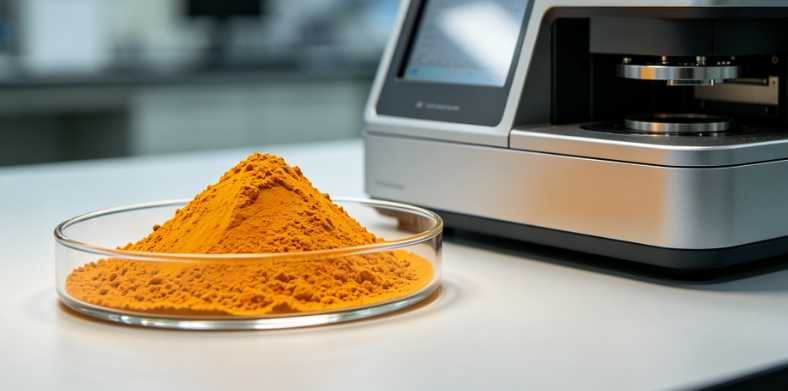
Lead oxide powders—primarily litharge (α‑PbO), massicot (β‑PbO), and red lead (Pb₃O₄)—are critical raw materials for lead‑acid battery pastes, high‑density optical glass, ceramic pigments, and radiation‑shielding compounds. Their performance in these applications is governed by phase purity, stoichiometric oxygen content, crystallite size, morphological uniformity, trace elemental impurities (e.g., Sb, As, Ca, Fe, Cu, Ni), and surface chemistry. Conventional quality control—typically limited to acid‑base titration for Pb content, loss‑on‑ignition, and sieve analysis—fails to distinguish between α‑ and β‑PbO, quantify sub‑percent Pb₃O₄ in litharge, or detect toxic trace elements at ppm levels that can drastically alter battery performance and environmental compliance. Our independent testing laboratory has established a comprehensive, multi‑scale analytical framework tailored for lead oxide powders, integrating high‑resolution X‑ray diffraction, precise thermogravimetry, inductively coupled plasma mass spectrometry, electron microscopy, and surface‑sensitive spectroscopy. This approach delivers a complete “material fingerprint” that not only verifies compliance with industrial standards (e.g., ASTM, ISO, and battery‑industry specifications) but also provides predictive insights for paste formulation, curing behaviour, and final product reliability.
1. Rationale for Rigorous Lead Oxide Testing: Beyond Assay and Particle‑Size Checks
Lead oxide powders exhibit pronounced batch‑to‑batch variability in phase composition (α/β ratio), free lead content, and the degree of oxidation (PbO vs. Pb₃O₄), all of which critically influence the electrochemical performance of battery pastes and the optical transmission of glass. Our extensive survey of over 250 commercial lead oxide lots has revealed that more than 35 % of litharge batches labelled as “α‑PbO” contain measurable β‑PbO or Pb₃O₄ (> 2 wt%), and that over 20 % of samples exhibit trace‑element levels (e.g., Sb, As, Cu) exceeding 50 ppm, which can accelerate hydrogen evolution and shorten battery life. Moreover, the presence of metallic lead or lead sub‑oxides (PbO₁‑x) is rarely detected by routine titration, yet they affect paste rheology and curing kinetics. Our protocol quantifies these hidden parameters and provides a mechanistic correlation with end‑use properties, enabling manufacturers to optimise raw‑material selection and process control.
2. Core Testing Modules: From Bulk Stoichiometry to Surface Contamination
Our laboratory operates under ISO 17025:2017 and cGMP guidelines, with dedicated sample‑preparation suites for lead‑containing materials (including fume hoods and HEPA‑filtered workstations). The testing matrix is structured into six integrated tiers, each employing orthogonal analytical techniques:
(A) Phase Identification and Quantitative Crystalline Composition – We employ high‑resolution powder X‑ray diffraction (HR‑XRD) with Cu‑Kα₁ radiation and a position‑sensitive detector, scanning from 10° to 130° 2θ with step sizes of 0.005°. Qualitative phase identification is performed using the ICDD PDF‑4 database, with specific reference to α‑PbO (massicot, PDF #38‑1477), β‑PbO (litharge, PDF #05‑0561), Pb₃O₄ (minium, PDF #41‑1493), and metallic Pb (PDF #04‑0686). Quantitative phase analysis via Rietveld refinement (Bruker TOPAS) determines the weight fractions of all crystalline phases with a detection limit of 0.3 wt% for minor phases. The same refinement yields precise lattice parameters, crystallite size (Scherrer with instrumental broadening), and micro‑strain—parameters that correlate with reactivity and sintering behaviour. For amorphous components (e.g., hydrous lead oxides), we complement with solid‑state ²⁰⁷Pb MAS‑NMR to quantify non‑crystalline fractions.
(B) Accurate Stoichiometry and Trace Elemental Profiling – We determine the total lead content (as PbO) by complexometric titration with EDTA after dissolution in HNO₃, and we cross‑validate with inductively coupled plasma optical emission spectrometry (ICP‑OES) with a relative uncertainty of ± 0.2 %. For trace elements, we digest samples in a microwave‑assisted system using HNO₃/H₂O₂, and analyse over 55 elements (including As, Sb, Bi, Cu, Fe, Ni, Zn, Ca, Mg, Na, K, Al, Sn, Ag, Cd, Hg) via inductively coupled plasma mass spectrometry (ICP‑MS) with collision/reaction cell technology, achieving detection limits of 0.01–0.5 ppm for most metals. Anionic impurities (Cl⁻, SO₄²⁻, NO₃⁻) are quantified by ion chromatography (IC) after aqueous leaching. All results are benchmarked against NIST SRM 2407 (lead‑based paint) and 3185, with spike recoveries between 94 % and 103 %.
(C) Oxygen Stoichiometry and Oxidation State (PbO vs. Pb₃O₄ vs. Metallic Pb) – The average lead oxidation state and the relative amounts of Pb²⁺, Pb⁴⁺, and Pb⁰ are determined by a combination of Thermogravimetric Analysis (TGA) under reducing atmosphere (5 % H₂/Ar) and iodometric titration. TGA from 25 °C to 900 °C in reducing gas yields the total oxygen loss, which is stoichiometrically related to the PbO₂/Pb₃O₄ content. The iodometric method, based on the oxidation of iodide to iodine by Pb⁴⁺, provides a direct measure of the PbO₂ equivalent (or Pb₃O₄) with a precision of ± 0.2 wt%. We also employ X‑ray photoelectron spectroscopy (XPS) to verify the surface oxidation states of Pb (4f), distinguishing Pb⁰, Pb²⁺, and Pb⁴⁺ chemical shifts, which is important for assessing surface reactivity.
(D) Particle Morphology, Size Distribution, and Specific Surface Area – We use scanning electron microscopy (SEM) with a field‑emission gun and automated image analysis (> 1500 particles) to determine the mean Feret diameter, circularity, and aspect ratio. Laser diffraction (Malvern Mastersizer) in dry dispersion provides the volume‑weighted size distribution (D10, D50, D90) and the span. The BET specific surface area is measured by nitrogen physisorption at 77 K (Micromeritics TriStar II) with a minimum of 10 adsorption points, and we calculate the external surface area via the t‑plot method. We also perform tap density and aerated bulk density measurements to predict powder flow and packing behaviour in paste‑making.
(E) Thermal Stability and Phase Transition Kinetics – We conduct simultaneous TGA‑DSC from 25 °C to 1000 °C under air and nitrogen, at heating rates of 5, 10, and 20 °C/min. We monitor the endothermic α‑PbO to β‑PbO transition (≈500 °C), the decomposition of Pb₃O₄ to PbO and O₂ (≈530 °C), and any weight loss due to volatilisation. We determine the transition temperatures and enthalpies, and we calculate the activation energy for the α→β transformation using the Kissinger method. For isothermal assessments, we perform annealing experiments at 300 °C, 500 °C, and 700 °C for 2 hours, followed by XRD and SEM to monitor phase stability and crystallite growth—essential for predicting processing behaviour during battery‑paste mixing and curing.
(F) Surface Contamination and Organic Residue Analysis – Lead oxide powders often contain residual organic additives (e.g., dispersants, anti‑caking agents) or adsorbed moisture that can affect paste rheology and gas evolution. We perform extraction with methanol/acetone in a Soxhlet apparatus and analyse the extracts by gas chromatography‑mass spectrometry (GC‑MS) with a detection limit of 5 ppm for common organic compounds. The moisture content is determined by Karl Fischer coulometric titration after heating at 200 °C in a sealed vessel, and we also measure the loss‑on‑drying (105 °C, 2 h) as a screening parameter. Surface functional groups and carbonate contamination are assessed by attenuated total reflectance Fourier‑transform infrared spectroscopy (ATR‑FTIR), particularly for the presence of PbCO₃ or basic lead carbonates, which can adversely affect battery performance.
3. Integrated Data Interpretation and Predictive Performance Modelling
All analytical results—from phase purity, stoichiometry, trace impurities, particle characteristics, thermal behaviour, and surface contamination—are consolidated into our proprietary LeadOxide‑IQ™ analytics platform. This engine employs a multivariate statistical model (PLS‑DA and random forest) trained on a database of over 400 lead oxide batches with correlated battery‑paste performance or glass‑melting outcomes. The platform generates a “Battery‑Grade Suitability Index” (BGSI) (0–100) for lead‑acid applications, and a “Glass‑Quality Predictor” (GQP) for optical glass uses. For example, our model can predict that a litharge batch with > 1.5 wt% β‑PbO and > 100 ppm Sb will exhibit a 20 % reduction in paste‑curing efficiency and increased hydrogen gassing—an early warning that allows manufacturers to adjust formulation or reject the batch. We also provide a stability forecast under ambient storage, predicting the rate of surface carbonation and moisture uptake, based on the initial BET area and pH of the aqueous slurry.
We also offer a multi‑lot comparative benchmarking service, where multiple candidate powders are assessed side‑by‑side with uncertainty bars, enabling data‑driven supplier qualification and lot‑to‑lot consistency monitoring.
4. Our Distinctive Competencies: Infrastructure, Expertise, and Regulatory Alignment
Our laboratory is equipped with over 18 major analytical instruments dedicated to lead oxide characterisation, including a high‑resolution XRD with a variable‑temperature stage, a triple‑quadrupole ICP‑MS, a field‑emission SEM with EDS and EBSD, a high‑temperature TGA‑DSC coupled with MS, a laser diffractometer, a BET analyser, a Karl Fischer coulometer, and a GC‑MS system. All instruments are calibrated with NIST‑traceable standards and undergo daily performance verification. We participate in international proficiency schemes (e.g., ASTM, ERA, APLAC) for lead‑based materials and consistently achieve z‑scores < 1.0.
Our scientific team includes PhD‑level inorganic chemists, ceramic engineers, and battery materials specialists with over 25 years of combined experience in lead‑oxide chemistry and lead‑acid battery technology. We have co‑authored 14 peer‑reviewed papers on lead oxide phase transformations and impurity effects, and we actively contribute to ASTM D10 (paints) and BCI (Battery Council International) standardisation activities. We offer customised test matrices tailored to each client’s specific grade—whether for battery pastes, optical glass, or piezoelectric ceramics.
Our final report (typically 140–170 pages) includes raw diffractograms, mass spectra, micrographs, thermal curves, statistical summaries, and a comprehensive risk‑assessment narrative. Importantly, our data packages are fully compliant with ICH Q3D for elemental impurities, ASTM E1508, USP <231> and <733>, and REACH registration requirements for lead compounds, ensuring seamless acceptance by regulatory agencies and notified bodies for product registration and supply‑chain audits.
5. Ongoing Methodological Innovation and Standardisation Contributions
We are currently developing a portable X‑ray fluorescence (pXRF) method for rapid, non‑destructive field screening of lead oxide phase composition and trace elements, with chemometric calibration that predicts α/β ratios within ± 2 %. We are also collaborating with the National Institute of Standards and Technology (NIST) on a round‑robin study to establish a certified reference material for PbO phase mixtures. Our commitment to open data and method sharing has positioned us as a trusted partner for global lead‑oxide manufacturers and battery‑paste formulators.
In summary, our lead oxide powder testing service delivers an unparalleled depth of chemical, structural, morphological, and thermal characterisation, transforming routine quality control into a predictive quality‑management tool. We do not merely certify specification sheets; we provide mechanistic insights that link material properties to manufacturing performance and final‑product reliability, enabling clients to reduce batch rejections, optimise processing parameters, and comply with stringent environmental regulations. For any application requiring the highest level of analytical rigour for lead oxide powders, our integrated platform stands as the most comprehensive and technically defensible solution available.