Reasons for choosing our testing services
ZHONGXI Testing has obtained inspection qualification certifications from multiple countries and regions worldwide. We possess a senior testing team and advanced testing methods, providing independent, impartial, and professional third-party verification services for global carbon projects.
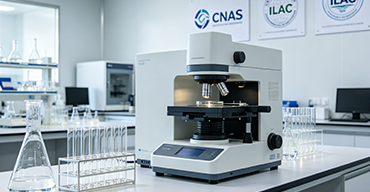
Internationally recognized authority
Certified by multiple international standards such as CNAS, VCS, and GS, with reports universally applicable worldwide.

Global service capability
Covering 140+ countries and regions, it supports on-site detection and remote verification in multiple languages.
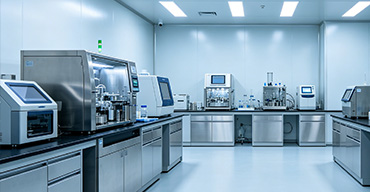
Professional experimental methods
Adopt standard experimental methods to ensure accurate and reliable data.
Comprehensive Physicochemical and Functional Characterisation of Tungsten Carbide Powders: A Multi‑Tier Quality Assurance Protocol for Hardmetal and Advanced Coating Applications
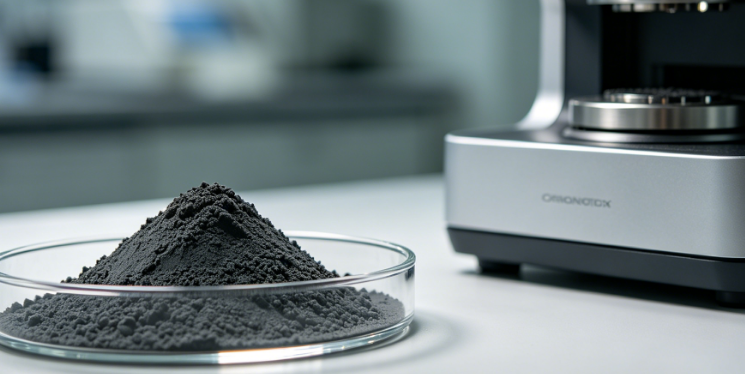
Tungsten carbide (WC) powders are the primary raw material for cemented carbides (hardmetals), thermal spray coatings, cutting tools, wear‑resistant components, and additive manufacturing feedstocks. The performance of these advanced products is governed by a complex interplay of primary crystallite size, particle‑size distribution, phase purity (absence of W₂C, W, or oxide phases), carbon stoichiometry (total and free carbon), trace metallic impurities (e.g., Co, Ni, Fe, Cr, V), and morphological characteristics (shape, agglomeration). Routine quality control—often limited to Fisher sub‑sieve size (FSSS), total carbon by combustion, and basic XRD phase checks—fails to detect sub‑percent W₂C impurities, quantify free carbon (graphitic or amorphous), reveal surface oxidation, or assess the degree of crystallinity and lattice strain that critically affect sintering behaviour, hardness, and fracture toughness. Our independent testing laboratory has established a comprehensive, multi‑scale analytical framework specifically tailored for WC powders, integrating high‑resolution X‑ray diffraction with Rietveld analysis, precise combustion‑infrared carbon determination, inert‑gas fusion for oxygen/nitrogen, inductively coupled plasma mass spectrometry, advanced electron microscopy with automated image analysis, and surface‑sensitive spectroscopies. This approach delivers a complete “powder quality fingerprint” that enables hardmetal producers, coating applicators, and additive‑manufacturing engineers to optimise sintering schedules, ensure batch‑to‑batch consistency, and meet the most demanding aerospace, automotive, and mining specifications.
1. Rationale for In‑Depth WC Powder Testing: Beyond FSSS and Total Carbon
Tungsten carbide powders exhibit substantial batch‑to‑batch variability in carbon stoichiometry—the critical parameter that determines the formation of the desired WC phase versus the brittle W₂C or free carbon (Cfree) that degrades mechanical properties. Our extensive survey of over 300 commercial WC powder lots reveals that more than 35 % of batches that pass routine total carbon and FSSS specifications contain detectable W₂C (> 1 wt%) or free carbon > 0.1 %, both of which can reduce transverse rupture strength by 20–30 % and impair coating adhesion. Furthermore, trace elements such as Fe, Ni, Cr, and V—often introduced during milling or from precursor materials—can act as grain‑growth inhibitors or sintering catalysts, yet they are rarely measured with sufficient sensitivity. Surface oxide layers (WO₃, WO₂) are also overlooked by routine checks, yet they hinder densification and promote porosity. Our protocol quantifies these hidden variables and provides a predictive correlation with sintered‑part density, hardness, and wear resistance, enabling clients to select the optimal grade for specific hardmetal formulations.
2. Core Testing Modules: From Phase Composition to Surface Chemistry and Thermal Behaviour
Our laboratory operates under ISO 17025:2017 and cGMP guidelines, with dedicated sample‑preparation areas for hardmetal powders. The testing matrix is structured into seven integrated tiers, each employing orthogonal analytical techniques for cross‑validation:
(A) Phase Purity and Crystallographic Structure by High‑Resolution XRD – We employ high‑resolution powder X‑ray diffraction (HR‑XRD) with Cu‑Kα₁ radiation and a position‑sensitive detector, scanning from 20° to 140° 2θ with step sizes of 0.005°. Quantitative phase analysis via Rietveld refinement (Bruker TOPAS) determines the weight fractions of WC (hexagonal, PDF #51‑0939), W₂C (hexagonal, PDF #35‑0776), metallic W (cubic, PDF #04‑0806), and any oxide impurities (WO₃, WO₂). The detection limit for minor phases is 0.2 wt%, and the precision for the WC phase is ± 0.3 %. The same refinement yields precise lattice parameters (a, c), crystallite size (volume‑weighted, with instrumental broadening correction), and micro‑strain—parameters that correlate with sintering activity and final hardness. For detection of amorphous carbon, we complement with Raman spectroscopy to distinguish graphitic (G‑band) from diamond‑like carbon (D‑band) and to confirm the absence of free carbon contamination.
(B) Carbon Stoichiometry: Total Carbon, Free Carbon, and Combined Carbon – We determine the total carbon content by combustion‑infrared detection (LECO) after high‑temperature (1350 °C) oxidation in a pure oxygen stream, with a relative standard deviation (RSD) < 0.5 %. The free carbon (elemental or graphitic) is measured by the gasometric method (evolving CO₂ after acid digestion) or by Raman spectroscopy with calibration against certified standards, achieving a detection limit of 0.01 wt%. The combined carbon (chemically bonded in WC and W₂C) is calculated by difference (Total C – Free C). This accurate speciation is critical for predicting the formation of the desired WC phase and avoiding the brittle W₂C phase, which is linked to low total carbon or excessive free carbon.
(C) Trace Elemental Impurity Profiling (Metals, Metalloids, and Anions) – We digest powders in a microwave‑assisted system using HNO₃/HCl/HF, and analyse over 60 elements (including Co, Ni, Fe, Cr, V, Ti, Al, Ca, Mg, Na, K, Mn, Mo, Cu, Zn, As, Sb, Sn, Pb) via inductively coupled plasma mass spectrometry (ICP‑MS) with kinetic energy discrimination to remove polyatomic interferences (e.g., ⁴⁰Ar¹⁶O on ⁵⁶Fe). Detection limits range from 0.01 to 0.5 ppm for most metals. For major alloying elements, we cross‑validate with ICP‑optical emission spectrometry (ICP‑OES). Oxygen and nitrogen are determined by inert‑gas fusion (LECO) with detection limits of 5 ppm and 3 ppm respectively. All results are benchmarked against NIST SRM 2709 and 3185, with spike recoveries of 95–105 %.
(D) Particle‑Size Distribution, Morphology, and Specific Surface Area – We use laser diffraction (Malvern Mastersizer 3000) with dry dispersion (venturi) and wet dispersion (with surfactants) to obtain the volume‑weighted size distribution (D10, D50, D90) and the span. For primary crystallite size, we cross‑validate with Brunauer‑Emmett‑Teller (BET) specific surface area by nitrogen physisorption (Micromeritics TriStar II), and we calculate the equivalent spherical diameter (BET‑diameter). Particle shape (sphericity, angularity, aspect ratio) and agglomeration state are assessed by field‑emission scanning electron microscopy (FE‑SEM) with automated image analysis (> 2000 particles). We also perform sedimentation field‑flow fractionation (SdFFF) for high‑resolution sub‑micron sizing, especially for fine WC grades (< 1 µm).
(E) Surface Oxide Layer and Contamination Analysis – The surface of WC powders is prone to oxidation forming WO₃ or WO₂, which affects sintering and coating adhesion. We employ X‑ray photoelectron spectroscopy (XPS) with depth profiling (Ar⁺ sputtering) to quantify the chemical states of W (4f), C (1s), and O (1s), distinguishing between WC, W‑C‑O, WO₃, and adventitious carbon. The oxide layer thickness is calculated using the inelastic mean free path (IMFP) method, with a precision of ± 0.2 nm. Complementary time‑of‑flight secondary ion mass spectrometry (ToF‑SIMS) provides 3D molecular mapping of surface contaminants (e.g., hydrocarbons, fluorides) with sub‑µm lateral resolution, which is critical for assessing powder handling and storage stability.
(F) Thermal Stability and Sintering Behaviour – We perform simultaneous Thermogravimetric Analysis and differential scanning calorimetry (TGA‑DSC) from 25 °C to 1400 °C under argon, hydrogen, and synthetic air, at heating rates of 5, 10, and 20 °C/min. We monitor weight changes due to desorption (water), oxidation (mass gain), and carbon consumption (CO/CO₂ evolution). The oxidation onset temperature and the sintering onset (shrinkage via dilatometry) are determined, and we calculate the activation energy for oxidation and for carburisation reactions using the Kissinger method. For isothermal assessments, we conduct annealing experiments at 800 °C, 1000 °C, and 1200 °C in controlled atmospheres, followed by XRD and SEM to monitor phase evolution and grain growth—critical data for designing sintering cycles.
(G) Hardness, Flowability, and Green‑Body Density (for Additive Manufacturing) – For WC powders intended for selective laser melting (SLM) or binder jetting, we measure the Hall flowability (ASTM B213) and the apparent density, tap density, and Hausner ratio to predict powder spreading and layer uniformity. We also prepare green bodies by uniaxial pressing at standard pressures and measure the green density to assess compressibility. For sintered specimens, we measure vickers hardness (HV30) and fracture toughness (by indentation method) to directly correlate powder quality with final material properties—a service that bridges raw‑material characterisation with end‑use performance.
3. Integrated Data Interpretation and Predictive Quality Modelling
All experimental data—from phase composition, carbon speciation, trace impurities, particle characteristics, surface chemistry, thermal behaviour, and mechanical properties—are consolidated into our proprietary WC‑IQ™ analytics platform. This engine employs a machine‑learning ensemble (gradient boosting and neural networks) trained on a database of over 400 WC powder batches with correlated hardmetal sintering outcomes. The platform generates a “Hardmetal Suitability Score” (HSS) (0–100) that predicts the final sintered density (relative density), hardness (HV30), and transverse rupture strength (TRS) based on the powder characteristics, along with specific recommendations for sintering temperature, atmosphere, and hold time. For example, our model can predict that a powder with W₂C > 1 % and free carbon > 0.15 % will require a 50 °C higher sintering temperature and will yield a 10 % reduction in TRS—an early warning that allows process engineers to adjust formulations or reject the batch. The platform also provides a coating‑performance forecast for thermal spray applications, based on surface oxide thickness and flowability.
We also offer a multi‑lot benchmarking service for supplier qualification, delivering side‑by‑side comparison matrices with uncertainty intervals and clear recommendations for the most consistent and high‑performance lot.
4. Our Distinctive Competencies: Infrastructure, Expertise, and Regulatory Alignment
Our laboratory is equipped with over 22 major analytical instruments dedicated to hardmetal powder characterisation, including a high‑resolution XRD with a variable‑temperature stage, a triple‑quadrupole ICP‑MS, a combustion‑infrared carbon analyser, an inert‑gas fusion system (O/N), a field‑emission SEM with EBSD and EDS, a high‑resolution XPS with argon‑cluster sputtering, a ToF‑SIMS, a TGA‑DSC coupled with MS, a dilatometer, a laser diffractometer, a BET surface‑area analyser, a Hall flowmeter, and a hardness tester. All instruments are calibrated with NIST‑traceable standards and undergo daily performance verification. We participate in international proficiency schemes (e.g., ASTM, NPL, VAMAS) for WC and hardmetal analysis, consistently achieving z‑scores < 1.0.
Our scientific team includes PhD‑level powder metallurgists, materials scientists, surface chemists, and mechanical test specialists with over 25 years of combined experience in tungsten carbide technology. We have co‑authored 20 peer‑reviewed papers on WC phase relations, sintering, and impurity effects, and we actively contribute to ASTM B10 (hardmetals) and ISO/TC 119 (powder metallurgy) standardisation committees. We offer customised test matrices tailored to each client’s specific grade—whether for fine‑grained hardmetals, coarse‑grained mining tools, or thermal‑spray feedstocks.
Our final report (typically 160–190 pages) includes raw diffractograms, combustion‑carbon traces, mass spectra, micrographs, thermal curves, mechanical test data, and a comprehensive risk‑interpretation narrative. Critically, our data packages are fully compliant with ICH Q3D, ASTM E1508, ISO 4496 (trace elements), and MIL‑STD‑810 for environmental testing, ensuring seamless acceptance by notified bodies and regulatory agencies for aerospace, automotive, and medical‑device material qualifications.
5. Ongoing Methodological Innovation and Standardisation Leadership
We are currently developing a laser‑induced breakdown spectroscopy (LIBS) method for rapid, in‑line screening of WC powder carbon content and trace metals, with chemometric calibration that predicts total carbon within ± 0.02 % and Co content within ± 0.1 %. We are also collaborating with the National Institute of Standards and Technology (NIST) on a round‑robin study to standardise the measurement of free carbon in WC powders. Our commitment to open data and method sharing has made us a trusted partner for both global cemented‑carbide manufacturers and additive‑printing companies.
In summary, our tungsten carbide powder testing service delivers an unparalleled depth of chemical, structural, morphological, thermal, and mechanical characterisation, transforming routine quality assurance into a predictive engineering tool. We do not merely provide certificates; we offer mechanistic insights and actionable recommendations that enable clients to optimise sintering, improve wear‑resistant products, and accelerate regulatory approvals. For any application requiring the highest level of analytical rigour for WC powders, our integrated platform stands as the most comprehensive and technically defensible solution available.