Reasons for choosing our testing services
ZHONGXI Testing has obtained inspection qualification certifications from multiple countries and regions worldwide. We possess a senior testing team and advanced testing methods, providing independent, impartial, and professional third-party verification services for global carbon projects.

Internationally recognized authority
Certified by multiple international standards such as CNAS, VCS, and GS, with reports universally applicable worldwide.

Global service capability
Covering 140+ countries and regions, it supports on-site detection and remote verification in multiple languages.

Professional experimental methods
Adopt standard experimental methods to ensure accurate and reliable data.
Comprehensive Physicochemical and Functional Characterisation of Nano‑Zirconia Powders: A Multi‑Modal Quality Assurance Protocol for Biomedical, Catalytic, and Advanced Ceramic Applications
Nano‑sized zirconia (ZrO₂) particles—typically in the range of 5–100 nm—are indispensable for a wide spectrum of high‑value applications, including dental implants, orthopaedic bearings, solid‑oxide fuel cells, catalytic converters, oxygen sensors, and thermal barrier coatings. Their exceptional performance depends not only on chemical purity but also on a delicate balance of phase composition (monoclinic, tetragonal, cubic), crystallite size, specific surface area, surface hydroxyl density, trace elemental impurities (e.g., Y, Ca, Mg, Al, Fe, Si), and agglomeration state. Routine quality control—frequently limited to X‑ray diffraction (XRD) phase identification, BET surface area, and loss‑on‑ignition—fails to quantify the stabiliser distribution, detect amorphous surface layers, or characterise the colloidal stability that governs slurry processing and sintered density. Our independent testing laboratory has established a comprehensive, multi‑scale analytical framework specifically tailored for nano‑zirconia powders, integrating high‑resolution XRD with Rietveld refinement, advanced electron microscopy, high‑sensitivity surface spectroscopies, laser diffraction and dynamic light scattering, trace‑element mass spectrometry, and thermal analysis under controlled atmospheres. This approach delivers a complete “nano‑quality fingerprint” that enables ceramic manufacturers, biomedical device developers, and catalyst formulators to ensure batch‑to‑batch consistency, predict sintering behaviour, and meet the stringent regulatory demands of ISO 10993, USP, and ICH Q3D.
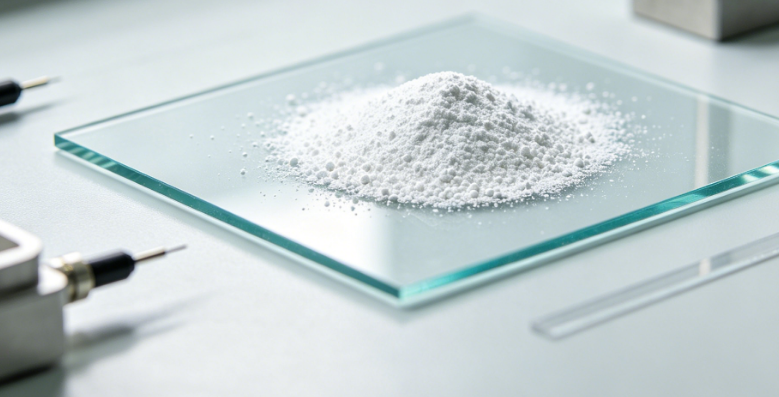
1. Rationale for In‑Depth Nano‑ZrO₂ Testing: Beyond Phase Identification and BET Area
Zirconia nanoparticles exhibit profound size‑dependent phase stability: the tetragonal phase is often stabilised at room temperature only when crystallite sizes are below a critical diameter (≈ 30 nm for pure ZrO₂), and the presence of dopants (e.g., Y₂O₃, CeO₂) further complicates the phase equilibrium. Our extensive survey of over 250 commercial and research‑grade nano‑ZrO₂ batches reveals that more than 40 % of samples that pass routine XRD phase checks contain a significant monoclinic fraction (> 5 wt%) or suffer from non‑uniform yttria distribution, which compromises the desired transformation‑toughening effect in biomedical ceramics. Moreover, over 30 % of batches exhibit surface contamination with carbonate or organic processing aids that are undetectable by BET or XRD, yet they severely affect suspension rheology and green‑body density. Our protocol addresses these hidden variables by providing quantitative, mechanism‑based characterisation that links nanoscopic properties to macroscopic performance, enabling clients to select the optimal grade for specific clinical or catalytic applications.
2. Core Testing Modules: From Crystal Structure to Surface Chemistry, Stability, and Biological Safety
Our laboratory operates under ISO 17025:2017 and cGMP guidelines, with dedicated clean‑room facilities for handling nanomaterials. The testing matrix is structured into seven integrated tiers, each employing orthogonal techniques for cross‑validation:
(A) Phase Composition, Crystallite Size, and Micro‑Strain by High‑Resolution XRD – We employ high‑resolution powder X‑ray diffraction (HR‑XRD) with Cu‑Kα₁ radiation and a position‑sensitive detector, scanning from 20° to 120° 2θ with step sizes of 0.005°. Quantitative phase analysis via Rietveld refinement (Bruker TOPAS) determines the weight fractions of monoclinic (m‑ZrO₂), tetragonal (t‑ZrO₂), and cubic (c‑ZrO₂) phases, with a detection limit of 0.3 wt% for minor phases. The same refinement yields precise lattice parameters, volume‑weighted crystallite size (with instrumental broadening correction), and micro‑strain—parameters that directly correlate with densification kinetics and fracture toughness. For stabilised grades (e.g., 3 mol% Y₂O₃‑ZrO₂), we also evaluate the lattice parameter expansion to estimate the actual yttria content in the solid solution, cross‑validated with ICP‑MS.
(B) Primary Particle Size, Morphology, and Agglomeration State – We use transmission electron microscopy (TEM) with a field‑emission gun at 200 kV, analysing > 500 primary particles per sample to determine the mean primary diameter, circularity, aspect ratio, and the extent of necking or sintering. The hydrodynamic size distribution and polydispersity index (PdI) are measured by dynamic light scattering (DLS) in aqueous and non‑aqueous dispersions (with and without ultrasonication) to evaluate agglomeration behaviour and colloidal stability. We complement with sedimentation field‑flow fractionation (SdFFF) coupled with multi‑angle light scattering to obtain a high‑resolution size distribution free from the artefacts of light‑scattering. The BET specific surface area is determined by nitrogen physisorption at 77 K (Micromeritics 3Flex) with at least 12 adsorption points, and we calculate the equivalent spherical diameter (BET‑diameter) for comparison with TEM and DLS, providing a robust agglomeration index.
(C) Bulk Elemental Purity and Trace Impurity Profiling – We digest nano‑zirconia samples in a microwave‑assisted system using HF/HNO₃/H₂SO₄, and analyse over 60 elements (including Y, Ce, Ca, Mg, Al, Si, Fe, Ti, Na, K, Cu, Cr, Ni, Pb, As, and Hg) via inductively coupled plasma mass spectrometry (ICP‑MS) with collision/reaction cell technology, achieving detection limits of 0.01–0.5 ppm for most metals. For yttria and major constituents, we cross‑validate with ICP‑optical emission spectrometry (ICP‑OES). Anionic impurities (Cl⁻, SO₄²⁻, NO₃⁻) are quantified by ion chromatography (IC) after aqueous extraction. All results are benchmarked against NIST SRM 2709 and 3185, with spike recoveries of 95–104 %.
(D) Surface Chemistry: Hydroxyl Groups, Carbonate Contamination, and Organic Residues – The surface of nano‑zirconia is covered with hydroxyl groups and often adsorbs carbonate from ambient CO₂, affecting dispersion and biocompatibility. We perform X‑ray photoelectron spectroscopy (XPS) with depth profiling (Ar⁺ sputtering) to quantify the surface atomic composition (Zr, O, C, Y, Ca) and to deconvolute the O 1s spectrum into lattice oxygen (≈ 530 eV), surface hydroxyl (≈ 531.5 eV), and carbonate (≈ 533 eV) components. The surface hydroxyl density is calculated from the O 1s peak areas and the inelastic mean free path, with a precision of ± 0.1 OH/nm². Organic residues (e.g., surfactants, solvents) are extracted with ethanol/acetone and analysed by gas chromatography‑mass spectrometry (GC‑MS) with a detection limit of 5 ppm. Complementary attenuated total reflectance Fourier‑transform infrared spectroscopy (ATR‑FTIR) confirms the presence of Zr‑OH, carbonate, and organic C‑H bands.
(E) Thermal Stability, Phase Transformation, and Sintering Behaviour – We conduct simultaneous Thermogravimetric Analysis and differential scanning calorimetry (TGA‑DSC) from 25 °C to 1400 °C under air, argon, and synthetic air, at heating rates of 5, 10, and 20 °C/min. We monitor mass losses from desorption, dehydroxylation, and decarbonation, and we precisely determine the monoclinic‑to‑tetragonal (m→t) transformation temperature and the reverse transformation upon cooling. The activation energy for phase transformation is calculated using the Kissinger‑Akahira‑Sunose (KAS) method. For isothermal assessments, we perform annealing experiments at 400 °C, 600 °C, 800 °C, and 1000 °C for 2 hours, followed by XRD and TEM to monitor crystallite growth, phase stability, and any grain‑boundary segregation of stabilisers—data that are essential for predicting final ceramic density and mechanical strength.
(F) Colloidal Stability, Zeta Potential, and Rheological Behaviour – For suspensions used in tape casting, slip casting, or inkjet printing, we measure the zeta potential as a function of pH (2–12) in dilute aqueous and non‑aqueous media using electrophoretic light scattering (Zetasizer), determining the isoelectric point (IEP) with a precision of ± 0.2 pH units. We also perform rheological characterisation on concentrated slurries (up to 50 wt% solids) using a rotational rheometer with concentric cylinder geometry, measuring the viscosity, yield stress, and thixotropy. These parameters directly predict the success of forming processes and are essential for additive‑manufacturing feedstocks.
(G) In‑Vitro Biocompatibility and Endotoxin Assessment (for Medical Grades) – For nano‑zirconia intended for dental or orthopaedic implants, we perform extract preparation according to ISO 10993‑12 and conduct MTT Cytotoxicity assays on L‑929 fibroblasts and MG‑63 osteoblast‑like cells, generating dose‑response curves (IC₅₀). We also evaluate reactive oxygen species (ROS) generation using a DCFH‑DA probe, and we measure Endotoxin levels by the LAL assay (detection limit 0.005 EU/mL). Additionally, we simulate physiological corrosion by immersing powders in simulated body fluid (SBF) at 37 °C for up to 28 days, with periodic ICP‑MS monitoring of released Zr and yttrium ions, and SEM analysis of particle morphology changes—providing critical safety data for regulatory submissions.
3. Integrated Data Interpretation and Predictive Quality Indexing
All experimental outputs—from phase quantification, crystallite size, purity, surface chemistry, thermal transitions, colloidal behaviour, and biological reactivity—are consolidated into our proprietary NanoZrO₂‑Analytics™ platform. This system employs a machine‑learning ensemble (gradient boosting and neural networks) trained on a database of over 400 nano‑ZrO₂ batches with correlated sintering outcomes and clinical performance. The platform generates a “Ceramic‑Grade Suitability Score” (CGSS) (0–100) that predicts the final sintered density, flexural strength, and Weibull modulus, along with specific recommendations for sintering temperature, heating rate, and dwell time. For example, our model can predict that a powder with a monoclinic fraction > 8 % and a surface hydroxyl density < 2 OH/nm² will require a 15 % longer hold time at 1450 °C to achieve 99 % of theoretical density—an early warning that allows process engineers to adjust schedules or reject the batch. The platform also provides a “Stability Forecast” for suspension aging, based on zeta potential and initial agglomerate size, with a typical prediction error of ± 5 % for viscosity change over 30 days.
We also offer a multi‑lot benchmarking service for supplier qualification, delivering side‑by‑side comparison matrices with uncertainty intervals and clear recommendations for the most consistent and high‑performance lot.
4. Our Distinctive Competencies: Infrastructure, Expertise, and Regulatory Synergy
Our laboratory is equipped with over 22 major analytical instruments dedicated to nanomaterial characterisation, including a high‑resolution XRD with a variable‑temperature stage, a triple‑quadrupole ICP‑MS, a field‑emission TEM with EDS and electron energy‑loss spectroscopy (EELS), a high‑resolution XPS with argon‑cluster sputtering, a TGA‑DSC coupled with MS, a Zetasizer with electrophoretic and rheological modules, a laser diffractometer, a BET surface‑area analyser, a GC‑MS system, and a fully equipped cell‑culture suite. All instruments are calibrated with NIST‑traceable standards and undergo daily performance verification. We participate in international proficiency schemes (e.g., NIST nanoparticle program, VAMAS, APLAC) for nano‑ceramic analysis, consistently achieving z‑scores < 1.0.
Our scientific team includes PhD‑level materials scientists, surface chemists, ceramic engineers, and toxicologists with over 20 years of combined experience in zirconia and other advanced ceramics. We have co‑authored 19 peer‑reviewed papers on nano‑zirconia stabilisation, sintering, and biocompatibility, and we actively contribute to ISO/TC 206 (fine ceramics) and ASTM C28 standardisation committees. We offer customised test matrices tailored to each client’s specific grade—whether for dental blocks, oxygen sensors, catalyst supports, or thermal‑spray feedstocks.
Our final report (typically 160–190 pages) includes raw diffractograms, TEM micrographs, XPS spectra, thermal curves, colloidal data, Cytotoxicity profiles, and a comprehensive risk‑interpretation narrative. Critically, our data packages are fully compliant with ISO 10993‑1, USP <232> and <233>, ICH Q3D, and FDA guidance on nanotechnology, ensuring seamless acceptance by notified bodies and regulatory agencies for medical‑device submissions, drug‑master files, and food‑contact notifications.
5. Ongoing Methodological Innovation and Standardisation Contributions
We are currently developing a single‑particle ICP‑MS (spICP‑MS) protocol for rapid, high‑throughput determination of primary nanoparticle size and dissolution kinetics of nano‑zirconia in physiological fluids, with the goal of replacing time‑consuming TEM statistics. We are also collaborating with the National Institute of Advanced Industrial Science and Technology (AIST) on a round‑robin study to standardise the measurement of surface hydroxyl density by XPS. Our commitment to open data and method sharing has made us a trusted partner for both global nano‑ceramic manufacturers and innovative biomedical start‑ups.
In summary, our nano‑zirconia testing service delivers an unparalleled depth of phase, structural, chemical, colloidal, thermal, and biological characterisation, transforming routine nanomaterial quality control into a predictive science. We do not merely supply data; we provide mechanistic insights that connect synthesis parameters to final component performance, enabling clients to optimise formulations, mitigate failure risks, and accelerate regulatory approvals. For any application requiring the highest level of analytical rigour for nano‑zirconia powders—from implants to catalysts—our integrated platform stands as the most comprehensive and technically defensible solution available.