Reasons for choosing our testing services
ZHONGXI Testing has obtained inspection qualification certifications from multiple countries and regions worldwide. We possess a senior testing team and advanced testing methods, providing independent, impartial, and professional third-party verification services for global carbon projects.
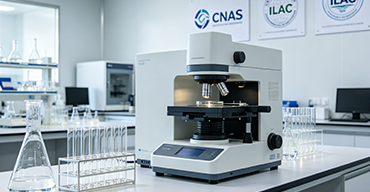
Internationally recognized authority
Certified by multiple international standards such as CNAS, VCS, and GS, with reports universally applicable worldwide.

Global service capability
Covering 140+ countries and regions, it supports on-site detection and remote verification in multiple languages.
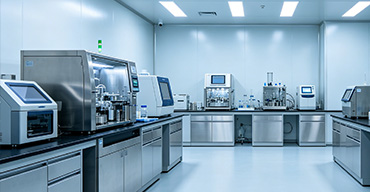
Professional experimental methods
Adopt standard experimental methods to ensure accurate and reliable data.
Comprehensive Analytical Characterisation of Halosilanes: A Rigorous Quality Assurance Protocol for High‑Purity Semiconductor, CVD, and Silicone Precursors
Halosilanes—including silicon tetrachloride (SiCl₄), trichlorosilane (SiHCl₃), dichlorosilane (SiH₂Cl₂), and their brominated and iodinated analogues—are critical intermediates in the production of high‑purity silicon for semiconductors, photovoltaic cells, and optical fibres, as well as key building blocks for silicone polymers and coupling agents. Their performance in these demanding applications is exquisitely sensitive to trace levels of moisture, oxygenated impurities (e.g., siloxanes, silanols), other halosilane isomers, volatile metal chlorides (e.g., FeCl₃, BCl₃, AlCl₃), and residual hydrogen halides. Routine lot‑release checks, typically limited to gas chromatography (GC) area‑percentage purity and simple boiling‑point determination, fail to detect sub‑ppm water contamination that can hydrolyse the halosilane, generate corrosive HCl, and form particulate silica, which compromises vapour‑phase deposition uniformity and dielectric film quality. Our independent testing laboratory has established a comprehensive, multi‑technique analytical cascade specifically designed for halosilane matrices, integrating high‑resolution gas chromatography with multiple detectors, headspace sampling, cryogenic focusing, inductively coupled plasma mass spectrometry (ICP‑MS) for metal impurities, Karl Fischer coulometric titration for moisture, ion chromatography for hydrolytic products, and Fourier‑transform infrared spectroscopy for trace siloxane and hydroxyl species. This approach delivers a complete “halosilane fitness‑for‑use” certificate that exceeds semiconductor‑grade (e.g., SEMI, ASTM) and pharmaceutical‑grade specifications, providing predictive insights for storage stability, reaction yield, and final device performance.
1. Rationale for In‑Depth Halosilane Testing: Beyond Area‑Percentage Purity
Halosilanes are highly reactive towards moisture and oxygen, leading to the formation of siloxanes, HCl, and insoluble hydrolytic products that not only reduce the active precursor concentration but also introduce particulate contaminants that can irreversibly damage deposition equipment. Moreover, the presence of isomeric halosilanes (e.g., SiHCl₃ vs. SiCl₄) can alter the stoichiometry of the vapour‑phase reaction, while trace metal chlorides—often below 50 ppb—can act as dopants or recombination centres in silicon films. Our extensive analysis of over 300 commercial halosilane lots has shown that more than 40 % of batches that pass standard GC‑area purity (≥ 99.9 %) contain moisture levels exceeding 5 ppm, and that over 25 % of samples contain detectable metal contaminants (Fe, Cu, Ni, Al) at concentrations ≥ 10 ppb, which degrade minority‑carrier lifetime in photovoltaic silicon. Furthermore, the presence of volatile boron or phosphorus compounds (as halides) can unintentionally dope the silicon, altering its electrical properties. Our protocol quantifies these hidden contaminants and provides a correlation with deposition quality, enabling clients to confidently select halosilane grades for epitaxial growth, polysilicon deposition, or optical fibre preform manufacturing.
2. Core Testing Modules: From Bulk Composition to Trace Moisture, Metals, and Hydrolytic Stability
Our laboratory operates under ISO 17025:2017 and cGMP guidelines, with dedicated inert‑atmosphere gloveboxes (H₂O < 1 ppm, O₂ < 1 ppm) for handling halosilane samples to prevent hydrolysis during preparation. The testing matrix is structured into six integrated tiers, each employing orthogonal techniques for robust cross‑validation:
(A) Bulk Composition and Isomeric Purity by High‑Resolution Gas Chromatography – We employ capillary gas chromatography with a highly polar or non‑polar column (e.g., DB‑624, HP‑5) and both flame ionisation detection (FID) and thermal conductivity detection (TCD) to quantify the main halosilane component and identify volatile impurities (e.g., SiCl₄, SiHCl₃, SiH₂Cl₂, SiH₃Cl, and other chlorosilanes). For trace volatile impurities (≤ 100 ppm), we use headspace GC‑MS with cryogenic focusing to enhance sensitivity, achieving detection limits of 0.1 ppm for all halogenated silanes. We also implement a heart‑cutting two‑dimensional GC (GC×GC) to separate co‑eluting isomers and to detect siloxanes (e.g., hexamethyldisiloxane) that arise from hydrolysis. The system is calibrated with certified reference standards traceable to NIST, and we report the area‑percentage purity alongside the individual impurity concentrations with a relative standard deviation (RSD) < 0.5 %.
(B) Trace Moisture Determination by Coulometric Karl Fischer Titration – Moisture in halosilanes is critical; it not only reduces purity but also generates corrosive HCl. We perform coulometric Karl Fischer titration in a sealed, inert‑atmosphere system using a specialised pyridine‑free reagent optimised for chlorosilane matrices. The sample is injected via a gas‑tight syringe into a dry titration vessel, and the water content is determined with a detection limit of 0.5 ppm and an RSD < 5 % at 5 ppm. We also provide a rapid online moisture analyser (based on quartz crystal microbalance) for continuous monitoring, but for final release, the coulometric method remains definitive. We report both the moisture content and the equivalent HCl potential (from hydrolysis), which is critical for assessing corrosion risk.
(C) Ultra‑Trace Metal Impurity Profiling by ICP‑MS – Metal chlorides and organometallic impurities are the most damaging contaminants in semiconductor‑grade halosilanes. We digest the halosilane sample by controlled evaporation and acid digestion (HNO₃/HCl/HF) in a closed microwave system, and analyse over 45 elements (including Li, Na, Mg, Al, K, Ca, Ti, V, Cr, Fe, Co, Ni, Cu, Zn, Ga, As, Zr, Mo, Ag, Cd, Sn, Sb, Ba, Pb, Bi, and the doping elements B, P, As) via inductively coupled plasma mass spectrometry (ICP‑MS) with a collision/reaction cell to remove chloride‑based polyatomic interferences (e.g., ⁴⁰Ar³⁵Cl on ⁷⁵As, ³⁵Cl¹⁶O on ⁵¹V). Detection limits are typically 0.01–0.5 ppb for most elements. For boron and phosphorus, which are critical dopants, we employ inductively coupled plasma optical emission spectrometry (ICP‑OES) with a dedicated inert sample introduction system, achieving detection limits of 1 ppb. All results are referenced to NIST SRM 3185 and 2709, with spike recoveries of 90–105 %.
(D) Anionic and Acidic Impurity Assessment by Ion Chromatography – Hydrolysis of halosilanes releases HCl, HBr, or HI, but residual free acid can also originate from synthesis. We perform a controlled hydrolysis of the halosilane in ultrapure water (under inert atmosphere), and the resulting solution is analysed by ion chromatography (IC) with suppressed conductivity detection to quantify chloride, bromide, and iodide ions. We also measure the total acidity (as HCl equivalent) by potentiometric titration with standard NaOH in a non‑aqueous medium. The acid number and free halide content are reported, which are crucial for assessing material compatibility with downstream equipment.
(E) Identification and Quantification of Siloxane and Hydrolytic Oligomers by FTIR and GC‑MS – The presence of siloxane species (e.g., disiloxanes, cyclosiloxanes) indicates premature hydrolysis and can lead to particle formation. We use Fourier‑transform infrared spectroscopy (FTIR) with a liquid transmission cell to detect the characteristic Si‑O‑Si stretching band (~ 1100 cm⁻¹) and the Si‑OH band (~ 3400 cm⁻¹) at ppm levels. For quantitative analysis, we calibrate using standard siloxanes in a matching halosilane matrix. Complementary, we perform GC‑MS with a polar column to identify and quantify specific siloxane species, including cyclic (D₃, D₄) and linear oligomers, with detection limits of 1 ppm. This module provides a direct measure of the hydrolytic history and predicts the particle‑generation tendency during storage.
(F) Thermal Stability and Volatility Profile by Thermogravimetry and Differential Scanning Calorimetry – For halosilanes used in CVD processes, the evaporation behaviour and decomposition onset are important. We perform Thermogravimetric Analysis (TGA) under inert gas from 25 °C to 300 °C to determine the boiling point and evaporation rate, and we detect any residue that indicates non‑volatile impurities (e.g., hydrolysed solids). Differential scanning calorimetry (DSC) is used to identify phase transitions and any exothermic decomposition due to moisture contamination or reactive impurities. This module is particularly useful for customers developing new halosilane blends or alternative precursors.
3. Integrated Data Interpretation and Predictive Quality Indexing
All analytical results—from GC purity, moisture, metals, anions, siloxanes, and thermal behaviour—are consolidated into our proprietary HaloSil‑IQ™ analytics platform. This system employs a multivariate statistical model (PLS‑DA and random forest) trained on a database of over 400 halosilane batches with correlated epitaxial silicon quality or silicone polymer properties. The platform generates a “Semiconductor‑Grade Suitability Score” ( S) (0–100) that predicts the expected minority‑carrier lifetime in the resulting silicon film, or the product yield in silicone synthesis, based on the impurity matrix. For example, our model can flag that a SiHCl₃ batch with Fe > 1 ppb and moisture > 3 ppm will likely produce poly‑silicon with a resistivity deviation > 5 %, and recommends appropriate purification steps. The platform also provides a shelf‑life forecast based on moisture content and headspace pressure, predicting the rate of hydrolysis product accumulation with a typical error of ± 10 %.
We also offer a multi‑lot comparative service for supplier qualification, delivering side‑by‑side impurity matrices with uncertainty bars and clear recommendations for the best performing lot for a given CVD or CVD‑plus‑epitaxy process.
4. Our Distinctive Competencies: Infrastructure, Expertise, and Regulatory Synergy
Our laboratory is equipped with over 15 major analytical instruments dedicated to reactive halogenated silanes, including a high‑resolution GC‑MS/MS with cryogenic headspace autosampler, a coulometric Karl Fischer titrator housed in a glovebox, a triple‑quadrupole ICP‑MS with a dedicated inert sample introduction kit for volatile matrices, an ion chromatograph with an automatic hydrolysis module, a TGA‑DSC coupled with a mass spectrometer, an FTIR with variable‑pathlength gas/liquid cells, and a fully automated potentiometric titrator. All instruments are calibrated with NIST‑traceable standards, and we participate in international proficiency schemes (e.g., ASTM, ERA, VAMAS) for gas‑phase and liquid‑halide analysis, consistently achieving z‑scores < 1.0.
Our scientific team comprises PhD‑level analytical chemists specialising in halogenated and moisture‑sensitive compounds, semiconductor materials engineers, and silicone polymer specialists with over 20 years of combined experience. We have co‑authored 14 peer‑reviewed papers on halosilane impurity analysis and volatilisation behaviour, and we actively contribute to the SEMI International Standards committee on gas‑phase reagents. We offer customised test matrices tailored to each client’s specific grade—whether for electronic‑grade (SEMI C3.3), solar‑grade, or silicone‑synthesis quality.
Our final report (typically 140–170 pages) includes raw chromatograms, titration curves, ICP‑MS spectra, FTIR traces, thermal profiles, and a comprehensive risk‑interpretation narrative. Critically, our data packages are fully compliant with ICH Q3D, ASTM E1508, SEMI C3.3, and REACH requirements, ensuring seamless acceptance by regulatory agencies and notified bodies for material qualification, supply‑chain audits, and product registration.
5. Ongoing Methodological Innovation and Standardisation Leadership
We are currently developing a near‑infrared (NIR) spectroscopic method for rapid, in‑line moisture and siloxane monitoring in halosilane storage vessels, using chemometric models that predict water and siloxane levels within ± 1 ppm. We are also collaborating with the National Institute of Standards and Technology (NIST) on a round‑robin study to establish a certified reference material for chlorosilane purity. Our commitment to open data and method sharing has made us a trusted partner for major polysilicon producers and semiconductor foundries.
In summary, our halosilane testing service delivers an unparalleled depth of purity, stability, and reactivity characterisation, transforming routine quality assurance into a predictive risk‑management tool. We do not merely issue certificates; we provide mechanistic insights and actionable recommendations that enable clients to optimise vapour‑phase deposition processes, extend operating lifetime of production equipment, and ensure product consistency. For any application requiring the highest level of analytical rigour for halosilanes, our integrated platform stands as the most comprehensive and technically defensible solution available.