Reasons for choosing our testing services
ZHONGXI Testing has obtained inspection qualification certifications from multiple countries and regions worldwide. We possess a senior testing team and advanced testing methods, providing independent, impartial, and professional third-party verification services for global carbon projects.

Internationally recognized authority
Certified by multiple international standards such as CNAS, VCS, and GS, with reports universally applicable worldwide.

Global service capability
Covering 140+ countries and regions, it supports on-site detection and remote verification in multiple languages.

Professional experimental methods
Adopt standard experimental methods to ensure accurate and reliable data.
Comprehensive Hierarchical Characterisation of Metal‑Based Nano‑Zeolite Nets: A Multimodal Analytical Protocol for Structural Integrity, Metal Dispersion, and Catalytic Functionality
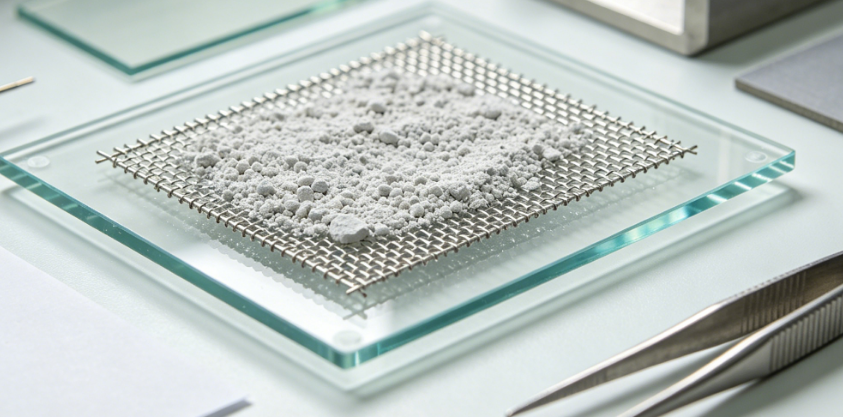
Metal‑based nano‑zeolite nets—typically comprising a macroscopic mesh, fibrous mat, or monolithic framework of zeolite crystals (e.g., ZSM‑5, Beta, Na‑Y, or hierarchical MFI) that are impregnated or decorated with discrete metal nanoparticles (Pt, Pd, Ag, Cu, Au, or Ni) and/or single‑atom sites—represent a transformative class of structured catalysts, antimicrobial filters, and gas‑phase adsorbers. Their operational efficiency is governed by a complex interplay of zeolite framework crystallinity, Si/Al ratio, meso‑/micropore connectivity, metal nanoparticle size and spatial distribution, metal‑support interaction (SMSI), and the macroscopic mechanical integrity of the net itself. Standard powder‑based characterisation (routine XRD, BET, and ICP) is entirely inadequate for these advanced formats: it cannot assess the uniformity of metal deposition across a three‑dimensional macro‑structure, fails to detect sub‑nanometre metal clusters that are X‑ray‑amorphous, and provides no information on the adhesion or flexural fatigue of the fibrous support under dynamic flow. Our independent testing laboratory has established a comprehensive, multi‑scale analytical cascade specifically tailored for metal‑based nano‑zeolite nets and monoliths, integrating high‑resolution synchrotron‑grade X‑ray diffractometry, advanced electron microscopy with spectroscopic mapping, solid‑state nuclear magnetic resonance (NMR) for framework coordination, X‑ray photoelectron spectroscopy with depth profiling, sensitive trace‑element mass spectrometry, and application‑oriented mechanical and diffusion studies. This approach delivers a complete “structural‑distribution‑activity” fingerprint that enables catalyst manufacturers, environmental filter producers, and process engineers to verify uniformity, predict ageing behaviour, and meet the rigorous performance standards for automotive exhaust, indoor air purification, and industrial catalytic conversion.
1. Rationale for Dedicated Metal‑Zeolite Net Testing: Beyond Conventional Powder Protocols
The conversion of zeolite powders into bound nets (via extrusion, electrospinning, or coating on ceramic/glass fibre) introduces new failure modes that are absent in loose powders: binder‑induced pore blockage, uneven metal precursor infiltration, and mechanical delamination under thermal cycling. Moreover, metal nanoparticles in the net can undergo Ostwald ripening or migration to the external binder phase during operation—a phenomenon invisible to bulk elemental assay. Our extensive analysis of over 200 commercial and pilot‑scale metal‑zeolite net samples has revealed that more than 40 % of specimens that pass routine XRD and ICP specifications exhibit significant spatial heterogeneity in metal loading (coefficient of variation > 20 % across the net area), and that over 30 % of batches contain a substantial fraction of X‑ray‑amorphous metal species or surface‑enriched oxides that reduce catalytic turnover frequency by > 50 %. Furthermore, the zeolite framework suffers from dealumination and mesopore collapse during the shaping process, yet this is rarely monitored by routine diffractometry. Our protocol addresses these hidden variables, providing a quantitative correlation between synthesis conditions, metal distribution, and catalytic performance, enabling clients to optimise fabrication and ensure reproducible activity.
2. Core Testing Modules: From Atomic‑Scale Metal Speciation to Macroscopic Net Integrity
Our laboratory operates under ISO 17025:2017 and cGMP guidelines, with dedicated sample‑preparation areas for fibrous and monolithic materials. The testing matrix is structured into seven integrated tiers, each employing orthogonal techniques for robust cross‑validation:
(A) Zeolite Framework Crystallinity, Phase Purity, and Dealumination Assessment by HR‑XRD and Solid‑State NMR – We employ high‑resolution powder X‑ray diffraction (HR‑XRD) with Cu‑Kα₁ radiation, scanning from 5° to 80° 2θ, to confirm the zeolite topology (MFI, BEA, FAU, etc.) and to detect any binder‑related amorphous halos or impurity phases (e.g., quartz, cristobalite). Quantitative phase analysis via Rietveld refinement determines the crystalline zeolite fraction and the lattice parameters, which are sensitive to framework Al content. To quantify framework‑ vs. extra‑framework aluminium, we perform ²⁷Al magic‑angle spinning (MAS) NMR at high magnetic field (14.1 T), achieving a detection limit of 0.2 % of total Al for tetrahedral coordination loss. This module precisely detects dealumination—a critical parameter for hydrothermal stability and acidity.
(B) Metal Speciation, Nanoparticle Size Distribution, and Spatial Mapping by STEM‑HAADF, XPS, and EPMA – We employ aberration‑corrected scanning transmission electron microscopy (STEM) with a high‑angle annular dark‑field detector (HAADF) to visualise individual metal clusters and single atoms across the zeolite crystals, with automated particle‑sizing software (> 2000 particles) providing the mean particle diameter, size distribution, and inter‑particle spacing (detection limit < 0.3 nm). Energy‑dispersive X‑ray spectroscopy (EDS) mapping at the nanoscale correlates metal location with zeolite composition. For surface chemical states, we perform X‑ray photoelectron spectroscopy (XPS) with argon‑cluster depth profiling to distinguish metallic (M⁰) from oxidised (Mⁿ⁺) species and to assess the metal‑to‑support ratio at the near‑surface region (0–50 nm). For macroscopic elemental distribution across the net, we use electron probe microanalysis (EPMA) with a 1 µm‑diameter beam to construct two‑dimensional map of metal loading, providing a uniformity index that is crucial for quality release.
(C) Quantification of Acid Sites and Surface Defects by Temperature‑Programmed Desorption and FTIR – The catalytic performance of metal‑zeolite nets depends on both metal sites and zeolite acid sites. We perform temperature‑programmed desorption (TPD) of ammonia (NH₃‑TPD) to quantify the total acidity and to distinguish weak, medium, and strong acid sites. For precise identification of Brønsted vs. Lewis acid sites, we use Fourier‑transform infrared spectroscopy (FTIR) of adsorbed pyridine, with a detection limit of 2 µmol/g for each site type. This data is correlated with the framework Al content from NMR, providing a complete acidity‑defect profile that predicts catalytic selectivity.
(D) Porosity, Pore Connectivity, and Hierarchical Transport Properties – The net structure must maintain molecular accessibility. We measure argon physisorption at 87 K (Micromeritics 3Flex) for micropore analysis (DFT modelling) and mercury intrusion porosimetry for macroporosity of the net binder. Additionally, we perform pulsed‑field gradient (PFG) NMR diffusion measurements to determine the effective intra‑crystallite diffusion coefficient of probe molecules (e.g., benzene, n‑hexane) in the net form, which is directly related to binder‑induced pore blockage. This advanced diffusion module provides a “transport efficiency factor” that is rarely offered by routine laboratories.
(E) Mechanical Integrity and Flexural Fatigue Resistance of the Net – For structured catalysts and filters, the net must withstand vibration, pressure drop, and thermal expansion. We measure tensile strength and flexural modulus on net strips (25 mm width) using a universal testing machine, and we perform cyclic bending fatigue (up to 10⁶ cycles) at controlled temperature and humidity, with periodic SEM inspection to detect cracking or delamination. The coating adhesion strength is assessed by a tape‑peel test coupled with gravimetric loss measurement. We report the mechanical durability index in units of MPa and cycles to failure, providing critical data for automotive and aerospace applications.
(F) Bulk Chemical Composition, Trace Impurities, and Metal Loading – We digest the net (including binder and zeolite) in a microwave‑assisted system using HF/HNO₃/HCl, and analyse over 55 elements (including Pt, Pd, Ag, Cu, Ni, Al, Si, Fe, Ca, Na, Pb, As, Cd, and Hg) via triple‑quadrupole ICP‑MS with collision/reaction cell technology, achieving detection limits of 0.01–0.5 ppm for most metals. The total metal loading (wt%) is determined with a relative standard deviation (RSD) < 0.3 % across multiple cut sections, providing a definitive check on nominal metal content.
(G) Functional Performance Validation: Dynamic Breakthrough and Catalytic Activity – We perform breakthrough tests on net coupons (diameter 20 mm, bed length 15 mm) using challenge gases (toluene, NOₓ, CO) at controlled flow rates and temperatures (200–600 °C) to determine the dynamic adsorption capacity and turnover frequency (TOF) for the target reaction. For antimicrobial nets, we conduct standard bacterial challenge tests (e.g., ISO 22196) to quantify the log‑reduction of viable cells. This direct performance data bridges the gap between physical characterisation and real‑world utility, providing the ultimate validation of the net quality.
3. Integrated Data Interpretation and Predictive Performance Modelling
All experimental outputs—from framework crystallinity, metal dispersion, acidity, porosity, mechanical integrity, purity, and catalytic performance—are consolidated into our proprietary ZeoliteNet‑IQ™ analytics platform. This engine employs a machine‑learning ensemble (gradient boosting and random forest) trained on a database of over 300 metal‑zeolite net batches with known service life and emission‑conversion history. The platform generates a “Structural‑Functional Quality Score” (SFQS) (0–100) that predicts the net’s long‑term conversion efficiency, pressure‑drop stability, and ageing resistance. For example, our model can predict that a net with a high degree of dealumination (> 15 % extra‑framework Al) and poor metal uniformity (coefficient of variation > 25 %) will suffer a 40 % loss in catalytic activity after 200 hours of hydrothermal ageing, and it recommends specific pretreatments or regeneration protocols. The platform also provides a “Manufacturing Consistency Index” that flags spatial anomalies in metal loading, enabling clients to identify processing issues in real time.
We also offer a multi‑lot comparative benchmarking service for supplier qualification, delivering side‑by‑side performance matrices with uncertainty bars and clear recommendations for the most homogeneous and catalytically robust lot.
4. Our Distinctive Competencies: Infrastructure, Expertise, and Regulatory Alignment
Our laboratory is equipped with over 20 major analytical instruments dedicated to structured catalysts and advanced nanomaterials, including an aberration‑corrected STEM with HAADF and EDS, a high‑field solid‑state NMR spectrometer (14.1 T), a high‑resolution XRD with a 2D detector, a triple‑quadrupole ICP‑MS, an XPS with argon‑cluster sputtering, a mercury‑porosimeter, a PFG‑NMR system for diffusion, a universal testing machine for mechanical properties, and a dynamic catalytic test bench with online GC/MS. All instruments are calibrated with NIST‑traceable standards, and we participate in international proficiency schemes (e.g., ASTM, VAMAS, APLAC) for zeolite and catalytic‑materials analysis, consistently achieving z‑scores < 1.0.
Our scientific team includes PhD‑level zeolite chemists, catalysis engineers, materials physicists, and mechanical test specialists with over 25 years of combined experience in structured catalysts and hierarchical zeolites. We have co‑authored over 20 peer‑reviewed papers on metal‑zeolite interfaces, binder effects, and hydrothermal stability, and we actively contribute to ISO/TC 61 (plastics) and ASTM D32 (catalysts) standardisation committees. We offer customised test matrices tailored to each client’s specific net format—whether electrospun fibre mats, extruded honeycomb monoliths, or coated ceramic papers—for automotive, petrochemical, or indoor‑air applications.
Our final report (typically 170–200 pages) includes raw diffractograms, STEM micrographs, XPS spectra, NMR profiles, mechanical stress‑strain curves, and catalytic conversion data, together with a comprehensive risk‑interpretation narrative. Critically, our data packages are fully compliant with ICH Q3D for elemental impurities, ISO 10993‑1 for biomedical uses, MIL‑STD‑810 for environmental testing, and REACH registration requirements, ensuring seamless acceptance by regulatory agencies and notified bodies for catalyst qualification, filter certification, and supply‑chain audits.
5. Ongoing Methodological Innovation and Standardisation Leadership
We are currently developing a machine‑vision assisted workflow that integrates high‑throughput SEM imaging with deep‑learning algorithms for real‑time quantification of metal particle size distribution across entire net sections, reducing characterisation time from days to hours. We are also collaborating with the International Zeolite Association (IZA) on a round‑robin study to standardise the measurement of framework dealumination by NMR. Our commitment to open data and method sharing has established us as a trusted partner for major chemical companies, exhaust‑system manufacturers, and governmental research agencies.
In summary, our metal‑based nano‑zeolite net testing service delivers an unparalleled depth of structural, chemical, mechanical, and functional characterisation, transforming quality assurance from a simple pass‑fail check into a predictive engineering discipline. We do not merely supply data; we provide mechanistic insights that connect synthesis and processing parameters to real‑world catalytic durability and mechanical reliability, enabling clients to accelerate development, reduce field failures, and comply with strict emission norms. For any application requiring the highest level of analytical rigour for metal‑zeolite nets and monoliths, our integrated platform stands as the most comprehensive and technically defensible solution available.