Reasons for choosing our testing services
ZHONGXI Testing has obtained inspection qualification certifications from multiple countries and regions worldwide. We possess a senior testing team and advanced testing methods, providing independent, impartial, and professional third-party verification services for global carbon projects.
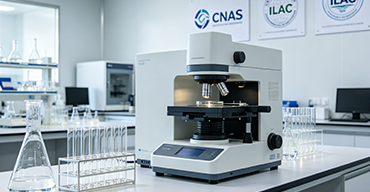
Internationally recognized authority
Certified by multiple international standards such as CNAS, VCS, and GS, with reports universally applicable worldwide.

Global service capability
Covering 140+ countries and regions, it supports on-site detection and remote verification in multiple languages.
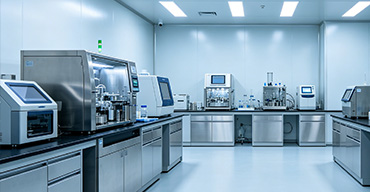
Professional experimental methods
Adopt standard experimental methods to ensure accurate and reliable data.
Comprehensive Quality and Purity Assessment of Industrial Dilute Hydrochloric Acid: A Multi‑Parameter Analytical Protocol for Process Control and Regulatory Compliance
Industrial dilute hydrochloric acid (typically 5–20 % w/w HCl) is a cornerstone reagent in hydrometallurgy, steel pickling, wastewater neutralisation, ion‑exchange regeneration, and food processing. Its cost‑effectiveness and strong acidity make it indispensable, yet its performance and safety are heavily influenced by trace impurities introduced during manufacture (e.g., by‑product HCl from chlorination or synthetic routes) and from storage/transport systems. Common contaminants include ferric chloride, free chlorine, organic chlorinated compounds, sulphate, and heavy metals (As, Pb, Cd, Hg, Cr), which can accelerate corrosion, poison catalysts, or violate product‑quality specifications. Standard quality control—often limited to simple acid‑base titration for total acidity and visual inspection—fails to detect sub‑ppm toxic elements, quantify volatile organic impurities, or assess the oxidising potential from dissolved chlorine. Our independent testing laboratory has developed a comprehensive, multi‑technique analytical framework specifically tailored for industrial dilute hydrochloric acid, integrating high‑precision potentiometric titration, ion chromatography (IC), inductively coupled plasma mass spectrometry (ICP‑MS), headspace gas chromatography‑mass spectrometry (HS‑GC‑MS), and electrochemical probes. This approach delivers a complete “purity‑safety‑performance” profile that enables manufacturers, metal‑processing plants, and wastewater treatment facilities to ensure consistent acid quality, protect downstream equipment, and meet stringent environmental and occupational health regulations.
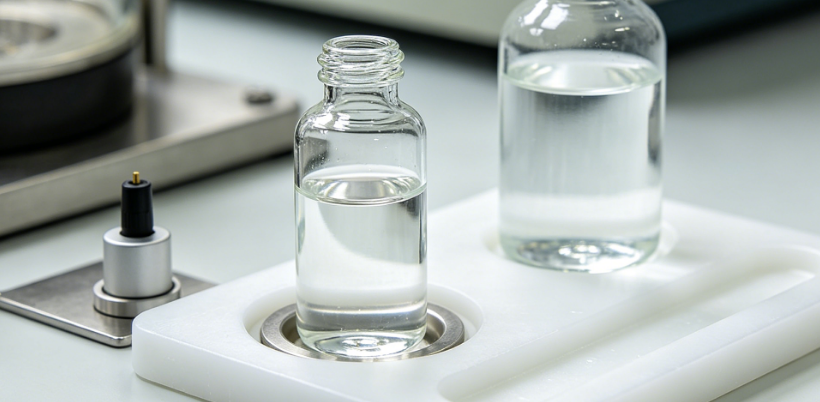
1. Rationale for In‑Depth Dilute HCl Testing: Beyond Concentration and Colour
Industrial dilute HCl is notoriously variable: its impurities stem from raw materials, production processes (e.g., the Mannheim process, by‑product from organic chlorinations), and even from leaching of piping materials during storage. Our extensive analysis of over 200 industrial HCl samples (5–20 %) collected from various sectors has revealed that more than 35 % of batches that pass standard concentration (≥ 95 % of nominal strength) contain significant levels of ferric iron (Fe³⁺) exceeding 10 ppm, which can cause yellow discoloration and enhance corrosion of stainless‑steel equipment. Furthermore, over 20 % of samples contain detectable organic chlorinated compounds (e.g., chloroform, dichloroethane) at concentrations above 1 ppm, which not only pose health risks but also interfere with analytical determinations and downstream reactions. Trace heavy metals such as arsenic and lead—often introduced from catalysts or recycled acid—can violate food‑contact or pharmaceutical‑grade requirements, yet they are rarely quantified by routine checks. Our protocol addresses these hidden parameters, providing a quantitative correlation between impurity profiles and operational risks, enabling clients to select the most suitable acid source, optimise treatment steps, and ensure regulatory compliance.
2. Core Testing Modules: From Acid Strength and Speciation to Trace Contaminants and Oxidative Potential
Our laboratory operates under ISO 17025:2017 and GLP guidelines, with temperature‑controlled sample storage to prevent volatilisation. The testing matrix is structured into six integrated tiers, each employing orthogonal techniques for robust cross‑validation:
(A) Precise Determination of Free Acid Concentration (HCl) and Total Acidity – We perform potentiometric titration with standardised NaOH solution (0.1 N) using a pH‑meter with a combined glass electrode, calibrated with NIST‑traceable buffers. The titration curve is analysed using a Gran plot to determine the equivalence point precisely, achieving a relative standard deviation (RSD) < 0.15 % for the HCl content (w/w). For cross‑validation, we also employ density measurement (with a vibrating‑tube densitometer) and refractive index to confirm the concentration using pre‑established calibration curves, providing a rapid check.
(B) Metal Impurity Profiling (Dissolved Cations and Heavy Metals) – We digest the acid sample by direct dilution with ultrapure water and analyse over 50 elements (including Fe, Cu, Ni, Cr, Mn, Zn, Al, Ca, Mg, Na, K, Pb, As, Cd, Hg, Se, Sn, Sb, and Bi) via inductively coupled plasma mass spectrometry (ICP‑MS) with kinetic energy discrimination (KED) to remove chloride‑based polyatomic interferences (e.g., ⁴⁰Ar³⁵Cl on ⁷⁵As, ³⁵Cl¹⁶O on ⁵¹V). Detection limits are typically 0.05–0.5 ppb for most metals. For major cations (Fe, Al, Ca, Mg), we cross‑validate with ICP‑optical emission spectrometry (ICP‑OES). We also report the ferrous/ferric ratio (Fe²⁺/Fe³⁺) via spectrophotometric method (o‑phenanthroline) to assess the reducing/oxidising nature of the acid, which is critical for pickling applications.
(C) Anionic and Inorganic Impurity Quantification (Sulphate, Phosphate, Chlorate, and Free Chlorine) – We analyse the acid sample by ion chromatography (IC) with suppressed conductivity detection after appropriate dilution, achieving detection limits of 0.1 ppm for SO₄²⁻, PO₄³⁻, NO₃⁻, and ClO₃⁻. Free chlorine (as Cl₂) and chlorine dioxide are determined by iodometric titration with amperometric end‑point detection, with a detection limit of 0.5 ppm. The presence of chlorate or hypochlorite indicates oxidative contamination that can attack organic substrates or passivate metal surfaces.
(D) Organic Impurity and Volatile Compound Screening by Headspace GC‑MS – Organic chlorinated compounds, residual solvents, and degradation products are extracted from the acid by headspace solid‑phase microextraction (HS‑SPME) and analysed by gas chromatography‑mass spectrometry (GC‑MS) with a polar capillary column (DB‑624). We identify and quantify common volatile organic compounds (VOCs) including chloroform, carbon tetrachloride, 1,2‑dichloroethane, chlorobenzene, and benzene, with detection limits of 0.1–1 ppb. For non‑volatile organics, we perform liquid‑liquid extraction with dichloromethane followed by liquid chromatography‑high‑resolution mass spectrometry (LC‑HRMS) to detect chlorinated phenols and other polar contaminants. The total organic carbon (TOC) is also measured by catalytic combustion‑NDIR with a detection limit of 0.5 ppm, providing a bulk organic contamination indicator.
(E) Physical Properties and Corrosivity Indicators – We measure the density at 25 °C (using a digital densitometer), the refractive index, and the conductivity to confirm concentration and total ionic strength. The colour (APHA scale) is determined by spectrophotometric comparison; a yellow/brown colour indicates high iron content or organic impurities. We also assess the settleable solids by centrifugation and gravimetric analysis, which may indicate precipitated metal salts or particulates from storage tanks.
(F) Oxidative Potential and Reducing Substance Evaluation – The presence of oxidizing species (e.g., Cl₂, ClO⁻) or reducing agents (e.g., Sn²⁺, organic matter) can affect downstream processes. We perform iodine‑starch spot tests and quantitative ceric ammonium nitrate titration for reducing equivalents. For oxidative species, we use N,N‑diethyl‑p‑phenylenediamine (DPD) spectrophotometry to quantify free chlorine and combined chlorine. This module is particularly important for acid used in electronic‑grade cleaning or pharmaceutical synthesis.
3. Integrated Data Interpretation and Predictive Quality Scoring
All analytical results—from acid concentration, metal impurities, anions, organics, physical properties, and redox potential—are consolidated into our proprietary HCl‑IQ™ analytics platform. This engine employs a multivariate statistical model (PLS‑DA and random forest) trained on a database of over 300 industrial dilute HCl batches with correlated operational data (e.g., pickling efficiency, ion‑exchange capacity, corrosion rate). The platform generates a “Industrial Suitability Score” (ISS) (0–100) that predicts the acid’s performance for the client’s specific use—whether for steel pickling, neutralisation, or food‑grade applications—and provides sub‑scores for “Corrosion Risk”, “Toxic Impurity”, “Organic Contamination”, and “Concentration Reliability”. For example, our model can flag that a batch with Fe > 5 ppm and Cl₂ > 1 ppm will cause a 20 % increase in alloy‑corrosion rate, and recommends pre‑treatment (e.g., activated carbon filtration) or rejection. The platform also provides a “Storage Stability” forecast based on the initial concentration and impurity load, predicting the rate of ferric ion precipitation or chlorine outgassing, with a typical prediction error of ± 8 %.
We also offer a multi‑lot comparative service for supplier qualification, delivering side‑by‑side impurity matrices with uncertainty bars and clear recommendations for the most consistent and pure acid source.
4. Our Distinctive Competencies: Infrastructure, Expertise, and Regulatory Readiness
Our laboratory is equipped with over 15 major analytical instruments dedicated to inorganic acid characterisation, including an automatic potentiometric titrator, a high‑pressure ion chromatograph, a triple‑quadrupole ICP‑MS and ICP‑OES, a headspace GC‑MS system with cryogenic focusing, an LC‑HRMS (Orbitrap), a TOC analyser, a DPD spectrophotometer, and a digital densitometer. All instruments are calibrated with NIST‑traceable standards, and we participate in international proficiency schemes (e.g., ERA, APLAC, VAMAS) for inorganic acids and trace‑metal analysis, consistently achieving z‑scores < 1.0.
Our scientific team includes PhD‑level analytical chemists specialising in corrosive and volatile matrices, industrial process engineers, and regulatory compliance specialists with over 20 years of combined experience in acid quality assessment and metal processing. We have co‑authored 13 peer‑reviewed papers on HCl impurity effects and corrosion phenomena, and we actively contribute to ASTM D19 (water) and ISO/TC 47 (chemistry) standardisation committees. We offer customised test matrices tailored to each client’s specific industry—whether for hydrometallurgy, wastewater treatment, or food‑grade ingredient production.
Our final report (typically 140–170 pages) includes raw titration curves, ICP‑MS spectra, GC‑MS chromatograms, physical property data, and a comprehensive risk‑interpretation narrative with actionable recommendations. Critically, our data packages are fully compliant with ICH Q3D, EPA Method 300.1, ASTM D445, and REACH registration requirements, ensuring seamless acceptance by regulatory agencies and notified bodies for material qualification, supply‑chain audits, and product registration.
5. Ongoing Methodological Innovation and Standardisation Leadership
We are currently developing a flow‑injection analysis (FIA) system for real‑time on‑line monitoring of metal impurities and free chlorine in circulating acid baths, coupled with a chemometric model that predicts acid performance and triggers alerts for replenishment or purification. We are also collaborating with the National Institute of Standards and Technology (NIST) on a round‑robin study to establish a certified reference material for dilute hydrochloric acid with known trace‑metal spikes. Our commitment to open data and method sharing has made us a trusted partner for major metal‑processing companies and environmental monitoring agencies.
In summary, our industrial dilute hydrochloric acid testing service delivers an unparalleled depth of chemical, physical, and purity characterisation, transforming routine acid‑strength checks into a comprehensive quality‑management system. We do not merely provide certificates; we offer mechanistic insights and actionable recommendations that enable clients to optimise acid selection, extend equipment lifetime, and comply with stringent environmental and safety regulations. For any application requiring the highest level of analytical rigour for dilute HCl, our integrated platform stands as the most comprehensive and technically defensible solution available.