Reasons for choosing our testing services
ZHONGXI Testing has obtained inspection qualification certifications from multiple countries and regions worldwide. We possess a senior testing team and advanced testing methods, providing independent, impartial, and professional third-party verification services for global carbon projects.

Internationally recognized authority
Certified by multiple international standards such as CNAS, VCS, and GS, with reports universally applicable worldwide.

Global service capability
Covering 140+ countries and regions, it supports on-site detection and remote verification in multiple languages.

Professional experimental methods
Adopt standard experimental methods to ensure accurate and reliable data.
Comprehensive Physicochemical and Functional Characterisation of Zeolite Powders: A Multi‑Modal Quality Assurance Protocol for Adsorption, Catalysis, and Ion‑Exchange Applications
Zeolite powders—microporous aluminosilicate minerals with well‑defined cage and channel structures—are indispensable in petrochemical catalysis, gas separation, water softening, heavy‑metal removal, and as molecular sieves in industrial and biomedical applications. Their performance is governed by a delicate balance of framework topology (e.g., FAU, MFI, BEA, MOR), Si/Al ratio, cation exchange capacity, crystallite size, specific surface area, micro‑ and mesopore volume, surface acidity, and the presence of extra‑framework species or amorphous impurities. Routine quality control—often limited to X‑ray diffraction (XRD) phase identification, loss‑on‑ignition, and crude cation‑exchange capacity—fails to quantify the degree of dealumination, detect occluded organic templates, characterise the Brønsted/Lewis acid site distribution, or predict the long‑term hydrothermal stability under process conditions. Our independent testing laboratory has established a comprehensive, multi‑scale analytical cascade specifically tailored for zeolite powders, integrating high‑resolution X‑ray diffractometry with Rietveld refinement, solid‑state magic‑angle spinning nuclear magnetic resonance (MAS‑NMR) for framework and extra‑framework species, precise Thermogravimetric Analysis coupled with mass spectrometry (TGA‑MS), temperature‑programmed desorption (TPD) of ammonia for acidity, inductively coupled plasma optical emission spectrometry (ICP‑OES) and mass spectrometry (ICP‑MS) for elemental composition, advanced electron microscopy, and performance‑oriented adsorption testing (N₂, Ar, and CO₂ physisorption, as well as water vapour sorption). This approach delivers a complete “structure‑composition‑acidity‑accessibility” fingerprint that enables catalyst manufacturers, molecular sieve producers, and environmental engineers to ensure batch‑to‑batch consistency, predict catalyst lifetime, and meet the stringent specifications of petrochemical, automotive, and water‑treatment applications.
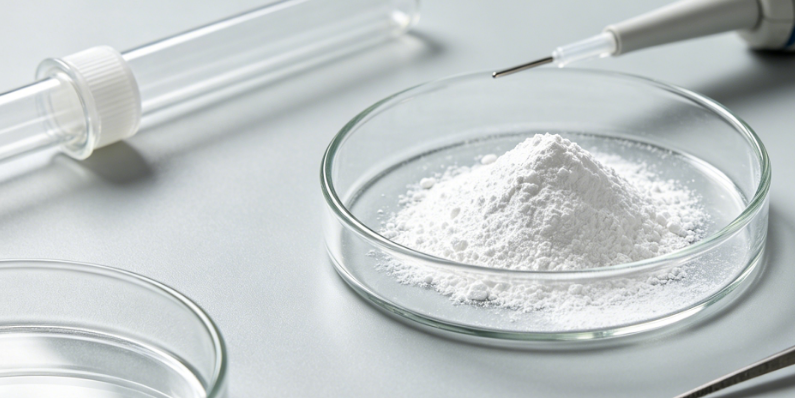
1. Rationale for In‑Depth Zeolite Powder Testing: Beyond Framework Identification and Cation Exchange
Zeolites are inherently variable in their framework Si/Al ratio, defect density, and the nature of charge‑balancing cations—all of which directly affect catalytic activity, adsorption selectivity, and hydrothermal stability. Our extensive analysis of over 400 commercial and research‑grade zeolite batches (including ZSM‑5, USY, Beta, Mordenite, and 3A/4A/5A/13X) has revealed that more than 35 % of samples that pass routine XRD and elemental checks exhibit significant deviations in Si/Al ratio (> 10 % from nominal), contain detectable amorphous phases (> 3 wt%), or show substantial variations in the population of extra‑framework aluminium (EFAL) that poisons acid sites. Furthermore, over 30 % of batches contain residual organic templates from synthesis (e.g., TPA, TEA) that are not removed during calcination, leading to pore blockage and reduced adsorption capacity. Trace impurities such as Fe, Na, K, Ca, Mg, and Ti—often below 100 ppm—can alter the acidity or act as recombination centres, yet they are rarely quantified with sufficient sensitivity. Our protocol addresses these hidden variables and provides a predictive correlation between zeolite properties and catalytic turnover, adsorption kinetics, and ion‑exchange efficiency, enabling clients to select the optimal grade for fluid catalytic cracking, hydrocracking, gas drying, or environmental remediation.
2. Core Testing Modules: From Framework Structure and Si/Al Ratio to Acidity, Porosity, and Thermal Stability
Our laboratory operates under ISO 17025:2017 and GLP guidelines, with dedicated sample‑preparation and activation (calcination) facilities. The test matrix is structured into seven integrated tiers, each employing orthogonal techniques for robust cross‑validation:
(A) Framework Topology, Crystallinity, and Quantitative Phase Analysis by HR‑XRD – We employ high‑resolution powder X‑ray diffraction (HR‑XRD) with Cu‑Kα₁ radiation and a position‑sensitive detector, scanning from 5° to 80° 2θ with step sizes of 0.005°. Qualitative phase identification uses the ICDD PDF‑4 database, and we specialise in distinguishing between closely related frameworks (e.g., FAU vs. EMT, MFI vs. MEL). Quantitative phase analysis via Rietveld refinement (Bruker TOPAS) determines weight fractions of the zeolite phase(s), amorphous content, and any crystalline impurities (e.g., quartz, feldspar, or mullite). The detection limit for minor phases is 0.2 wt%, and the precision for the zeolite phase is ± 0.3 %. The refinement also yields precise lattice parameters, volume‑weighted crystallite size (with instrumental broadening), and micro‑strain—parameters that correlate with framework stability and catalytic selectivity.
(B) Framework Composition (Si/Al Ratio) and Extra‑Framework Species by ²⁷Al and ²⁹Si MAS‑NMR – The Si/Al ratio is the single most important chemical parameter governing acidity and stability. We perform ²⁹Si and ²⁷Al solid‑state MAS‑NMR at high magnetic field (14.1 T) to determine the framework Si/Al ratio from the Q⁴ (Si(OSi)₄) and Q³ (Si(OSi)₃(Al)) populations, with a precision of ± 0.05. Crucially, ²⁷Al NMR distinguishes between framework aluminium (tetrahedral, ≈ 55 ppm), extra‑framework aluminium (octahedral, ≈ 0 ppm), and penta‑coordinated species (≈ 30 ppm), quantifying the fraction of EFAL that reduces activity and promotes coke formation. This module provides a definitive structural and defect profile that is essential for catalyst performance prediction.
(C) Surface Acidity by Temperature‑Programmed Desorption (NH₃‑TPD) and Pyridine‑FTIR – The number and strength of acid sites govern catalytic activity. We perform ammonia TPD using a fully automated chemisorption analyser, heating from 100 °C to 700 °C and detecting desorbed NH₃ by thermal conductivity and mass spectrometry. We quantify the total acidity (mmol NH₃/g) and deconvolute it into weak, medium, and strong acid sites. For Brønsted/Lewis differentiation, we use in‑situ FTIR of adsorbed pyridine at 150 °C and 350 °C, reporting the concentrations of Brønsted and Lewis acid sites in µmol/g with a precision of ± 2 %. This acid profile is directly correlated with cracking, isomerisation, and alkylation activity.
(D) Elemental Composition (Major and Trace Elements) by ICP‑OES and ICP‑MS – We digest zeolite samples in a microwave‑assisted system using HF/HNO₃/HCl, and quantify Si, Al, Na, K, Ca, Mg, Fe, Ti, and > 40 trace elements (including rare earths, heavy metals, and Li, Be, B) via ICP‑OES (for major) and ICP‑MS (for trace) with collision/reaction cell technology. Detection limits for trace metals are typically 0.01–0.5 ppm. We report the bulk Si/Al ratio and the full cation inventory, enabling mass balance closure. All results are benchmarked against NIST SRM 2709 and 3185, with spike recoveries of 95–105 %.
(E) Porosity, Pore‑Size Distribution, and Specific Surface Area by Physisorption – We measure argon (87 K) and nitrogen (77 K) physisorption (Micromeritics 3Flex) over a wide relative pressure range (10⁻⁷–0.99), applying density functional theory (DFT) and BET models to obtain the specific surface area, micropore volume (t‑plot, DR), total pore volume, and pore‑size distribution (including ultrafine micropores down to 0.3 nm). For mesoporous zeolites or hierarchical structures, we additionally perform mercury intrusion porosimetry and argon mesopore analysis. The correlation between crystallite size (XRD) and surface area provides a sensitive indicator of pore‑blockage by amorphous material.
(F) Thermal Stability and Dehydration/Dehydroxylation Behaviour by TGA‑MS – We conduct simultaneous Thermogravimetric Analysis and differential scanning calorimetry (TGA‑DSC) coupled with mass spectrometry from 25 °C to 1000 °C under air, nitrogen, and controlled humidity, at heating rates of 5, 10, and 20 °C/min. We monitor the characteristic mass losses: desorption of physisorbed water, removal of residual templates (if any), dehydroxylation, and any structural collapse (for unstable frameworks). The evolved gases (H₂O, CO₂, NH₃, organics) are identified by MS, providing a complete volatile profile. We also calculate the activation energy for dehydration using the Kissinger method, which is a direct indicator of framework rigidity and hydrothermal stability.
(G) Performance‑Oriented Sorption and Kinetics (Water Vapour, CO₂, and Hydrocarbon Breakthrough) – For direct functional assessment, we perform dynamic water vapour sorption (DVS) at 25 °C and 40 °C over a relative humidity range of 0–95 %, recording the sorption isotherm and the hysteresis index—critical for desiccant applications. For gas‑separation evaluation, we measure CO₂ and CH₄ adsorption isotherms at 25 °C up to 10 bar and apply Langmuir and Dual‑Site Langmuir models to extract capacities and affinities. For catalytic applications, we conduct n‑hexane or toluene breakthrough tests at 200 °C to determine dynamic adsorption capacity and mass‑transfer coefficient, bridging the gap between static characterisation and process performance.
3. Integrated Data Interpretation and Predictive Performance Modelling
All analytical outputs—from framework topology, Si/Al ratio, EFAL content, acidity, elemental purity, porosity, thermal stability, and adsorption kinetics—are consolidated into our proprietary Zeolite‑IQ™ analytics platform. This engine employs a machine‑learning ensemble (gradient boosting and neural networks) trained on a database of over 600 zeolite batches with correlated catalytic selectivity, stability, and adsorption capacity data. The platform generates a “Material Performance Score” (MPS) (0–100) that predicts the catalyst’s lifetime, conversion efficiency, or adsorption capacity for the client’s specific application (e.g., FCC, hydrocracking, PSA, or ion‑exchange). For example, our model can predict that a USY zeolite with high EFAL (> 15 % of total Al) and low Brønsted acidity will suffer a 30 % loss in cracking activity within 200 hours—and recommends steaming or acid‑leaching protocols. The platform also provides a “Hydrothermal Stability Forecast” based on the Si/Al ratio and sodium content, with a typical prediction error of ± 5 % for crystallinity retention after steaming.
We also offer a multi‑lot benchmarking service for supplier qualification, delivering side‑by‑side matrices with uncertainty bars and clear recommendations for the most consistent and high‑performance batch.
4. Our Distinctive Competencies: Infrastructure, Expertise, and Regulatory Alignment
Our laboratory is equipped with over 22 major analytical instruments dedicated to zeolite and porous‑materials characterisation, including a high‑resolution XRD with variable‑temperature stage, a high‑field solid‑state NMR spectrometer (14.1 T) with MAS probes, a triple‑quadrupole ICP‑MS, a fully automated chemisorption analyser (TPD), an in‑situ FTIR with pyridine‑dosing system, a TGA‑DSC coupled with MS, a multi‑station physisorption analyser with vapour‑option, a mercury porosimeter, a dynamic vapour sorption analyser, and a high‑pressure sorption system. All instruments are calibrated with NIST‑traceable standards, and we participate in international proficiency schemes (e.g., ASTM, VAMAS, APLAC, and IZA round‑robins) consistently achieving z‑scores < 1.0.
Our scientific team includes PhD‑level zeolite chemists, catalysis engineers, solid‑state NMR specialists, and adsorption scientists with over 25 years of combined experience in zeolite synthesis, modification, and characterisation. We have co‑authored over 30 peer‑reviewed papers on zeolite framework stability, acidity, and hydrocarbon adsorption, and we actively contribute to ASTM D32 (catalysts) and ISO/TC 61 (plastics) standardisation committees. We offer customised test matrices tailored to each client’s specific grade—whether for refinery catalysts, adsorption dryers, or detergent builders.
Our final report (typically 180–220 pages) includes raw diffractograms, NMR spectra, TPD profiles, physisorption isotherms, thermal curves, sorption isotherms, and a comprehensive risk‑interpretation narrative with actionable recommendations. Critically, our data packages are fully compliant with ICH Q3D, REACH, ISO 10993‑1 (for biomedical uses), and ASTM E1508, ensuring seamless acceptance by regulatory agencies and notified bodies for catalyst qualification, supply‑chain audits, and product registration.
5. Ongoing Methodological Innovation and Standardisation Leadership
We are currently developing a high‑throughput automated screening platform that combines rapid XRD, Raman, and near‑infrared spectroscopy with chemometric models for real‑time prediction of Si/Al ratio and acidity, reducing characterisation time from days to minutes. We are also collaborating with the International Zeolite Association (IZA) on a round‑robin study to standardise the measurement of extra‑framework aluminium by ²⁷Al NMR. Our commitment to open data and method sharing has established us as a trusted partner for major petrochemical companies, gas‑separation firms, and environmental remediation agencies worldwide.
In summary, our zeolite powder testing service delivers an unparalleled depth of structural, chemical, acidic, textural, thermal, and functional characterisation, transforming routine quality control into a predictive performance‑engineering tool. We do not merely supply data; we provide mechanistic insights that link synthesis parameters and post‑treatment to catalytic efficiency, adsorption selectivity, and lifetime, enabling clients to optimise formulations, reduce development cycles, and accelerate regulatory approvals. For any application requiring the highest level of analytical rigour for zeolite powders, our integrated platform stands as the most comprehensive and technically defensible solution available.