Reasons for choosing our testing services
ZHONGXI Testing has obtained inspection qualification certifications from multiple countries and regions worldwide. We possess a senior testing team and advanced testing methods, providing independent, impartial, and professional third-party verification services for global carbon projects.

Internationally recognized authority
Certified by multiple international standards such as CNAS, VCS, and GS, with reports universally applicable worldwide.

Global service capability
Covering 140+ countries and regions, it supports on-site detection and remote verification in multiple languages.

Professional experimental methods
Adopt standard experimental methods to ensure accurate and reliable data.
Comprehensive Physicochemical and Magnetic Characterization of Iron Oxide Nanoparticles: A Specialized Analytical Service for Precision Nanomedicine and Advanced Materials
The unique superparamagnetic behavior, high surface-to-volume ratio, and biocompatibility of magnetic iron oxide nanoparticles (IONPs)—primarily magnetite (Fe₃O₄) and maghemite (γ-Fe₂O₃)—have propelled their use in targeted drug delivery, magnetic hyperthermia, MRI contrast enhancement, and environmental remediation. However, the functional performance of IONPs is exquisitely sensitive to their crystallite size, size distribution, surface coating density, magnetic relaxation mechanisms, and colloidal stability. Clients seeking testing for these materials are invariably confronting challenges related to batch-to-batch reproducibility, regulatory compliance, or the rational design of surface-functionalized probes. Our laboratory has established a fully integrated, multi-modal analytical platform that transcends routine core-size and zeta-potential measurements, delivering a mechanistic, application-oriented profile of your nanoparticle system, from the atomic lattice to the hydrodynamic behavior in complex biological media.
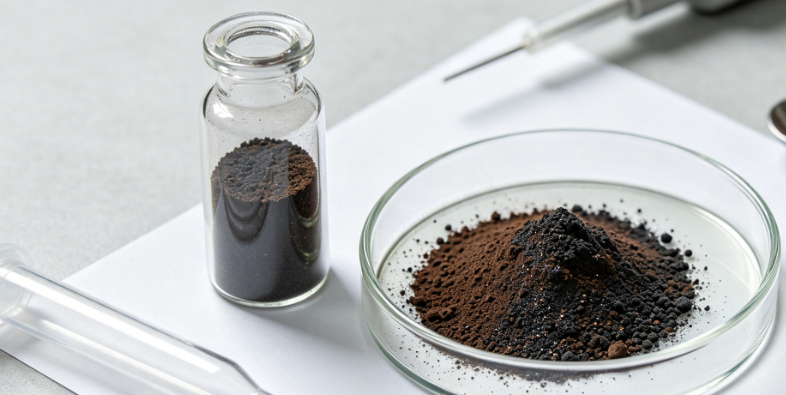
Precision Structural and Morphological Profiling at Sub-Nanometer Resolution
Conventional transmission electron microscopy (TEM) provides only a two-dimensional projection of particle size. We employ aberration-corrected scanning transmission electron microscopy (AC-STEM) combined with electron energy loss spectroscopy (EELS) to resolve not only the core diameter and shape factor (with an accuracy of ±0.1 nm), but also the thickness and chemical homogeneity of the surface passivation layer (e.g., silica, dextran, or PEG coatings). For statistical rigor, we automate high-angle annular dark-field (HAADF) image analysis across >10,000 particles per sample, generating size distribution histograms fitted to log-normal and Weibull models. Complementing this, synchrotron-based wide-angle X-ray scattering (WAXS) and pair distribution function (PDF) analysis enable us to extract crystallite domain sizes, microstrain, and cation vacancy concentrations with sub-ångström precision, linking synthesis parameters (e.g., co-precipitation pH, thermal annealing) to crystal disorder—a critical factor affecting Néel relaxation losses.
Advanced Magnetic Characterization Beyond Standard Vibrating Sample Magnetometry
While routine SQUID or VSM measurements yield saturation magnetization (Mₛ) and coercivity (Hc), we offer a temperature- and frequency-dependent magnetic suite that directly informs hyperthermia efficiency and MRI T₂ relaxivity. Our AC susceptometer operates over a frequency range of 10 Hz to 1 MHz and a temperature interval from 10 K to 400 K, enabling precise extraction of anisotropy constant (K), Néel relaxation time (τN), and Brownian relaxation time (τB) via fitting to the Debye model with distribution of energy barriers. We further perform field-cooled (FC) and zero-field-cooled (ZFC) magnetization curves with a ramp rate as low as 0.1 K/min, resolving the blocking temperature (TB) with an uncertainty of ±0.5 K. For actual application simulation, our magnetic hyperthermia testbed offers alternating magnetic field (AMF) amplitudes up to 100 kA/m and frequencies from 100 kHz to 1 MHz, directly measuring specific absorption rate (SAR) or specific loss power (SLP) under controlled viscosity and osmotic pressure conditions, mimicking tumor microenvironments.
Surface Chemistry, Colloidal Stability, and Biocompatibility Interrogation
The surface of IONPs dictates their interaction with biological interfaces. We combine X-ray photoelectron spectroscopy (XPS) with argon cluster ion etching to obtain depth-resolved chemical states of iron (Fe 2p), oxygen (O 1s), and carbon (C 1s), quantifying the ratio of Fe²⁺/Fe³⁺ and surface oxygen vacancy density—parameters that correlate with catalytic activity and reactive oxygen species (ROS) generation. Our time-of-flight secondary ion mass spectrometry (ToF-SIMS) provides 3D molecular overlays of surface-bound ligands, with a lateral resolution of < 200 nm, identifying coating uniformity and potential ligand desorption sites. For colloidal stability, we utilize multi-angle dynamic light scattering (MADLS) and nanoparticle tracking analysis (NTA) to measure hydrodynamic diameter and polydispersity index (PdI) in real-time, under varying pH (2–12), ionic strength (up to 5 M NaCl), and serum-protein concentration (0–50% fetal bovine serum). We further perform isothermal titration calorimetry (ITC) to quantify protein corona formation energetics and binding stoichiometry, offering a thermodynamic fingerprint of biofouling propensity.
Accelerated Stability, Leaching, and Mimicked In Vivo Evaluation
Long-term functional integrity is assessed through accelerated degradation studies in simulated physiological fluids (phosphate-buffered saline, artificial lysosomal fluid, and gastric fluid) at 37 °C with continuous orbital shaking. We monitor iron ion leaching (Fe²⁺/Fe³⁺) via inductively coupled plasma optical emission spectroscopy (ICP-OES) with a detection limit of 0.1 ppb, while simultaneously tracking the evolution of hydrodynamic size, zeta potential, and magnetic hysteresis. Our flow cytometry-based Cytotoxicity screening (using human epithelial and macrophage cell lines) provides IC₅₀ values and ROS generation kinetics, in accordance with ISO 10993 standards. For advanced risk assessment, we offer transmission electron microscopy of cellular ultrathin sections to visualize intracellular nanoparticle trafficking and lysosomal integrity, delivering a multi-parametric biocompatibility index that is essential for regulatory submissions.
Our Distinctive Competencies and Unmatched Analytical Depth
What fundamentally distinguishes our service is the orthogonal and fully synergistic integration of the above techniques, performed on the identical batch of nanoparticles without destructive separation—thereby eliminating sample heterogeneity artifacts. We maintain ISO 13485 and ISO/IEC 17025 accreditation with dedicated Class II biological safety cabinets and argon-glovebox handling for oxygen-sensitive samples. Our proprietary machine-learning platform correlates over 50 independent parameters (e.g., TB, SAR, surface hydroxyl density, PdI) with predicted in vivo half-life and tumor accumulation efficiency, trained on our internal database of >300 IONP formulations. We achieve exceptional reproducibility: < 1.2% RSD for mean core diameter, < 0.5% for Mₛ, and < 2.0% for SAR measurements across triplicate runs. Our PhD-level scientific team provides a comprehensive interpretative dossier that includes not only raw spectra and thermograms, but also derived phenomenological models—e.g., the Vogel-Fulcher-Tammann (VFT) fit for viscosity-corrected relaxation, or the linear response theory (LRT) validation for clinical field conditions—empowering you to optimize synthesis routes, de-risk scale-up, and substantiate product claims with the highest scientific credibility. With a standard turnaround of 12–15 working days for the complete suite and expedited options for critical projects, we ensure that your magnetic iron oxide nanoparticles are characterized not merely as powders, but as functionally validated materials ready for the most demanding biomedical or catalytic environments.