Reasons for choosing our testing services
ZHONGXI Testing has obtained inspection qualification certifications from multiple countries and regions worldwide. We possess a senior testing team and advanced testing methods, providing independent, impartial, and professional third-party verification services for global carbon projects.

Internationally recognized authority
Certified by multiple international standards such as CNAS, VCS, and GS, with reports universally applicable worldwide.

Global service capability
Covering 140+ countries and regions, it supports on-site detection and remote verification in multiple languages.

Professional experimental methods
Adopt standard experimental methods to ensure accurate and reliable data.
Advanced Multi-Modal Characterization of Microwave Catalysts: A Specialized Testing Framework for Rational Design and Performance Optimization
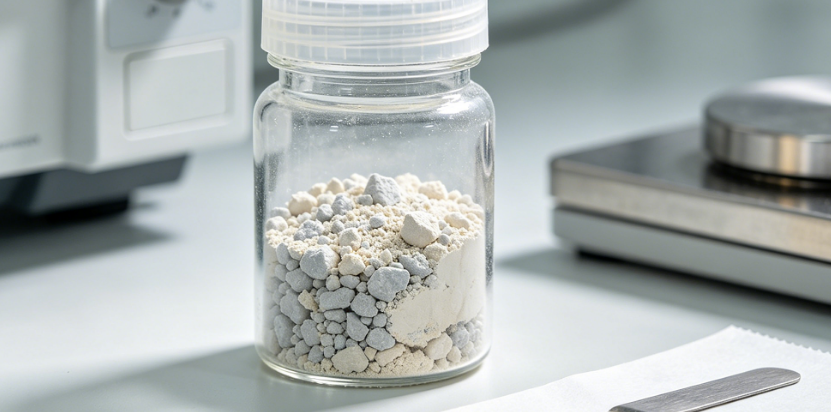
The rapid adoption of microwave-assisted heterogeneous catalysis—spanning chemical synthesis, environmental abatement, and biomass conversion—has exposed a critical gap in conventional catalyst evaluation protocols. Unlike thermal catalysis, microwave-driven reactions are governed by a complex interplay of dielectric loss, thermal gradients, hot-spot formation, and non-thermal electromagnetic field effects. Clients seeking testing for microwave catalysts are typically engaged in developing novel susceptor materials (e.g., SiC, carbon-based composites, spinel ferrites, or metal-organic framework derivatives) and require a mechanistic understanding of how microwave-specific parameters correlate with catalytic activity, selectivity, and stability. Our laboratory has established a comprehensive, application-tailored analytical pipeline that integrates high-frequency electromagnetic characterization, operando thermal mapping, and reaction kinetics profiling, delivering a holistic performance fingerprint that extends far beyond standard BET surface area and thermogravimetric analyses.
Precision Dielectric and Electromagnetic Response Profiling
At the heart of microwave catalysis lies the material's ability to absorb and convert microwave energy into localized heat or active electronic states. We employ a vector network analyzer (VNA) coupled with a custom-designed high-temperature dielectric probe to measure complex permittivity (ε' and ε'') and complex permeability (μ' and μ'') over a frequency range of 0.5 to 20 GHz and a temperature interval from room temperature to 1000 °C under controlled inert, oxidative, or reducing atmospheres. This enables the extraction of dielectric loss tangent (tan δ) and microwave penetration depth as a function of temperature and frequency—critical parameters for predicting heating uniformity and energy coupling efficiency. For advanced material systems, we perform broadband dielectric spectroscopy (1 MHz – 20 GHz) with equivalent circuit modeling (Cole-Cole and Havriliak-Negami fitting) to deconvolute contributions from ionic conduction, dipolar polarization, and interfacial (Maxwell-Wagner) relaxation. Our temperature-controlled resonant cavity perturbation system further allows measurement of dielectric properties at the exact frequency of your industrial microwave reactor (e.g., 915 MHz or 2.45 GHz) with an accuracy of ±2% for ε' and ±3% for ε'', ensuring direct scalability from laboratory to production.
Operando Thermal Mapping and Catalytic Performance Assessment Under Microwave Irradiation
Conventional fixed-bed evaluation under external heating fails to capture the steep thermal gradients and dynamic temperature profiles that occur during microwave absorption. Our facility is equipped with a dedicated microwave-assisted catalytic reactor (2.45 GHz, 0–1200 W, variable pulsed mode) integrated with fiber-optic thermometry (six spatially distributed probes) and infrared thermal imaging (high-speed FLIR camera, 50 Hz frame rate) to construct real-time 2D and 3D temperature maps of the catalyst bed and pellet surfaces with a spatial resolution of < 1 mm. Simultaneously, we monitor effluent gas composition via inline quadrupole mass spectrometry (QMS) and Fourier-transform infrared (FTIR) spectroscopy, enabling the simultaneous acquisition of temperature-dependent conversion, selectivity, and apparent activation energy (under microwave and thermal modes) for reactions such as dry reforming of methane, ammonia decomposition, or VOC oxidation. To differentiate purely thermal from non-thermal microwave effects, we conduct comparative isothermal experiments under identical temperature profiles achieved by conventional electric heating, using our unique dual-mode (microwave/conductive) reactor that permits direct crossover analysis. We further provide microwave power modulation studies (square, sine, and ramped waves) to quantify catalyst responsiveness to transient energy input, mimicking intermittent renewable-powered scenarios.
Structural and Chemical Evolution Under Microwave Irradiation
Microwave exposure can induce structural reorganization, phase transformations, and surface defect generation that are not observed under conventional calcination. We perform ex situ and operando X-ray diffraction (XRD) with a microwave-compatible diffractometer to monitor crystallite growth, lattice strain, and phase purity during and after microwave treatment. For deeper insight, our transmission electron microscopy (TEM) with in situ microwave biasing holder (prototype stage) allows real-time imaging of nanoparticle coalescence, facet reconstruction, and amorphization at the atomic scale, with a point resolution of 0.08 nm. Complementary Raman spectroscopy (with 532 nm and 785 nm lasers) and photoluminescence (PL) spectroscopy are performed on the same samples to detect carbonaceous species, oxygen vacancies, and metal-support interactions (MSI) that evolve upon microwave heating—providing a direct link between microwave absorption history and surface active site density. Additionally, our temperature-programmed reduction (TPR) and temperature-programmed oxidation (TPO) are adapted for microwave pre-treated samples to measure redox reversibility and oxygen storage capacity under conditions that replicate actual duty cycles.
Stability, Leaching, and Microwave Durability Testing
Industrial viability demands that catalysts withstand repeated microwave cycling without degradation. We have designed an accelerated aging protocol involving 500 on/off microwave cycles (each 10 min at 800 W), followed by a full re-characterization battery to assess changes in specific surface area (BET), pore volume, metal dispersion (CO chemisorption), and structural integrity (SEM-EDS mapping). For liquid-phase microwave processes, we perform leaching tests under autoclave conditions with online ICP-MS monitoring of dissolved metal species (detection limit < 0.1 ppb) at varying pH (2–12) and temperature (up to 200 °C). Our dielectric property re-measurement after aging provides a “dielectric stability index” that predicts the material's usable lifetime, a parameter often absent from standard catalyst datasheets.
Our Distinctive Competencies and Analytical Superiority
What fundamentally sets our service apart is the synergistic integration of electromagnetic, thermal, catalytic, and structural characterization on a single, well-documented sample series, eliminating cross-batch variability and enabling direct correlation between dielectric loss and conversion rate. We operate under a strict quality management system (ISO/IEC 17025) with traceable calibration standards (e.g., NIST SRM for complex permittivity) and proprietary software for deconvolution of thermal and non-thermal contributions. Our team of PhD-level specialists in microwave engineering, catalysis, and solid-state physics provides a comprehensive interpretive report that includes not only raw data but also fitted kinetic models, energy efficiency ratios (EER), and scale-up recommendations—bridging the gap between laboratory findings and industrial reactor design.
We achieve exceptional reproducibility: < 1.5% RSD for permittivity measurements, < 2% for conversion at steady state, and < 1.0% for BET surface area across triplicate runs. Our turnaround time for the full suite (dielectric + catalytic + durability) is 10–15 working days, with expedited 7-day service available for urgent industrial optimization projects. With over 80 successful projects involving diverse microwave catalysts—including perovskites, carbon nanotubes, and supported nickel or cobalt systems—we empower our clients to rationally tune material composition, optimize microwave power programming, and de-risk scale-up with the highest level of scientific rigor and practical insight.