Reasons for choosing our testing services
ZHONGXI Testing has obtained inspection qualification certifications from multiple countries and regions worldwide. We possess a senior testing team and advanced testing methods, providing independent, impartial, and professional third-party verification services for global carbon projects.

Internationally recognized authority
Certified by multiple international standards such as CNAS, VCS, and GS, with reports universally applicable worldwide.

Global service capability
Covering 140+ countries and regions, it supports on-site detection and remote verification in multiple languages.

Professional experimental methods
Adopt standard experimental methods to ensure accurate and reliable data.
Comprehensive Performance and Integrity Assessment of Non‑Spherical Granular Activated Carbons: A Specialized Testing Protocol for Variable‑Shape Adsorbents
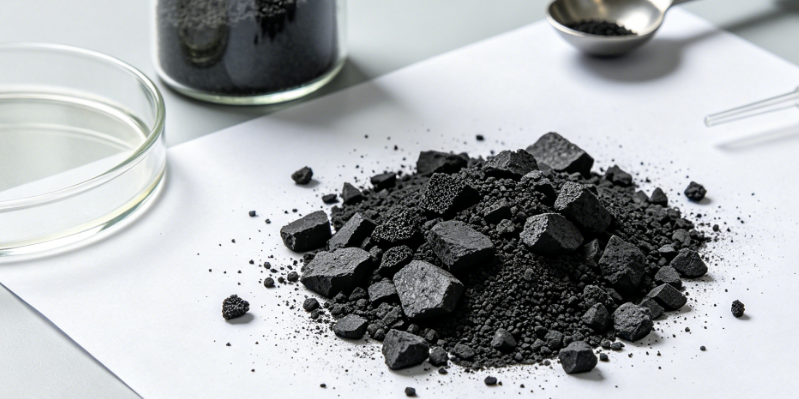
The widespread adoption of granular activated carbons (GAC) in water treatment, gas phase purification, and solvent recovery has increasingly favored irregularly shaped (non‑spherical) particulate forms—including crushed, ground, and sieved fractions—due to their cost‑effectiveness and tailored packing densities. However, the inherent morphological heterogeneity of these materials presents substantial challenges to conventional quality testing: particle size distribution, mechanical attrition, and flow‑related pressure drop are intrinsically coupled with microstructure, surface chemistry, and adsorption kinetics. Clients seeking testing for non‑spherical GAC are typically confronted with the need to optimize backwashing efficiency, minimize fines generation, and guarantee consistent performance across multiple batches, all while meeting stringent regulatory standards. Our laboratory has designed a multi‑parametric, application‑oriented analytical framework that goes far beyond standard iodine number and hardness tests, delivering a statistically robust, process‑relevant profile that directly informs filter design, regeneration schedules, and operational reliability.
High‑Precision Physical and Morphological Characterization
Unlike uniform spherical beads, irregular particles require a three‑dimensional morphological assessment to predict their behavior in packed beds. We employ a dynamic image analysis (DIA) system equipped with a high‑speed camera and advanced shape recognition software, capturing over 50,000 particles per measurement to compute not only the equivalent volume diameter but also aspect ratio, circularity, convexity, and Feret diameter distributions. This dataset is subsequently used to generate statistical shape descriptors (e.g., sphericity, roundness, and fractal dimension), which correlate directly with bulk density and void fraction. For mechanical resilience, we implement a custom‑designed rotating drum attrition tester that operates under controlled humidity and temperature, followed by automated sieving and image analysis of generated fines (down to 10 µm), yielding a breakage probability curve and a degradation rate constant (katt) with an inter‑laboratory reproducibility of < ±3% RSD. This is supplemented by single‑particle crush strength measurements using a micro‑compression tester with a force resolution of 0.5 mN, providing a direct measure of structural integrity against mechanical loads.
Advanced Porosity, Surface Area, and Pore Architecture Analysis
While BET surface area is a routine metric, the heterogeneous nature of crushed GAC often leads to artifactual micropore restriction and mesopore interconnectivity that affect diffusion rates. We perform nitrogen physisorption at 77 K and argon physisorption at 87 K with a full isotherm acquisition (over 150 equilibrium points) over a relative pressure range from 10⁻⁶ to 0.995. Using density functional theory (DFT) and quenched solid DFT (QSDFT) with carbon‐slit and cylindrical pore models, we resolve pore size distributions (PSD) from ultramicropores (< 0.5 nm) to mesopores (up to 50 nm) with sub‑ångström resolution. For irregular particles, we pay special attention to external surface area (via the t‑plot method) and micropore volume, which we cross‑validate with carbon dioxide adsorption at 273 K to avoid diffusion limitations. Furthermore, we offer mercury intrusion porosimetry (MIP) up to 60,000 psi to measure macropore volume, particle density, and skeletal density, providing a complete pore hierarchy that is critical for predicting mass transfer in both liquid and gas phases.
Surface Chemistry, Functional Group Quantification, and Adsorption Performance
The irregular surface of crushed GAC often presents a non‑uniform distribution of oxygen‑containing moieties, which directly influences polarity, wettability, and heavy metal removal. We employ a multi‑technique surface characterization suite: X‑ray photoelectron spectroscopy (XPS) with depth profiling to quantify surface O/C ratio and the relative abundance of carboxyl, carbonyl, hydroxyl, and lactone groups; temperature‑programmed desorption (TPD) coupled with mass spectrometry to measure functional group densities (with a detection limit of 0.02 mmol/g); and Boehm titration (automated potentiometric) for acidic/basic site quantification. For dynamic performance, we conduct breakthrough column tests using standard adsorbates (methylene blue, iodine, and phenol) under flow conditions that mimic real filtration (varying bed height, superficial velocity, and influent concentration). We also offer challenge tests with emerging contaminants (e.g., PFAS, microcystins) to provide adsorption capacity and mass transfer zone length, with online UV‑vis and TOC monitoring to generate complete breakthrough curves that are fitted to the Thomas, Yoon‑Nelson, and Adams‑Bohart models.
Hydraulic Behavior and Fouling Resistance Under Realistic Conditions
Irregular particles are notorious for uneven packing, channeling, and increased pressure drop during operation. Our hydraulic test rig allows measurement of head loss as a function of flow rate for different particle size fractions and bed compression ratios, with real‑time pressure transducers (accuracy ±0.1 kPa) across a range of Reynolds numbers (0.1–50). We perform repeated backwash cycles with controlled upward flow and measure bed expansion ratios using ultrasonic bed level detection and visual particle tracking. For fouling assessment, we subject the GAC to accelerated loading with natural organic matter (NOM) or oil/water emulsions for up to 100 hours, followed by surface imaging (SEM‑EDS) and chemical cleaning efficacy tests to quantify irreversible fouling fraction and regeneration recovery efficiency. This yields a hydraulic stability index that is essential for filter sizing and backwashing frequency planning.
Our Distinctive Competencies and Unmatched Analytical Rigor
What distinguishes our service is the systematic integration of morphological, physicochemical, and hydraulic parameters derived from the same representative sample lot, ensuring direct correlations between shape descriptors and performance metrics. We operate under ISO/IEC 17025 accreditation with in‑house reference materials (irregular GAC) that have been cross‑calibrated with international round‑robin studies. Our proprietary statistical fusion algorithm combines over 30 independent variables (e.g., circularity, micropore volume, TPD peak temperature, attrition constant) into a single “Operational Robustness Score” (ORS) that ranks your material against a database of >150 commercial products, enabling rapid benchmarking and troubleshooting.
We achieve exceptional measurement precision: < 1.0% RSD for BET surface area, < 1.5% for total pore volume, < 2.0% for attrition loss, and < 3.0% for breakthrough capacity (q0) across triplicate column runs. Our turnaround time for the complete suite (including dynamic column tests) is 10–14 working days, with a priority 6‑day service available for urgent operational issues. Crucially, our team of PhD‑level material scientists and chemical engineers provides a comprehensive interpretive dossier that translates raw data into actionable recommendations—such as optimal sieving cut, backwash intensity, and replacement intervals—tailored to your specific treatment train (e.g., drinking water, wastewater, or flue gas). With over 120 successful projects on irregular GAC from diverse feedstocks (coal, coconut, wood, and peat), we empower you to standardize procurement specifications, predict filter lifetime, and minimize operational downtime with the highest level of scientific defensibility.