Reasons for choosing our testing services
ZHONGXI Testing has obtained inspection qualification certifications from multiple countries and regions worldwide. We possess a senior testing team and advanced testing methods, providing independent, impartial, and professional third-party verification services for global carbon projects.

Internationally recognized authority
Certified by multiple international standards such as CNAS, VCS, and GS, with reports universally applicable worldwide.

Global service capability
Covering 140+ countries and regions, it supports on-site detection and remote verification in multiple languages.

Professional experimental methods
Adopt standard experimental methods to ensure accurate and reliable data.
Comprehensive Physicochemical and Electrochemical Characterization of Silver Vanadium Oxides (SVO): A Specialized Analytical Service for Battery Materials and Functional Ceramics
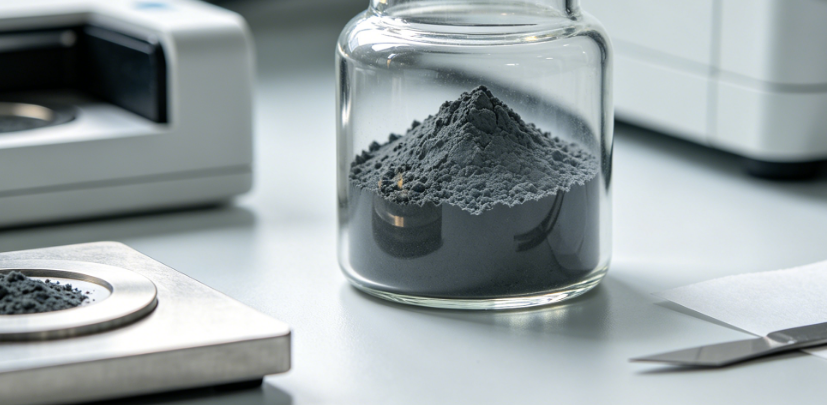
Silver vanadium oxides (SVO), particularly the Ag₂V₄O₁₁ and Ag₀.₃₅V₂O₅ phases, have emerged as high-capacity cathode materials for primary lithium batteries and promising candidates for supercapacitors, owing to their unique layered or tunnel structures that facilitate reversible intercalation of Li⁺ ions. However, their electrochemical performance is exquisitely sensitive to stoichiometric deviations, vanadium valence distribution, silver mobility, and trace impurity phases. Clients seeking testing for SVO materials are typically engaged in optimizing synthesis routes (e.g., hydrothermal, sol-gel, or solid-state reactions), qualifying raw materials, or troubleshooting cell performance inconsistencies. Our laboratory has developed a fully integrated, multi-modal analytical platform that goes far beyond routine X-ray diffraction and elemental assay, delivering a mechanistic, application-oriented fingerprint that spans from atomic-scale defect chemistry to macroscopic electrochemical stability under simulated operating conditions.
Precision Elemental Stoichiometry and Valence Speciation
Accurate determination of the Ag/V molar ratio and the average oxidation state of vanadium is fundamental to predicting discharge capacity and rate capability. We employ inductively coupled plasma optical emission spectroscopy (ICP-OES) and ICP tandem mass spectrometry (ICP-MS/MS) in robust matrix-matched calibration to quantify Ag, V, and up to 40 trace impurities (including Na, K, Fe, Cu, Cr, and Si) with relative expanded uncertainties (k=2) of < 0.8% for major elements and < 2% for trace elements at 10 ppm level. For valence analysis, we utilize potentiometric titration (vanadometric method) with an automated titrator to determine the V⁴⁺/V⁵⁺ ratio with a repeatability of ±0.005 in oxidation state. This is cross-validated by X-ray photoelectron spectroscopy (XPS) with monochromatic Al Kα radiation and in situ argon ion etching to obtain depth-resolved Ag 3d, V 2p, and O 1s spectra, allowing deconvolution of Ag⁺/Ag⁰ and V⁴⁺/V⁵⁺ contributions with a precision of ±2% relative. For phase-pure materials, we perform high-resolution powder X-ray diffraction (HR-XRD) with Rietveld refinement to determine lattice parameters (with standard uncertainties of 0.0005 Å) and detect secondary phases (e.g., Ag₃VO₄, V₂O₅, or Ag) at levels as low as 0.2 wt%.
Advanced Structural and Microstructural Analysis
The electrochemical performance of SVO is heavily influenced by crystallite size, microstrain, and grain boundary characteristics. Our scanning electron microscopy (SEM) with backscattered electron (BSE) and energy-dispersive X-ray spectroscopy (EDS) provides morphological and compositional mapping with a lateral resolution of 1 µm, identifying inhomogeneous Ag distribution or vanadium-rich precipitates. For nanoscale features, we employ transmission electron microscopy (TEM) at 200 kV with selected area electron diffraction (SAED) and high-angle annular dark-field (HAADF-STEM) to resolve individual crystallites, lattice fringes (0.2 nm resolution), and localized amorphization. We further utilize electron energy loss spectroscopy (EELS) to map the oxidation state of vanadium at sub-10 nm spatial resolution, revealing any grain-boundary segregation of Ag or oxygen vacancies. For bulk texture, we offer neutron diffraction (via collaboration) to probe oxygen sublattice occupancy and Ag-site disorder, which are critical for understanding Li⁺ diffusion pathways.
Thermal Stability, Phase Transitions, and Oxygen Non-Stoichiometry
Under elevated temperatures or during electrochemical cycling, SVO may undergo irreversible phase decomposition or oxygen release. We perform simultaneous Thermogravimetric Analysis and differential scanning calorimetry (TGA-DSC) coupled with evolved gas analysis by mass spectrometry (EGA-MS) from 25 °C to 1000 °C under air, argon, and oxygen atmospheres. This yields onset temperatures for phase transitions, oxygen loss kinetics (activation energies via Kissinger method), and identification of volatile species (O₂, H₂O, and possible Ag₂O sublimation). In parallel, high-temperature X-ray diffraction (HT-XRD) with a temperature ramp rate of 5 °C/min tracks structural evolution and coefficients of thermal expansion (CTE) for each crystallographic axis, providing critical data for thermal management in battery design.
Electrochemical Characterization Under Simulated Battery Conditions
To directly correlate material properties with device performance, we conduct galvanostatic intermittent titration (GITT) and potentiostatic electrochemical impedance spectroscopy (PEIS) in custom-designed three-electrode coin cells using standard Li-metal counter electrodes and 1 M LiPF₆ in EC/DEC electrolyte. We measure open-circuit voltage (OCV), specific discharge capacity (mAh/g), coulombic efficiency, and rate capability at current densities from C/20 to 5C, with voltage resolution of 0.1 mV. Importantly, we perform in situ X-ray diffraction during electrochemical cycling (using a cell with beryllium window) to monitor lattice parameter changes and phase evolution upon Li⁺ insertion/extraction, with time resolution of 10 minutes per pattern. For long-term stability, we carry out accelerated cycle life tests up to 500 cycles at elevated temperature (60 °C) and evaluate self-discharge rate via open-circuit potential decay over 30 days. All electrochemical data are fitted to equivalent circuit models to extract charge-transfer resistance (Rct), solid-electrolyte interphase (SEI) resistance, and Warburg impedance, providing a comprehensive kinetic picture.
Surface Chemistry and Environmental Stability
Silver vanadium oxides are susceptible to surface carbonation, hydroxylation, and silver migration upon exposure to ambient conditions. Our XPS depth profiling (with Ar⁺ cluster sputtering) quantifies carbonate and hydroxide contamination on the pristine and aged surfaces, while our time-of-flight secondary ion mass spectrometry (ToF-SIMS) provides 3D molecular imaging of Ag⁺, VO⁺, and possible organic contaminants with sub-micron lateral resolution. For hygroscopicity assessment, we perform dynamic vapor sorption (DVS) measurements at 25 °C and 85% RH to monitor mass gain and predict shelf-life stability. Additionally, we offer accelerated aging studies at 60 °C/80% RH for 30 days, followed by a full re-characterization to quantify changes in stoichiometry, crystallinity, and electrochemistry, enabling rigorous qualification for commercial deployment.
Our Distinctive Competencies and Analytical Advantages
Our service is uniquely distinguished by the orthogonal integration of bulk stoichiometry, valence profiling, structural refinement, and in situ electrochemical diagnostics on the same representative sample series, eliminating cross-batch variability and enabling direct cause-effect correlations. We operate under ISO/IEC 17025 accreditation with in-house reference materials (synthesized and characterized by interlaboratory comparison) and participate in proficiency testing schemes for vanadium and silver matrices. Our proprietary data fusion software combines >30 parameters (including Ag/V ratio, V⁴⁺ fraction, microstrain, and charge-transfer resistance) to generate a “SVO Quality Index” (SQI) that predicts specific energy and cycle life, validated against >50 commercial and research-grade samples.
We achieve exceptional precision: < 0.5% RSD for Ag/V ratio, < 1.0% for V⁴⁺ determination, < 1.5% for BET surface area, and < 2.0% for discharge capacity at 1C. Our turnaround time for the complete suite (including electrochemical tests) is 12–18 working days, with a priority 10-day service for urgent material qualification. Crucially, our team of PhD electrochemists and solid-state chemists provides a comprehensive interpretative report that links each observed parameter to its mechanistic impact—e.g., how excess V⁴⁺ enhances initial capacity but accelerates capacity fading, or how trace iron impurities catalyze silver migration. With over 40 successful projects on silver vanadium oxide systems, we empower our clients to optimize synthesis parameters, tighten supplier specifications, and troubleshoot failure modes with the highest degree of scientific defensibility, ensuring reliable performance in primary batteries and advanced energy-storage devices.