Reasons for choosing our testing services
ZHONGXI Testing has obtained inspection qualification certifications from multiple countries and regions worldwide. We possess a senior testing team and advanced testing methods, providing independent, impartial, and professional third-party verification services for global carbon projects.

Internationally recognized authority
Certified by multiple international standards such as CNAS, VCS, and GS, with reports universally applicable worldwide.

Global service capability
Covering 140+ countries and regions, it supports on-site detection and remote verification in multiple languages.

Professional experimental methods
Adopt standard experimental methods to ensure accurate and reliable data.
Advanced Analytical Characterization of Hydroxocobalamin Salts: A Comprehensive Quality and Purity Assessment for Pharmaceutical and Nutraceutical Applications
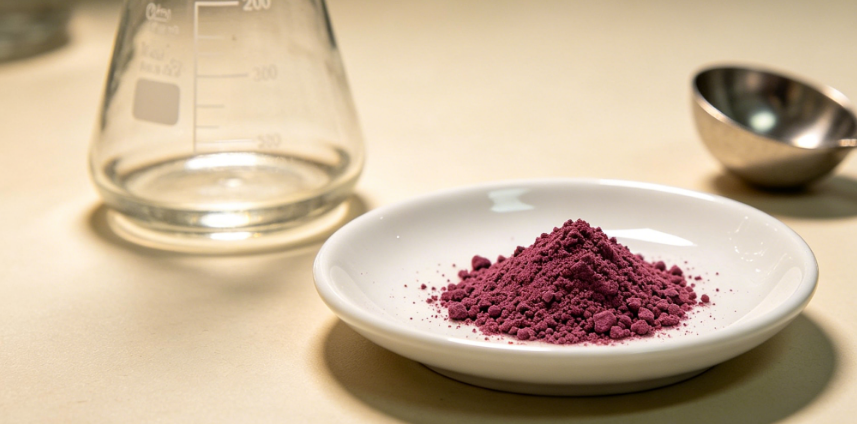
Hydroxocobalamin (vitamin B₁₂a) and its pharmaceutically acceptable salts (e.g., acetate, chloride, or sulfate) are essential cobalamin derivatives used extensively in the treatment of cyanide poisoning, pernicious anemia, and as a nutritional supplement. The clinical efficacy, stability, and safety of these formulations are critically dependent on the absolute purity, accurate cobalt content, stereochemical integrity, and the absence of degradation products such as cyanocobalamin, aquocobalamin, or sulfitocobalamin. Clients seeking testing for hydroxocobalamin salts typically face challenges related to batch-to-batch consistency, compliance with pharmacopoeial monographs (USP, EP, JP), and the detection of trace impurities that may arise from synthesis or storage. Our laboratory has established a fully integrated, multi-technique analytical platform that goes far beyond routine UV-Vis spectrophotometry and classical titration, delivering a mechanistic, stability-indicating profile that ensures your material meets the highest regulatory and therapeutic standards.
Ultra-High Performance Liquid Chromatography for Purity, Impurity Profiling, and Isomer Separation
Reversed-phase HPLC with UV/Vis detection remains the cornerstone of cobalamin analysis, but conventional methods often lack the resolution to separate hydroxocobalamin from its photolytic, thermal, or oxidative degradation products. We employ a validated ultra-high performance liquid chromatography (UHPLC) system equipped with sub-2 µm stationary phase (C18, phenyl-hexyl, or mixed-mode) and diode array detection (DAD) covering 190–700 nm. Our proprietary gradient method achieves baseline separation of hydroxocobalamin from at least eight known related substances (including cyanocobalamin, aquocobalamin, sulfitocobalamin, and the epimers at the ribose moiety) within 15 minutes, with resolution > 2.0 between all critical pairs. We offer comprehensive impurity profiling with quantitation limits as low as 0.02% (area%) for individual unknown impurities and 0.05% for specified impurities, all in full compliance with ICH Q3A/Q3B guidelines. For definitive identification of unknown peaks, we couple the UHPLC with high-resolution mass spectrometry (HRMS) using quadrupole-time-of-flight (Q-TOF) or Orbitrap, enabling accurate mass measurements (sub-ppm mass error) and MS/MS fragmentation to elucidate structures of novel degradation products.
Absolute Cobalt Content and Trace Elemental Analysis by High-Precision ICP-MS
Hydroxocobalamin contains a single cobalt atom per molecule; deviations from the theoretical cobalt content indicate the presence of other cobalamins, cobalt‑free impurities, or degradation. We determine the total cobalt content using inductively coupled plasma mass spectrometry (ICP-MS) after acid digestion, with matrix-matched calibration and internal standardization (using 89Y or 103Rh) to achieve an accuracy of ±0.5% relative and a repeatability of < 0.3% RSD. Simultaneously, we perform ultra‑trace impurity screening for over 60 elements (including heavy metals Pb, Cd, As, Hg, and catalysts like Ni, Cu, Mn) with detection limits in the low ppb range (0.01–0.5 ppb) in the solid material. This is especially critical for evaluating residual metal catalysts used in the synthesis of cobalamin analogues. For routine control, we also provide flame atomic absorption spectroscopy (FAAS) as an alternative for cobalt, but our ICP‑MS capability is unparalleled for comprehensive elemental fingerprinting.
Structural Integrity and Crystallinity Assessment via Vibrational Spectroscopy and X-Ray Diffraction
Hydroxocobalamin salts can exist in multiple crystalline polymorphs, solvates, or amorphous forms, each affecting solubility, bioavailability, and stability. We employ Fourier‑transform infrared spectroscopy (FTIR) with attenuated total reflectance (ATR) and Raman spectroscopy (with 785 nm laser) to obtain characteristic fingerprint regions (400–1800 cm⁻¹) that differentiate hydroxocobalamin from its salt forms and common degradation products. Our diffuse reflectance UV‑Vis‑NIR spectroscopy further characterizes the corrin ring coordination state. For polymorph identification and quantification, we use powder X‑ray diffraction (PXRD) with high‑resolution (Bragg‑Brentano geometry, Cu Kα radiation) and perform Rietveld refinement to detect minor crystalline phases (< 1% w/w). In cases of amorphous content, we apply solid‑state NMR (13C and 59Co CP/MAS) to probe the local coordination environment with atomic‑level sensitivity.
Stability Studies, Photodegradation Kinetics, and Forced Degradation Profiling
Hydroxocobalamin is notoriously sensitive to light, heat, and oxidizing agents, converting to aquocobalamin or even cyanocobalamin in the presence of trace cyanide. Our ICH‑compliant forced degradation studies expose the sample to acidic, alkaline, oxidative (H₂O₂), thermal (40–80 °C), and photolytic (ICH Q1B) conditions, followed by UHPLC‑DAD‑HRMS analysis to identify and quantify degradation products and assess mass balance. We use real‑time stability monitoring under controlled humidity and temperature (25°C/60% RH and 40°C/75% RH) for up to 6 months, with periodic sampling to generate degradation kinetics (first‑order rate constants and shelf‑life predictions via Arrhenius extrapolation). This provides you with stability‑indicating specifications and recommended packaging/storage conditions to ensure product integrity over its entire lifecycle.
Residual Solvents, Counter‑Ion Stoichiometry, and Water Content
The salt form (e.g., acetate, chloride) must have correct stoichiometry to ensure correct labeling and activity. We determine counter‑ion content using ion chromatography (IC) with suppressed conductivity detection (for chloride) or potentiometric titration (for acetate). For residual organic solvents (methanol, ethanol, acetone, etc.), we perform headspace GC‑FID in accordance with USP <467>, with detection limits below the ICH class 2 and class 3 limits. Water content is measured by coulometric Karl Fischer titration with a precision of ±0.02% and a detection limit of 0.01%, which is critical because hydration can affect crystalline stability and assay values.
Microbiological Quality and Endotoxin Testing
For parenteral applications, Sterility and low Endotoxin levels are mandatory. Our ISO 17025‑accredited microbiology lab performs Sterility testing (USP <71>), bacterial Endotoxin testing (LAL, kinetic chromogenic method), and total viable aerobic count (TAMC) and yeast/mold count (TYMC) per USP <61>, all with fully validated methods suitable for cobalamin‑containing matrices. We ensure your product meets the rigorous requirements of injectable or oral formulations.
Our Distinctive Competencies and Analytical Superiority
What fundamentally distinguishes our service is the orthogonal and complementary integration of high‑resolution chromatography, high‑accuracy mass spectrometry, elemental analysis, solid‑state characterization, and microbiological testing—all performed on the same representative sample batch under a strict quality management system (ISO/IEC 17025 and GMP‑compliant). We maintain pharmacopoeial grade reference standards and have developed in‑house secondary standards with full traceability to USP/EP/CRS. Our proprietary data correlation engine combines impurity profile, cobalt content, counter‑ion ratio, and degradation kinetics into a single “Stability‑Adjusted Purity Index” (SAPI) that predicts both immediate quality and long‑term performance, aiding in release decisions and expiry dating.
We achieve exceptional method performance: < 0.5% RSD for assay (by HPLC), < 0.1% for total related substances, < 1.0% for cobalt determination, and < 2.0% for water content. Our turnaround time for the complete cobalamin characterization suite (including forced degradation and full impurity identification) is 10–15 working days, with expedited 7‑day service for batch release. Crucially, our team of PhD analytical chemists and pharmaceutical scientists provides a comprehensive interpretative report that translates complex data into actionable recommendations—e.g., identifying the root cause of an off‑spec impurity, suggesting synthetic modifications to reduce photodegradation, or confirming the absence of toxicologically relevant degradation products. With over 80 successful projects on cobalamin derivatives and a deep understanding of vitamin B₁₂ chemistry, we empower our clients to confidently release raw materials, qualify new suppliers, and support regulatory submissions with the highest level of scientific rigor and regulatory acceptance.