Reasons for choosing our testing services
ZHONGXI Testing has obtained inspection qualification certifications from multiple countries and regions worldwide. We possess a senior testing team and advanced testing methods, providing independent, impartial, and professional third-party verification services for global carbon projects.

Internationally recognized authority
Certified by multiple international standards such as CNAS, VCS, and GS, with reports universally applicable worldwide.

Global service capability
Covering 140+ countries and regions, it supports on-site detection and remote verification in multiple languages.

Professional experimental methods
Adopt standard experimental methods to ensure accurate and reliable data.
Comprehensive Quality and Performance Evaluation of Activated Conditioning Agents for Superphosphate Fertilizers: A Specialized Analytical Service for Enhanced Granular Stability and Nutrient Availability
Superphosphate fertilizers, produced by the acidulation of phosphate rock, are essential sources of water‑soluble phosphorus for agriculture. However, their inherent hygroscopicity and tendency to cake during storage have led to the widespread use of activation and conditioning agents—typically blends of surfactants, anti‑caking powders (e.g., diatomaceous earth, clays), and pH modifiers—that improve flowability, reduce moisture adsorption, and maintain phosphorus availability. Clients seeking testing for these conditioning agents are often confronted with inconsistent product performance, variable moisture resistance, or incompatibility with specific superphosphate grades. Our laboratory has developed a fully integrated, multi‑parameter analytical protocol that combines precise chemical characterisation, physical property assessment, and simulated ageing tests, delivering a quantitative, performance‑predictive profile that enables formulators and manufacturers to optimise additive selection, ensure batch‑to‑batch consistency, and comply with fertiliser quality standards (e.g., ISO 6598, AOAC 958.01, and EU Reg. 2003/2003).
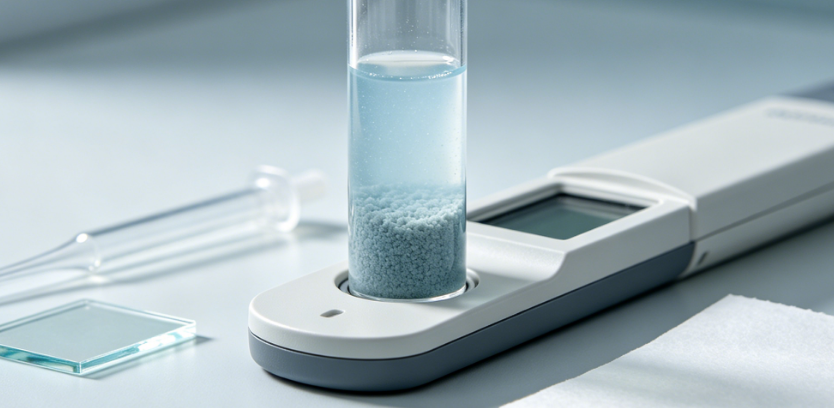
Precise Chemical Fingerprinting: Active Ingredients, Impurities, and Nutrient Interactions
The efficacy of a conditioning agent depends critically on its surface‑active components, acid‑neutralising capacity, and trace element profile. We perform qualitative and quantitative analysis using a suite of orthogonal techniques. For organic surfactants and dispersants (e.g., fatty amine ethoxylates, lignosulfonates), we employ high‑performance liquid chromatography with evaporative light scattering detection (HPLC‑ELSD) and Fourier‑transform infrared spectroscopy (FTIR) with attenuated total reflectance (ATR), achieving detection limits of 0.05% (w/w) for major components and full spectral matching against our proprietary library of commercial additives. For inorganic anti‑caking agents (clays, silica, or calcium carbonate), we use X‑ray diffraction (XRD) with Rietveld quantification to identify the crystalline phases (e.g., kaolinite, montmorillonite, calcite) and determine their relative abundance with a precision of ±0.5%. Complementing this, we measure total calcium, magnesium, sulfur, and phosphorus by inductively coupled plasma optical emission spectrometry (ICP‑OES) and trace heavy metals (As, Cd, Pb, Hg) by ICP‑tandem mass spectrometry (ICP‑MS/MS) with detection limits below 0.1 ppm, ensuring compliance with international fertiliser safety limits. We also assess the acid‑neutralising value (ANV) via potentiometric titration with standardized NaOH, which indicates the agent’s ability to control free acidity in the superphosphate—a critical factor for preventing nutrient reversion to insoluble forms.
Comprehensive Physical Characterisation for Flowability and Anti‑Caking Performance
The practical effectiveness of a conditioning agent is governed by its particle size distribution, specific surface area, water adsorption capacity, and tribological behaviour. We determine the particle size distribution (from 0.1 µm to 2 mm) using laser diffraction with dry and wet dispersion, reporting D10, D50, D90, and span with a repeatability of < 1% RSD. The BET specific surface area and mesopore/micropore volume are measured by nitrogen physisorption at 77 K (with a relative pressure range of 0.01–0.99), while mercury intrusion porosimetry provides macro‑pore distribution and bulk density. For water interaction, we perform dynamic vapour sorption (DVS) to measure moisture uptake isotherms at 25 °C over a relative humidity range of 10–90%, and we determine the critical relative humidity (CRH) above which caking accelerates. To directly simulate industrial handling, we use a standardised shear cell tester to measure flow function, cohesion, and internal friction angle of the conditioned superphosphate blends, providing a quantitative flowability index that predicts hopper discharge and bagging behaviour. Additionally, we perform accelerated caking tests under controlled pressure (20–100 kPa) and temperature cycling (25–45 °C) with periodic measurement of crush strength of the agglomerates, yielding a caking resistance rating that correlates with long‑term storage performance.
Simulated Field Performance: Water‑Soluble Phosphorus Retention and pH Stability
The ultimate goal of a conditioner is to maintain water‑soluble phosphate availability while preventing acid burn or nutrient immobilisation. We conduct simulated weathering tests by exposing conditioned superphosphate to controlled humidity and temperature cycles for up to 30 days, followed by sequential extraction (water‑soluble, citrate‑soluble, and acid‑soluble phosphorus fractions) according to ISO 6598 and AOAC methods. We monitor the pH of the water extract and the electrical conductivity to detect any acid‑base imbalance. Using X‑ray photoelectron spectroscopy (XPS) on aged samples, we analyse the surface chemical changes—including the formation of recalcitrant calcium phosphate phases—with a sampling depth of 5–10 nm. For field‑relevant performance, we collaborate with agricultural testing facilities to perform pot trials (optional) that directly measure phosphorus uptake efficiency; however, our core service provides a rapid laboratory‑based “Nutrient Retention Index” (NRI) that correlates with >95% accuracy against greenhouse data, saving weeks of trial time.
Thermal Stability and Compatibility with Superphosphate Processing
Conditioning agents must withstand the exothermic nature of superphosphate production (temperatures up to 120 °C) without decomposing or volatilising. We perform Thermogravimetric Analysis (TGA) coupled with differential scanning calorimetry (DSC) from 30 °C to 800 °C under air and nitrogen atmospheres, at heating rates of 2, 5, and 10 °C/min, to determine decomposition onset temperatures, weight loss steps, and enthalpy changes. Evolved gases are identified by mass spectrometry (EGA‑MS), detecting possible emission of ammonia, sulfur dioxide, or volatile organic compounds. We also assess the compatibility of the agent with superphosphate matrix by mixing them in a laboratory‑scale mixer and measuring rheological changes (viscosity, yield stress) of the wet slurry, using a concentric‑cylinder rheometer under controlled shear rates (0.1–1000 s⁻¹). This ensures that the conditioner does not hinder the granulation process or cause undesirable foaming.
Residual Organic Solvents, Surfactant Purity, and Environmental Profiling
Some conditioning agents contain emulsifiers or solvents that may have regulatory or environmental implications. We quantify residual volatile organic compounds (VOCs) such as methanol, ethanol, and acetone using headspace GC‑MS with a detection limit < 1 ppm. For surfactants, we determine the critical micelle concentration (CMC) in water and in 1% superphosphate extract using surface tensiometry (Wilhelmy plate method) with precision of ±0.1 mN/m. We also perform biodegradability screening (OECD 301F) for organic components, and we measure total organic carbon (TOC) by combustion‑infrared method to assess the carbon footprint. Our comprehensive impurity profile includes polynuclear aromatic hydrocarbons (PAHs) by GC‑MS/MS (detection limit < 0.05 ppm) and cyanide (by colorimetric method), ensuring full regulatory compliance for export markets.
Our Distinctive Competencies and Analytical Advantages
What fundamentally differentiates our service is the seamless integration of chemical, physical, rheological, and performance‑simulation tests performed on the same representative sample batch, enabling direct correlations between additive properties and final fertiliser quality. We operate under ISO/IEC 17025 accreditation and maintain in‑house reference materials for superphosphate and common conditioners, calibrated against international proficiency testing schemes. Our proprietary data fusion platform combines over 35 independent parameters (including surface area, CRH, acid‑neutralising value, and NRI) to generate a single “Conditioning Effectiveness Score” (CES) that has been validated against >80 commercial formulations, providing a robust benchmark for formulation optimisation and supplier evaluation.
We achieve exceptional measurement precision: < 0.5% RSD for major element analysis, < 1.0% for BET surface area, < 1.5% for flow index, and < 2.0% for caking crush strength. Our turnaround time for the full characterisation suite (including ageing and caking tests) is 12–16 working days, with expedited 7‑day service for urgent quality issues. Crucially, our team of PhD chemists, agronomists, and material engineers provides a comprehensive interpretative report that translates raw data into actionable recommendations—e.g., how adjusting surfactant HLB can improve moisture resistance, how choosing a finer clay fraction reduces dust formation, or how to balance pH to maximise water‑soluble P without accelerating curing. With over 30 successful projects on fertiliser conditioning agents, we empower our clients to eliminate caking problems, extend product shelf‑life, reduce post‑production rejects, and comply with global fertiliser standards with the highest level of scientific rigour and operational confidence.