Reasons for choosing our testing services
ZHONGXI Testing has obtained inspection qualification certifications from multiple countries and regions worldwide. We possess a senior testing team and advanced testing methods, providing independent, impartial, and professional third-party verification services for global carbon projects.

Internationally recognized authority
Certified by multiple international standards such as CNAS, VCS, and GS, with reports universally applicable worldwide.

Global service capability
Covering 140+ countries and regions, it supports on-site detection and remote verification in multiple languages.

Professional experimental methods
Adopt standard experimental methods to ensure accurate and reliable data.
Comprehensive Quality Assessment and Process Optimization of Raw Soda Filter Cake: A Specialized Analytical Service for the Sodium Carbonate Industry
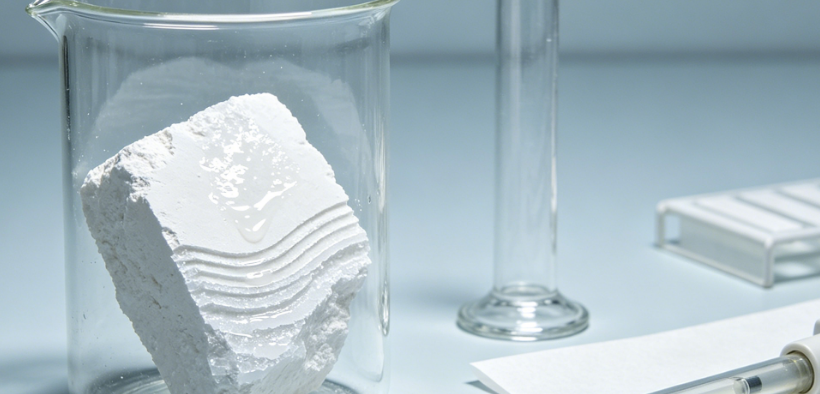
Raw soda filter cake—the intermediate product obtained from the carbonation and filtration stages of the Solvay or dual‑process soda ash manufacturing—consists primarily of sodium bicarbonate (NaHCO₃) along with variable amounts of sodium carbonate (Na₂CO₃), moisture, chloride, sulfate, and trace impurities. Its chemical and physical properties critically influence the efficiency of subsequent calcination, the quality of dense or light soda ash, and overall production economics. Clients seeking testing for raw filter cake are typically confronted with fluctuations in bicarbonate-to-carbonate ratio, inconsistent moisture content, elevated chloride levels leading to corrosion, or unexplained losses in calcination yield. Our laboratory has developed a multi‑tiered, application‑oriented analytical protocol that combines precise compositional analysis, crystallinity assessment, particle morphology evaluation, and thermal behaviour profiling, delivering a comprehensive, process‑relevant fingerprint that enables manufacturers to stabilise operations, reduce energy consumption, and meet stringent product specifications (e.g., ISO 740, GB/T 210, and ASTM E509).
Precise Compositional Analysis: Bicarbonate, Carbonate, and Moisture
Routine acid‑base titration often fails to distinguish sodium bicarbonate from sodium carbonate in the presence of other alkaline impurities. We employ a dual‑method approach: automated potentiometric titration with a glass‑calomel electrode system using standardised HCl, coupled with non‑aqueous thermometric titration to resolve the bicarbonate/carbonate ratio with an accuracy of ±0.1% (w/w) for each component. Moisture content—a critical parameter affecting calcination energy and powder flow—is determined by Karl Fischer coulometric titration (for free water) and oven‑drying at 105 °C ± 2 °C (for total moisture), with repeatability of < 0.05% RSD. For samples with high carbonate content, we apply a correction factor based on the thermogravimetric loss at 100–120 °C to account for loosely bound hydration water. Our results are reported with expanded uncertainties (k=2) according to ISO/IEC Guide 98‑3, ensuring traceability and comparability across batches.
Impurity Profiling: Chloride, Sulfate, Silica, and Heavy Metals
Chloride and sulfate are the most critical contaminants in raw filter cake, as they cause corrosion in downstream calcination equipment and reduce the purity of final soda ash. We quantify chloride by ion chromatography (IC) with suppressed conductivity detection after aqueous extraction, achieving a detection limit of 1 ppm and a reproducibility of < 1.5% RSD. Sulfate is determined by both IC and gravimetric precipitation as barium sulfate for cross‑validation, with a precision of ±0.02% at typical levels (0.1–1.0%). For total silica (as SiO₂), we use ICP‑OES after alkaline fusion, with a detection limit of 10 ppm. Trace heavy metals (Fe, Ca, Mg, Cu, Pb, Cd, As, and Hg) are measured by inductively coupled plasma tandem mass spectrometry (ICP‑MS/MS) with collision/reaction cell technology, providing detection limits of 0.01–0.5 ppb in solution, and sub‑ppm levels in solid samples after acid digestion. Our comprehensive impurity scan ensures that your filter cake meets the purity requirements for glass, detergent, or chemical intermediate applications.
Thermal Behaviour and Calcination Kinetics
The calcination of raw filter cake (NaHCO₃ → Na₂CO₃ + CO₂ + H₂O) is a rate‑limited step that determines plant throughput and energy efficiency. We perform simultaneous Thermogravimetric Analysis and differential scanning calorimetry (TGA‑DSC) from 40 °C to 400 °C under nitrogen atmosphere at heating rates of 1, 5, and 10 °C/min. This provides the decomposition temperature (onset, peak, and endset), the mass loss corresponding to CO₂ and H₂O, and the enthalpy of decomposition (ΔH) with an accuracy of ±0.5% for mass and ±1% for enthalpy. We apply the Kissinger‑Akahira‑Sunose (KAS) and Flynn‑Wall‑Ozawa (FWO) isoconversional methods to determine the apparent activation energy (Ea) as a function of conversion, revealing any retardation effects caused by trace impurities or crystal habit. This data is essential for optimising kiln temperature profiles, predicting the impact of filter cake variability on fuel consumption, and troubleshooting incomplete calcination incidents.
Crystalline Phase Identification and Morphological Evaluation
The crystal form and size distribution of the raw filter cake influence its filtration rate and calcination behaviour. We use powder X‑ray diffraction (XRD) with Cu Kα radiation to identify the presence of NaHCO₃ (thermonatrite), Na₂CO₃·H₂O, and any residual NaCl or Na₂SO₄. Full pattern Rietveld refinement quantifies the phase fractions with an accuracy of ±0.5% and determines the crystallite size via the Scherrer equation. For morphology, we employ scanning electron microscopy (SEM) with backscattered electron (BSE) and energy‑dispersive X‑ray spectroscopy (EDS) to examine particle shape, surface texture, and elemental distribution across individual grains. We also measure the particle size distribution of the raw and calcined cake using laser diffraction (wet and dry dispersion) over a range of 0.1–1000 µm, reporting D10, D50, D90, and span with repeatability < 1% RSD. This morphological information is crucial for adjusting filtration parameters, avoiding dust formation during handling, and controlling the bulk density of the final soda ash.
Filter Cake Condition and Filtration Performance Indicators
The filterability of the raw slurry and the final moisture of the cake are directly influenced by particle size, specific surface area, and the presence of fines. We measure the specific surface area (BET) by nitrogen physisorption at 77 K using a multi‑point method (relative pressure 0.05–0.30), achieving precision of ±0.01 m²/g. We also perform capillary suction time (CST) tests to evaluate the dewatering characteristics of the slurry, providing a dimensionless index that correlates with press‑or‑vacuum filter productivity. For existing plant data, we can also correlate our laboratory results with your filtration flux and cake moisture data to establish a predictive quality‑control model.
Residual Ammonia and Organic Impurity Screening
For plants using the ammonia‑soda (Solvay) route, residual ammonium salts or organic amines may be present in the filter cake, potentially causing odour or affecting product quality. We quantify total ammonium nitrogen by automated Kjeldahl distillation with potentiometric endpoint detection, with a detection limit of 5 ppm and reproducibility of ±2%. For organic impurities, we perform headspace‑GC‑MS to identify volatile organic compounds (e.g., acetone, methanol, or amine‑based anti‑caking agents), and we measure total organic carbon (TOC) by combustion‑infrared method with a detection limit of 1 ppm. This ensures that your product not only meets the chemical specifications but also the organoleptic and environmental standards required for food‑ or pharmaceutical‑grade soda ash.
Our Distinctive Competencies and Unmatched Analytical Depth
Our service is uniquely distinguished by the orthogonal integration of titration, IC, ICP‑MS/MS, TGA‑DSC, XRD, and SEM‑EDS, all performed on the same representative filter‑cake sample to avoid cross‑batch variability. This allows us to establish direct cause‑effect correlations—for example, linking an increase in chloride content to accelerated calciner corrosion, or correlating a shift in particle size to changes in filtration resistance. We operate under ISO/IEC 17025 accreditation and maintain in‑house reference materials for soda‑ash intermediates, calibrated against international standards (NIST, BAM). Our proprietary data fusion platform combines over 30 parameters (including bicarbonate/carbonate ratio, BET area, Cl⁻ and SO₄²⁻ levels, decomposition Ea, and CST index) to generate a single “Filter Cake Quality Index” (FCQI) that predicts overall calcination efficiency and final product purity, validated against >80 industrial production datasets.
We achieve exceptional measurement precision: < 0.2% RSD for NaHCO₃ by titration, < 0.3% RSD for moisture, < 1.0% for chloride and sulfate at typical levels, < 0.5% for BET surface area, and < 2.0% for TGA decomposition temperature. Our turnaround time for the complete characterisation suite (including TGA kinetics and XRD phase analysis) is 10–14 working days, with expedited 7‑day service for urgent process troubleshooting. Crucially, our team of PhD analytical chemists, chemical engineers, and crystallographers provides a comprehensive interpretative report that translates each parameter into actionable recommendations—e.g., how to adjust carbonation temperature to reduce chloride entrainment, how to modify the washing regime to lower sulfate content, or how to interpret a sudden increase in BET area as a sign of crystal habit change. With over 35 successful projects on soda‑ash intermediates, we empower our clients to reduce calcination fuel consumption, minimise unplanned downtime, and deliver consistent, high‑grade soda ash to their customers, all backed by the highest level of scientific rigour and operational insight.