Reasons for choosing our testing services
ZHONGXI Testing has obtained inspection qualification certifications from multiple countries and regions worldwide. We possess a senior testing team and advanced testing methods, providing independent, impartial, and professional third-party verification services for global carbon projects.

Internationally recognized authority
Certified by multiple international standards such as CNAS, VCS, and GS, with reports universally applicable worldwide.

Global service capability
Covering 140+ countries and regions, it supports on-site detection and remote verification in multiple languages.

Professional experimental methods
Adopt standard experimental methods to ensure accurate and reliable data.
Comprehensive Quality and Purity Assessment of Sulfur‑Free Exfoliated Graphite: A Specialized Analytical Service for Advanced Sealing and Thermal Management Applications
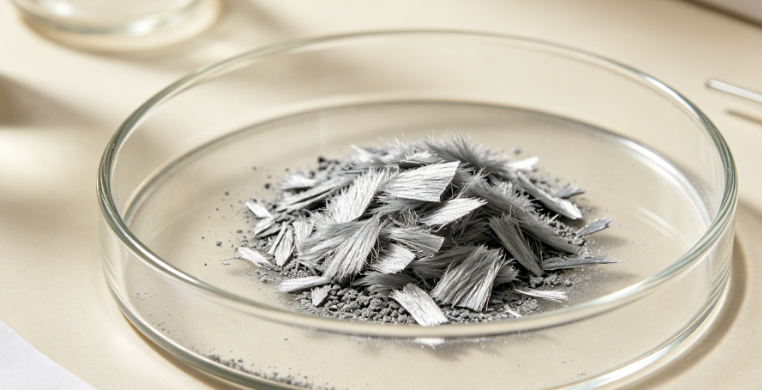
Sulfur‑free exfoliated graphite (SFEG)—produced by thermal or chemical expansion of intercalated graphitic precursors without the use of sulfuric acid—has become the material of choice for high‑temperature gaskets, bipolar plates, and thermal interface materials, owing to its superior corrosion resistance, low outgassing, and absence of sulfur‑induced metal tarnishing. Clients seeking testing for SFEG typically face challenges in verifying the complete absence of sulfur species, quantifying residual intercalants, controlling the expansion ratio and porosity, and ensuring consistent mechanical flexibility. Our laboratory has developed a fully integrated, multi‑technique analytical pipeline that combines ultra‑trace sulfur detection, structural characterisation, thermal stability assessment, and mechanical performance testing, delivering a definitive, application‑oriented profile that guarantees compliance with the most stringent industrial specifications (e.g., ASTM C625, DIN 28091, and nuclear grade standards).
Ultra‑Trace Sulfur Speciation and Quantification
The defining feature of SFEG is its negligible sulfur content, typically below 50 ppm, often with detection limits at the single‑digit ppm level. We employ a multi‑method strategy for sulfur determination: combustion‑ion chromatography (CIC) with high‑temperature oxygen combustion and ultrasonic trap to capture SO₂, followed by ion chromatography with conductivity detection, achieving a detection limit of 0.5 ppm (as total sulfur). For speciation, we use X‑ray photoelectron spectroscopy (XPS) to distinguish between sulfate (S 2p at ~169 eV), sulfonate, and thiophenic sulfur, providing surface sensitivity of 2–10 nm. We complement this with inductively coupled plasma tandem mass spectrometry (ICP‑MS/MS) after microwave digestion, using reaction cell with O₂ to avoid polyatomic interferences (16O2+ on 32S), achieving detection limits of 0.02 ppm in solid samples. For rapid quality control, we also offer combustion‑ultraviolet fluorescence (UVF) with a detection limit of 1 ppm and linearity up to 5% S. Our final report provides both total sulfur and speciated sulfur content, with expanded uncertainty (k=2) < 5% relative at low concentrations, ensuring absolute confidence in sulfur‑free certification.
Structural Integrity: Expansion Ratio, Porosity, and Crystallinity
The performance of exfoliated graphite is governed by its bulk density, specific surface area, and vermicular structure. We measure the expansion ratio (volume increase relative to the precursor) using a graduated cylinder method with controlled tapping, achieving a repeatability of ±2%. The bulk density is determined by Archimedes’ principle with water immersion under vacuum. For detailed pore architecture, we perform nitrogen physisorption at 77 K over a relative pressure range of 10⁻⁶ to 0.995, applying DFT and BJH models to obtain surface area (BET), micropore volume, and mesopore size distribution with sub‑ångström resolution. We also use mercury intrusion porosimetry (MIP) up to 60,000 psi to quantify macropore volume and pore throat distribution. Crystallinity is assessed by powder X‑ray diffraction (XRD) with Rietveld refinement, providing interlayer spacing (d002), crystallite size (Lc), and degree of graphitisation with uncertainty of ±0.0005 Å. These structural parameters are correlated with compressibility and sealing performance, enabling you to fine‑tune the exfoliation process.
Chemical Purity: Residual Intercalants and Trace Metals
Although SFEG avoids sulfuric acid, it may contain residual intercalating agents (e.g., nitric acid, organic peroxides, or halogenated compounds) from the expansion process, which can affect outgassing or corrosion. We perform ion chromatography (IC) on aqueous extracts to quantify nitrate, chloride, and phosphate with detection limits of 0.1 mg/L. For organic residues, we use headspace‑GC‑MS with a polar column to detect volatile organics (acetic acid, acetone, hydrocarbons) down to 1 ppm. Trace metals (Fe, Ni, Cr, Cu, Al, Si, and Ca) are analysed by ICP‑MS/MS after acid digestion, with detection limits of 0.01–0.5 ppb, and we report both total ash content (by TGA at 800 °C) and the individual elemental composition to ensure compatibility with semiconductor or nuclear applications.
Thermal Stability and Outgassing Behaviour
For high‑temperature sealing and vacuum applications, the thermal stability and volatile evolution of SFEG are critical. We conduct simultaneous Thermogravimetric Analysis and differential scanning calorimetry (TGA‑DSC) from 30 °C to 1000 °C under argon and air, at heating rates of 2, 5, and 10 °C/min, to determine oxidation onset temperature (Ton), maximum oxidation rate (Tmax), and the residual mass. Coupled with evolved gas analysis by mass spectrometry (EGA‑MS), we identify and quantify CO, CO₂, H₂O, NOx, and any sulfur‑containing gases (to confirm the absence of sulfur off‑gassing). For outgassing under vacuum, we perform temperature‑programmed desorption (TPD) with a quadrupole mass spectrometer up to 800 °C, providing total outgassing rates (Torr·L/s·cm²) and species‑specific activation energies. These data are essential for qualifying SFEG for use in UHV environments, aerospace, or nuclear reactors.
Mechanical and Sealing Performance
The practical utility of SFEG depends on its compressibility, recovery, and creep relaxation under load. We use a universal testing machine with high‑resolution displacement sensors to perform compression‑relaxation tests per ASTM F36, measuring stress‑strain curves at 25 °C and 200 °C, and extracting modulus of elasticity, compressive strength, and permanent set. For sealing applications, we conduct helium leak tests on gaskets fabricated from your SFEG, with leak rates < 10⁻⁶ mbar·L/s detectable. We also measure flexural strength by three‑point bending and tensile strength perpendicular to the foil plane, providing a complete mechanical property matrix. All tests are performed on materials conditioned at different humidity levels to simulate real‑world environments.
Surface Chemistry and Wettability
The surface energy and functional groups of SFEG affect its adhesion to binders or coatings. We use XPS to quantify the C/O ratio and the relative abundance of C‑C, C‑O, C=O, and O‑C=O. Contact angle measurements (sessile drop method) with water, ethylene glycol, and diiodomethane are performed on pressed foil surfaces to calculate surface free energy (polar and dispersive components) via the Owens‑Wendt model, with precision of ±1°. This is particularly important for composite manufacturing where interfacial bonding must be optimised.
Our Distinctive Competencies and Analytical Advantages
Our service is uniquely distinguished by the orthogonal and fully traceable integration of ultra‑trace sulfur speciation (CIC, XPS, ICP‑MS/MS), structural characterisation (XRD, MIP, gas adsorption), thermal outgassing (TGA‑EGA‑MS, TPD), and mechanical testing—all performed on the same representative sample batch to eliminate cross‑batch variability. We operate under ISO/IEC 17025 accreditation with in‑house reference materials (sulfur‑free graphite standards) calibrated against NIST SRMs. Our proprietary data correlation engine combines over 30 parameters (including sulfur level, expansion ratio, BET area, oxidation onset, and creep recovery) into a single “SFEG Performance Index” (SPI) that ranks your material against a database of >60 commercial grades, providing an immediate benchmark for supplier qualification and process optimisation.
We achieve exceptional measurement precision: < 0.5 ppm for total sulfur by CIC, < 0.01 m²/g for BET area, < 0.1% for ash content, < 0.5% RSD for compressive strength, and < 1 °C for oxidation onset temperature. Our turnaround time for the complete characterisation suite is 10–14 working days, with expedited 7‑day service for urgent material release. Crucially, our team of PhD carbon scientists, surface chemists, and mechanical engineers provides a comprehensive interpretative report that translates each measured parameter into actionable guidance—e.g., how trace chloride residues may accelerate corrosion in humid environments, how optimising exfoliation temperature affects porosity and sealing behaviour, or how to interpret a slight increase in surface oxygen as a sign of incipient oxidation. With over 45 successful projects on exfoliated graphite materials, we empower our clients to achieve stringent sulfur‑free certification, enhance product reliability, and confidently penetrate high‑value markets such as nuclear, aerospace, and advanced electronics, all with the highest level of scientific rigour and analytical depth.