Reasons for choosing our testing services
ZHONGXI Testing has obtained inspection qualification certifications from multiple countries and regions worldwide. We possess a senior testing team and advanced testing methods, providing independent, impartial, and professional third-party verification services for global carbon projects.

Internationally recognized authority
Certified by multiple international standards such as CNAS, VCS, and GS, with reports universally applicable worldwide.

Global service capability
Covering 140+ countries and regions, it supports on-site detection and remote verification in multiple languages.

Professional experimental methods
Adopt standard experimental methods to ensure accurate and reliable data.
Comprehensive Analytical Characterization of Inorganic Yellow Pigments: A Specialized Testing Service for Quality Assurance, Regulatory Compliance, and Performance Optimization
Inorganic yellow pigments—comprising lead chromates, zinc chromates, cadmium sulfides, nickel‑antimony titanates, and iron oxide hydroxides—are indispensable in high‑performance coatings, plastics, ceramics, and construction materials due to their exceptional opacity, weather resistance, and thermal stability. However, their functional efficacy and safety are governed by a complex interplay of chemical composition, crystalline phase purity, particle morphology, surface treatment, and trace impurity profile. Clients seeking testing for these pigments are typically motivated by the need to verify conformance to industrial standards (e.g., ISO 1248, ASTM D3022), comply with global hazardous substance regulations (RoHS, REACH, and China GB), troubleshoot batch‑to‑batch colour variations, or optimise pigment dispersion and processability. Our laboratory offers a fully integrated, multi‑technique analytical platform that delivers a definitive, application‑oriented characterization—from elemental stoichiometry and crystal structure to colourimetry, heat stability, and leaching behaviour—ensuring that your inorganic yellow pigments meet the most stringent quality and environmental criteria.
Precision Elemental Composition and Purity Profiling
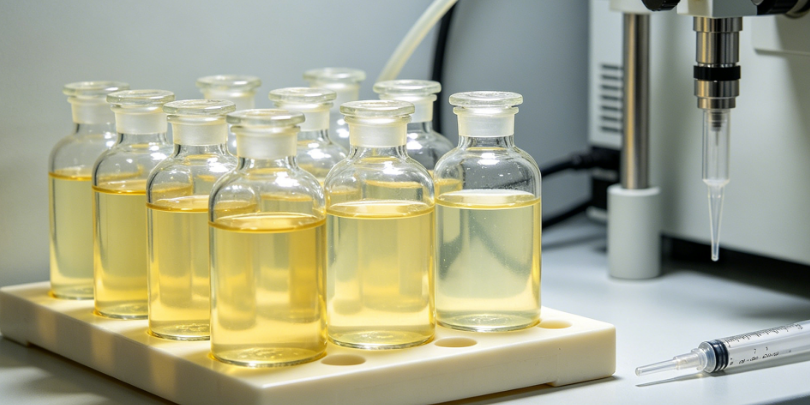
Accurate quantification of the pigment’s major components (Pb, Cr, Cd, Zn, Ti, Sb, Ni, Fe) and critical trace impurities (e.g., As, Hg, Ba, Cu, Mn) is fundamental to product certification. We employ inductively coupled plasma optical emission spectrometry (ICP‑OES) for major elements (relative expanded uncertainty < 0.8%) and ICP‑tandem mass spectrometry (ICP‑MS/MS) with reaction/collision cell technology for ultra‑trace metals, achieving detection limits of 0.01–0.5 ppb in digested solutions. For chromium speciation, we use ion chromatography coupled with ICP‑MS to distinguish Cr(VI) from Cr(III) – a critical safety parameter for lead chromate pigments – with a detection limit of 0.05 ppm. Total sulfur and carbon are determined by combustion‑infrared detection, and we quantify moisture and volatile matter by Thermogravimetric Analysis (TGA) at 105 °C and 900 °C. Our comprehensive elemental fingerprint is reported with expanded uncertainties (k=2) according to ISO/IEC Guide 98‑3, providing the traceability required for regulatory submissions.
Crystalline Phase Identification, Solid‑Solution Composition, and Microstructural Analysis
The colour strength and durability of inorganic yellow pigments are intimately linked to their crystal structure – e.g., monoclinic vs. orthorhombic lead chromate, hexagonal or cubic cadmium sulfide, and rutile‑type titanates. We use high‑resolution powder X‑ray diffraction (HR‑XRD) with Cu Kα radiation and a step size of 0.005° 2θ to perform Rietveld refinement, determining the phase fractions, lattice parameters (±0.0005 Å), and crystallite size (via Scherrer and Williamson‑Hall methods). For pigments with isomorphous substitution (e.g., PbCr₁₋ₓSₓO₄ or (Ti,Sn,Ni)O₂), we determine the solid‑solution composition by correlating lattice constants with reference standards. Complementing XRD, we use Raman microspectroscopy (532 nm and 785 nm lasers) to identify characteristic vibrational modes and detect any amorphous surface layers. Scanning electron microscopy (SEM) with energy‑dispersive X‑ray spectroscopy (EDS) provides particle morphology, agglomeration state, and elemental distribution at the single‑particle level, while transmission electron microscopy (TEM) (for sub‑micron particles) reveals crystal defects, twinning, and core‑shell structures that affect pigment performance.
Colouristic Performance and Optical Property Assessment
Colour strength, hue, brightness, and hiding power are the primary quality attributes of yellow pigments. We measure spectral reflectance (360–750 nm) using a double‑beam UV‑Vis‑NIR spectrophotometer with an integrating sphere, under D65 illuminant and 10° standard observer. The CIELAB coordinates (L*, a*, b*), chroma (C*), and hue angle (h°) are determined with a repeatability of ΔE* < 0.05. For tinting strength, we perform rub‑out tests in a standard alkyd or acrylic vehicle, measuring relative colour strength (ASTM D3022) against a reference pigment. We also evaluate hiding power by contrast ratio (ASTM D2805) and oil absorption by the spatula rub‑out method (ASTM D281). For advanced optical applications, we offer angle‑resolved reflectance (goniospectrophotometry) to assess flop or metallic effects in effect‑pigment blends. All colour measurements are performed under controlled temperature (23 ± 2 °C) and humidity (50 ± 5% RH), with results reported as pass/fail against your specification or tolerance limits.
Dispersion, Rheological, and Surface Chemistry Evaluation
The processability of pigments in liquid or melt formulations depends on their dispersibility, wetting, and rheological impact. We determine particle size distribution (0.01–2000 µm) by laser diffraction (wet and dry dispersion) and dynamic light scattering (DLS) for sub‑micron fractions. The specific surface area (BET) is measured by nitrogen physisorption with a multi‑point method. Surface chemistry is assessed by X‑ray photoelectron spectroscopy (XPS) to identify coating layers (e.g., silica, alumina, organic surfactants), and by Fourier‑transform infrared spectroscopy (FTIR) with attenuated total reflectance (ATR) to characterise organic post‑treatments. We also perform zeta potential measurements as a function of pH to predict dispersion stability in aqueous or non‑aqueous media. For mill‑base formulations, we use a controlled‑stress rheometer to measure viscosity vs. shear rate, thixotropy, and yield stress, providing data to optimise pigment loading and milling efficiency.
Thermal Stability, Weathering, and Chemical Resistance
Inorganic yellow pigments must withstand processing temperatures (up to 300 °C for plastics) and outdoor exposure. We perform simultaneous thermogravimetry and differential scanning calorimetry (TGA‑DSC) from 30 °C to 1000 °C under air and nitrogen, with controlled heating rates (1–20 °C/min) to determine decomposition temperature, colour change onset, and enthalpy changes. Evolved gases (CO₂, SO₂, H₂O, etc.) are monitored by evolved gas analysis‑mass spectrometry (EGA‑MS). For accelerated weathering, we use a QUV/condensation chamber (UVA‑340 lamps, 0.89 W/m²·nm) and a xenon‑arc weatherometer (ISO 11341, ASTM G155) with controlled humidity and water spray, measuring colour difference (ΔE*) and gloss retention at regular intervals (up to 2000 hours). Chemical resistance is assessed by immersion tests in acid (0.1 M H₂SO₄), alkali (0.1 M NaOH), organic solvents (xylene, MEK), and salt spray (ISO 9227), with weight loss, colour shift, and surface morphology change monitored. These test results are compiled into a durability rating that directly predicts performance in demanding end‑uses.
Leaching Behaviour and Environmental Compliance
Regulatory limits on toxic elements – especially lead, cadmium, chromium(VI), and mercury – require rigorous leachability testing. We perform leaching tests according to EN 71‑3 (toy safety), EPA Method 3051A (acid digestion), and the TCLP (Toxicity Characteristic Leaching Procedure). The leachates are analysed by ICP‑MS/MS for total metals and by ion chromatography for Cr(VI). We also provide RoHS screening (using XRF for preliminary scan, and ICP‑MS for confirmation) with a turnaround time of 3 days. Our comprehensive compliance report includes the maximum allowable concentrations per region (EU, USA, China) and a clear pass/fail declaration, helping you avoid costly non‑compliance.
Our Distinctive Competencies and Analytical Advantages
Our service is uniquely distinguished by the orthogonal and fully traceable integration of elemental (ICP‑MS/MS, ICP‑OES, IC‑ICP‑MS), structural (HR‑XRD, Raman, SEM‑EDS, TEM), colouristic (spectrophotometry, tinting strength), physical (BET, DLS, rheology), and durability (TGA‑EGA‑MS, accelerated weathering, chemical resistance) characterisations—all performed on the same representative sample lot to eliminate cross‑batch variability. We operate under ISO/IEC 17025 accreditation and maintain in‑house reference inorganic pigments certified by interlaboratory comparisons. Our proprietary data fusion platform combines over 40 parameters (including pigment composition, Cr(VI) fraction, hue angle, heat stability, and leachable metal content) into a single “Pigment Quality Index” (PQI), which predicts formulation performance and regulatory risk. This index has been validated against >80 commercial pigment grades, providing you with an objective benchmark for supplier qualification, process optimisation, and competitive product positioning.
We achieve exceptional measurement precision: < 0.5% RSD for major element concentrations, < 0.1% for colour coordinates (L*, a*, b*), < 0.01 m²/g for BET area, and < 0.5 °C for thermal decomposition onset. Our turnaround time for the complete pigment characterisation suite (including accelerated weathering and leaching) is 12–16 working days, with expedited 7‑day service for urgent batch release. Crucially, our team of PhD inorganic chemists, material scientists, and colour technologists provides a comprehensive interpretative report that translates each measured parameter into actionable insights – e.g., how a minor shift in the Pb/Cr ratio alters hue and hiding power, how surface treatment influences dispersion viscosity, or how the presence of trace contaminants accelerates colour fade. With over 50 successful projects on inorganic pigments, we empower our clients to achieve consistent colour quality, comply with evolving regulations, and differentiate their products in global markets – all with the highest level of scientific rigour and technical credibility.