Reasons for choosing our testing services
ZHONGXI Testing has obtained inspection qualification certifications from multiple countries and regions worldwide. We possess a senior testing team and advanced testing methods, providing independent, impartial, and professional third-party verification services for global carbon projects.

Internationally recognized authority
Certified by multiple international standards such as CNAS, VCS, and GS, with reports universally applicable worldwide.

Global service capability
Covering 140+ countries and regions, it supports on-site detection and remote verification in multiple languages.

Professional experimental methods
Adopt standard experimental methods to ensure accurate and reliable data.
Comprehensive Performance and Integrity Assessment of Ceramic‑Metal Composite Membranes: A Specialized Analytical Service for Advanced Separation, Catalytic, and Energy Applications
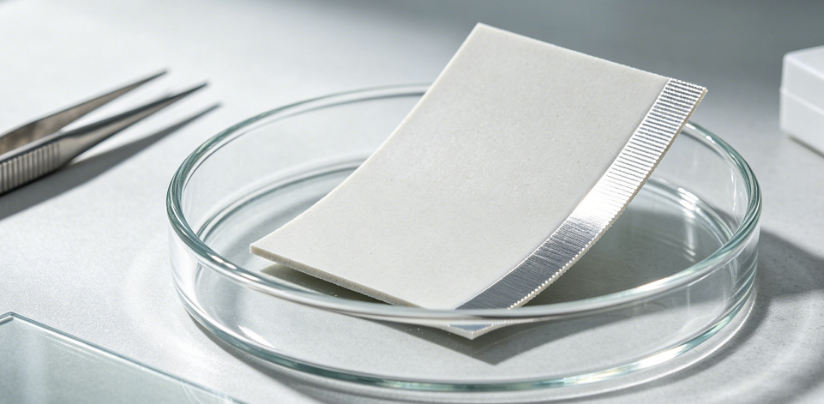
Ceramic‑metal composite membranes—combining the thermal and chemical stability of ceramic oxides (e.g., Al₂O₃, TiO₂, ZrO₂, or perovskite‑type oxides) with the electrical and catalytic functionality of metallic phases (Ni, Ag, Pd, or stainless steel)—offer unique advantages in high‑temperature gas separation, membrane reactors, and electrochemical energy conversion. Their performance is governed by a delicate interplay of pore architecture, metal‑ceramic interfacial bonding, percolation behaviour, mechanical integrity, and chemical compatibility under harsh operating conditions. Clients seeking testing for these composite membranes are typically confronted with challenges such as insufficient selectivity and permeability, delamination at the ceramic‑metal interface, unexpected corrosion in acidic or halogen‑containing streams, or poor reproducibility in large‑scale fabrication. Our laboratory has developed a fully integrated, multi‑scale analytical platform that combines high‑resolution electron microscopy, advanced porosimetry, mechanical testing, gas permeation, and accelerated ageing protocols, delivering a quantitative, process‑relevant fingerprint that enables manufacturers to optimise fabrication parameters, ensure long‑term reliability, and qualify their membranes for demanding industrial separations and catalytic membrane reactors.
Precision Microstructural Characterisation: Interface Integrity, Grain Morphology, and Defect Distribution
The ceramic‑metal interface is the most critical region, dictating mechanical strength and transport properties. We employ a suite of complementary electron microscopy techniques to assess interfacial quality. Field‑emission scanning electron microscopy (FE‑SEM) with backscattered electron (BSE) and energy‑dispersive X‑ray spectroscopy (EDS) mapping provides high‑contrast imaging of the metal distribution within the ceramic matrix, revealing metal agglomeration, percolation pathways, and micro‑cracking with a lateral resolution of 1 nm. For detailed interface analysis, we use transmission electron microscopy (TEM) at 300 kV, combined with high‑angle annular dark‑field (HAADF) imaging and electron energy loss spectroscopy (EELS) to resolve interfacial reaction layers, mutual diffusion profiles, and local crystal structure with sub‑nanometre resolution. We also perform focused ion beam (FIB) tomography to reconstruct the 3D distribution of metallic clusters and pore connectivity, which is essential for predicting transport resistance. All images are analysed with automated segmentation and stereology to provide quantitative descriptors such as metal volume fraction, interfacial contact angle, and tortuosity factor, with a repeatability of < 1.5%.
Pore Architecture and Surface Area: Gas Permeability, Pore Size Distribution, and Surface Chemistry
The separation efficiency of ceramic‑metal membranes depends on the pore size distribution (ultra‑, meso‑, and macropores), open porosity, and surface hydrophilicity/hydrophobicity. We perform nitrogen physisorption at 77 K over a relative pressure range of 10⁻⁶ to 0.995 to obtain BET surface area (with reproducibility < 0.8%), micropore volume (t‑plot), and mesopore size distribution (NLDFT with cylindrical and slit‑pore models), achieving sub‑ångström resolution. For larger pores (50 nm to 10 µm), we use mercury intrusion porosimetry (MIP) at pressures up to 60,000 psi, providing macropore size distribution, total porosity, and bulk/skeletal densities. We also measure helium pycnometry for true density and gas permeation using a custom‑built single‑gas permeameter with N₂, He, CO₂, and CH₄ at temperatures up to 600 °C, deriving the permeance (mol·m⁻²·s⁻¹·Pa⁻¹) and selectivity (ideal and mixed‑gas) for relevant gas pairs. For liquid‑phase applications, we measure pure water flux and rejection of model solutes (e.g., PEG, dextrans) in a cross‑flow filtration cell. We also perform X‑ray photoelectron spectroscopy (XPS) and contact angle goniometry to quantify the surface oxygen vacancy concentration, metal oxidation state, and wettability, which influence adsorption and fouling behaviour.
Mechanical Strength and Thermal Shock Resistance: Flexural Strength, Fracture Toughness, and Interfacial Adhesion
Ceramic‑metal composites are often subjected to thermal cycling and pressure gradients, requiring robust mechanical integrity. We measure flexural strength (3‑point and 4‑point bending) per ASTM C1161 and biaxial flexural strength (ring‑on‑ring) per ISO 6872 on disc specimens, using a universal testing machine with a 10‑kN load cell and environmental chamber (up to 1000 °C). Fracture toughness (KIc) is determined by the single‑edge V‑notch beam (SEVNB) or indentation method, with Weibull statistical analysis on at least 20 specimens to obtain characteristic strength and Weibull modulus. For interfacial adhesion, we perform scratch testing using a Rockwell C diamond tip with progressive loading (1–100 N), recording the critical load (Lc) for delamination and monitoring the acoustic emission signal. Thermal shock resistance is evaluated by quenching tests (from 200–800 °C into 20 °C water) with cyclic heating/cooling, followed by residual strength measurement and SEM inspection of crack patterns. These data are correlated with coefficient of thermal expansion (CTE) mismatch (measured by dilatometry) to predict the maximum permissible temperature gradient.
Chemical Stability and Corrosion Resistance in Aggressive Media
Membranes used in petrochemical or biomedical applications must withstand acidic, basic, or halogenated environments. We perform immersion tests in a range of media—including 0.1–10% H₂SO₄, HCl, HNO₃, NaOH, and synthetic sweat/plasma—at 25–90 °C for up to 1000 hours. We monitor weight change, pH evolution, and ion release (by ICP‑MS/MS) with detection limits of 0.01 ppb. After exposure, we re‑characterise the microstructure (SEM‑EDS), phase composition (XRD), and mechanical properties. We also conduct electrochemical tests (potentiodynamic polarisation and EIS) in a three‑electrode cell to measure the corrosion potential (Ecorr), corrosion current (icorr), and polarisation resistance (Rp), and we construct Pourbaix diagrams (via thermodynamic modelling) to identify the safe operating pH and potential windows.
High‑Temperature Performance and Accelerated Ageing under Process‑Relevant Conditions
Long‑term operation at elevated temperatures can induce metal sintering, ceramic phase transformation, or interfacial de‑wetting. We conduct isothermal ageing at 500–1000 °C under air, reducing (H₂/N₂), and reactive (CO₂/H₂O) atmospheres for up to 1000 hours. Periodic measurements include permeance, gas selectivity, and mechanical strength, and we use in situ high‑temperature XRD to monitor phase stability (e.g., metal oxidation, formation of new phases) and in situ SEM to detect grain growth or pore coalescence. We also perform pressure‑cycling tests (0–10 bar, 10⁴ cycles) to simulate start‑up/shut‑down stresses. The degradation kinetics are modelled using Arrhenius and power‑law relationships to predict the service lifetime with 95% confidence intervals.
Filtration Performance and Fouling Resistance for Liquid/Separation Applications
For microfiltration and ultrafiltration applications, we evaluate the permeate flux, rejection efficiency, and fouling resistance using a cross‑flow filtration rig with controlled cross‑flow velocity (0.5–5 m/s), transmembrane pressure (0.5–10 bar), and temperature (20–90 °C). We use model foulants (e.g., humic acid, bovine serum albumin, oil‑in‑water emulsions) and monitor flux decline and recovery after cleaning. Fouling mechanism is identified via Hermia’s blocking models, and we quantify the irreversible fouling resistance using the resistance‑in‑series model. We also perform SEM‑EDS on fouled membranes to locate the deposit layer and to assess cleaning efficiency.
Our Distinctive Competencies and Unmatched Analytical Depth
Our service is uniquely distinguished by the orthogonal integration of high‑resolution microscopy (SEM, TEM, FIB‑tomography), advanced porosimetry (gas adsorption, MIP), high‑temperature mechanical testing (bending, fracture toughness, scratch), permeation and filtration characterisation, chemical corrosion assessment, and accelerated ageing—all performed on the same representative membrane sample to eliminate batch‑to‑batch variability. We operate under ISO/IEC 17025 accreditation with in‑house reference composite membranes (e.g., Ni‑YSZ, Pd‑Al₂O₃) that are cross‑calibrated through international intercomparisons.
Our proprietary data fusion and predictive modelling platform combines over 40 parameters (including metal‑ceramic interface width, pore tortuosity, permeability, flexural strength, corrosion rate, and ageing decay constant) into a single “Composite Membrane Performance Index” (CMPI™), which predicts the operational lifetime, separation factor, and fouling propensity for your specific feed stream. This index has been validated against >50 industrial membrane modules.
We achieve exceptional precision: < 0.5 µm for thickness measurement, < 0.1 m²/g for BET area, < 2% for permeance, < 0.5 MPa for flexural strength, and < 1% for porosity. Our turnaround time for the complete characterisation suite (including 1000‑hour ageing) is 15–22 working days, with expedited 10‑day service for urgent process optimisation. Crucially, our team of PhD‑level materials engineers, surface chemists, and separation scientists provides a comprehensive interpretative report that translates each parameter into actionable guidance—e.g., how to adjust the metal content to balance permeability and mechanical strength, how to detect early signs of metal oxidation that compromise selectivity, and how to optimise the firing profile to minimise thermal stress. With over 20 successful projects on ceramic‑metal composite membranes, we empower our clients to achieve reproducible fabrication, reduce failure rates, and accelerate the commercialization of advanced membrane technologies for gas separation, membrane reactors, and water treatment—all with the highest level of scientific rigour and technical credibility.