Reasons for choosing our testing services
ZHONGXI Testing has obtained inspection qualification certifications from multiple countries and regions worldwide. We possess a senior testing team and advanced testing methods, providing independent, impartial, and professional third-party verification services for global carbon projects.

Internationally recognized authority
Certified by multiple international standards such as CNAS, VCS, and GS, with reports universally applicable worldwide.

Global service capability
Covering 140+ countries and regions, it supports on-site detection and remote verification in multiple languages.

Professional experimental methods
Adopt standard experimental methods to ensure accurate and reliable data.
Comprehensive Performance and Quality Assessment of Activated Bleaching Earth: A Specialized Analytical Service for Edible Oil Refining, Wastewater Treatment, and Industrial Adsorption Applications
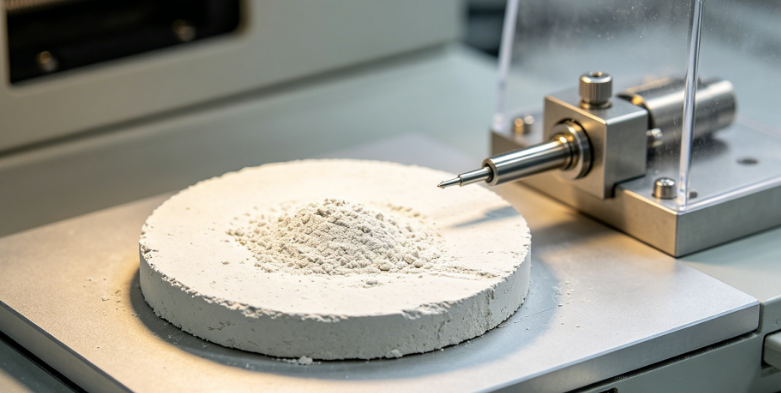
Activated bleaching earth (ABE)—produced by the acid‑activation of natural bentonite clays—is a highly porous, acid‑treated aluminosilicate adsorbent widely used for the decolorization of edible oils, purification of mineral oils, removal of polar impurities from wastewater, and as a catalyst support in petrochemical processes. The refining efficiency and economic viability of ABE depend critically on a complex interplay of acid‑activation degree, specific surface area, mesopore volume, acidity (both Brønsted and Lewis), residual sulfate/phosphate content, moisture level, and particle size distribution. Clients seeking testing for ABE are typically confronted with challenges such as inconsistent decolorization performance across batches, excessive oil retention leading to yield loss, premature filter cake blockage, or unexpected acidity transfer to the refined product. Our laboratory has developed a fully integrated, multi‑technique analytical platform that combines advanced surface analysis, high‑precision wet chemistry, thermal stability assessment, and application‑oriented performance testing, delivering a quantitative, process‑relevant fingerprint that enables manufacturers and end‑users to optimize activation parameters, maintain batch‑to‑batch consistency, and achieve superior refining efficiency with minimal oil losses.
Precise Surface Area and Porosity Architecture by Nitrogen Physisorption and Mercury Porosimetry
The adsorption capacity and decolorization kinetics of ABE are directly governed by its specific surface area (BET) and pore size distribution, particularly the abundance of mesopores (2–50 nm) that accommodate large pigment molecules (e.g., carotenoids, chlorophylls). We perform high‑resolution nitrogen physisorption at 77 K over a relative pressure range from 10⁻⁶ to 0.995 using a volumetric analyser, with data reduction by BET theory (surface area, reproducibility < 1%), t‑plot method (micropore volume), and density functional theory (DFT) with slit‑cylindrical pore models for full pore size distributions (0.4–50 nm) with sub‑ångström resolution. For larger pores (macropores and inter‑particle voids), we use mercury intrusion porosimetry (MIP) up to 60,000 psi to quantify total pore volume, bulk density, and macro‑pore size distribution (50 nm – 500 µm). We also measure true density by helium pycnometry and calculate porosity (%). The combined surface and pore profile allows us to predict decolorization efficiency for specific oil matrices and to detect any collapse of the mesopore network due to over‑activation.
Comprehensive Acidity Characterisation: Brønsted and Lewis Acid Site Density
The catalytic and decolorizing activity of ABE is strongly dependent on the concentration and type of acid sites generated during activation. We employ temperature‑programmed desorption of ammonia (NH₃‑TPD) with a mass spectrometer detector to quantify total acidity (mmol NH₃/g) and to differentiate weak, medium, and strong acid sites based on desorption temperature (100–200 °C, 200–400 °C, >400 °C), with repeatability of < 2% RSD. For site‑specific characterisation, we use pyridine adsorption followed by FTIR (Py‑FTIR) in transmission mode on self‑supported wafers, with in situ evacuation at 150 °C, 300 °C, and 450 °C. The Brønsted (1545 cm⁻¹) and Lewis (1450 cm⁻¹) band intensities are measured with a resolution of 2 cm⁻¹, and the B/L ratio is calculated with a precision of ±0.05. This acid fingerprint is essential for predicting the material's reactivity towards basic impurities and its potential to induce undesirable side reactions (e.g., isomerization or oxidation) in oil refining.
Moisture Content, Loss on Ignition, and Thermal Stability
Moisture and volatiles affect both the flowability and the adsorption performance of ABE. We determine loss on drying (LOD) at 105 °C and loss on ignition (LOI) at 800 °C by Thermogravimetric Analysis (TGA) under air, with precision of ±0.02% for LOD and ±0.05% for LOI. The LOI value indicates the amount of organic matter, hydrated water, and carbonate‑derived CO₂, which influences the thermal stability of the adsorbent. We also perform simultaneous TGA‑DSC up to 1000 °C to detect dehydroxylation, phase transitions, and any exothermic decomposition. For process‑related quality control, we provide the moisture content by Karl Fischer coulometric titration (for free water) with a detection limit of 50 ppm. These thermal data are critical for predicting the material's behaviour during high‑temperature regeneration and for ensuring consistent handling in industrial feeders.
Residual Acid (Soluble Acidity), Sulfate/Phosphate Content, and pH Value
Excess residual acidity or leachable sulfate/phosphate can cause corrosion of process equipment and off‑specification oil products. We measure water‑soluble acidity (as H₂SO₄ or HCl equivalent) by potentiometric titration of an aqueous extract with standardised NaOH, with repeatability of < 0.5% RSD. The pH of a 10% aqueous slurry is determined at 25 °C with ±0.02 pH unit precision. Residual sulfate and phosphate are quantified by ion chromatography (IC) with suppressed conductivity on aqueous extracts, achieving detection limits of 1 ppm for sulfate and 0.5 ppm for phosphate. We also determine total sulfur and phosphorus by combustion‑infrared detection and cross‑validate with the IC data. These parameters are essential for compliance with international standards (e.g., FCC, FAO/WHO) for food‑grade bleaching earths.
Elemental Composition and Trace Metal Impurity Profiling
The major oxides (SiO₂, Al₂O₃, Fe₂O₃, MgO, CaO, Na₂O, K₂O) and trace metals (As, Pb, Cd, Hg, Cu, Zn, Ni, V) are quantified by X‑ray fluorescence (XRF) on fused beads for major elements (accuracy ±0.2% relative) and by inductively coupled plasma mass spectrometry (ICP‑MS/MS) for ultra‑trace elements (detection limits 0.01–0.5 ppb) after microwave acid digestion. The SiO₂/Al₂O₃ molar ratio is calculated as an indicator of the clay’s tetrahedral substitution, which correlates with acid activation efficiency. We also measure free crystalline silica (quartz) content using a combined XRD‑internal standard method to assess workplace safety risks (e.g., silicosis hazard). This comprehensive elemental fingerprint enables you to trace the origin of the raw bentonite, detect any adulteration, and monitor process‑induced changes.
Particle Size Distribution, Flowability, and Dustiness
The particle size of ABE directly influences filtration rates, oil retention, and dust generation. We measure particle size distribution (0.02–2000 µm) by laser diffraction (wet and dry dispersion) with repeatability < 1% RSD, reporting D10, D50, D90, and span. We determine bulk density, tapped density, and calculate the Hausner ratio and Carr index to classify flowability. For dust generation potential, we use a hekkel dust meter or rotating drum dustiness tester to quantify respirable dust fraction (particles < 10 µm). These physical properties are critical for designing silo storage, pneumatic conveying, and bag filter systems.
Decolorizing Performance Test: Oil Bleaching Capacity and Pigment Adsorption
The ultimate quality indicator of ABE is its ability to reduce the colour of edible oils. We perform a standardised oil bleaching test using a refined or crude soybean oil (or a synthetic test oil) with controlled chlorophyll and carotenoid concentrations. The test is conducted at 100–120 °C under vacuum with 0.5–2.0% ABE dosage and 30–60 minutes contact time. After filtration, we measure oil colour by a Lovibond tintometer (red/yellow units) and by UV‑Vis spectrophotometry (absorbance at 400, 500, 600, and 700 nm) to quantify the reduction in chlorophyll (peak ~670 nm) and carotenoid (peak ~450 nm). The bleaching index is calculated as the percentage reduction in absorbance or Lovibond colour, and we compare the result against a reference standard ABE to ensure batch‑to‑batch consistency. We also measure the oil retention (wt% of oil trapped in the filter cake) by weighing the spent earth after extraction with a solvent, because lower retention means higher oil yield.
Our Distinctive Competencies and Analytical Superiority
Our service is uniquely distinguished by the orthogonal, fully integrated approach that combines advanced textural characterisation (BET, DFT, MIP), acidity profiling (NH₃‑TPD, Py‑FTIR), elemental analysis (XRF, ICP‑MS/MS), and application‑oriented oil bleaching tests—all performed on the same representative sample to eliminate cross‑batch variability. We operate under ISO/IEC 17025 accreditation and maintain in‑house reference activated bleaching earths that are cross‑calibrated with international proficiency testing schemes (e.g., AOCS, FOSFA).
Our proprietary “Bleaching Performance Index” (BPI™) combines over 30 parameters—including BET area, mesopore volume, total acidity, sulfate residue, D50 particle size, chlorophyll reduction efficiency, and oil retention—into a single quantitative score that predicts the economic yield and refined oil quality under given process conditions. This index has been validated against >50 industrial ABE samples from various raw clay sources.
We achieve exceptional precision: < 0.5% RSD for BET area, < 1.0% for mesopore volume, < 0.02 pH units for slurry pH, < 0.2% for oil retention, and < 1% for Lovibond colour reduction. Our turnaround time for the complete characterisation suite (including oil bleaching tests) is 10–14 working days, with expedited 7‑day service for urgent batch qualification. Crucially, our team of PhD‑level clay scientists, colloid chemists, and oil technologists provides a comprehensive interpretative report that translates each parameter into actionable guidance—e.g., how to adjust acid concentration to maximise mesopore development, how to reduce residual acidity without compromising bleaching capacity, or how to optimise the grinding time to achieve the ideal particle size for rapid filtration. With over 25 successful projects on activated bleaching earths and related industrial minerals, we empower our clients to achieve consistent oil quality, minimise refining losses, and meet international food‑grade standards—all with the highest level of scientific rigour and technical credibility.