Reasons for choosing our testing services
ZHONGXI Testing has obtained inspection qualification certifications from multiple countries and regions worldwide. We possess a senior testing team and advanced testing methods, providing independent, impartial, and professional third-party verification services for global carbon projects.
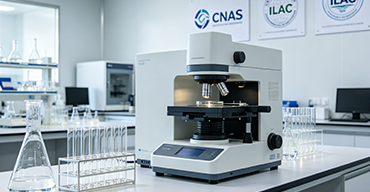
Internationally recognized authority
Certified by multiple international standards such as CNAS, VCS, and GS, with reports universally applicable worldwide.

Global service capability
Covering 140+ countries and regions, it supports on-site detection and remote verification in multiple languages.
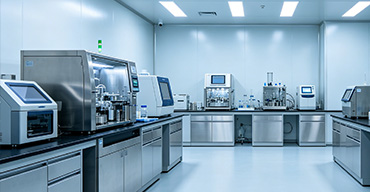
Professional experimental methods
Adopt standard experimental methods to ensure accurate and reliable data.
Comprehensive Analytical Quality Assurance of Strontium Hydroxide Solutions: A Specialized Testing Service for Advanced Materials, Electronics, and Chemical Process Industries
Strontium hydroxide (Sr(OH)₂) solutions are essential precursors for the production of high‑purity strontium compounds, optical glass, ferrite magnets, and specialized catalysts, as well as being used as an electrolyte additive in alkaline batteries and as a stabilizer in PVC processing. The functional performance and safety of these solutions are critically governed by exact strontium concentration, free hydroxide alkalinity, the presence of carbonate precipitates, trace heavy metal impurities (especially barium, calcium, iron, and lead), and colloidal stability. Clients seeking testing for strontium hydroxide solutions typically face challenges related to lot‑to‑lot variability in synthesis yields, premature precipitation of strontium carbonate due to CO₂ uptake, inconsistent reactivity in downstream reactions, or non‑compliance with stringent purity specifications for electronic and optical applications. Our laboratory has established a fully validated, multi‑technique analytical platform that combines high‑precision acid‑base titrimetry, inductively coupled plasma optical emission and mass spectrometry (ICP‑OES and ICP‑MS/MS), ion chromatography, and advanced physical characterisation, delivering a definitive, process‑relevant quality profile that ensures your strontium hydroxide solution meets the most demanding industrial and research requirements.
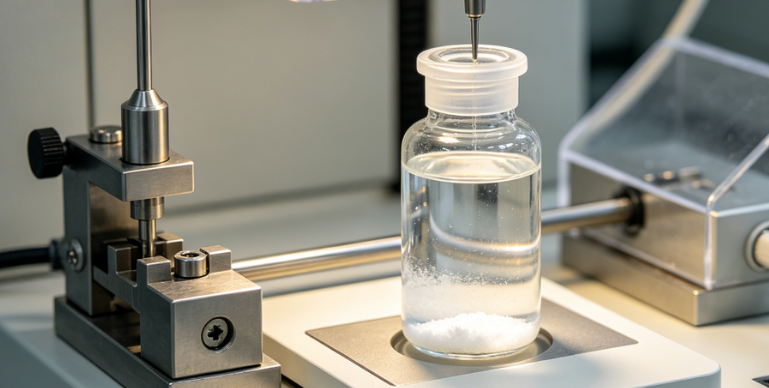
Precise Determination of Strontium Concentration and Free Alkalinity
The total strontium content (expressed as % Sr(OH)₂ or g/L Sr) is the primary specification for most applications. We determine total strontium by two independent, cross‑validated methods: complexometric titration with EDTA (using xylenol orange or Eriochrome Black T indicator) under controlled pH, achieving repeatability of < 0.2% RSD and an expanded uncertainty (k=2) of < 0.4% relative, and inductively coupled plasma optical emission spectrometry (ICP‑OES) with matrix‑matched calibration using high‑purity strontium reference standards (NIST SRM 3109a), providing detection limits of 0.02 mg/L and excellent linearity up to 10,000 mg/L. The free alkalinity (expressed as % Sr(OH)₂ equivalent) is measured by automated potentiometric titration with standardized HCl to the phenolphthalein end‑point (pH 8.2), and separately to the methyl orange end‑point (pH 4.5), allowing us to calculate the total alkalinity, carbonate alkalinity, and hydroxide alkalinity using the Phenolphthalein‑Methyl Orange (P‑M) method. This alkalinity speciation is critical for distinguishing active Sr(OH)₂ from inactive carbonate‑ or bicarbonate‑bound strontium. All titrimetric results are verified using certified reference materials and are reported with expanded uncertainties (k=2) to support regulatory compliance.
Speciation of Carbonate, Bicarbonate, and Hydroxide by Potentiometric and CO₂ Evolution Methods
The presence of carbonate (SrCO₃) in strontium hydroxide solutions, arising from atmospheric CO₂ absorption, can cause precipitation, turbidity, and reduced reactivity. We quantify total carbonate content by acid‑evolution manometry (liberated CO₂ measured volumetrically) with a detection limit of 0.01% as CO₂. For speciation between free hydroxide, bicarbonate, and carbonate, we use Gran titration (non‑linear potentiometric titration with HCl) over the pH range 12 to 4, which resolves the equivalence points with precision of ±0.5%. We also employ ion chromatography (IC) with suppressed conductivity on a diluted sample, using a carbonic acid eluent system to separate and quantify carbonate, sulfate, nitrate, and chloride with detection limits of 0.05 mg/L. This comprehensive speciation ensures that you can monitor the ageing of your solution and take corrective measures such as inert gas blanketing or filtration.
Comprehensive Trace Elemental Impurity Profiling by ICP‑MS/MS
High‑purity strontium hydroxide solutions for electronic or optical applications require strict control of barium, calcium, magnesium, iron, lead, cadmium, and other transition metals at sub‑ppm or even sub‑ppb levels. We employ inductively coupled plasma tandem mass spectrometry (ICP‑MS/MS) with collision/reaction cell technology (O₂, NH₃, or H₂) to eliminate isobaric and polyatomic interferences (e.g., 40Ar16O⁺ on 56Fe, 88Sr⁺ on 88Sr, and 42Ca16O⁺ on 58Ni) and achieve detection limits of 0.01–0.5 ppb for over 50 elements. Samples are acidified with ultra‑pure HNO₃ and directly introduced after appropriate dilution to reduce matrix effects. We use internal standardisation (Sc, Rh, Ir) and standard addition where necessary to correct for any suppression caused by the strontium matrix. We also determine total barium and calcium (which are the most critical impurities in strontium compounds) with accuracy better than 1% relative. Our comprehensive impurity report includes expanded uncertainties (k=2) for each element and clear pass/fail status against the specified limits (e.g., SEMI C39, ASTM D513, or internal customer specifications).
Physical Property Characterisation: Density, Viscosity, and Surface Tension
The handling and processing of strontium hydroxide solutions—such as pumping, filtration, and mixing—depend on their density, viscosity, and surface tension. We measure density at 20 °C, 25 °C, and 40 °C using a digital vibrating‑tube densitometer with accuracy of ±0.0002 g/cm³ and repeatability < 0.001%. Dynamic viscosity is determined with a rotational viscometer (concentric cylinder geometry) over a shear rate range of 10–1000 s⁻¹ at relevant temperatures, reporting the Newtonian or shear‑thinning behaviour. For surface tension, we use the Wilhelmy plate method at 25 °C, achieving precision of ±0.1 mN/m. These physical property data are essential for designing storage tanks, pipelines, and dosing equipment, and they are also valuable for quality control as they are sensitive to the presence of suspended solids or colloidal impurities.
Particulate, Turbidity, and Colloidal Stability Assessment
Precipitation of strontium carbonate or hydroxide hydrates can cause turbidity, nozzle clogging, and inconsistent performance. We measure turbidity using a nephelometer (ISO 7027 compliant) with a detection limit of 0.01 NTU. For particle size analysis in the sub‑micron range, we perform dynamic light scattering (DLS) to determine the hydrodynamic diameter distribution and polydispersity index (PdI) of any suspended particles. We also use zeta potential measurements (via electrophoretic light scattering) as a function of pH and temperature to predict colloidal stability and aggregation tendency. We perform accelerated sedimentation tests using a centrifugal photosedimentometer to quantify the settling rate and to identify any unstable batches. These stability indicators are critical for ensuring consistent quality during long‑term storage or transport.
Anion and Organic Impurity Screening
Anionic contaminants such as chloride, sulfate, nitrate, and phosphate can originate from raw materials or processing chemicals, and they may affect downstream reactions or cause corrosion. We quantify these anions by ion chromatography (IC) with suppressed conductivity after sample dilution, achieving detection limits below 0.1 mg/L. For organic impurities (e.g., residual solvents, surfactants, or preservatives), we use headspace‑gas chromatography‑mass spectrometry (HS‑GC‑MS) for volatile organics, and liquid chromatography‑high‑resolution mass spectrometry (LC‑HRMS) after solid‑phase extraction for semi‑volatiles and non‑volatiles, with detection limits in the low µg/L range. This organic profile is especially important for applications in the pharmaceutical and food‑contact industries.
Thermal Stability and Crystallisation Behaviour
Strontium hydroxide solutions can undergo phase changes upon heating or cooling, forming hydrates (e.g., Sr(OH)₂·8H₂O) or anhydrous precipitates. We perform simultaneous Thermogravimetric Analysis and differential scanning calorimetry (TGA‑DSC) on dried residues from the solution, from 30 °C to 600 °C under nitrogen and air, to identify dehydration steps, phase transitions, and decomposition temperatures. We also conduct cooling crystallisation experiments using a dynamic temperature‑controlled cell with online turbidity and conductivity monitoring to determine the supersaturation and metastable zone width. These data are invaluable for predicting handling temperature limits and for developing safe crystallisation processes.
Accelerated Ageing and Shelf‑Life Prediction
Strontium hydroxide solutions are susceptible to carbonation and hydration changes over time. We perform accelerated storage studies at elevated temperatures (40 °C, 50 °C, 60 °C) under air, nitrogen, and CO₂‑enriched atmospheres for up to 6 months, with periodic measurements of alkalinity, carbonate content, turbidity, and metal impurities. The degradation kinetics are modelled using Arrhenius and zero‑order rate equations to estimate the shelf‑life under recommended storage conditions (typically 15‑25 °C in sealed containers with inert gas headspace). We provide a clear recommendation for packaging, storage temperature, and maximum holding time, helping you avoid costly product losses.
Our Distinctive Competencies and Analytical Superiority
Our service is uniquely distinguished by the orthogonal, fully traceable integration of strontium assay (titrimetric and ICP‑OES), alkalinity speciation (Gran titration and P‑M method), ultra‑trace elemental analysis (ICP‑MS/MS), carbonate quantification (manometry and IC), physical property characterisation (density, viscosity, surface tension), stability assessment (DLS, zeta potential, turbidity), and accelerated ageing studies—all performed on the same representative sample to eliminate cross‑batch variability. We operate under ISO/IEC 17025 accreditation and maintain in‑house reference strontium hydroxide solutions that are periodically cross‑verified against certified reference materials (e.g., NIST SRM 3109a for Sr, SRM 3183 for carbonate). Our proprietary “Strontium Solution Quality Index” (SSQI™) combines assay purity, carbonate fraction, heavy metal sum, and colloidal stability into a single score that predicts reactivity, precipitation resistance, and suitability for high‑purity applications. This index has been validated against >30 commercial strontium hydroxide lots.
We achieve exceptional precision: < 0.3% RSD for Sr assay, < 0.02% for carbonate by manometry, < 0.5 ppb detection limits for critical metals, and < 0.01 NTU for turbidity. Our turnaround time for the full characterisation suite (including accelerated stability tests) is 10–14 working days, with expedited 5‑day service for urgent process troubleshooting. Crucially, our team of PhD‑level inorganic chemists, colloid scientists, and process engineers provides a comprehensive interpretative report that translates each parameter into actionable insights—e.g., how to interpret a slight rise in carbonate as an indication of CO₂ ingress, how to adjust the storage temperature to prevent hydrate precipitation, or how to set an upper limit on iron to avoid discoloration in optical glass applications. With over 15 successful projects on strontium hydroxide and related alkaline earth solutions, we empower our clients to achieve consistent product quality, reduce batch rejection, and meet the demanding specifications of optical, electronic, and battery industries—all with the highest level of scientific rigour and technical credibility.