Reasons for choosing our testing services
ZHONGXI Testing has obtained inspection qualification certifications from multiple countries and regions worldwide. We possess a senior testing team and advanced testing methods, providing independent, impartial, and professional third-party verification services for global carbon projects.

Internationally recognized authority
Certified by multiple international standards such as CNAS, VCS, and GS, with reports universally applicable worldwide.

Global service capability
Covering 140+ countries and regions, it supports on-site detection and remote verification in multiple languages.

Professional experimental methods
Adopt standard experimental methods to ensure accurate and reliable data.
Comprehensive Analytical Quality Assurance of Nickel Sulfate: A Specialized Testing Service for Electroplating, Battery Materials, and Electronic Chemical Applications
Nickel sulfate (NiSO₄·6H₂O and its anhydrous or lower‑hydrate forms) is a critical raw material in electroplating, the production of nickel‑based battery precursors (e.g., nickel hydroxide, lithium nickel oxides), and as a catalyst precursor in fine chemical synthesis. Its functional performance and product safety are critically governed by exact nickel content, stoichiometric purity, the presence of metallic impurities (especially copper, zinc, iron, lead, and cadmium), anionic contaminants (chloride, nitrate, and phosphate), water of crystallisation, and storage‑induced hydrolysis or oxidation. Clients seeking testing for nickel sulfate are typically driven by the need to verify supplier conformity with electroplating bath specifications (ASTM B558, ISO 4525), meet battery‑grade purity requirements (e.g., < 10 ppm total transition metals), ensure consistent deposition quality, or comply with environmental discharge limits for heavy metals. Our laboratory has developed a fully validated, multi‑technique analytical platform that combines high‑precision complexometric titration, inductively coupled plasma mass spectrometry (ICP‑MS), ion chromatography, thermal gravimetric analysis, and advanced physical characterisation, delivering a definitive, process‑relevant quality profile that enables manufacturers and end‑users to maintain consistent product quality, optimise process parameters, and meet the most stringent regulatory and industrial specifications.
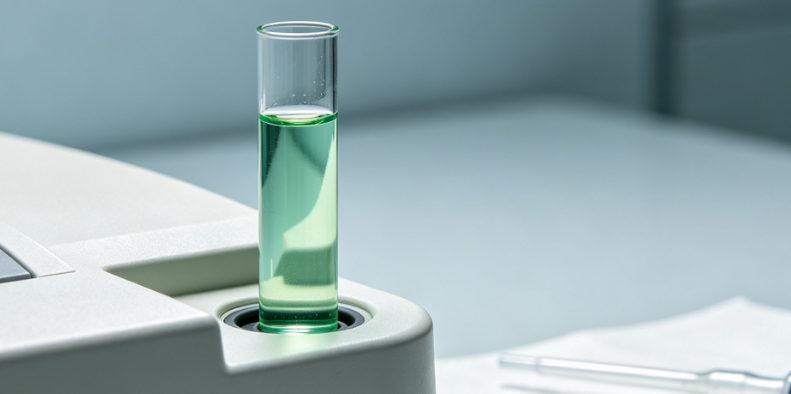
Precise Nickel Assay and Stoichiometric Verification
The primary quality attribute is the active nickel content (expressed as % Ni or % NiSO₄·6H₂O equivalent). We determine total nickel using two independent, cross‑validated methods: complexometric titration with EDTA (with murexide or PAN indicator) under controlled pH, achieving repeatability of < 0.15% RSD and an expanded uncertainty (k=2) of < 0.3% relative, and inductively coupled plasma optical emission spectrometry (ICP‑OES) with matrix‑matched calibration using certified nickel standards (NIST SRM 3108a). The ICP‑OES method provides a detection limit of 0.01 mg/L and serves as a powerful check for matrix interferences. To verify the hydration state and stoichiometry, we combine the nickel assay with Thermogravimetric Analysis (TGA) for water content and ion chromatography (IC) for sulfate, enabling the calculation of the molar ratio of Ni to SO₄. Any deviation from the theoretical ratio (1:1 for NiSO₄) indicates the presence of basic salts or impurities. All results are reported with expanded uncertainties (k=2) and are traceable to NIST reference materials.
Speciation of Nickel Species and Free Acid Determination
Nickel sulfate solutions may contain free acid (H₂SO₄) or hydrolysed species (basic nickel sulfates) that affect electroplating bath efficiency and deposit quality. We measure free acid content by potentiometric titration with standardised NaOH to the first equivalence point (pH 4.0), achieving precision of ±0.01% (as H₂SO₄ equivalent). For speciation of soluble nickel species—distinguishing Ni²⁺ aquo complexes, nickel hydroxide colloids, and sulfate‑bound complexes—we use UV‑Vis spectrophotometry and electrospray ionisation mass spectrometry (ESI‑MS) on dilute solutions. We also perform electrochemical measurements (cyclic voltammetry) to assess the electroactive nickel species, providing a direct link to plating performance. These analyses are essential for adjusting bath chemistry and for troubleshooting deposition defects.
Comprehensive Trace Elemental and Anionic Impurity Profiling
High‑purity nickel sulfate—particularly for battery and electronic applications—requires strict control of over 30 elements, including Cu, Zn, Fe, Pb, Cd, Cr, Mn, Co, Mg, Ca, Na, K, and As. We employ inductively coupled plasma tandem mass spectrometry (ICP‑MS/MS) with collision/reaction cell technology (O₂, NH₃, or H₂) to eliminate polyatomic interferences (e.g., 40Ar16O⁺ on 56Fe, 40Ca16O⁺ on 56Ni, and 40Ar35Cl⁺ on 75As) and achieve detection limits of 0.01–0.5 ppb for most metals. For mercury, we use cold vapour atomic fluorescence spectrometry (CV‑AFS) with a detection limit of 0.001 ppb. Anionic impurities (chloride, nitrate, sulfate, phosphate, fluoride) are quantified by ion chromatography (IC) with suppressed conductivity after sample dilution, with detection limits < 0.1 mg/L. We also measure total organic carbon (TOC) for battery‑grade material, using combustion‑infrared detection, to ensure absence of organic contaminants that could degrade electrolyte performance. All impurity results are reported with expanded uncertainties (k=2) and are compared against the relevant specifications (e.g., ASTM B558, EN 12352, or internal battery‑grade limits).
Physical Property Characterisation: Particle Size, Density, and Dissolution Behaviour
The handling and processing of nickel sulfate—especially in blending and dissolution for bath makeup—depend on its particle size distribution, bulk density, and flowability. We measure particle size distribution (0.02–2000 µm) by laser diffraction (dry and wet dispersion) with repeatability < 1% RSD, reporting D10, D50, D90, and span. Bulk and tapped densities are determined using a volumeter and tapping device, and we calculate the Hausner ratio and Carr index for flowability classification. True density is measured by helium pycnometry. We also evaluate dissolution rate in deionised water at 20 °C, 30 °C, and 40 °C using online conductivity monitoring, providing the time to 90% dissolution (T₉₀) and the dissolution rate constant according to first‑order kinetics. These physical parameters are critical for designing automatic dissolving systems and for ensuring batch‑to‑batch consistency in plating operations.
Thermal Stability, Phase Transitions, and Hydrate Characterisation
Nickel sulfate can exist as several hydrates (hexahydrate, heptahydrate, anhydrous) and may undergo dehydration or decomposition upon heating, affecting dosing accuracy and storage stability. We perform simultaneous Thermogravimetric Analysis and differential scanning calorimetry (TGA‑DSC) from 30 °C to 600 °C under nitrogen and air, at heating rates of 2, 5, and 10 °C/min. We identify the dehydration steps (endotherms) and the onset of decomposition to nickel oxide, and we quantify the mass loss for each step. The TGA data are used to calculate the exact number of water molecules and to detect any hydrolysis products (basic sulfates) that may have formed. For phase identification, we use high‑temperature X‑ray diffraction (HT‑XRD) up to 400 °C to monitor structural changes and to confirm the formation of anhydrous NiSO₄. These data are essential for setting drying temperatures and for defining safe storage conditions.
Identification of Crystalline Polymorphs and Impurity Phases
Different crystalline forms (monoclinic, orthorhombic) or the presence of amorphous phases can alter dissolution behaviour. We use powder X‑ray diffraction (XRD) with Cu Kα radiation over a 2θ range of 5‑80°, and Rietveld refinement to confirm the expected crystalline structure, to quantify any crystalline impurities (e.g., ammonium sulfate, nickel oxide), and to detect amorphous fractions via internal standard addition. We also employ Raman microspectroscopy (with 532 nm and 785 nm excitation) to probe the vibrational modes of sulfate and water, providing a quick fingerprint for phase purity and detecting any surface contamination or hydration variations.
Accelerated Stability Studies and Storage Life Prediction
Nickel sulfate can absorb moisture (causing caking) or slowly oxidise trace contaminants, especially in humid conditions. We conduct accelerated storage tests at 40 °C/75% RH, 60 °C/ambient RH, and cyclic temperature (–20 °C to +40 °C) for up to 6 months, with periodic re‑analysis of assay, moisture content, free acid, and impurity levels. We also evaluate the effect of packaging materials (HDPE, multi‑layer bags, moisture‑barrier liners) on stability. The degradation kinetics are modelled using Arrhenius and zero‑order rate equations to estimate the shelf‑life under recommended storage conditions (cool, dry, sealed). We provide a clear recommendation for handling, storage, and maximum holding time, helping you avoid costly product degradation.
Our Distinctive Competencies and Analytical Superiority
Our service is uniquely distinguished by the orthogonal, fully traceable integration of nickel assay (titration and ICP‑OES), ultra‑trace elemental analysis (ICP‑MS/MS), anion quantification (IC), physical characterisation (particle size, density, dissolution), thermal analysis (TGA‑DSC, HT‑XRD), and accelerated stability studies—all performed on the same representative sample to eliminate cross‑batch variability. We operate under ISO/IEC 17025 accreditation and maintain in‑house reference nickel sulfate (certified for purity and impurity profile) that is routinely cross‑checked with NIST SRM 3108a and other standards. Our proprietary “Nickel Sulfate Quality Index” (NSQI™) combines assay purity, impurity sum (especially Cu, Zn, Fe), free acid content, and hydration consistency into a single score that predicts electroplating brightness, bath stability, and battery precursor reactivity. This index has been validated against >40 commercial nickel sulfate batches from various suppliers.
We achieve exceptional precision: < 0.2% RSD for nickel assay, < 0.5 ppb detection limits for critical metals, < 0.05% for free acid, and < 1.5% RSD for dissolution rate constants. Our turnaround time for the complete characterisation suite (including accelerated stability tests) is 10–14 working days, with expedited 5‑day service for urgent batch release. Crucially, our team of PhD‑level analytical chemists, electrochemists, and materials scientists provides a comprehensive interpretative report that translates each parameter into actionable guidance—e.g., how to interpret a slight increase in free acid as a sign of hydrolysis, how to set acceptance limits for cobalt to avoid unwanted alloying, or how to select the optimal grinding and packaging conditions to minimise caking. With over 40 successful projects on nickel sulfate and related nickel chemicals, we empower our clients to achieve consistent electroplating quality, reduce battery material variability, and meet the stringent purity requirements of high‑tech industries—all with the highest level of scientific rigour and technical credibility.