Reasons for choosing our testing services
ZHONGXI Testing has obtained inspection qualification certifications from multiple countries and regions worldwide. We possess a senior testing team and advanced testing methods, providing independent, impartial, and professional third-party verification services for global carbon projects.
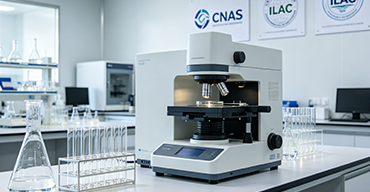
Internationally recognized authority
Certified by multiple international standards such as CNAS, VCS, and GS, with reports universally applicable worldwide.

Global service capability
Covering 140+ countries and regions, it supports on-site detection and remote verification in multiple languages.

Professional experimental methods
Adopt standard experimental methods to ensure accurate and reliable data.
Comprehensive Analytical Characterisation of Bismuth Oxide: A Specialised Testing Service for High‑Purity Electronic, Pharmaceutical, and Optical Applications
Bismuth oxide (Bi₂O₃) is a key functional material in advanced ceramics, solid‑oxide fuel cells, optical glasses, and pharmaceutical formulations (e.g., bismuth subsalicylate). Its performance and safety are critically dependent on precise stoichiometry, trace impurity profile, crystalline phase purity, and physical properties. Clients seeking testing for bismuth oxide are typically driven by the need to verify compliance with stringent specifications (e.g., USP, EP, or proprietary customer requirements), ensure batch‑to‑batch reproducibility, and qualify raw materials for high‑value applications. Our laboratory offers a fully validated, multi‑technique analytical platform that delivers a definitive quality fingerprint—from ultra‑trace elemental analysis to polymorphic identification—enabling manufacturers and end‑users to achieve consistent product quality and regulatory confidence.
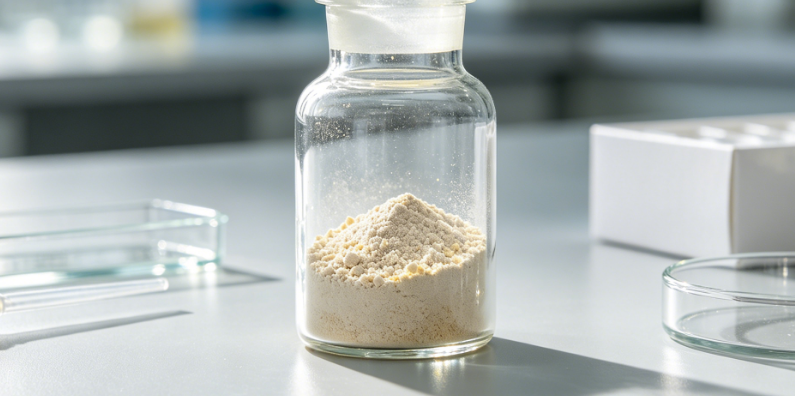
Ultra‑Trace Elemental Purity and Stoichiometric Verification
The primary quality attribute is the Bi₂O₃ assay, but equally critical is the quantification of heavy metals (Pb, Cd, As, Hg, Cu, Zn, Fe, etc.) and alkali/alkaline earth elements (Na, K, Ca, Mg), which can alter electrical properties or pose toxicological risks. We determine total bismuth content by complexometric titration with EDTA (using xylenol orange indicator) and by inductively coupled plasma optical emission spectrometry (ICP‑OES) for cross‑validation, achieving repeatability of < 0.2% RSD and an expanded uncertainty (k=2) of < 0.3% relative. For ultra‑trace impurities (sub‑ppm and ppb levels), we employ inductively coupled plasma tandem mass spectrometry (ICP‑MS/MS) with collision/reaction cell technology to eliminate polyatomic interferences (e.g., 40Ar16O⁺ on 56Fe, 40Ar35Cl⁺ on 75As, and 40Ca16O⁺ on 56Ni), achieving detection limits of 0.01–0.5 ppb for over 50 elements. For mercury, we use cold vapour atomic fluorescence spectrometry (CV‑AFS) with a detection limit of 0.001 ppb. We also quantify anionic impurities (chloride, sulfate, nitrate) by ion chromatography (IC) after alkaline fusion. Our impurity profile is reported with expanded uncertainties (k=2) and is compared against the limits of USP, EP, and other international pharmacopoeias or customer‑defined specifications, ensuring a clear pass/fail status.
Crystalline Phase Identification and Polymorphic Analysis
Bismuth oxide exists in several polymorphic forms (α‑, β‑, γ‑, δ‑Bi₂O₃), each with distinct ionic conductivity, optical bandgap, and reactivity. The α‑phase (monoclinic) is the most common at room temperature, but the high‑temperature δ‑phase (cubic) is highly conductive and desirable for fuel cells. We use powder X‑ray diffraction (XRD) with Cu Kα radiation over a 2θ range of 10–90° and Rietveld refinement to quantify the relative phase fractions with an accuracy of ±0.5 wt% for major phases and detection of minor phases down to 0.2 wt%. We also determine crystallite size and microstrain via Williamson‑Hall analysis. For rapid polymorph screening, we employ Raman microspectroscopy (with 532 nm and 785 nm excitation) to identify characteristic vibrational modes (Bi‑O stretching and bending) and to detect any amorphous or hydrated surface layers. Our phase composition report is essential for predicting sintering behaviour, ionic conductivity, and optical transparency.
Thermal Stability and Phase Transition Behaviour
The transformation temperatures of bismuth oxide polymorphs directly affect processing and end‑use performance. We perform simultaneous thermogravimetric and differential thermal analysis (TGA‑DTA) from 25 °C to 800 °C under air, argon, and oxygen, at heating rates of 1, 5, and 10 °C/min. We identify the α→δ transition (around 730 °C) with its characteristic endotherm, the melting point (around 825 °C), and any weight loss due to volatilisation or reduction. Coupled evolved gas analysis‑mass spectrometry (EGA‑MS) detects any release of CO₂, H₂O, or oxygen, indicating the presence of carbonates or hydroxides. We also perform high‑temperature XRD (HT‑XRD) up to 800 °C to monitor the phase evolution in real time, providing a complete thermal fingerprint for process optimisation and for predicting material behaviour under service conditions.
Particle Size Distribution, Specific Surface Area, and Flowability
Powder morphology directly influences sintering densification, coating uniformity, and dissolution kinetics. We measure particle size distribution (0.02–2000 µm) by laser diffraction (wet and dry dispersion) with repeatability < 1% RSD, reporting D10, D50, D90, and span. Specific surface area (BET) is determined by nitrogen physisorption at 77 K with a multi‑point method (precision < 1%). For porous or agglomerated powders, we also perform mercury intrusion porosimetry (MIP) to obtain pore volume and pore size distribution. Bulk and tapped densities are measured using a volumeter and tapping device, and we calculate the Hausner ratio and Carr index to classify flowability—critical for powder feeding and compaction processes. We also assess moisture content by Karl Fischer coulometric titration and loss on drying at 105 °C. These physical parameters are reported with expanded uncertainties and correlated with the material’s reactivity and processing behaviour.
Surface Chemistry and Hydration State Assessment
Surface hydroxyl groups, carbonate contamination, and hydration layers can affect sintering and catalytic activity. We use X‑ray photoelectron spectroscopy (XPS) with depth profiling (Ar⁺ sputtering) to quantify the surface Bi/O ratio, the relative abundance of Bi₂O₃ vs. BiOOH or Bi₂O₂CO₃, and to detect any organic residues. We also perform Fourier‑transform infrared spectroscopy (FTIR) with attenuated total reflectance (ATR) to identify characteristic absorption bands for hydroxyl (3400 cm⁻¹) and carbonate (1450 cm⁻¹). These surface analyses are essential for evaluating the suitability of the oxide for catalytic coatings or for detecting degradation during storage.
Accelerated Stability and Environmental Exposure Testing
Bismuth oxide can react with atmospheric CO₂ and moisture, forming carbonates and hydrates that alter its stoichiometry. We conduct accelerated aging tests at 40 °C/75% RH, 60 °C/ambient, and under CO₂‑enriched atmospheres (5000 ppm) for up to 6 months, with periodic re‑analysis of phase composition (XRD), impurity profile (ICP‑MS), and surface chemistry (XPS). The degradation kinetics are modelled using Avrami‑Erofeev equations to predict the shelf‑life and to recommend optimal storage conditions (e.g., dry, inert packaging). We also evaluate the effect of grinding or milling on phase stability (mechanochemical transformation) by comparing the properties before and after mechanical processing.
Compliance and Regulatory Support
Our testing is performed in accordance with ISO/IEC 17025 and follows relevant pharmacopoeial and industrial standards (USP, EP, ASTM). We provide a certificate of analysis (CoA) for each batch, including all measured parameters, their uncertainties, and a clear pass/fail declaration. For export or regulatory submissions, we also offer method validation packages and technical consultancy on sampling and specification setting. Our laboratory participates in international proficiency testing schemes for inorganic materials, ensuring the reliability and comparability of our results.
Our Distinctive Competencies and Analytical Superiority
Our service is uniquely distinguished by the orthogonal integration of ICP‑MS/MS, HR‑XRD with Rietveld refinement, TGA‑DTA‑EGA‑MS, laser diffraction, BET, XPS, and accelerated stability tests—all performed on the same representative sample to eliminate cross‑batch variability and to enable direct correlations (e.g., impurity sum vs. phase transition temperature). We maintain in‑house reference materials (certified Bi₂O₃ of various purities) and utilise NIST‑traceable standards for calibration. Our proprietary “Bismuth Oxide Quality Index” (BOQI™) combines purity, impurity sum, phase composition, and particle size consistency into a single numerical score that predicts sintering behaviour, electrical performance, and chemical stability. This index has been validated against >30 commercial samples from diverse producers, offering you an immediate, objective benchmark for supplier qualification and process optimisation.
We achieve exceptional precision: < 0.2% RSD for Bi assay, < 0.5% RSD for impurity elements at 1 ppm, < 0.3 m²/g for BET area, and < 0.02° for XRD peak position. Our turnaround time for the full characterisation suite is 10–14 working days, with expedited 5‑day service for urgent batch release. Crucially, our team of PhD‑level analytical chemists, material scientists, and phase‑equilibria experts provides a comprehensive interpretative report that translates each parameter into actionable insights—e.g., how to detect incipient carbonation by monitoring the weight gain in TGA, how to correlate the α‑to‑δ transition temperature with impurity content, or how to adjust milling conditions to achieve the desired particle size without inducing phase transformation. With over 20 successful projects on bismuth oxide and related bismuth compounds, we empower our clients to ensure product consistency, satisfy regulatory requirements, and accelerate the development of high‑performance electronic and pharmaceutical materials—all with the highest level of scientific rigour and technical credibility.