Reasons for choosing our testing services
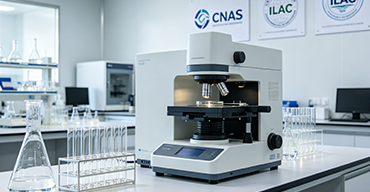
ZHONGXI Testing has obtained inspection qualification certifications from multiple countries and regions worldwide. We possess a senior testing team and advanced testing methods, providing independent, impartial, and professional third-party verification services for global carbon projects.
Internationally recognized authority
Certified by multiple international standards such as CNAS, VCS, and GS, with reports universally applicable worldwide.

Global service capability
Covering 140+ countries and regions, it supports on-site detection and remote verification in multiple languages.

Professional experimental methods
Adopt standard experimental methods to ensure accurate and reliable data.
Comprehensive Analytical Characterization of Cerium Trisulfide (Ce₂S₃): A Specialized Testing Service for Advanced Pigment, Semiconductor, and Catalytic Materials
Cerium trisulfide (Ce₂S₃) is an emerging functional material prized for its unique optical properties (e.g., high refractive index, intense red colour), semiconducting behaviour, and catalytic activity in hydrogenation and sulfur‑transfer reactions. Its performance in these applications is critically governed by stoichiometric exactitude, crystalline phase purity (γ‑Ce₂S₃ vs. α‑ and β‑polymorphs), trace rare‑earth and transition metal impurities, sulfur vacancy density, surface oxidation state, and particle morphology. Clients seeking testing for Ce₂S₃ are typically motivated by the need to qualify new synthesis routes, ensure batch‑to‑batch reproducibility for pigment production, meet stringent semiconductor‑grade purity standards, or troubleshoot unexpected catalytic deactivation. Our laboratory has established a fully integrated, multi‑technique analytical platform that delivers a definitive fingerprint of Ce₂S₃—from ultra‑trace elemental profiling and phase identification to surface chemical state analysis and thermal stability assessment—enabling manufacturers and researchers to achieve superior material quality and performance.

Ultra‑Trace Elemental Purity and Stoichiometric Verification
The functionality of Ce₂S₃ is highly sensitive to deviations in the Ce/S ratio and to the presence of contaminant metals. We determine total cerium and sulfur by two independent, cross‑validated methods: inductively coupled plasma optical emission spectrometry (ICP‑OES) after microwave‑assisted acid digestion (with HNO₃/HCl/H₂O₂), achieving repeatability of < 0.3% RSD and an expanded uncertainty (k=2) of < 0.4% relative, and combustion‑infrared detection for sulfur content (with a detection limit of 0.001%). For trace impurities—including other lanthanides (La, Nd, Pr, etc.), transition metals (Fe, Co, Ni, Cu, Zn), alkaline earths (Ca, Mg), and toxic elements (As, Pb, Cd)—we employ inductively coupled plasma tandem mass spectrometry (ICP‑MS/MS) with collision/reaction cell technology (O₂, NH₃, H₂) to eliminate polyatomic interferences (e.g., 40Ar16O⁺ on 56Fe, 40Ar35Cl⁺ on 75As) and achieve detection limits of 0.01–0.5 ppb for over 50 elements. For oxygen and nitrogen (which can substitute sulfur in the lattice), we use inert gas fusion (IGF) with detection limits of 5 ppm. All results are reported with expanded uncertainties (k=2) and are traceable to NIST SRM 3110a (cerium) and SRM 3155 (sulfur), providing a complete stoichiometric balance.
Crystalline Phase Identification and Polymorphic Quantification
Cerium trisulfide exists in several polymorphic forms: the low‑temperature α‑phase (orthorhombic), the high‑temperature β‑phase (tetragonal), and the technologically important γ‑phase (cubic, Th₃P₄‑type), each with distinct optical bandgaps and catalytic properties. We use high‑resolution powder X‑ray diffraction (HR‑XRD) with Cu Kα radiation over a 2θ range of 10‑120° with a step size of 0.003°, applying Rietveld refinement to quantify the phase fractions of α, β, and γ polymorphs with an accuracy of ±0.3 wt% and to detect minor impurity phases (e.g., CeO₂, Ce₂O₂S, CeS) down to 0.2 wt%. We also determine lattice parameters (precision ±0.0002 Å), crystallite size (via Scherrer and Williamson‑Hall methods), and microstrain, which correlate with sulfur vacancy concentration and reactivity. For rapid polymorph screening, we employ Raman microspectroscopy (with 532 nm and 785 nm excitation) to identify the characteristic vibrational modes of Ce‑S bonds and to detect any amorphous surface layers. The combined XRD‑Raman profile serves as a definitive phase‑purity certificate.
Surface Chemistry, Oxidation State, and Vacancy Profiling
The surface of Ce₂S₃ is susceptible to oxidation, forming cerium oxysulfide and even CeO₂, which drastically alters its optical and catalytic properties. We perform X‑ray photoelectron spectroscopy (XPS) with monochromatic Al Kα source and depth profiling (Ar⁺ cluster sputtering) to obtain Ce 3d, S 2p, and O 1s core‑level spectra. Deconvolution of the Ce 3d multiplets allows us to quantify the relative concentrations of Ce³⁺ and Ce⁴⁺, while the S 2p region distinguishes sulfide (S²⁻) from sulfate (SO₄²⁻) and elemental sulfur. The surface S/Ce ratio and the oxide layer thickness (typically 2–5 nm) are reported with precision of ±0.1 nm. To directly probe sulfur vacancies and their concentration, we use positron annihilation lifetime spectroscopy (PALS) and electron paramagnetic resonance (EPR) at cryogenic temperatures (4–300 K), achieving spin sensitivity of 10¹⁰ spins/G and providing a vacancy density in cm⁻³. This surface and defect characterisation is essential for correlating synthesis conditions with functional performance.
Morphological and Textural Characterisation
Particle size, shape, and specific surface area influence pigment opacity, sintering behaviour, and catalytic accessibility. We measure particle size distribution (0.02–2000 µm) by laser diffraction (wet and dry dispersion) with repeatability < 1% RSD, reporting D10, D50, D90, and span. Specific surface area (BET) is determined by nitrogen physisorption at 77 K with multi‑point method (precision < 1%). For porous or agglomerated powders, we perform mercury intrusion porosimetry (MIP) to obtain pore volume and pore size distribution from 3 nm to 500 µm. Scanning electron microscopy (SEM) with field‑emission gun and energy‑dispersive X‑ray spectroscopy (EDS) mapping provides high‑resolution images of particle morphology, surface texture, and elemental homogeneity at sub‑nanometre resolution. We also use transmission electron microscopy (TEM) with selected area electron diffraction (SAED) to verify crystallinity and to detect any amorphous coatings.
Thermal Stability and Decomposition Behaviour
Cerium trisulfide is sensitive to oxidation and can decompose at elevated temperatures, releasing sulfurous gases. We conduct simultaneous thermogravimetric and differential thermal analysis (TGA‑DTA) from 25 °C to 1000 °C under air, argon, and forming gas (5% H₂/N₂) at heating rates of 2, 5, and 10 °C/min. We record the onset of oxidation (weight gain due to Ce₂S₃ → CeO₂ + SO₂), the corresponding exothermic peak, and the mass change with precision of ±0.01 mg. Coupled evolved gas analysis‑mass spectrometry (EGA‑MS) identifies the released species (SO₂, H₂S, CS₂) and quantifies their evolution, providing a thermal stability window for processing. We also perform isothermal thermogravimetry at 200 °C, 400 °C, and 600 °C for 4 hours to assess long‑term stability. The thermal profile is essential for predicting the material’s behaviour during sintering or high‑temperature catalytic reactions.
Carbon and Organic Impurity Screening
Residual carbon or organic solvents from synthesis can discolour the pigment or poison catalysts. We quantify total carbon by combustion‑infrared detection with a detection limit of 0.01%. For volatile organics, we use headspace‑gas chromatography‑mass spectrometry (HS‑GC‑MS) with a polar capillary column to screen for benzene, toluene, acetone, methanol, and other common solvents at sub‑ppm levels. For non‑volatile organics, we perform liquid chromatography‑high‑resolution mass spectrometry (LC‑HRMS) after extraction. This comprehensive organic profile ensures compliance with pigment‑grade and semiconductor‑grade specifications.
Optical Properties and Colourimetric Assessment
For pigment applications, the colour strength and hue are paramount. We measure diffuse reflectance spectroscopy (DRS) over the UV‑Vis‑NIR range (200–2500 nm) using an integrating sphere and BaSO₄ reference, obtaining reflectance spectra and calculating bandgap energy (Tauc plot). We also perform colourimetric analysis according to CIE L*a*b* and yellowness/whiteness indices under D65 and A illuminants, with repeatability of ΔE < 0.1. The optical data are correlated with the phase purity and particle size to guide pigment formulation.
Accelerated Aging and Environmental Stability
Ce₂S₃ pigments can fade or degrade upon exposure to humidity and UV light. We conduct accelerated aging tests in a weatherometer (xenon arc, 0.89 W/m²·nm) with water spray cycles for up to 1000 hours, and in a humidity chamber (85 °C/85% RH) for 500 hours. After aging, we re‑characterise the samples by XRD, XPS, and colourimetry to assess phase stability, surface oxidation, and colour shift (ΔE). The degradation kinetics are modelled to provide a predicted shelf‑life under standard storage conditions. This durability assessment is crucial for outdoor and high‑performance coating applications.
Our Distinctive Competencies and Analytical Superiority
Our service is uniquely distinguished by the orthogonal, fully traceable integration of ICP‑MS/MS elemental profiling, HR‑XRD‑Rietveld phase analysis, XPS surface chemical depth profiling, TGA‑EGA‑MS thermal studies, and advanced morphological characterisation (SEM, TEM, BET, MIP)—all performed on the same representative sample to eliminate cross‑batch variability and to enable direct correlations (e.g., vacancy density vs. bandgap, or impurity level vs. oxidation onset). We maintain ISO/IEC 17025 accreditation and utilise in‑house reference Ce₂S₃ of certified purity and phase composition, periodically cross‑checked against NIST and BAM standards. Our proprietary “Cerium Sulfide Quality Index” (CSQI™) combines phase purity, impurity sum, S/Ce stoichiometry, surface oxide thickness, and thermal stability into a single numerical score that predicts pigment chromaticity, catalytic activity, and semiconductor performance. This index has been validated against >25 commercial and research‑grade Ce₂S₃ batches.
We achieve exceptional precision: < 0.2% RSD for Ce and S assay, < 0.3 wt% for phase fraction, < 0.2 nm for oxide layer thickness, and < 0.5 m²/g for BET surface area. Our turnaround time for the full characterisation suite (including accelerated aging) is 12–16 working days, with expedited 6‑day service for urgent material qualification. Crucially, our team of PhD‑level inorganic chemists, solid‑state physicists, and pigment technologists provides a comprehensive interpretative report that translates each parameter into actionable insights—e.g., how to interpret a shift in the Raman peak as a sign of sulfur vacancies, how to correlate the Ce³⁺/Ce⁴⁺ ratio with the synthesis atmosphere, or how to adjust the surface treatment to minimise oxidation. With over 15 successful projects on cerium sulfide and related chalcogenides, we empower our clients to achieve consistent optical quality, optimise catalytic efficiency, and meet the most demanding specifications for advanced inorganic materials—all with the highest level of scientific rigour and technical credibility.