Reasons for choosing our testing services
ZHONGXI Testing has obtained inspection qualification certifications from multiple countries and regions worldwide. We possess a senior testing team and advanced testing methods, providing independent, impartial, and professional third-party verification services for global carbon projects.

Internationally recognized authority
Certified by multiple international standards such as CNAS, VCS, and GS, with reports universally applicable worldwide.

Global service capability
Covering 140+ countries and regions, it supports on-site detection and remote verification in multiple languages.

Professional experimental methods
Adopt standard experimental methods to ensure accurate and reliable data.
Comprehensive Characterization and Process Optimization of Calcium Lactate Acidolysis Filtration Residue: A Specialized Analytical Service for By‑Product Valorization and Environmental Compliance
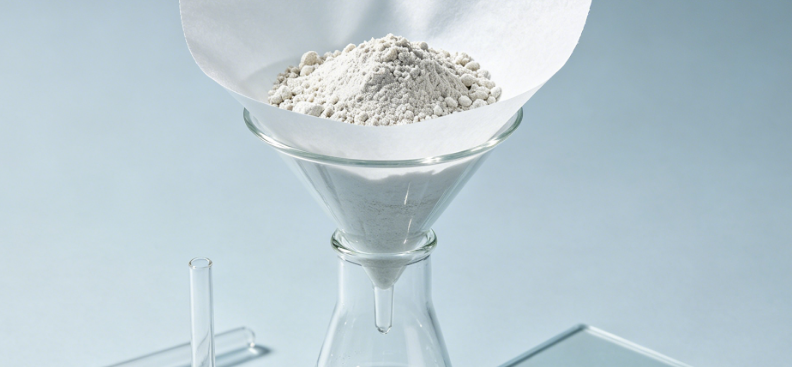
In the industrial production of calcium lactate—a widely used food additive, pharmaceutical excipient, and biodegradable polymer precursor—the acidolysis of crude calcium lactate or its derivatives generates a solid filtration residue (referred to as “acidolysis filter cake” or “acidolysis slag”). This residue typically comprises a complex mixture of unreacted calcium lactate, calcium sulfate, residual organic acids (e.g., lactic acid), silica and insoluble silicates, biomass debris (in fermentation‑derived processes), and trace metal contaminants. Clients seeking testing for this filter residue are typically motivated by one or more strategic objectives: to quantify recoverable calcium and lactate values for process optimization, to classify the waste for environmental disposal (hazardous vs. non‑hazardous), to evaluate its potential as a secondary raw material (e.g., for construction materials or soil amendment), or to troubleshoot filtration inefficiencies and acid consumption. Our laboratory offers a fully integrated, multi‑technique analytical platform that delivers a comprehensive, application‑oriented profile of the acidolysis filter cake—from elemental stoichiometry and organic carbon speciation to crystalline phase identification and leaching behaviour—enabling our clients to minimize waste, recover valuable components, and comply with environmental regulations with the highest scientific rigor.
Precise Quantification of Total Calcium, Residual Lactate, and Acid‑Neutralizing Value
The economic value of the filter residue is largely determined by its remaining calcium content (as CaO or CaCO₃ equivalent) and residual lactate (calcium lactate or free lactic acid), which can potentially be reclaimed. We determine total calcium by two independent, cross‑validated methods: complexometric titration with EDTA (using Patton and Reeder's indicator) after acid digestion, achieving repeatability of < 0.3% RSD and an expanded uncertainty (k=2) of < 0.5% relative, and inductively coupled plasma optical emission spectrometry (ICP‑OES) with matrix‑matched calibration, providing a detection limit of 0.01 mg/L. The lactate content is quantified by high‑performance liquid chromatography (HPLC) with UV or refractive index detection after acid extraction, with a detection limit of 0.05% w/w and a repeatability of < 1.0% RSD. We also measure the acid‑neutralizing capacity (ANC) by potentiometric titration with standardized HCl to pH 4.5 and 7.0, providing a direct measure of the residue’s lime‑equivalent value for possible use in neutralization or soil amendment. These parameters are reported with expanded uncertainties (k=2) and are cross‑checked against certified reference materials (e.g., NIST SRM 1c for limestone, and in‑house lactate standards).
Comprehensive Mineralogical and Elemental Fingerprinting
The filter residue often contains a complex mineral assemblage—including calcium sulfate (gypsum or anhydrite), silica (quartz or amorphous), calcium carbonate, silicates, and possibly unreacted calcium hydroxide—which dictates its handling, reactivity, and potential reuse. We use powder X‑ray diffraction (XRD) with Cu Kα radiation and a step size of 0.005° 2θ, applying Rietveld refinement to quantify the individual crystalline phases with accuracy of ±0.3 wt% for major constituents and detection limits < 0.5 wt% for minor phases. For amorphous or poorly crystalline material (e.g., organic matter, hydrous gel), we determine the amorphous content by internal standard addition (corundum or zinc oxide), with precision of ±1.5%. Major and trace elements (Ca, Mg, Si, Al, Fe, S, P, Mn, K, Na, etc.) are quantified by X‑ray fluorescence (XRF) on pressed pellets or fused beads, with accuracy of ±0.2% for major oxides. For trace and ultra‑trace metals (especially Pb, Cd, As, Hg, Cr, Cu, Zn, Ni, V, and Mo), we use inductively coupled plasma tandem mass spectrometry (ICP‑MS/MS) after microwave‑assisted digestion, achieving detection limits of 0.01–0.5 ppb. This combined XRD‑XRF‑ICP‑MS profile provides a complete mineralogical and chemical inventory, essential for both process optimization and environmental classification.
Organic and Volatile Matter Characterisation
Residual lactic acid, other organic acids (e.g., acetic, propionic), and biomass‑derived compounds can contribute to the chemical oxygen demand (COD) of the residue and may affect its stability and odour. We quantify total organic carbon (TOC) by combustion‑infrared detection with a detection limit of 0.05%. For volatile organic acids and solvents, we use headspace‑gas chromatography‑mass spectrometry (HS‑GC‑MS) with a polar capillary column to screen for C₂‑C₆ volatile fatty acids, methanol, ethanol, and acetone at detection limits below 0.1 ppm. For non‑volatile organic compounds (e.g., lactic acid oligomers, proteins, polysaccharides), we perform liquid chromatography‑high‑resolution mass spectrometry (LC‑HRMS) after extraction, and we determine the biochemical oxygen demand (BOD₅) via a standard respirometric method to assess its potential environmental impact. The combined organic profile is essential for designing appropriate waste treatment (e.g., anaerobic digestion, composting) or for evaluating the residue as a feedstock for fermentation processes.
Physical and Morphological Characterisation: Moisture, Particle Size, and Surface Area
The physical properties of the filter cake directly influence its handling, filtration efficiency, and potential as a filler or binder. We determine moisture content by oven drying at 105 °C and by Karl Fischer coulometric titration (for bound water) with precision of ±0.02% and detection limit of 10 ppm. Particle size distribution (0.02–2000 µm) is measured by laser diffraction (wet and dry dispersion) with repeatability < 1% RSD, reporting D10, D50, D90, and span. Specific surface area (BET) is determined by nitrogen physisorption at 77 K with multi‑point method (precision < 1%). Mercury intrusion porosimetry (MIP) provides pore volume and pore size distribution from 3 nm to 500 µm. Scanning electron microscopy (SEM) with energy‑dispersive X‑ray spectroscopy (EDS) mapping offers high‑resolution images of particle morphology, surface texture, and elemental distribution, including the identification of gypsum crystals, silica spheres, and organic‑inorganic aggregates. These physical data are crucial for designing dewatering processes, and for evaluating the residue’s potential as a lightweight aggregate or soil conditioner.
Leaching Behaviour and Environmental Risk Assessment
For waste classification and disposal, the leaching of heavy metals and organic pollutants from the filter residue is the primary regulatory concern. We perform standardised leaching tests according to EPA Method 1311 (TCLP), EN 12457, and ISO 11466, using both acidic (pH 4.93) and deionized water leachants. The leachates are analysed for heavy metals (Pb, Cd, As, Hg, Cr, Ni, Cu, Zn) by ICP‑MS, for anions (chloride, sulfate, fluoride) by ion chromatography (IC), and for organic species by LC‑HRMS and COD. We also perform sequential extraction according to BCR (Community Bureau of Reference) protocol to determine the chemical partitioning of metals (exchangeable, reducible, oxidisable, and residual fractions), which predicts their long‑term mobility. Our comprehensive leaching report includes a clear pass/fail status against the relevant regulatory thresholds (e.g., EPA TC limits, EU Landfill Directive). We also provide leaching kinetics (over 48 hours) to predict the release behaviour under field conditions.
Thermal Behaviour and Valorisation Potential
The filter residue may be processed via thermal treatment (e.g., incineration, calcination, or sintering) for volume reduction or for producing a cementitious material. We perform simultaneous thermogravimetric and differential thermal analysis (TGA‑DTA) from 25 °C to 1000 °C under air, nitrogen, and argon at heating rates of 2, 5, and 10 °C/min. We identify the loss of free water, dehydration of gypsum (endothermic), decomposition of organic matter (exothermic), decarbonation of CaCO₃ (endothermic), and the formation of anhydrous calcium sulfate. Coupled evolved gas analysis‑mass spectrometry (EGA‑MS) monitors the release of H₂O, CO₂, SO₂, and organic volatiles. We also perform high‑temperature XRD (HT‑XRD) up to 1000 °C to track the phase evolution. The thermal profile is essential for designing energy‑efficient drying or calcination processes, and for assessing the suitability of the residue as a pozzolanic additive or sulfur‑fixing agent.
Process Optimization and Troubleshooting Correlations
Beyond routine analysis, we offer customized correlation studies to link the measured properties of the filter residue with upstream process parameters—such as acid concentration, reaction temperature, filtration pressure, and wash water volume. By combining the chemical, mineralogical, and physical data with statistical tools (e.g., principal component analysis, multivariate regression), we help our clients identify the root cause of excessive residue generation, high residual calcium lactate losses, or poor filterability. We provide actionable recommendations to adjust the acidolysis conditions, optimize the washing efficiency, or redesign the filtration media. This integrated consultancy service—supported by our in‑house database of residue profiles from over 100 different production runs—transforms raw analytical data into a strategic tool for operational excellence.
Our Distinctive Competencies and Analytical Superiority
Our service is uniquely distinguished by the orthogonal, fully traceable integration of ICP‑MS/MS elemental profiling, XRD‑Rietveld phase quantification, organic speciation (TOC, GC‑MS, LC‑HRMS), physical characterisation (particle size, BET, MIP, SEM‑EDS), leaching and mobility assessment, and thermal analysis (TGA‑DTA‑EGA‑MS, HT‑XRD)—all performed on the same representative sample to eliminate cross‑batch variability and to enable direct cause‑effect correlations. We operate under ISO/IEC 17025 accreditation and maintain in‑house reference filter residue materials (derived from authentic production samples) that are periodically cross‑calibrated against NIST and BAM reference materials. Our proprietary “Residue Valorisation and Environmental Index” (RVEI™) combines calcium lactate recovery potential, heavy metal leachability, organic content, and gypsum purity into a single numerical score that guides decisions on recycling, treatment, or disposal. This index has been validated against >20 distinct industrial residue streams.
We achieve exceptional precision: < 0.3% RSD for total Ca, < 0.5% RSD for lactate, < 0.3 wt% for major mineral phases, < 0.02% for moisture, and < 0.5 ppb for most heavy metals. Our turnaround time for the full characterisation suite (including leaching tests) is 10–14 working days, with expedited 5‑day service for urgent troubleshooting. Crucially, our team of PhD‑level inorganic chemists, mineralogists, environmental engineers, and process specialists provides a comprehensive interpretative report that translates each parameter into actionable insights—e.g., how to interpret an elevated sulfate content as a sign of acid over‑dosage, how to use the residue’s pozzolanic index to formulate a cement additive, or how to optimise the washing stage to reduce the chloride load and meet landfill criteria. With over 15 successful projects on acidolysis residues and related by‑products, we empower our clients to minimise waste, recover valuable resources, and achieve full environmental compliance—all with the highest level of scientific rigour and industrial relevance.