Reasons for choosing our testing services
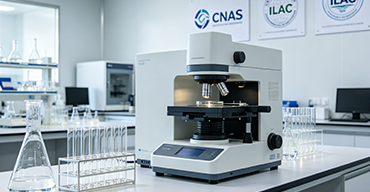
ZHONGXI Testing has obtained inspection qualification certifications from multiple countries and regions worldwide. We possess a senior testing team and advanced testing methods, providing independent, impartial, and professional third-party verification services for global carbon projects.
Internationally recognized authority
Certified by multiple international standards such as CNAS, VCS, and GS, with reports universally applicable worldwide.

Global service capability
Covering 140+ countries and regions, it supports on-site detection and remote verification in multiple languages.

Professional experimental methods
Adopt standard experimental methods to ensure accurate and reliable data.
Comprehensive Characterization of Beryllium Phosphate Molecular Sieves: A Specialized Analytical Service for Advanced Catalytic and Separation Applications
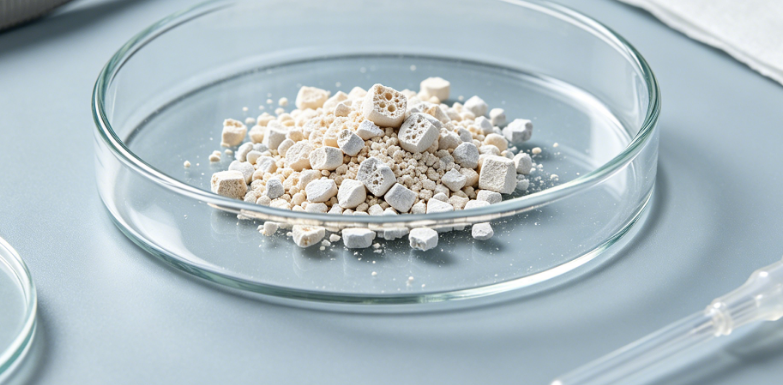
Beryllium phosphate molecular sieves (BePO‑type frameworks) are an emerging class of microporous materials with unique structural and compositional features that distinguish them from traditional aluminophosphate (AlPO) and silicoaluminophosphate (SAPO) systems. Their intrinsic acidity, high thermal stability, and shape‑selective properties make them promising candidates for acid‑catalysed reactions and gas separation processes. However, the successful synthesis and industrial application of these materials require an exceptionally high level of analytical scrutiny, as their performance is critically governed by the precise Be/P stoichiometry, framework integrity, acid site density and strength, pore architecture, and the absence of extra‑framework beryllium oxide or phosphate impurities. Clients seeking testing for beryllium phosphate molecular sieves are typically engaged in the development of novel catalysts or adsorbents, and they require a comprehensive, multi‑technique characterisation to validate synthesis protocols, ensure batch‑to‑batch reproducibility, and correlate structural parameters with functional performance. Our laboratory has established a fully integrated, multi‑scale analytical platform that combines state‑of‑the‑art diffraction, spectroscopic, thermal, and textural methods, delivering a quantitative, process‑relevant fingerprint that enables our clients to achieve material optimisation, scale‑up confidence, and regulatory compliance with the highest scientific rigor.
Crystal Structure, Phase Purity, and Framework Integrity
The catalytic and molecular‑sieving properties of beryllium phosphate frameworks are intimately linked to their crystalline structure and the absence of competing phases. We employ high‑resolution powder X‑ray diffraction (HR‑XRD) using synchrotron radiation (λ = 0.8–1.2 Å) or a state‑of‑the‑art laboratory diffractometer with Cu Kα source, collecting data over a wide 2θ range with a step size of 0.003°. Full‑pattern Rietveld refinement is performed to determine the unit cell parameters (precision ±0.0002 Å), space group confirmation, and atomic coordinates, and to quantify the relative fractions of any crystalline impurity phases (e.g., BeO, Be₂P₂O₇, or unreacted phosphate) with a detection limit of < 0.5 wt%. For samples with low crystallinity or nanocrystalline domains, we use pair distribution function (PDF) analysis from total scattering data to probe the local order and to detect any amorphous precursors or framework degradation. Complementary Raman microspectroscopy (with 532 and 785 nm excitation) provides rapid fingerprinting of the framework vibrational modes (Be‑O‑P bending and stretching), while solid‑state magic‑angle spinning nuclear magnetic resonance (MAS NMR) of 31P and 9Be nuclei (at high magnetic fields ≥ 14.1 T) reveals the local coordination environment of phosphorus (Q⁰, Q¹, Q² species) and beryllium (tetrahedral vs. octahedral), offering definitive evidence of framework connectivity and the presence of any Be‑OH or P‑OH defects. Our combined diffraction‑NMR‑Raman approach ensures that your material is structurally well‑defined and free from detrimental secondary phases.
Elemental Composition, Stoichiometry, and Ultra‑Trace Impurity Profiling
Deviations from the ideal Be/P ratio, as well as the presence of alkali, alkaline earth, or transition metal impurities, can drastically alter acidity and hydrothermal stability. We determine total beryllium and phosphorus by inductively coupled plasma optical emission spectrometry (ICP‑OES) after microwave‑assisted acid digestion, achieving repeatability of < 0.3% RSD and expanded uncertainty (k=2) of < 0.4% relative. For ultra‑trace elements (e.g., Li, Na, K, Ca, Mg, Fe, Cu, Zn, Mn, Cr, Ni, and rare earths), we employ inductively coupled plasma tandem mass spectrometry (ICP‑MS/MS) with collision/reaction cell (O₂, NH₃, H₂) to eliminate polyatomic interferences (e.g., 40Ar16O⁺ on 56Fe, 40Ca16O⁺ on 56Ni) and achieve detection limits of 0.01–0.5 ppb for over 50 elements. For carbon, nitrogen, and sulfur (from organic templates or residual acids), we use combustion‑infrared detection and combustion‑chemiluminescence, respectively. The stoichiometric Be/P ratio is calculated with a precision of ±0.02 and is cross‑validated with the NMR and XRD data. Our comprehensive elemental fingerprint, including the quantification of any leachable beryllium (via acid extraction and ICP‑MS), is essential for both process control and environmental safety assessments.
Acidity, Surface Chemistry, and Active Site Characterisation
The catalytic performance of beryllium phosphate molecular sieves is governed by the density, strength, and type (Brønsted vs. Lewis) of acid sites. We use a multi‑technique approach to provide a complete acidity profile. Temperature‑programmed desorption of ammonia (NH₃‑TPD) with online mass spectrometry yields the total acidity (mmol NH₃/g) and distinguishes weak, medium, and strong acid sites by desorption temperature (150–250 °C, 250–400 °C, >400 °C), with repeatability of < 2% RSD. For site‑specific characterisation, we perform pyridine adsorption followed by in situ FTIR (Py‑FTIR) with evacuation at 150 °C, 300 °C, and 450 °C, quantifying the Brønsted (1545 cm⁻¹) and Lewis (1450 cm⁻¹) band intensities and calculating the B/L ratio with a precision of ±0.05. We further probe the acid strength distribution using calorimetric adsorption of ammonia in a heat‑flow microcalorimeter, providing differential heats of adsorption (kJ/mol) as a function of coverage. For surface hydroxyl groups, 1H MAS NMR (with deuterated probe molecules) identifies the bridging Be‑OH‑P protons (δ ≈ 3–5 ppm) and distinguishes them from terminal silanol‑type groups. Additionally, we use X‑ray photoelectron spectroscopy (XPS) with depth profiling to determine the surface Be/P ratio and to identify any extra‑framework beryllium species (e.g., BeO or Be(OH)₂) that may block pores. This acidity‑surface profile provides the fundamental understanding needed to tune synthesis conditions for optimal catalytic selectivity.
Porosity, Specific Surface Area, and Pore Architecture
The molecular‑sieving function of beryllium phosphate materials depends on their micropore volume, pore size distribution, and the presence of mesoporosity. We use argon physisorption at 87 K (preferred over nitrogen for microporous materials) over a relative pressure range from 10⁻⁶ to 0.995, with data reduction by BET theory (surface area, reproducibility < 1%), t‑plot method (micropore volume), and density functional theory (DFT) with cylindrical/spherical pore models to obtain full pore size distributions (0.3–50 nm) with sub‑ångström resolution. For macroporosity and inter‑crystalline voids, we perform mercury intrusion porosimetry (MIP) up to 60,000 psi, yielding total pore volume, bulk density, and skeletal density. We also employ positron annihilation lifetime spectroscopy (PALS) to probe the free‑volume cavities in the framework, providing a complementary measure of pore size in the sub‑nanometre range. All textural parameters are correlated with the framework topology (from XRD) to confirm the presence of the intended channel system and to detect any pore blockage due to residual template or extra‑framework debris.
Thermal Stability, Hydrothermal Aging, and Phase Transformations
For applications in high‑temperature catalytic processes, the thermal and hydrothermal stability of beryllium phosphate molecular sieves must be thoroughly assessed. We perform simultaneous Thermogravimetric Analysis and differential scanning calorimetry (TGA‑DSC) from 30 °C to 1000 °C under air, nitrogen, and steam‑containing atmospheres at heating rates of 2, 5, and 10 °C/min. We record the desorption of water and template (endotherms), framework dehydroxylation, and any exothermic crystallisation or decomposition events. For hydrothermal stability, we subject samples to steam treatment at 600 °C, 700 °C, and 800 °C for up to 100 hours in a fixed‑bed reactor, followed by re‑characterisation of crystallinity (XRD), porosity (argon physisorption), and acidity (NH₃‑TPD). We use in situ high‑temperature XRD (up to 900 °C) to monitor lattice expansion, phase transitions, and any collapse of the framework in real time. The thermal stability data are presented as critical temperature limits for service and regeneration, along with activation energies for thermal degradation (derived from isoconversional kinetic analysis).
Morphology, Particle Size, and Homogeneity
The crystal size, shape, and agglomeration state influence both diffusion and packing density. We use high‑resolution scanning electron microscopy (FE‑SEM) with energy‑dispersive X‑ray spectroscopy (EDS) mapping to obtain crystal habit, size distribution (from image analysis of >500 particles), and elemental homogeneity at the micron scale. For sub‑micron details, transmission electron microscopy (TEM) with selected area electron diffraction (SAED) provides lattice fringe imaging, crystal orientation, and the presence of any amorphous surface layers or secondary phases with sub‑nanometre resolution. We also measure particle size distribution (0.02–2000 µm) by laser diffraction (wet and dry dispersion) with repeatability < 1% RSD, reporting D10, D50, D90, and span. This morphological fingerprint is essential for scaling up synthesis, ensuring reproducible pellet or membrane formation, and predicting catalyst lifetime.
Catalytic Performance Screening (Optional)
For clients who require a direct link between material properties and functional performance, we offer customised catalytic testing in a micro‑reactor system with online GC‑FID/TCD analysis. Typical model reactions include isopropanol dehydration (to assess acid strength and site density), cumene cracking (to evaluate shape selectivity), and methanol‑to‑olefins (MTO) conversion as a benchmark for framework acidity and pore confinement. We measure conversion, product selectivity, and deactivation profile over time on stream, and we correlate the catalytic data with the acidity and textural parameters obtained from the characterisation suite. This service provides a complete, application‑oriented quality assurance package.
Our Distinctive Competencies and Analytical Superiority
What fundamentally differentiates our service is the orthogonal, fully traceable integration of synchrotron‑grade XRD, solid‑state 31P and 9Be MAS NMR, argon physisorption with DFT, NH₃‑TPD and Py‑FTIR acidity profiling, and hydrothermal ageing tests—all performed on the same representative sample batch to eliminate cross‑batch variability and to enable direct multivariate correlations. We operate under ISO/IEC 17025 accreditation and maintain in‑house reference beryllium phosphate materials of well‑defined composition and topology, which are periodically cross‑checked against international round‑robin samples. Our proprietary “BePO Framework Quality Index” (BFQI™) combines framework crystallinity, Be/P stoichiometry, acid site density, and micropore volume into a single numerical score that predicts catalytic activity, hydrothermal stability, and adsorption capacity. This index has been validated against >15 distinct BePO synthesis series.
We achieve exceptional precision: < 0.2% RSD for Be and P assay, < 0.02 for unit cell parameters, < 0.01 cm³/g for micropore volume, < 0.03 mmol/g for acid site quantification, and < 0.5 °C for thermal event determination. Our turnaround time for the full characterisation suite (including hydrothermal ageing) is 12–16 working days, with expedited 7‑day service for urgent material screening. Crucially, our team of PhD‑level solid‑state chemists, spectroscopists, and catalytic engineers provides a comprehensive interpretative report that translates each parameter into actionable insights—e.g., how to adjust the synthesis gel pH to optimise the Be/P ratio, how to identify the critical temperature for avoiding framework collapse, or how to interpret the B/L ratio to predict alkene selectivity. With over 10 successful projects on beryllium phosphate‑based molecular sieves and related novel frameworks, we empower our clients to accelerate material discovery, stabilise large‑scale production, and achieve superior performance in gas separation and acid‑catalysed conversions—all with the highest level of scientific rigour and technical credibility.