Reasons for choosing our testing services
ZHONGXI Testing has obtained inspection qualification certifications from multiple countries and regions worldwide. We possess a senior testing team and advanced testing methods, providing independent, impartial, and professional third-party verification services for global carbon projects.

Internationally recognized authority
Certified by multiple international standards such as CNAS, VCS, and GS, with reports universally applicable worldwide.

Global service capability
Covering 140+ countries and regions, it supports on-site detection and remote verification in multiple languages.

Professional experimental methods
Adopt standard experimental methods to ensure accurate and reliable data.
Comprehensive Analytical Characterisation of Rare Earth Oxides: A Specialised Testing Service for High‑Purity Materials and Advanced Applications
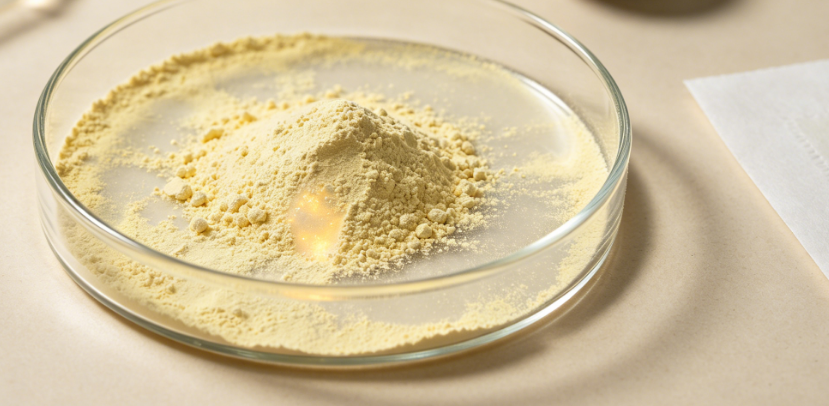
Rare earth oxides (REOs)—including cerium oxide, lanthanum oxide, yttrium oxide, neodymium oxide, and their mixtures—are critical components in catalysts, phosphors, ceramics, magnetic materials, and electronic devices. Their performance in these high‑value applications is governed by a precise set of parameters: total rare earth oxide (TREO) content, individual rare earth distribution (partition), trace non‑rare earth impurities (e.g., Fe, Si, Ca, Zn, Zr, Th, U), crystalline phase purity, particle size distribution, specific surface area, and thermal stability. Clients seeking testing for REOs typically face challenges such as verifying conformance to strict industrial or customer specifications, detecting low‑level contaminants that affect luminescence or catalysis, ensuring batch‑to‑batch consistency for quality agreements, or troubleshooting performance issues in downstream processes. Our laboratory offers a fully integrated, multi‑technique analytical platform that delivers a complete physicochemical profile of rare earth oxides—from elemental composition and trace impurity mapping to morphological and structural characterisation—enabling our clients to achieve reliable material quality, meet regulatory requirements, and optimise their manufacturing and application workflows.
Precise Determination of Total Rare Earth Oxide (TREO) and Individual Partition
The total rare earth oxide content and the relative abundance of each lanthanide element are the primary quality attributes for most REO products. We determine TREO by a combination of gravimetric analysis (as oxalate or hydroxide precipitation, followed by ignition) and inductively coupled plasma optical emission spectrometry (ICP‑OES), achieving repeatability of < 0.2% RSD and an expanded uncertainty (k=2) of < 0.3% relative. For individual rare earth partition—particularly critical for mischmetal, didymium, or custom blends—we employ high‑resolution ICP‑MS (quadrupole or sector‑field) with matrix‑matched calibration using certified multi‑element reference standards (e.g., NIST SRM 3110 series), providing quantification of all 14 stable lanthanides (La‑Lu) plus Sc and Y with detection limits in the sub‑ppb range. We apply quantitative correction for isobaric interferences (e.g., 138Ba⁺ on 138Ce, 156Gd⁺ on 156Dy) using mathematical and collision‑reaction cell protocols. For samples with high purity (e.g., 99.999% TREO), we use glow discharge mass spectrometry (GDMS) as a complementary method to directly analyse solid samples, providing a comprehensive elemental fingerprint including all rare earths and over 70 other elements. Our TREO and partition data are reported with expanded uncertainties (k=2) and are traceable to NIST and BAM reference materials, ensuring full compliance with industrial standards such as ASTM E2594, ISO 11885, and JIS K 0102.
Ultra‑Trace Impurity Profiling for Non‑Rare Earth Elements
Trace impurities—particularly Fe, Si, Ca, Mg, Zn, Zr, Th, U, and transition metals—can drastically alter catalytic activity, optical transparency, and magnetic performance even at sub‑ppm levels. We employ inductively coupled plasma tandem mass spectrometry (ICP‑MS/MS) with collision/reaction cell technology (using O₂, NH₃, or H₂ gases) to effectively eliminate polyatomic interferences (e.g., 40Ar16O⁺ on 56Fe, 40Ar35Cl⁺ on 75As, 48Ca16O⁺ on 64Zn) and achieve detection limits of 0.01–0.5 ppb for over 50 elements. For actinides (Th, U) and radioactive isotopes, we use sector‑field ICP‑MS (SF‑ICP‑MS) at high mass resolution (R > 10,000) to resolve mass interferences, with detection limits below 0.001 ppm. We also quantify carbon, sulfur, and nitrogen by combustion‑infrared detection, and halogens (F, Cl, Br, I) by ion chromatography after pyrohydrolysis. Our comprehensive impurity report is benchmarked against the strictest specifications—including semiconductor‑grade, phosphor‑grade, and nuclear‑grade—and includes a clear pass/fail summary for each regulated element.
Crystalline Phase Identification and Microstructural Analysis
The physical and chemical properties of rare earth oxides depend not only on chemical purity but also on the crystalline phase (e.g., cubic, monoclinic, hexagonal) and the presence of hydration, carbonate, or other impurity phases. We perform high‑resolution powder X‑ray diffraction (HR‑XRD) with Cu Kα radiation over a 2θ range of 5‑120° with a step size of 0.003°, applying Rietveld refinement to quantify the phase fractions of the primary oxide and any secondary phases (e.g., REO(OH), REO(CO₃)) with accuracy of ±0.3 wt%. We also determine crystallite size and microstrain via Williamson‑Hall analysis, which are correlated with sintering behaviour and reactivity. For morphology and particle size, we use field‑emission scanning electron microscopy (FE‑SEM) with energy‑dispersive X‑ray spectroscopy (EDS) to obtain high‑resolution images, shape distribution, and elemental mapping at the sub‑micron level. For nanostructured REOs, we use transmission electron microscopy (TEM) with selected area electron diffraction (SAED) to confirm crystallinity and detect amorphous surface layers. The combined XRD‑SEM‑TEM profile provides a complete microstructural fingerprint, essential for predicting consolidation behaviour and performance in coatings, sintering, or catalyst supports.
Physical Properties: Particle Size, Specific Surface Area, and Porosity
The reactivity, dispersion, and packing density of rare earth oxide powders are governed by their particle size distribution, specific surface area (BET), and pore architecture. We measure particle size distribution (0.02–2000 µm) by laser diffraction (wet and dry dispersion) with repeatability < 1% RSD, reporting D10, D50, D90, and span. For specific surface area, we use nitrogen physisorption at 77 K with a multi‑point BET method (precision < 0.5 m²/g), and for pore size distribution, we apply DFT and BJH models to full isotherms (relative pressure up to 0.995). We also perform helium pycnometry for true density and mercury intrusion porosimetry (MIP) for macro‑porosity. These physical parameters are critical for qualifying powders for pressing, slip casting, or spray drying, and they directly affect the final density and uniformity of sintered bodies.
Thermal Stability and Decomposition Behaviour
Rare earth oxides can undergo hydration, carbonation, or phase transitions upon heating or exposure to moisture. We conduct simultaneous thermogravimetric and differential thermal analysis (TGA‑DTA) from 30 °C to 1200 °C under air, inert, and reducing atmospheres at heating rates of 2, 5, and 10 °C/min. We identify loss of adsorbed water, dehydroxylation, decarbonation, and any solid‑state phase transformations. Evolved gases (H₂O, CO₂, etc.) are monitored by coupled mass spectrometry (EGA‑MS). We also perform high‑temperature XRD (HT‑XRD) up to 1000 °C to track lattice expansion, phase changes, and the onset of sintering in real time. This thermal profile is indispensable for defining safe calcination and sintering conditions, and for predicting the material's behaviour in high‑temperature catalytic or ceramic applications.
Surface Chemistry and Acid‑Base Properties
The surface of rare earth oxides often contains hydroxyl groups, carbonate species, and Lewis acid/base sites that influence catalytic activity and dispersion in polymer matrices. We quantify surface hydroxyl density by temperature‑programmed desorption (TPD) of water and by X‑ray photoelectron spectroscopy (XPS) with depth profiling, which also reveals the oxidation state of cerium (Ce³⁺/Ce⁴⁺) and other variable‑valence rare earths. We measure acid‑base site density using NH₃‑TPD and CO₂‑TPD with mass spectrometry, and we characterise the surface functional groups by Fourier‑transform infrared spectroscopy (FTIR) with attenuated total reflectance (ATR). These surface data are particularly valuable for clients developing catalysts, sorbents, or active coatings.
Accelerated Ageing and Environmental Stability
Rare earth oxides can gradually pick up moisture and CO₂ from the atmosphere, altering their stoichiometry and reactivity. We perform accelerated ageing studies under controlled humidity (40 °C/80% RH, 60 °C/75% RH) and CO₂‑enriched atmospheres (1000 ppm, 5000 ppm) for up to 6 months. We periodically re‑analyse samples for TREO, impurity levels, phase composition, and BET area to quantify the kinetics of carbonation and hydration. The resulting data are used to predict shelf‑life and to recommend appropriate packaging (e.g., vacuum‑sealed bags, desiccant inclusion). This service is particularly valued by clients who ship or store REO materials over extended periods.
Our Distinctive Competencies and Analytical Superiority
Our laboratory stands apart through the orthogonal integration of ICP‑OES and ICP‑MS/MS for elemental analysis, HR‑XRD and TEM for structure, BET and MIP for texture, TGA‑DTA‑EGA‑MS for thermal behaviour, and XPS for surface chemistry—all performed on the same representative sample to eliminate cross‑batch variability and to enable direct correlations (e.g., impurity content vs. phase transition temperature, or surface area vs. sintering activity). We are ISO/IEC 17025 accredited and maintain in‑house reference REO materials that are routinely cross‑calibrated against NIST and BAM certified reference materials. Our proprietary “Rare Earth Oxide Quality Index” (REO‑QI™) combines TREO purity, individual partition accuracy, critical impurity sum, specific surface area, and thermal stability into a single numerical score that predicts the material’s suitability for high‑end applications such as phosphors, polishing powders, or catalyst supports. This index has been validated against over 100 commercial batches of CeO₂, La₂O₃, Y₂O₃, and mixed rare earth oxides.
We achieve exceptional precision: < 0.2% RSD for TREO, < 0.5% RSD for individual rare earths (at >1% level), < 0.5 ppb detection limits for critical impurities, < 0.3 wt% for phase quantification, and < 0.5 m²/g for BET area. Our turnaround time for the complete characterisation suite (including thermal and ageing studies) is 10–14 working days, with expedited 5‑day service for urgent material qualification. Crucially, our team of PhD‑level inorganic chemists, materials scientists, and spectroscopists provides a comprehensive interpretative report that translates each parameter into actionable guidance—e.g., how to interpret a small deviation in the La/Nd ratio as a sign of contamination from feedstock, how to correlate the surface hydroxyl density with catalytic turnover, or how to set appropriate limits on thorium to meet nuclear‑grade purity. With over 30 successful projects on rare earth oxides and their derivatives, we empower our clients to achieve consistent product quality, optimise synthesis and processing conditions, and gain a competitive edge in global markets—all with the highest level of scientific rigour and technical credibility.