Reasons for choosing our testing services
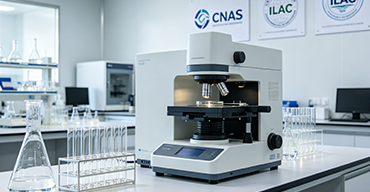
ZHONGXI Testing has obtained inspection qualification certifications from multiple countries and regions worldwide. We possess a senior testing team and advanced testing methods, providing independent, impartial, and professional third-party verification services for global carbon projects.
Internationally recognized authority
Certified by multiple international standards such as CNAS, VCS, and GS, with reports universally applicable worldwide.

Global service capability
Covering 140+ countries and regions, it supports on-site detection and remote verification in multiple languages.

Professional experimental methods
Adopt standard experimental methods to ensure accurate and reliable data.
Comprehensive Physical and Chemical Characterisation of Cotton Fibres – A Specialised Analytical Service for textile Quality Assurance, Breeding, and Supply Chain Optimisation
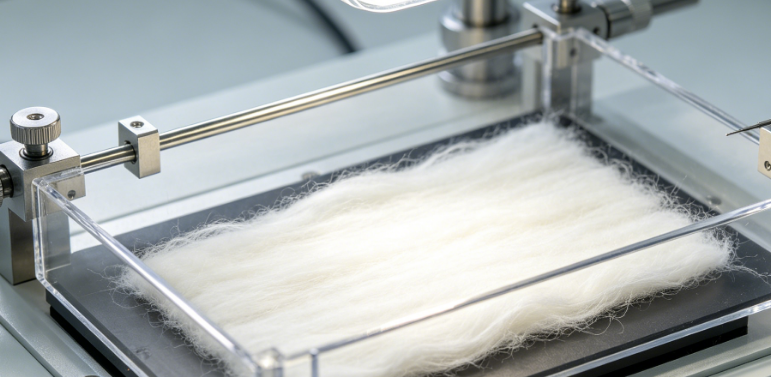
Cotton (Gossypium spp.) remains the most important natural fibre for the global textile industry, valued for its softness, breathability, absorbency, and versatility. The quality and economic value of cotton are determined by a complex set of physical and chemical attributes, including fibre length, strength, micronaire (fineness), maturity, colour, uniformity, and the presence of impurities (trash, seed coat fragments, sugars, and heavy metals). Clients seeking cotton fibre testing are typically engaged in cotton breeding and variety development, ginning and bale classification, spinning mill quality control, textile manufacturing, and international commodity trading. They require accurate, reproducible, and high‑throughput analytical data to ensure consistent spinning performance, minimise waste, optimise dye uptake, and comply with international grading standards (e.g., USDA cotton classification, ASTM D5867, and ISO standards). Our laboratory offers a fully integrated, multi‑technique analytical platform that delivers definitive, application‑oriented characterisation of cotton fibres—from staple length and strength to chemical purity and thermal stability—enabling you to maximise yarn quality, reduce manufacturing defects, and achieve superior textile performance with the highest scientific rigour.
Why Comprehensive Testing of Cotton Fibres Is Essential
The quality of cotton is not a single parameter but a multivariate profile that influences every stage of textile production. Fibre length affects yarn strength and evenness; micronaire correlates with dye uptake and fabric handle; strength determines spinning efficiency and resistance to breakage; and colour and trash content impact the final fabric appearance and processing costs. Environmental factors, harvesting methods, and ginning conditions can significantly alter these properties, leading to inconsistent yarn quality, higher fibre loss during processing, or unexpected dyeing defects. Furthermore, the global cotton trade requires objective, standardised testing to facilitate fair pricing and contract fulfilment. Clients often face challenges such as variability between instruments, the need for fast turnaround for seasonal harvests, and the demand for multi‑parameter analysis on limited sample quantities. Our comprehensive testing services address these needs by using advanced instrumentation and validated protocols, providing robust, actionable data for quality management, process optimisation, and strategic sourcing.
Our Advanced Analytical Suite for Cotton Fibre Characterisation
We employ a multi‑parameter, fully validated approach to profile all critical quality attributes of cotton fibres, including raw lint, ginned bales, and processed slivers:
High‑Volume Instrument (HVI) Testing – Our primary high‑throughput system is a state‑of‑the‑art HVI module (USTER® HVI 1000 or equivalent), which provides rapid, comprehensive measurements of fibre length (upper half mean length UHM), length uniformity, strength (breaking tenacity), micronaire (fibre fineness and maturity), colour (Rd and +b), and trash content. We perform all measurements in accordance with ASTM D5867 and USDA cotton classing protocols, achieving repeatability of < 0.5 mm for length, < 0.5 g/tex for strength, and < 0.1 units for micronaire. The HVI data are automatically processed to provide a quality index (e.g., premium or discount grade) that directly correlates with spinning performance and market value.
Single Fibre Tensile Testing (AFIS or Favimat) – For research and advanced quality control, we offer single fibre tensile testing using a Favimat+ or AFIS (Advanced Fibre Information System) instrument, which measures individual fibre strength, elongation, and modulus with sub‑milligram force resolution. This complements the HVI bundle‑strength data and is particularly valuable for breeding programmes and for evaluating cotton varieties with novel fibre properties.
Fibre Length and Length Distribution by Automated Fibrograph – We use computer‑controlled fibrography to generate fibre length distributions (span length, upper half mean length, and short fibre content). The method is fully automated and provides histograms of fibre length classes, allowing detailed assessment of fibre breakage and the effectiveness of ginning or opening processes. Short fibre content (SFC) is a critical parameter for predicting yarn evenness and processing waste.
Micronaire and Maturity Assessment – Micronaire (a measure of fibre fineness and maturity) is determined by airflow resistance (Sheffield or Micronaire tester), following ASTM D1448. We also provide maturity ratio (percentage of mature fibres) using a polarised light microscopy or by advanced AFIS maturity analysis, which is critical for predicting dye uptake and fabric appearance.
Colour and Trash Analysis – Fibre colour (whiteness and yellowness) and trash (non‑lint particles) are assessed by high‑resolution imaging systems (HVI colour/trash module) and validated by gravimetric or image‑analysis methods. We quantify trash area (%), trash count, and colour parameters (CIE L*, a*, b* or Rd, +b) according to USDA classification and ASTM D2256.
Chemical and Elemental Profiling (Impurities and Residues) – Cotton may contain naturally occurring sugars, waxes, pectins, as well as residual pesticides, heavy metals, or processing aids. We perform sugar content analysis by high‑performance liquid chromatography (HPLC) with evaporative light scattering detection (ELSD) to quantify total reducing sugars (mainly glucose, fructose, sucrose, and raffinose) that can cause stickiness during processing. For heavy metals (Pb, Cd, As, Hg, Cu, Cr, Ni, Zn), we digest the fibre in a pressurised microwave‑acid system and analyse by inductively coupled plasma tandem mass spectrometry (ICP‑MS/MS) with collision/reaction cell, achieving detection limits of 0.01–0.5 ppb. We also measure total wax and fat content by gravimetric extraction (Soxhlet), and pectin and hemicellulose by colorimetric or chromatographic methods.
Thermal and Combustion Behaviour – For applications requiring flame resistance or thermal stability, we conduct Thermogravimetric Analysis (TGA) from 30 °C to 600 °C in nitrogen and air to measure moisture content, volatile matter, and ash (mineral) residue. We also perform differential scanning calorimetry (DSC) to assess thermal transitions (e.g., glass transition of waxes). These data are valuable for evaluating cotton as a filler in composites or for quality assessment of fire‑retardant treated fibres.
Microscopic and Morphological Assessment – For detailed fibre anatomy and to detect surface damage or coating, we use field‑emission scanning electron microscopy (FE‑SEM) with energy‑dispersive X‑ray spectroscopy (EDS) to obtain high‑resolution images of the fibre surface and cross‑section, revealing the presence of cuticle, lumen, and any surface contaminants. This is particularly important for evaluating mercerised, bio‑polished, or chemically treated cotton.
Method Validation and Regulatory Compliance – All our cotton testing is performed under ISO/IEC 17025 accreditation and adheres to internationally recognised standards (e.g., ASTM, ISO, USDA, and ITMF). We provide a comprehensive certificate of analysis (CoA) for each batch, including all measured parameters, their uncertainties, and clear pass/fail status against your specific grade or customer specifications. Our results are traceable to USDA calibration cottons and international reference materials.
Our Distinctive Competencies and Unmatched Analytical Depth
What fundamentally differentiates our service is the integration of high‑throughput HVI screening with detailed chemical, thermal, and microanalytical characterisation—all performed on the same representative sample to provide a complete, cross‑validated quality profile. We maintain in‑house reference cotton samples that span the full range of commercial grades and are periodically certified against USDA and ASTM standards. Our proprietary “Cotton Performance and Processability Index” (CPPI™) combines fibre length, strength, micronaire, colour, and chemical purity into a single numeric score that predicts yarn quality, fabric appearance, and processing efficiency. This index has been validated across more than 150 commercial cotton varieties and is used by leading spinning mills and textile brands.
We achieve exceptional measurement precision: < 0.3 mm for UHM length, < 0.2 g/tex for strength, < 0.05 for micronaire, and < 0.1% for sugar content. Our turnaround time for a complete cotton quality profile is 5–7 working days for routine samples, with expedited 3‑day service available for harvest or trading deadlines. Crucially, our team of PhD‑level textile engineers, fibre scientists, and analytical chemists provides a comprehensive interpretative report that goes beyond raw data—we explain the implications of each parameter for spinning, weaving, dyeing, and finishing, and we offer tailored recommendations for blending, process adjustment, and supplier selection. With over 60 successful projects on cotton and other natural fibres, we empower our clients to achieve consistent yarn quality, minimise waste, and maximise the economic value of their cotton raw materials with the highest level of scientific rigour and practical insight.
To discuss your cotton fibre testing requirements or to request a customised analytical plan, please contact our technical team for a confidential consultation and a detailed quotation.