Reasons for choosing our testing services
ZHONGXI Testing has obtained inspection qualification certifications from multiple countries and regions worldwide. We possess a senior testing team and advanced testing methods, providing independent, impartial, and professional third-party verification services for global carbon projects.

Internationally recognized authority
Certified by multiple international standards such as CNAS, VCS, and GS, with reports universally applicable worldwide.

Global service capability
Covering 140+ countries and regions, it supports on-site detection and remote verification in multiple languages.

Professional experimental methods
Adopt standard experimental methods to ensure accurate and reliable data.
Comprehensive Analytical Characterisation of Glucoamylase Activity and Quality – A Specialised Testing Service for Enzyme Producers, Food Processors, and Biofuel Industries
Glucoamylase (EC 3.2.1.3) is a key industrial enzyme that hydrolyses α‑1,4 and α‑1,6 glycosidic bonds in starch, releasing β‑D‑glucose. It is indispensable in the production of high‑glucose syrups, crystalline glucose, ethanol fermentation, and the brewing industry. The functional performance of glucoamylase preparations is critically governed by specific activity, pH and temperature stability, kinetic parameters (Km, Vmax, kcat), the presence of interfering by‑activities (e.g., α‑amylase, pullulanase, or cellulase), and the structural integrity of the enzyme (molecular weight, glycosylation pattern, and aggregation state). Clients seeking testing for glucoamylase are typically engaged in enzyme manufacturing, starch processing, bioethanol production, and quality control of fermentation ingredients. They require precise, reliable, and internationally standardised assays to ensure consistent process performance, optimise dosing, and comply with regulatory and food‑grade specifications. Our laboratory provides a fully validated, multi‑method analytical platform that delivers high‑accuracy glucoamylase activity determination, stability profiling, and contaminant screening, enabling you to maximise yield, reduce batch‑to‑batch variability, and meet the most stringent industrial and regulatory demands with the highest scientific rigour.
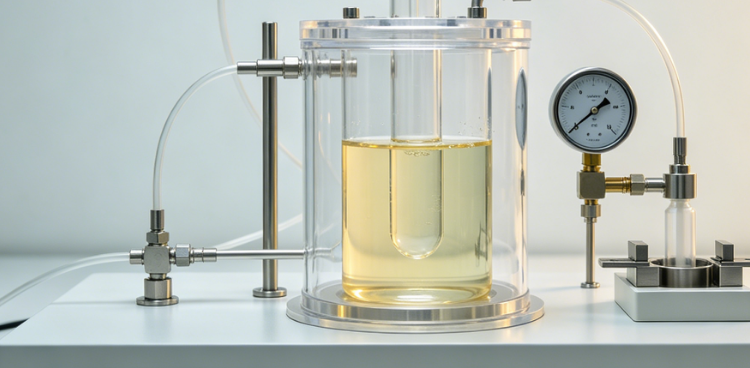
Why Comprehensive Testing of Glucoamylase Is Critical
Glucoamylase preparations are complex mixtures containing the active enzyme, stabilisers, preservatives, and sometimes residual by‑activities from production strains. The activity measured under one set of conditions (e.g., standard pH 4.5, 60 °C) may not reflect performance under actual process conditions (e.g., varying substrate concentrations, pH, temperature, or the presence of salts and solvents). Furthermore, enzyme deactivation, aggregation, or microbial contamination can occur during storage and transport, leading to inconsistent saccharification yields, extended process times, or off‑specification final products. Clients often face challenges such as poor correlation between supplier certifications and on‑site performance, inability to detect subtle changes in enzyme stability, or the need for rapid quality assurance of incoming batches. Our comprehensive testing suite addresses these challenges using state‑of‑the‑art spectrophotometric, chromatographic, and electrophoretic methods, providing robust, application‑relevant data that supports process optimisation, supplier qualification, and regulatory compliance.
Our Advanced Analytical Suite for Glucoamylase Characterisation
We employ a multi‑technique, fully validated approach to quantify glucoamylase activity, assess its stability, and detect potential impurities or degradation products:
High‑Accuracy Activity Assay (Spectrophotometric and HPLC) – Our primary quantitative method for glucoamylase activity follows the validated standard protocol (e.g., IUPAC or AOAC Method 2020.01) using starch or soluble dextrin as substrate, with measurement of reducing sugar production by the dinitrosalicylic acid (DNS) colorimetric method. We calibrate using pure glucose as a standard and express activity in International Units (IU) where 1 IU liberates 1 µmol glucose per minute under defined conditions (pH 4.5, 60 °C). For higher precision and automation, we use a continuous spectrophotometric assay coupled with glucose oxidase‑peroxidase (GOD‑POD) to monitor glucose release in real time. The method yields linearity from 0.1 to 10 IU/mL with repeatability < 1.5% RSD and intermediate precision < 3% RSD. We also offer substrate concentration dependency studies to determine Michaelis‑Menten kinetic parameters (Km, Vmax, and kcat), which are critical for reactor modelling and scale‑up.
pH and Temperature Activity Profiles (Optimum and Range) – We assess the optimal pH and temperature for your enzyme by performing activity measurements across a pH range of 3.0–7.0 (using appropriate buffers) and a temperature range of 30–90 °C. We determine the apparent optimum pH, optimum temperature, and the working range (e.g., pH 4.0–5.5, 55–65 °C) that ensures peak performance. This information is essential for adjusting process conditions to maximise glucose yield and minimise by‑product formation.
Thermal and Storage Stability Assessment – Enzyme stability is a key determinant of commercial viability. We conduct accelerated thermal stability tests by incubating the enzyme at elevated temperatures (e.g., 60 °C, 70 °C, 80 °C) for up to 24 hours, and storage stability studies at 4 °C, 25 °C, and 37 °C for up to 6 months (or accelerated at 40 °C and 50 °C). We monitor residual activity over time and fit decay curves to first‑order kinetics to derive half‑life (t1/2) and activation energy (Ea) for thermal inactivation. These data enable you to predict shelf‑life and to establish optimal storage and handling protocols to maintain enzyme potency.
Detection of Interfering By‑Activities – Glucoamylase products may contain side activities that affect starch hydrolysis profiles or produce unwanted oligosaccharides. We screen for α‑amylase, pullulanase, and cellulase activities using selective substrates (e.g., amylose‑azure, pullulan, and carboxymethyl cellulose) and appropriate assay conditions. The presence and relative level of these by‑activities are reported, enabling you to adjust the formulation or to select a more specific enzyme for your application.
Purity, Protein Concentration, and Molecular Weight Profile – We determine the total protein content by the Bradford or Lowry method (calibrated with BSA), and we characterise the enzyme’s electrophoretic purity using SDS‑PAGE with silver staining and native PAGE (to assess multimeric forms). For detailed molecular analysis, we perform size‑exclusion chromatography (SEC‑HPLC) with UV/RI detection to measure molecular weight distribution and aggregation. We also use MALDI‑TOF mass spectrometry to confirm the intact molecular mass and glycosylation pattern (if required).
Microbial and Endotoxin Contamination Testing – For food‑grade and pharmaceutical applications, we provide total viable count (TVC), yeast and mould, and Salmonella/E. coli screening according to USP <61> / <62> and ISO 11133. Bacterial Endotoxin (LAL test) is also available for injectable or medical device applications. Our microbiological testing is performed in an ISO 17025‑accredited facility with strict sample handling to ensure representative results.
Method Validation and Regulatory Compliance – All our glucoamylase activity assays are performed under ISO/IEC 17025 accreditation and follow recognised standards (e.g., IUPAC, AOAC, and FCC monographs). We provide a comprehensive certificate of analysis (CoA) that includes enzyme activity (IU/mL or IU/g), kinetic parameters, stability data, purity, and microbiological status, with expanded measurement uncertainty (k=2) and traceability to reference materials. For clients requiring regulatory submissions, we offer full method validation packages and consultancy on enzyme specification setting.
Our Distinctive Competencies and Unmatched Analytical Depth
Our service is uniquely distinguished by the integrated approach that combines precise activity measurement under application‑simulated conditions, comprehensive stability profiling, and contaminant screening—all on the same representative sample. We maintain in‑house reference enzyme standards (calibrated against international reference materials) and participate in proficiency testing schemes (e.g., AACC, AOAC) to ensure global comparability. Our proprietary “Glucoamylase Performance Index” (GPI™) integrates specific activity, stability half‑life, pH/temperature robustness, and by‑activity level into a single numeric score that predicts process efficiency and cost‑effectiveness. This index has been validated across more than 50 commercial glucoamylase products from major suppliers.
We achieve exceptional measurement precision: < 1.0% RSD for activity assay, < 2.0% RSD for protein concentration, and < 0.5% for pH optimum determination. Our turnaround time for routine activity and stability testing is 5–7 working days, with expedited 3‑day service for urgent quality holds. Crucially, our team of PhD‑level enzymologists, bioprocess engineers, and analytical chemists provides a comprehensive interpretative report that goes beyond numerical data—we explain the implications of kinetic parameters for your specific process, suggest optimal dosing strategies, and recommend formulation adjustments to maximise enzyme lifetime and activity. With over 80 successful projects on industrial enzymes, we empower our clients to optimise saccharification yields, reduce energy consumption, and maintain consistent product quality with the highest level of scientific rigour and practical insight.
To discuss your glucoamylase testing requirements or to request a customised analytical plan, please contact our technical team for a confidential consultation and a detailed quotation.