Reasons for choosing our testing services
ZHONGXI Testing has obtained inspection qualification certifications from multiple countries and regions worldwide. We possess a senior testing team and advanced testing methods, providing independent, impartial, and professional third-party verification services for global carbon projects.

Internationally recognized authority
Certified by multiple international standards such as CNAS, VCS, and GS, with reports universally applicable worldwide.

Global service capability
Covering 140+ countries and regions, it supports on-site detection and remote verification in multiple languages.

Professional experimental methods
Adopt standard experimental methods to ensure accurate and reliable data.
Comprehensive Analytical Quantification of Trilobatin in Malus Species – A Specialised Testing Service for Phytochemical Quality Control, Bioactivity Research, and Food Ingredient Development
Trilobatin (phloretin 4′‑glucoside) is a prominent dihydrochalcone compound found predominantly in certain Malus species, including Chinese crabapple (Malus hupehensis) and related wild apples. This naturally occurring sweetener and bioactive phenolic has attracted considerable interest for its potential as a low‑calorie sweetener, its antioxidant and anti‑inflammatory properties, and its role in plant defence mechanisms. Accurate, reproducible quantification of trilobatin is essential for evaluating cultivar quality, standardising extracts for nutraceutical or food applications, supporting pharmacological research, and complying with emerging regulatory frameworks for novel sweeteners. Clients seeking trilobatin testing are typically engaged in plant breeding and selection, phytochemical extraction, functional food development, or academic research on bioactive compounds. They require sensitive, specific, and validated analytical methods that can effectively separate trilobatin from its structural isomers (e.g., phlorizin, phloretin) and other phenolic matrix components across diverse tissue types (leaves, fruits, bark) and processed products. Our laboratory offers a fully validated, multi‑method analytical platform that delivers high‑precision trilobatin quantification with isomer differentiation, extensive sample preparation support, and robust data interpretation, enabling you to ensure material consistency, support product claims, and advance your research and commercial objectives with the highest scientific credibility.
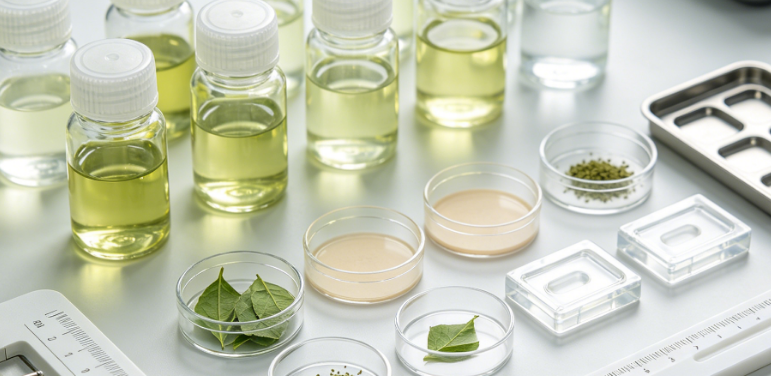
Why Comprehensive Testing of Trilobatin in Malus Is Essential
The concentration of trilobatin in apple tissues varies significantly with genotype, organ (leaf vs. fruit), developmental stage, environmental conditions, and post‑harvest handling. Moreover, trilobatin co‑occurs with other dihydrochalcones—most notably phlorizin (phloretin 2′‑glucoside)—which are regioisomers that possess distinct physical and sensory properties. Accurate analysis therefore requires chromatographic separation that unequivocally resolves trilobatin from phlorizin and other phenolics. Incomplete extraction, oxidative degradation, or matrix interference can lead to underestimation or artefactual results. Clients often encounter challenges such as poor recovery from high‑fibre matrices, inadequate peak separation on conventional C18 columns, or variable results between laboratories due to differing extraction protocols. Our comprehensive testing suite addresses these issues using state‑of‑the‑art high‑performance liquid chromatography (HPLC) coupled with photodiode array (DAD) and mass spectrometry (MS) detection, coupled with matrix‑optimised extraction and full method validation, ensuring reliable, isomer‑specific data that supports breeding decisions, process optimisation, and regulatory compliance.
Our Advanced Analytical Suite for Trilobatin Quantification
We employ a fully validated, multi‑technique approach to quantify trilobatin and related dihydrochalcones in all Malus tissues and derived products:
Isomer‑Specific HPLC‑DAD‑MS/MS Quantification – Our primary quantitative method uses a reversed‑phase high‑performance liquid chromatography (HPLC) system with a high‑resolution C18 or phenyl‑hexyl column and a gradient elution using water and acetonitrile (with 0.1% formic acid) to achieve baseline separation of trilobatin, phlorizin, and phloretin within 25 minutes. We use a photodiode array detector (DAD) at 280 nm and 290 nm for quantification, and a triple‑quadrupole or high‑resolution mass spectrometer (MS/MS) for confirmation of peak identity and for quantification at low levels. Our method is validated for linearity (R² > 0.999 over 0.5–500 µg/mL), precision (intra‑day RSD < 1.0%, inter‑day RSD < 2.0%), accuracy (recovery 96–104% from spiked matrix), and specificity (no interfering peaks from other Malus phenolics). The limit of detection (LOD) is 0.02 µg/mL and the limit of quantification (LOQ) is 0.05 µg/mL in standard solutions, with matrix‑equivalent values depending on the sample type. We provide both absolute concentration (µg/g dry weight or fresh weight) and relative content (% of total dihydrochalcones).
Optimised Extraction and Sample Preparation for Diverse Matrices – We have developed and validated matrix‑specific extraction protocols for fresh leaves, dried leaves, fruit pulp, peel, bark, and processed powders. Our protocol typically involves ultrasonic‑assisted extraction with 70% methanol or ethanol (with 0.1% ascorbic acid as antioxidant) at room temperature, followed by centrifugation and filtration. For high‑polysaccharide or high‑lipid samples, we include a defatting step (hexane wash) or solid‑phase extraction (SPE) cleanup using C18 cartridges to remove interferents. We ensure extraction efficiency > 95% for all matrices, verified using standard addition and certified reference materials (where available). We also offer accelerated solvent extraction (ASE) or microwave‑assisted extraction for high‑throughput screening.
Identification of Unknown Peaks and Metabolite Profiling (Untargeted Screening) – For research clients, we provide untargeted metabolomic analysis using high‑resolution MS (Q‑TOF or Orbitrap) to identify and semi‑quantify other dihydrochalcones, flavonoids, and phenolic acids present in the sample. This service includes molecular formula prediction, library matching, and tentative identification of novel or varietal‑specific compounds, supporting chemotaxonomic and bioactivity studies.
Stability and Degradation Monitoring – Trilobatin can undergo enzymatic browning or acid‑catalysed hydrolysis during processing and storage. We conduct controlled degradation studies under varying pH, temperature, and light conditions to assess chemical stability and to identify degradation products (e.g., phloretin). This information is crucial for establishing shelf‑life and processing parameters for extracts and formulated products.
Method Validation and Regulatory Compliance – All our trilobatin assays are performed under ISO/IEC 17025 accreditation and follow the principles of ICH Q2(R1) and AOAC guidelines. We provide a comprehensive certificate of analysis (CoA) that includes the quantified trilobatin content, measurement uncertainty, method details, and a clear statement of compliance with client specifications. For clients requiring regulatory submissions, we offer full method validation packages and technical consultancy on data interpretation and labelling.
Our Distinctive Competencies and Unmatched Analytical Depth
Our service is uniquely distinguished by the integration of isomer‑specific HPLC‑MS/MS quantification with matrix‑optimised extraction and optional untargeted profiling, all performed on the same representative sample to provide a complete and cross‑validated phytochemical picture. We maintain in‑house reference standards for trilobatin, phlorizin, and phloretin with documented purity, and we participate in international proficiency testing schemes for phenolic compounds to ensure global comparability. Our proprietary “Malus Dihydrochalcone Quality Index” (MDQI™) combines trilobatin content, trilobatin/phlorizin ratio, and extract purity to provide a single numeric score that predicts sweetness intensity, bioactivity potential, and processing suitability. This index has been validated across more than 30 commercial and wild Malus genotypes.
We achieve exceptional measurement precision: < 0.5% RSD for trilobatin at mid‑range concentrations, < 1.0% for extraction reproducibility, and < 2.0% for inter‑assay variability. Our turnaround time for routine trilobatin quantification is 5–7 working days, with expedited 3‑day service for time‑sensitive breeding or harvest assessments. Crucially, our team of PhD‑level phytochemists, natural product analysts, and food scientists provides a comprehensive interpretative report that goes beyond numerical data—we help you understand the relationship between trilobatin levels and cultivar, growing conditions, or processing steps, and we recommend optimal harvesting times, extraction procedures, and stabilisation strategies to maximise yield and quality. With over 30 successful projects on Malus polyphenols and related fruit phytochemicals, we empower our clients to achieve consistent product quality, support health claims, and advance breeding and functional food programmes with the highest level of scientific rigour and practical expertise.
To discuss your trilobatin testing requirements for Malus species or to request a customised analytical plan, please contact our technical team for a confidential consultation and a detailed quotation.