Reasons for choosing our testing services
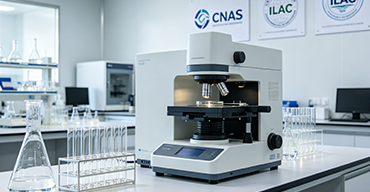
ZHONGXI Testing has obtained inspection qualification certifications from multiple countries and regions worldwide. We possess a senior testing team and advanced testing methods, providing independent, impartial, and professional third-party verification services for global carbon projects.
Internationally recognized authority
Certified by multiple international standards such as CNAS, VCS, and GS, with reports universally applicable worldwide.

Global service capability
Covering 140+ countries and regions, it supports on-site detection and remote verification in multiple languages.

Professional experimental methods
Adopt standard experimental methods to ensure accurate and reliable data.
Comprehensive Analytical Quantification of Chlorophyll Content in Maize – A Specialised Testing Service for Crop Physiology, Breeding, and Food Quality Assessment
Chlorophyll is the primary photosynthetic pigment in maize (Zea mays), directly influencing crop productivity, stress tolerance, and nutritional quality. Accurate quantification of chlorophyll a, chlorophyll b, and total chlorophyll is essential for assessing plant health, optimising fertilisation and irrigation strategies, screening for stress‑tolerant genotypes, and predicting grain yield potential. Moreover, chlorophyll content serves as a key quality indicator for green vegetable maize and for processed products such as canned corn and frozen kernels. Clients seeking chlorophyll testing for maize are typically engaged in breeding programmes, agronomic research, crop management, or food processing quality control. They require precise, reliable, and efficient analytical methods that can handle the high throughput demands of field‑scale studies while maintaining accuracy across diverse genotypes, growth stages, and sample matrices. Our laboratory offers a fully validated, multi‑method analytical platform that delivers high‑precision chlorophyll quantification with differentiation of chlorophyll a and b, comprehensive support for field sampling and sample preservation, and robust data interpretation, enabling you to optimise crop management, accelerate genetic gains, and ensure consistent product quality with the highest scientific rigour.
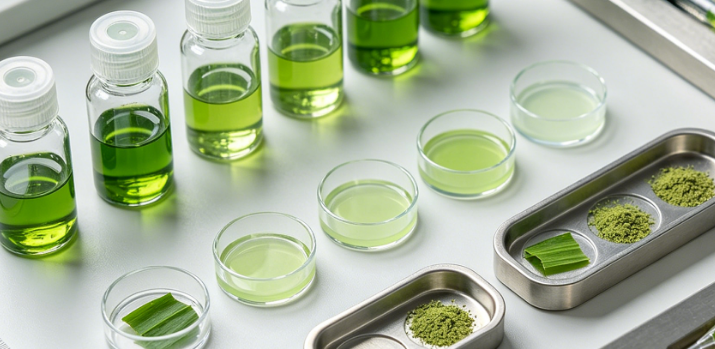
Why Comprehensive Chlorophyll Testing of Maize Is Critical
Chlorophyll concentration in maize leaves is influenced by a complex interplay of genotype, nitrogen status, water availability, temperature, light intensity, and developmental stage. Traditional hand‑held chlorophyll meters (SPAD) provide a rapid but indirect estimate, which can be biased by leaf thickness, specific leaf weight, and varietal differences. Moreover, many research and quality control applications require absolute concentrations (µg/g fresh weight or mg/g dry weight) and the individual chlorophyll a/b ratio, which is a sensitive indicator of photosystem composition and stress adaptation. Clients often face challenges such as rapid pigment degradation during sampling and storage, inefficient extraction from fibrous leaf tissues, and the need for high‑throughput processing of numerous field samples. Our comprehensive testing suite addresses these issues using state‑of‑the‑art spectrophotometric and chromatographic methods, coupled with optimised sample handling and validated extraction protocols, ensuring accurate, reproducible data that supports informed decision‑making in breeding, agronomy, and food quality management.
Our Advanced Analytical Suite for Maize Chlorophyll Quantification
We employ a fully validated, multi‑technique approach to quantify chlorophyll a, chlorophyll b, and total chlorophyll in maize leaves, husks, and kernels:
High‑Precision Spectrophotometric Determination (Arnon or Porra Method) – Our primary quantitative method uses a validated spectrophotometric protocol based on the Porra (or Arnon) equations for chlorophyll a and b in 80% acetone or 100% methanol extracts. We measure absorbance at 663 nm and 645 nm (Arnon) or at 664 nm and 647 nm (Porra) using a double‑beam UV‑Vis spectrophotometer with ultra‑low stray light (< 0.005% T) and wavelength accuracy of ±0.1 nm. The method is calibrated using commercial chlorophyll a and b standards (Sigma or equivalent) and yields linearity from 0.1 to 50 µg/mL with repeatability < 1.0% RSD and intermediate precision < 2.0% RSD. We report concentrations as µg chlorophyll per gram fresh weight (FW) or dry weight (DW), along with the chlorophyll a/b ratio. For samples with significant pheophytin or other degradation products, we include a correction step using acidification (pheophytin test) to ensure accuracy.
High‑Performance Liquid Chromatography (HPLC‑DAD) for Chlorophyll and Pheophytin Speciation – For research applications requiring separation and quantification of individual chlorophylls and their degradation products (pheophytin a, pheophytin b, chlorophyllide), we use a reversed‑phase HPLC system with a C18 or C30 column and a photodiode array detector (DAD) monitoring at 430 nm and 660 nm. The method employs a gradient elution with methanol, acetonitrile, and ethyl acetate to achieve baseline separation of chlorophyll a, chlorophyll b, pheophytin a, and pheophytin b within 25 minutes. Our HPLC method offers detection limits of 0.01 µg/mL and quantification limits of 0.05 µg/mL for each pigment, with excellent specificity for separating co‑eluting carotenoids. This method is particularly valuable for studying pigment degradation during food processing or for assessing the effect of herbicides on photosynthetic pigment composition.
Rapid Non‑Destructive Screening (SPAD and Dualex) – For high‑throughput field screening, we offer calibration services using hand‑held chlorophyll meters (SPAD‑502, Dualex) correlated with our spectrophotometric reference method. We develop genotype‑specific and growth‑stage‑specific calibration equations to convert SPAD or Dualex values into absolute chlorophyll content (µg/cm² or µg/g FW). This service is particularly valuable for breeding programmes and large‑scale agronomic trials where rapid, non‑destructive assessment is required.
Optimised Sample Collection, Preservation, and Extraction – Chlorophyll degradation begins immediately after leaf excision. We provide comprehensive sampling and preservation guidance (including the use of liquid nitrogen, dry ice, or ethanol‑based preservation) to ensure pigment integrity during field‑to‑laboratory transport. Our extraction protocol uses ice‑cold acetone or methanol (80‑100%) with a pinch of sodium carbonate to neutralise acids, followed by homogenisation and centrifugation. We include tissue grinding with liquid nitrogen for recalcitrant leaf samples to maximise pigment recovery. All extractions are performed under dim light to prevent photodegradation. Our method achieves extraction efficiency > 98% for fresh maize leaves, verified against certified reference materials and spiked samples.
Chlorophyll Stability and Degradation Assessment – For clients processing maize for canned or frozen products, we provide pigment stability studies under varying processing and storage conditions (temperature, pH, light exposure). We monitor the degradation of chlorophyll to pheophytin (olive‑brown colour) and provide kinetic degradation rates to optimise blanching, canning, and storage protocols, ensuring the retention of green colour and nutritional quality.
Method Validation and Regulatory Compliance – All our chlorophyll assays are performed under ISO/IEC 17025 accreditation and follow recognised guidelines (e.g., AOAC Official Methods, and relevant food quality standards). We provide a comprehensive certificate of analysis (CoA) that includes chlorophyll a, chlorophyll b, total chlorophyll, a/b ratio, measurement uncertainty, and method details, with full traceability to NIST and USP reference standards.
Our Distinctive Competencies and Unmatched Analytical Depth
Our service is uniquely distinguished by the integrated, multi‑level approach that combines rapid spectrophotometric screening with confirmatory HPLC speciation, rigorous sample preservation protocols, and tailored calibration for field‑based instrumentation—all performed on the same representative sample set to provide a complete, cross‑validated pigment profile. We maintain in‑house reference chlorophyll standards and participate in international proficiency testing schemes (e.g., AOCS, FAPAS) to ensure global comparability. Our proprietary “Maize Chlorophyll Quality and Vigour Index” (MCVI™) integrates total chlorophyll, chlorophyll a/b ratio, and degradation status into a single numeric score that predicts photosynthetic efficiency, stress tolerance, and processing suitability. This index has been validated across more than 100 maize hybrids and inbred lines.
We achieve exceptional measurement precision: < 0.5% RSD for total chlorophyll at typical field concentrations, < 1.0% RSD for chlorophyll a/b ratio, and < 2.0% RSD across different leaf positions. Our turnaround time for routine chlorophyll quantification (spectrophotometric method) is 3–5 working days for up to 100 samples, with expedited 2‑day service for time‑sensitive field trials. Crucially, our team of PhD‑level plant physiologists, analytical chemists, and crop scientists provides a comprehensive interpretative report that goes beyond numerical data—we help you understand the physiological meaning of chlorophyll values, identify potential nutrient or stress issues, and recommend agronomic interventions or breeding strategies to improve photosynthetic capacity and yield. With over 50 successful projects on maize and other cereal chlorophyll analysis, we empower our clients to accelerate variety development, optimise crop management, and ensure consistent quality in processed maize products with the highest level of scientific rigour and practical insight.
To discuss your maize chlorophyll testing requirements or to request a customised analytical plan, please contact our technical team for a confidential consultation and a detailed quotation.