Reasons for choosing our testing services
ZHONGXI Testing has obtained inspection qualification certifications from multiple countries and regions worldwide. We possess a senior testing team and advanced testing methods, providing independent, impartial, and professional third-party verification services for global carbon projects.

Internationally recognized authority
Certified by multiple international standards such as CNAS, VCS, and GS, with reports universally applicable worldwide.

Global service capability
Covering 140+ countries and regions, it supports on-site detection and remote verification in multiple languages.

Professional experimental methods
Adopt standard experimental methods to ensure accurate and reliable data.
Comprehensive Analytical Quantification of p‑Hydroxybenzyl Alcohol – A Specialised Testing Service for Pharmaceutical, Cosmetic, and Natural Product Quality Assurance
p‑Hydroxybenzyl alcohol (4‑hydroxybenzyl alcohol, PHBA) is a naturally occurring phenolic alcohol found in various plant species, including Gastrodia elata (tianma), Salvia miltiorrhiza, and many fermentation broths. It is also a key intermediate in the synthesis of pharmaceuticals, flavours, and antioxidants. Accurate quantification of PHBA is essential for standardising herbal extracts, monitoring synthetic intermediates, ensuring batch‑to‑batch consistency in cosmetic formulations, and complying with regulatory purity specifications. Clients seeking PHBA testing are typically engaged in pharmaceutical development, natural product research, quality control of botanical ingredients, or scale‑up of chemical synthesis. They require sensitive, specific, and validated analytical methods that can distinguish PHBA from structurally related phenolics (e.g., vanillyl alcohol, p‑hydroxybenzaldehyde, p‑hydroxybenzoic acid) and matrix constituents across diverse sample types (plant powders, extracts, synthetic intermediates, finished products). Our laboratory provides a fully validated, multi‑method analytical platform that delivers high‑precision PHBA quantification with isomer differentiation, comprehensive sample preparation support, and stability data, enabling you to ensure product purity, substantiate label claims, and meet international regulatory requirements with the highest scientific credibility.
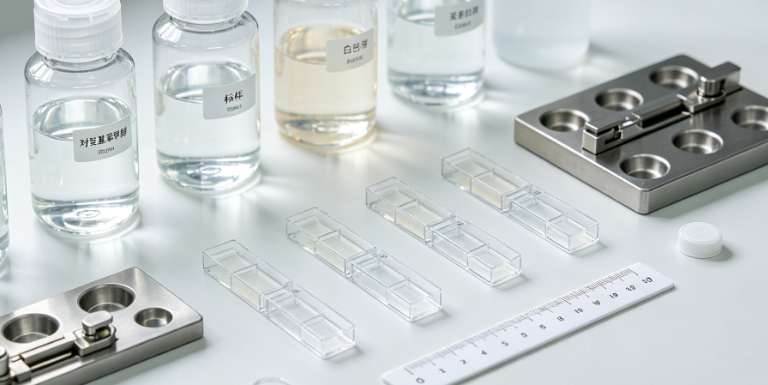
Why Accurate Quantification of p‑Hydroxybenzyl Alcohol Is Critical
The concentration of PHBA in natural sources and synthetic batches can vary significantly due to plant cultivar, harvest time, extraction efficiency, reaction conditions, and purification methods. Moreover, PHBA is susceptible to oxidation to p‑hydroxybenzaldehyde and further to p‑hydroxybenzoic acid, which can alter the chemical profile and biological activity of the product. In pharmaceutical synthesis, residual PHBA or its dimers may affect impurity profiles and safety. Clients often encounter challenges such as poor chromatographic resolution from co‑eluting phenolic compounds, inadequate extraction from polysaccharide‑rich matrices, or instability during sample storage. Our comprehensive testing suite addresses these issues by employing state‑of‑the‑art high‑performance liquid chromatography (HPLC) with photodiode array (DAD) and mass spectrometry (MS) detection, coupled with matrix‑optimised extraction protocols and rigorous stability monitoring, ensuring reliable, isomer‑specific data that supports product development and regulatory compliance.
Our Advanced Analytical Suite for p‑Hydroxybenzyl Alcohol Quantification
We employ a fully validated, multi‑technique approach to quantify PHBA in a wide range of sample matrices:
High‑Precision HPLC‑DAD‑MS/MS Quantification – Our primary quantitative method uses a reversed‑phase high‑performance liquid chromatography (HPLC) system with a C18 or phenyl‑hexyl column and a gradient elution using acidified water (0.1% formic acid or phosphoric acid) and acetonitrile/methanol to achieve baseline separation of PHBA, p‑hydroxybenzaldehyde, p‑hydroxybenzoic acid, and other phenolics within 25 minutes. We use a photodiode array detector (DAD) at 220 nm and 280 nm for quantification (the characteristic absorption maxima of PHBA), and a triple‑quadrupole or high‑resolution mass spectrometer (MS/MS) for identity confirmation via specific precursor → product ion transitions (e.g., m/z 125 → 107 for PHBA). Our method is validated for linearity (R² > 0.999 over 0.1–500 µg/mL), precision (intra‑day RSD < 0.8%, inter‑day RSD < 1.5%), accuracy (recovery 98–102% from spiked matrix), and specificity. The limit of detection (LOD) is 0.01 µg/mL and the limit of quantification (LOQ) is 0.03 µg/mL in standard solutions, with matrix‑equivalent values determined for each sample type. We report both absolute concentration (µg/g dry weight or fresh weight) and relative purity (%) of PHBA in the sample.
Optimised Extraction and Sample Preparation for Diverse Matrices – Plant materials often contain polysaccharides, lipids, and pigments that can interfere with PHBA analysis. We have developed matrix‑specific extraction protocols utilising ultrasonic‑assisted extraction with 70% methanol or ethanol (with antioxidant stabilisation, e.g., ascorbic acid) at room temperature, followed by centrifugation, filtration, and optional solid‑phase extraction (SPE) cleanup using C18 or mixed‑mode sorbents to remove interfering matrix components. Our protocols ensure extraction efficiency > 96% for PHBA, verified using standard addition and certified reference materials (where available). We also offer accelerated solvent extraction (ASE) for high‑throughput processing and hydrolysis steps when required for bound glycosides.
Stability Studies and Degradation Monitoring – PHBA is susceptible to air oxidation and photodegradation. We conduct controlled stability studies under varying pH, temperature, light, and oxygen conditions to assess chemical stability and to identify degradation products (e.g., p‑hydroxybenzaldehyde, p‑hydroxybenzoic acid). We provide kinetic degradation parameters (half‑life, activation energy) and recommend optimal storage and handling conditions to maintain analyte integrity. These data are critical for setting shelf‑life and for validating sample storage procedures.
Method Validation and Regulatory Compliance – All our PHBA assays are performed under ISO/IEC 17025 accreditation and follow the principles of ICH Q2(R1) and AOAC guidelines. We provide a comprehensive certificate of analysis (CoA) that includes PHBA concentration, measurement uncertainty, method details, and a clear pass/fail statement against client specifications. For clients requiring regulatory submissions, we offer full method validation packages and technical consultancy on impurity profiling and stability testing.
Our Distinctive Competencies and Unmatched Analytical Depth
Our service is uniquely distinguished by the integration of isomer‑specific HPLC‑MS/MS quantification with matrix‑optimised extraction and stability studies, all performed on the same representative sample to provide a complete, cross‑validated quality profile. We maintain in‑house reference standards for PHBA, p‑hydroxybenzaldehyde, and p‑hydroxybenzoic acid with documented purity, and we participate in international proficiency testing schemes (e.g., FAPAS, AOCS) to ensure global comparability. Our proprietary “PHBA Quality Index” (PQI™) combines PHBA content, impurity level (aldehydes/acid), and stability half‑life into a single numeric score that predicts storage stability and purity grade. This index has been validated across more than 30 natural extracts and synthetic batches.
We achieve exceptional measurement precision: < 0.5% RSD for PHBA at mid‑range concentrations, < 1.0% for extraction reproducibility, and < 1.5% for inter‑assay variability. Our turnaround time for routine PHBA quantification is 5–7 working days, with expedited 3‑day service available for urgent process control. Crucially, our team of PhD‑level analytical chemists, phytochemists, and quality assurance specialists provides a comprehensive interpretative report that goes beyond numerical data—we help you understand the source of variability (e.g., oxidation during processing), recommend improved extraction or purification strategies, and advise on impurity thresholds for regulatory compliance. With over 40 successful projects on phenolic quantification across diverse industries, we empower our clients to achieve consistent product quality, ensure regulatory acceptance, and advance research into PHBA‑containing natural products and synthetic intermediates with the highest level of scientific rigour and practical expertise.
To discuss your p‑hydroxybenz alcohol testing requirements or to request a customised analytical plan, please contact our technical team for a confidential consultation and a detailed quotation.