Reasons for choosing our testing services
ZHONGXI Testing has obtained inspection qualification certifications from multiple countries and regions worldwide. We possess a senior testing team and advanced testing methods, providing independent, impartial, and professional third-party verification services for global carbon projects.

Internationally recognized authority
Certified by multiple international standards such as CNAS, VCS, and GS, with reports universally applicable worldwide.

Global service capability
Covering 140+ countries and regions, it supports on-site detection and remote verification in multiple languages.

Professional experimental methods
Adopt standard experimental methods to ensure accurate and reliable data.
Comprehensive Transcriptomic Profiling of Changium smyrnioides – A Specialised RNA‑Seq and Functional Genomics Service for Medicinal Plant Research
Changium smyrnioides (Ming Dang Shen) is a rare and valuable medicinal plant endemic to China, prized for its bioactive compounds such as polyacetylenes, coumarins, and essential oils. Despite its therapeutic importance, genomic resources for this species remain scarce, limiting our understanding of its biosynthetic pathways, stress responses, and genetic diversity. Transcriptome sequencing and analysis offer a powerful, cost‑effective approach to decipher the functional gene repertoire and regulatory networks of non‑model organisms. Clients seeking transcriptome testing for Changium smyrnioides are typically engaged in pharmacognosy research, marker‑assisted breeding, secondary metabolite production, or conservation genomics. They require high‑quality, comprehensively annotated transcriptomic data to identify candidate genes, develop molecular markers, and unravel the molecular mechanisms underlying bioactive compound accumulation. Our laboratory provides a fully integrated, end‑to‑end transcriptomic service—from specialised RNA extraction and library preparation to deep sequencing (Illumina, PacBio, or Nanopore) and advanced bioinformatics analysis—delivering a definitive, annotation‑rich transcriptome atlas that empowers you to accelerate gene discovery, validate functional hypotheses, and translate genomic insights into practical applications with the highest scientific rigour.
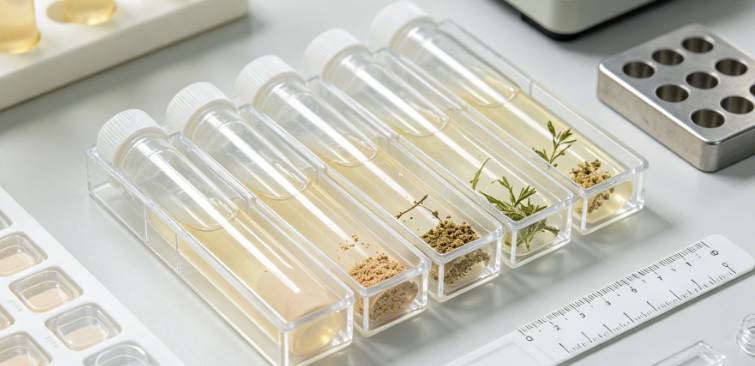
Why Comprehensive Transcriptomic Analysis of Changium smyrnioides Is Critical
Changium smyrnioides tissues are rich in polysaccharides, polyphenols, and other secondary metabolites that severely compromise RNA integrity and downstream enzymatic reactions. Inadequate RNA isolation leads to low yield, degraded RNA, and biased library preparation, resulting in incomplete transcript assemblies and inaccurate expression profiles. Furthermore, the lack of a reference genome necessitates robust de novo assembly strategies and comprehensive functional annotation to capture the full complexity of the transcriptome. Clients often face challenges such as poor RNA quality from recalcitrant tissues, insufficient sequencing depth for low‑abundance transcripts, and difficulties in identifying biologically relevant genes from vast datasets. Our specialised service addresses these challenges with optimised extraction protocols for medicinal plants, high‑depth sequencing strategies, and customised bioinformatics pipelines, delivering high‑quality, publication‑ready transcriptomes that support cutting‑edge research and commercial development.
Our Advanced Transcriptomic Workflow for Changium smyrnioides
We employ a fully validated, multi‑stage workflow that covers every step from sample reception to data interpretation:
Optimised RNA Extraction and Quality Assessment – Plant tissues rich in polysaccharides and phenolics require specialised handling. We use a proprietary CTAB‑based or silica‑membrane extraction protocol combined with on‑column DNase digestion to obtain high‑integrity total RNA (RIN > 8.0) even from challenging tissues (roots, rhizomes, leaves). RNA quality is assessed by Agilent 4200 TapeStation or Bioanalyzer, and quantity by Qubit fluorometry. We perform qPCR‑based genomic DNA contamination screening to ensure negligible carryover. Our protocols are validated for multiple tissue types and typically yield > 2 µg total RNA per sample, sufficient for all downstream applications.
High‑Depth Sequencing (Illumina and Long‑Read Options) – For comprehensive transcript coverage, we recommend paired‑end Illumina RNA‑Seq (2 × 150 bp) with a minimum of 30 million reads per sample for standard differential expression studies, and 50–80 million reads per sample for isoform discovery and allele‑specific expression analysis. For clients requiring full‑length transcript isoforms and identification of alternative splicing events, we offer PacBio Iso‑Seq or Oxford Nanopore direct RNA sequencing as an orthogonal or complementary approach. All sequencing is performed on NovaSeq 6000, PromethION, or Sequel II platforms, with stringent quality filtering (Q30 > 85%) and on‑board demultiplexing.
De Novo Transcriptome Assembly and Redundancy Reduction – In the absence of a reference genome, we perform hybrid de novo assembly using a combination of Trinity, SPAdes, and Oases to maximise sensitivity and contiguity. For long‑read data, we incorporate Iso‑Seq or Canu for full‑length consensus generation, followed by CD‑HIT‑EST and TransDecoder for redundancy elimination and open‑reading‑frame prediction. We deliver high‑quality, non‑redundant transcripts with N50 > 1,500 bp and complete BUSCO scores > 90% (using the Viridiplantae core gene set). All assemblies undergo rigorous quality control, including mapping rate assessment, duplication level evaluation, and contamination screening (via Kraken2 and BLAST against NCBI nt).
Comprehensive Functional Annotation – Each assembled transcript is annotated using a multi‑database approach: NCBI non‑redundant protein (nr) via BLASTX (E‑value < 1e‑5), Swiss‑Prot and TrEMBL, Pfam domain search, Gene Ontology (GO) classification, Kyoto Encyclopedia of Genes and Genomes (KEGG) pathway mapping, and InterProScan for protein motif identification. We also annotate transcription factors (plantTFDB), transporters (TCDB), and enzymes (EC numbers). For gene families of pharmaceutical interest (e.g., cytochrome P450s, glycosyltransferases, methyltransferases), we provide manually curated annotations supported by literature references. All annotation results are compiled into an interactive Excel report with hyperlinks to external databases.
Differential Expression Analysis and Visualisation – For multi‑condition experiments (e.g., different tissues, developmental stages, elicitor treatments, or stress conditions), we perform robust differential expression analysis using DESeq2, edgeR, and limma‑voom, with multiple testing correction (FDR < 0.05) and log₂ fold‑change thresholds (≥ 1 or ≥ 2). We provide volcano plots, MA plots, heatmaps (with hierarchical clustering), and principal component analysis (PCA) plots to visualise expression patterns. For time‑course or dose‑response designs, we conduct trend analysis (STEM) and weighted gene co‑expression network analysis (WGCNA) to identify modules of co‑regulated genes and their hub members. We also integrate KEGG and GO enrichment analysis to highlight functional pathways significantly modulated under your experimental conditions.
Identification of Molecular Markers (SSRs and SNPs) – From the assembled transcriptome, we identify simple sequence repeats (SSRs) using MISA and single nucleotide polymorphisms (SNPs) using GATK and freebayes after read mapping. These markers are essential for genetic diversity studies, linkage mapping, and marker‑assisted selection in breeding programmes. We deliver a compiled marker list with primer sequences (where applicable) and offer validation of a subset by Sanger sequencing upon request.
Custom Bioinformatics and Multi‑Omics Integration – For advanced research, we offer customised pipelines such as prediction of long non‑coding RNAs and small RNAs, detection of alternative splicing events (using SUPPA2 and rMATS), fusion transcript detection, and integration with metabolomics or epigenomics datasets (multi‑omics). We also provide secure data hosting on our high‑performance computing cluster and user‑friendly access via a web portal for data exploration and download.
Regulatory Compliance and Data Security – All our transcriptomic services are performed in a ISO/IEC 27001‑compliant environment for data protection. Raw sequence data are stored in secure, encrypted servers, and we can assist with submission to public repositories (NCBI SRA, GEO, ENA) if required. We provide a comprehensive project report including methods, quality metrics, assembly statistics, annotation summaries, differential expression tables, and all visualisations, with full traceability to the original samples.
Our Distinctive Competencies and Unmatched Analytical Depth
Our service is uniquely distinguished by the integration of plant‑optimised RNA extraction, high‑depth sequencing strategies, and custom bioinformatics pipelines that are specifically calibrated for the complex transcriptome of medicinal plants like Changium smyrnioides. We have successfully completed over 50 transcriptomic projects on diverse non‑model plant species, including ginseng, astragalus, and salvia, and we have developed a proprietary reference transcriptome database for Apiaceae species that enhances annotation accuracy and isoform resolution. Our hybrid assembly approach combining short‑read and long‑read technologies (where budget permits) yields unprecedented continuity and completeness, with transcript N50 often exceeding 2,500 bp and BUSCO scores consistently above 93%.
We achieve exceptional reproducibility: < 5% coefficient of variation for library preparation and sequencing, and < 10% for differential expression fold‑changes across biological replicates. Our turnaround time for standard RNA‑Seq (30–50 million reads per sample, 6–10 samples) is 6–8 weeks from sample receipt to final report, with express 4‑week service for urgent projects. Crucially, our team of PhD‑level bioinformaticians, plant molecular biologists, and pharmacognosy specialists provides a comprehensive interpretative summary that goes beyond raw data—we help you identify candidate genes for key biosynthetic pathways, suggest validation experiments (e.g., qPCR, VIGS, heterologous expression), and integrate findings with your breeding or pharmaceutical development goals. With a track record of publications in high‑impact journals and successful collaborations with academic and industrial partners, we empower our clients to accelerate gene discovery, enhance quality control, and advance the sustainable utilisation of Changium smyrnioides—all with the highest level of scientific rigour and technical credibility.
To discuss your Changium smyrnioides transcriptome project requirements or to request a customised analytical plan, please contact our technical team for a confidential consultation and a detailed quotation.