Reasons for choosing our testing services
ZHONGXI Testing has obtained inspection qualification certifications from multiple countries and regions worldwide. We possess a senior testing team and advanced testing methods, providing independent, impartial, and professional third-party verification services for global carbon projects.

Internationally recognized authority
Certified by multiple international standards such as CNAS, VCS, and GS, with reports universally applicable worldwide.

Global service capability
Covering 140+ countries and regions, it supports on-site detection and remote verification in multiple languages.

Professional experimental methods
Adopt standard experimental methods to ensure accurate and reliable data.
Comprehensive Analytical Determination of Linoleic Acid Content in Rice (Oryza sativa) – A Specialized Testing Service for Nutritional Quality and Food Processing Applications
Linoleic acid (C18:2, cis‑9,cis‑12‑octadecadienoic acid) is an essential omega‑6 polyunsaturated fatty acid that plays a vital role in human nutrition, cardiovascular health, and cellular membrane integrity. In rice (Oryza sativa), linoleic acid is the predominant unsaturated fatty acid in both brown and milled grain, typically accounting for 30–45% of total fatty acids in the bran and 15–25% in polished rice. Its concentration is a key determinant of nutritional value, oxidative stability, and sensory quality of rice and its processed products (e.g., rice bran oil, rice flour, and puffed snacks). Accurate, reproducible quantification of linoleic acid is essential for rice breeding programmes aimed at enhancing nutritional quality, quality control in rice bran oil extraction, monitoring lipid oxidation during storage, and compliance with food labelling regulations. Clients seeking linoleic acid testing for rice are typically engaged in cereal chemistry research, rice breeding and genetics, food processing industry, or regulatory compliance and nutritional labelling. They require sensitive, specific, and validated analytical methods that can effectively extract and quantify linoleic acid from complex cereal matrices, separate it from other fatty acids (oleic, palmitic, stearic, linolenic), and distinguish between free and esterified (acylglycerol) forms. Our laboratory provides a fully validated, multi‑method analytical platform that delivers high‑precision linoleic acid quantification with full fatty acid profile support, comprehensive sample preparation, and robust stability data, enabling you to ensure product consistency, support health claims, and meet international food and feed standards with the highest scientific credibility.
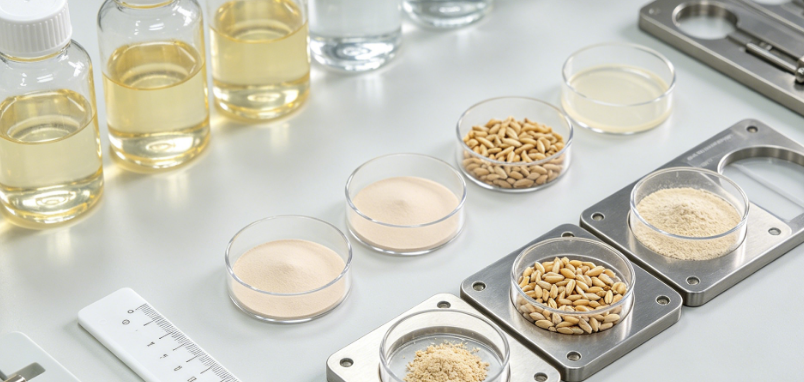
Why Accurate Linoleic Acid Quantification in Rice Is Critical
Linoleic acid content in rice varies significantly with cultivar, growing conditions, degree of milling, storage conditions, and processing (e.g., parboiling, extrusion). Moreover, its polyunsaturated nature makes it susceptible to lipid oxidation, leading to the formation of hydroperoxides, aldehydes, and off‑flavours that degrade sensory quality and reduce shelf life. In rice bran, the high activity of endogenous lipases can rapidly hydrolyse triglycerides, releasing free fatty acids and accelerating rancidity unless stabilisation is applied. Inaccurate quantification can lead to misleading nutritional labelling, inconsistent product quality, failure to meet fatty acid composition specifications, and ineffective oxidative stability management. Clients often encounter practical challenges such as incomplete lipid extraction from starch‑rich matrices, lipid degradation during sample preparation, co‑elution of linoleic acid with other unsaturated isomers, and variability due to different hydrolysis/derivatisation steps. Our comprehensive testing suite addresses these issues by employing state‑of‑the‑art gas chromatography (GC) with flame ionisation detection (FID) and mass spectrometry (MS), coupled with optimised extraction and derivatisation protocols, rigorous method validation, and stability monitoring, ensuring reliable, isomer‑specific data that supports breeding, processing, and quality assurance programmes.
Our Advanced Analytical Suite for Rice Linoleic Acid Quantification
We employ a fully validated, multi‑technique approach to quantify linoleic acid and provide a complete fatty acid profile for rice and its fractions:
High‑Resolution Gas Chromatography (GC‑FID) for Fatty Acid Methyl Ester (FAME) Profiling – Our primary quantitative method uses acid‑catalysed or base‑catalysed transmethylation to convert total lipids (triacylglycerols, phospholipids, and free fatty acids) into fatty acid methyl esters (FAMEs). We then analyse FAMEs using a high‑performance gas chromatograph equipped with a flame ionisation detector (FID) and a highly polar cyanopropyl capillary column (e.g., CP‑Sil 88 or DB‑23) to achieve baseline separation of linoleic acid methyl ester (C18:2) from oleic (C18:1), linolenic (C18:3), and other fatty acid methyl esters within 35 minutes. Our method is validated for linearity (R² > 0.999 over 0.1–10 mg/mL), precision (intra‑day RSD < 1.0%, inter‑day RSD < 2.0%), accuracy (recovery 97–103% from spiked rice matrix), and specificity. The limit of detection (LOD) is 0.005 mg/g dry weight and the limit of quantification (LOQ) is 0.01 mg/g dry weight for linoleic acid in rice. We report the absolute concentration (mg/g dry weight or % of total fatty acids) for each identified fatty acid, along with a complete fatty acid profile (sum of saturated, monounsaturated, polyunsaturated fatty acids and the PUFA/SFA ratio).
Confirmation by GC‑MS and Identification of Isomeric / Oxidised Species – For definitive identification and to detect any positional or geometric isomers (e.g., trans‑linoleic acid or conjugated dienes), we confirm selected samples by GC‑mass spectrometry (GC‑MS) in electron ionisation (EI) mode, matching retention times and mass spectra with authentic standards. This is particularly valuable for detecting oxidation‑derived artefacts or for verifying identity in novel germplasm.
Extraction and Sample Preparation for Diverse Rice Matrices – Rice samples (brown, milled, bran, flour, and processed products) require robust lipid extraction. We use a validated extraction protocol involving chloroform‑methanol (Folch or Bligh‑Dyer) or accelerated solvent extraction (ASE) with hexane/isopropanol, followed by saponification and methylation to ensure complete conversion of all lipid classes to FAMEs. For samples requiring free fatty acid (FFA) vs. esterified lipid differentiation, we offer selective extraction and direct FFA analysis by GC after solid‑phase extraction (SPE) separation. Our protocols include addition of antioxidants (e.g., BHT) and inert gas flushing to prevent oxidative degradation during processing. We achieve extraction efficiency > 96% for all major fatty acids, verified using certified reference materials (e.g., NIST SRM 3233) and standard addition.
Lipid Stability and Oxidative Rancidity Assessment – Linoleic acid is highly prone to oxidation, producing primary (peroxides, conjugated dienes) and secondary (aldehydes, ketones) products that affect flavour and shelf life. In addition to linoleic acid quantification, we provide peroxide value (PV), p‑anisidine value (p‑AV), and conjugated diene/triene measurements to assess the extent of lipid oxidation. We also conduct accelerated oxidative stability tests (Rancimat or OSI method) at elevated temperatures (110–130 °C) to determine the oxidative induction time for rice and rice products, providing critical data for shelf‑life prediction and packaging optimisation.
Lipase Activity and Free Fatty Acid Monitoring – For rice bran, endogenous lipase activity rapidly releases free fatty acids. We quantify free fatty acid (FFA) content by titrimetric or GC‑based method and, upon request, measure lipase activity using a colorimetric or titrimetric assay to assess the effectiveness of stabilisation treatments (e.g., heating, extrusion). These data are essential for rice bran oil producers to maintain quality during storage.
Method Validation and Regulatory Compliance – All our fatty acid analyses are performed under ISO/IEC 17025 accreditation and follow recognised standards (e.g., AOCS Official Methods, AOAC, and Codex Alimentarius). We provide a comprehensive certificate of analysis (CoA) that includes linoleic acid content, full fatty acid profile, measurement uncertainty, and a clear pass/fail statement against client specifications or regulatory limits. For clients requiring regulatory submissions, we offer full method validation packages and technical consultancy on nutritional labelling and quality specifications.
Our Distinctive Competencies and Unmatched Analytical Depth
Our service is uniquely distinguished by the integration of high‑resolution GC‑FID profiling with confirmatory GC‑MS, matrix‑optimised extraction, and comprehensive oxidative stability assessment—all performed on the same representative sample to provide a complete nutritional and quality picture. We maintain in‑house reference fatty acid standards (including linoleic, oleic, linolenic, and palmitic) with certified purity, and we participate in international proficiency testing schemes (e.g., AOCS, FAPAS) to ensure global comparability. Our proprietary “Rice Lipid Quality Index” (RLQI™) combines linoleic acid content, PUFA/SFA ratio, and oxidative stability parameters into a single numeric score that predicts nutritional value and shelf‑life potential. This index has been validated across more than 50 commercial and experimental rice cultivars.
We achieve exceptional measurement precision: < 0.5% RSD for linoleic acid at typical concentrations (2–10 mg/g), < 0.8% RSD for total fatty acid recovery, and < 1.0% RSD for oxidative stability induction time. Our turnaround time for routine linoleic acid quantification and full fatty acid profile is 5–7 working days, with expedited 3‑day service available for urgent quality issues. Crucially, our team of PhD‑level lipid chemists, cereal scientists, and food technologists provides a comprehensive interpretative report that goes beyond numerical data—we help you understand the implications of linoleic acid levels for nutritional quality, processing stability, and storage behaviour, and we recommend optimal stabilisation strategies, processing conditions, and storage protocols to maximise product quality. With over 50 successful projects on lipid analysis in rice and other cereals, we empower our clients to achieve consistent nutritional value, extend shelf life, and meet the rigorous quality standards of the food and nutraceutical industries with the highest level of scientific rigour and practical expertise.
To discuss your rice linoleic acid testing requirements or to request a customised analytical plan, please contact our technical team for a confidential consultation and a detailed quotation.