Reasons for choosing our testing services
ZHONGXI Testing has obtained inspection qualification certifications from multiple countries and regions worldwide. We possess a senior testing team and advanced testing methods, providing independent, impartial, and professional third-party verification services for global carbon projects.

Internationally recognized authority
Certified by multiple international standards such as CNAS, VCS, and GS, with reports universally applicable worldwide.

Global service capability
Covering 140+ countries and regions, it supports on-site detection and remote verification in multiple languages.

Professional experimental methods
Adopt standard experimental methods to ensure accurate and reliable data.
Comprehensive Analytical Characterisation of Oligonucleotides – A Specialised Testing Service for Quality Assurance, Process Development, and Regulatory Compliance
Oligonucleotides, including antisense oligos (ASOs), small interfering RNAs (siRNAs), guide RNAs (gRNAs), aptamers, and synthetic DNA/RNA fragments, have emerged as transformative therapeutics, diagnostics, and research tools. Their performance and safety are critically dependent on a multitude of molecular attributes: exact sequence fidelity, length, molecular weight, purity (full‑length vs. failure sequences), the presence and position of chemical modifications (e.g., 2'‑O‑methyl, phosphorothioate, locked nucleic acids), 5' and 3' end integrity, residual synthesis reagents, counter‑ion composition, and higher‑order structure. Clients seeking oligonucleotide testing are typically engaged in drug discovery and development, contract manufacturing, quality control of raw materials, or clinical trial supply. They require comprehensive, regulatory‑compliant analytical data to ensure batch‑to‑batch consistency, meet pharmacopoeial specifications (e.g., USP, EP), and support regulatory submissions. Our laboratory provides a fully integrated, multi‑technique analytical platform that delivers definitive characterisation of oligonucleotides across all development stages—from early‑stage screening to GMP lot release—with the highest levels of sensitivity, specificity, and data integrity.
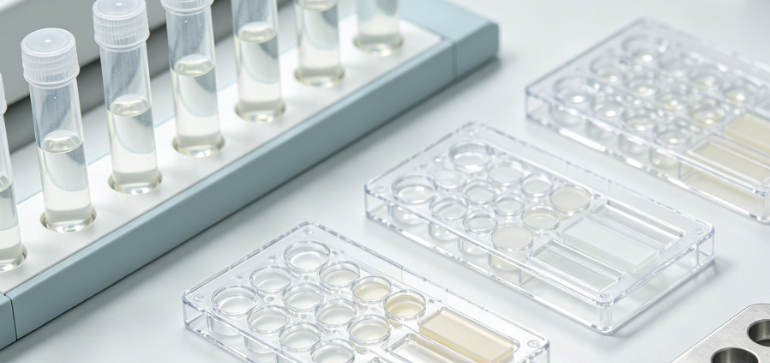
Why Professional Oligonucleotide Testing Is Indispensable
The chemical and biological complexity of oligonucleotides demands a suite of orthogonal analytical methods to fully define identity, purity, and potency. Traditional UV‑based quantification and gel electrophoresis are insufficient to detect subtle impurities, sequence deletions, or modification defects that can dramatically alter biological activity and immunogenicity. Moreover, regulatory agencies (e.g., FDA, EMA) increasingly require detailed characterisation of oligonucleotide therapeutics under ICH Q6B and emerging guidelines. Clients often encounter challenges such as insufficient chromatographic resolution to separate full‑length oligos from failure sequences (n‑1, n‑2, etc.), inability to identify low‑abundance adducts or depurination products, inadequate sensitivity for trace residual solvents or heavy metals, and lack of validated stability‑indicating methods. Our comprehensive testing suite addresses these challenges with state‑of‑the‑art instrumentation and expert data interpretation, ensuring that your oligonucleotide meets the rigorous quality standards for clinical and commercial use.
Our Advanced Analytical Suite for Oligonucleotide Characterisation
We employ an orthogonal, fully validated set of techniques that cover every critical quality attribute of oligonucleotides, from primary sequence to higher‑order conformation:
Molecular Weight and Full‑Length Sequence Confirmation by High‑Resolution Mass Spectrometry (HRMS) – Our primary identity confirmation uses ultra‑high‑performance liquid chromatography (UHPLC) coupled to a quadrupole‑time‑of‑flight (Q‑TOF) or Orbitrap mass spectrometer with electrospray ionisation (ESI). This platform provides exact mass measurement (sub‑ppm mass accuracy) and confirms the molecular mass of the full‑length oligonucleotide and any major impurities. For sequencing, we offer tandem mass spectrometry (MS/MS) with collision‑induced dissociation (CID) or electron‑transfer/higher‑energy collisional dissociation (EThcD) to determine the base sequence and confirm the position of chemical modifications. Our LC‑MS methods are validated for linearity, precision (RSD < 2%), and sensitivity (LOQ typically < 10 ng/mL), and we can handle oligos ranging from 6 to over 120 nucleotides.
Purity Profiling by Ion‑Pair Reversed‑Phase HPLC (IP‑RP‑HPLC) and Anion‑Exchange HPLC (AEX‑HPLC) – Purity determination is critical for quantifying full‑length product, failure sequences, and degradation products. We employ optimised IP‑RP‑HPLC with UV detection at 260 nm using a high‑resolution C18 or C8 column and volatile ion‑pairing reagents (e.g., hexylamine, triethylamine) to achieve baseline separation of full‑length oligonucleotide from n‑1, n‑2, and later eluting impurities. Our complementary AEX‑HPLC method using a strong anion‑exchange column (e.g., DNAPac) and salt gradient (NaCl or NaClO₄) provides a different selectivity, enabling separation of charge variants (e.g., incomplete phosphorothioation). We report area‑% purity with a typical LOQ of 0.05% for impurities and RSD < 1% for major peaks. These methods are fully validated for specificity, linearity, accuracy, and robustness, and they are compatible with MS hyphenation for peak identification when required.
Capillary Electrophoresis (CE) for Size‑Based Purity and Conformational Homogeneity – For complementary size‑based analysis, we use capillary gel electrophoresis (CGE) with UV or laser‑induced fluorescence (LIF) detection. This technique separates oligonucleotides primarily by length (charge/mass ratio) and is particularly effective for resolving n‑1 and n‑2 truncation products. We offer both denaturing CGE (with urea or formamide) for single‑chain oligos and non‑denaturing CE for secondary structure assessment. Our CGE methods provide excellent resolution of single‑nucleotide differences and are routinely validated for purity, repeatability (RSD < 2%), and quantitative accuracy.
Quantification of Potency and Active Substance Content by UV‑Vis Spectrophotometry – For concentration determination (as mass or molarity), we use high‑precision UV‑Vis spectrophotometry at 260 nm, with extinction coefficients calculated from nearest‑neighbour models and confirmed by phosphate analysis (digestion followed by ICP‑OES) when needed. Our methods are validated for linearity, accuracy, and precision (RSD < 1%), and we provide concentration in µg/mL or nmol/mL with full uncertainty budgets.
Modification and End‑Group Analysis by LC‑MS/MS and Nucleoside Digestion – For chemically modified oligonucleotides (e.g., with 2'‑OMe, LNA, phosphorothioate, 5'‑caps), we perform total enzymatic digestion (using nuclease P1, snake venom phosphodiesterase, and alkaline phosphatase) followed by LC‑MS/MS analysis of the resulting nucleosides. This allows quantification and confirmation of the molar ratios of canonical and modified nucleosides, ensuring correct incorporation of all intended modifications. We also directly analyse end‑groups (e.g., 5'‑hexylamino, 3'‑cholesterol, biotin) by MS/MS of intact oligos after enzymatic cleavage or by specific chemical labelling.
Residual Impurity and Contaminant Screening (Solvents, Metals, and Bioburden) – In compliance with ICH Q3C and USP <467>, we quantify residual solvents (acetonitrile, ethanol, isopropanol, etc.) by headspace GC‑MS with detection limits in the low ppm range. Trace metals (Pd, Pt, Ni, Cu, Zn, etc.) from synthesis catalysts or purification columns are analysed by inductively coupled plasma tandem mass spectrometry (ICP‑MS/MS) with detection limits below 0.1 ppm. Bioburden and Endotoxin testing (USP <61>, <62>, and <85>) is also available for GMP material.
Stability‑Indicating Studies and Forced Degradation – To support shelf‑life determination and shipping validation, we conduct ICH‑compliant forced degradation studies (thermal, oxidative, photolytic, and pH stress) and analyse samples by IP‑RP‑HPLC and LC‑MS to identify degradation pathways (e.g., depurination, oxidation, chain cleavage). We determine degradation kinetics (first‑order rate constants, activation energies) and set tentative shelf‑life and storage recommendations.
Microbiological and Endotoxin Testing – For clinical‑grade material, we offer Sterility testing (USP <71>), microbial enumeration (TAMC, TYMC), and bacterial Endotoxin (LAL or rFC) testing according to pharmacopoeial requirements.
Our Distinctive Competencies and Unmatched Analytical Depth
Our service is uniquely distinguished by the orthogonal, multi‑technique integration of HRMS, IP‑RP‑HPLC, AEX‑HPLC, CE, and digestion‑LC‑MS—all performed on the same representative sample to provide a complete, cross‑validated quality picture. We operate under a strict quality management system (ISO/IEC 17025 and GMP compliance) and maintain in‑house reference oligonucleotide standards (both native and modified) with documented purity and sequence. Our proprietary “Oligonucleotide Quality and Stability Index” (OQSI™) combines purity, molecular weight accuracy, modification completeness, and stability data into a single numeric score that predicts biological performance and regulatory acceptance. This index has been validated across more than 50 oligonucleotide sequences and is continuously updated with evolving regulatory expectations.
We achieve exceptional measurement precision: < 1% RSD for purity by HPLC and CE, < 2% RSD for MS intensity, and < 0.5% RSD for UV quantification. Our turnaround time for routine characterisation (identity, purity, concentration, and modification analysis) is 5–7 working days, with expedited 3‑day service for urgent developmental batches. Crucially, our team of PhD‑level bioanalytical chemists, oligonucleotide specialists, and regulatory consultants provides a comprehensive interpretative report that goes beyond raw data—we help you understand the impact of specific impurities on biological activity, recommend optimal purification strategies, and advise on method validation for regulatory submissions. With over 80 successful projects on diverse oligonucleotide formats (DNA, RNA, mixed backbone, circular, and multimeric), we empower our clients to accelerate development, reduce batch failures, and confidently enter clinical and commercial phases with the highest level of scientific rigour and regulatory credibility.
To discuss your oligonucleotide testing requirements or to request a customised analytical plan, please contact our technical team for a confidential consultation and a detailed quotation.