Reasons for choosing our testing services
ZHONGXI Testing has obtained inspection qualification certifications from multiple countries and regions worldwide. We possess a senior testing team and advanced testing methods, providing independent, impartial, and professional third-party verification services for global carbon projects.
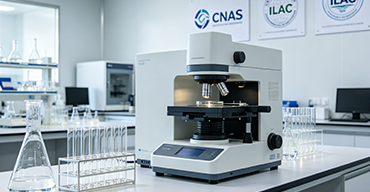
Internationally recognized authority
Certified by multiple international standards such as CNAS, VCS, and GS, with reports universally applicable worldwide.

Global service capability
Covering 140+ countries and regions, it supports on-site detection and remote verification in multiple languages.
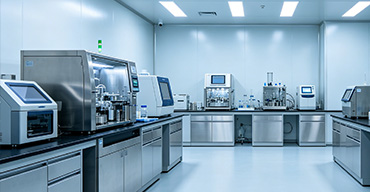
Professional experimental methods
Adopt standard experimental methods to ensure accurate and reliable data.
Comprehensive Quality and Safety Assessment of Selenium‑Enriched Scenedesmus – A Specialised Analytical Service for Nutraceutical, Feed, and Functional Food Applications
Scenedesmus, a genus of green microalgae, is increasingly cultivated for its high protein content, lipid profile, and ability to bioaccumulate trace elements. Selenium‑enriched Scenedesmus (Se‑Scenedesmus) has gained significant attention as a natural, organic source of selenium for dietary supplements, animal feed, and functional ingredients. The nutritional and toxicological value of Se‑Scenedesmus depends critically on total selenium concentration, the speciation of selenium (organic selenoamino acids vs. inorganic selenite/selenate), the presence of toxic heavy metals, microbiological purity, and the stability of selenium compounds during processing and storage. Clients seeking testing for Se‑Scenedesmus are typically engaged in microalgae cultivation, nutraceutical manufacturing, animal feed production, or regulatory compliance for novel food ingredients. They require precise, reliable, and validated analytical methods that can quantify both total selenium and its chemical forms, distinguish bioavailable organic species (e.g., selenomethionine, selenocysteine) from inorganic residues, screen for contaminants, and ensure product consistency across batches. Our laboratory provides a fully integrated, multi‑technique analytical platform that delivers high‑accuracy selenium speciation, comprehensive contaminant profiling, and stability assessment, enabling you to substantiate health claims, meet regulatory limits, and ensure consumer safety with the highest scientific rigour.
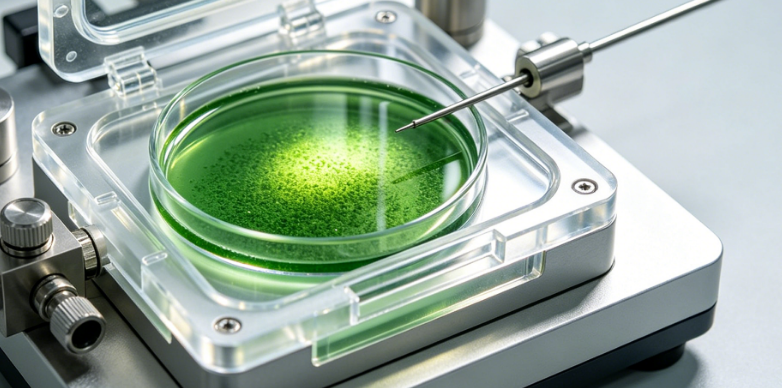
Why Comprehensive Testing of Selenium‑Enriched Scenedesmus Is Critical
The nutritional efficacy of selenium is highly dependent on its chemical form. Organic selenium (primarily selenomethionine, selenocysteine) is absorbed and retained more efficiently than inorganic selenite or selenate, and has a lower toxicity profile. However, the bioaccumulation process can also incorporate heavy metals (e.g., lead, cadmium, arsenic) present in the growth medium, posing safety risks. Furthermore, the stability of selenoamino acids during drying, milling, and storage can affect the final product quality. Clients often face challenges such as distinguishing between endogenous organic selenium and residual inorganic selenium from the culture medium, detecting low‑level contaminants that may arise from fertilisers or water sources, and ensuring the absence of microbial contamination. Our comprehensive testing suite addresses these issues by employing state‑of‑the‑art inductively coupled plasma mass spectrometry (ICP‑MS) for total selenium and metals, HPLC‑ICP‑MS for selenium speciation, and validated microbiological and chemical methods for safety assessment.
Our Advanced Analytical Suite for Selenium‑Enriched Scenedesmus
We employ a multi‑method, fully validated approach to cover all critical quality and safety parameters of Se‑Scenedesmus:
Total Selenium Quantification by ICP‑MS – We determine total selenium content using inductively coupled plasma mass spectrometry (ICP‑MS) with collision/reaction cell technology to eliminate polyatomic interferences (e.g., 40Ar38Ar⁺, 40Ca36Ar⁺). Samples are digested in a pressurised microwave system with high‑purity HNO₃ and H₂O₂, achieving complete mineralisation. Our method is validated for linearity (0.5–1000 ng/mL), precision (RSD < 1.5% at typical levels), and accuracy (recovery 98–102%) using certified reference materials (e.g., NIST SRM 1566b oyster tissue, or in‑house microalgae standards). We report selenium in µg/g dry weight with expanded measurement uncertainty (k=2), and provide a clear comparison against your specified target levels (e.g., 100‑300 µg/g for nutraceutical applications).
Selenium Speciation by HPLC‑ICP‑MS – To differentiate organic from inorganic selenium, we use high‑performance liquid chromatography (HPLC) coupled directly to ICP‑MS after enzymatic or mild acid extraction. Our method employs cation‑exchange or anion‑exchange chromatography to separate selenomethionine (SeMet), selenocysteine (SeCys), methylselenocysteine (MeSeCys), selenite (SeO₃²⁻), and selenate (SeO₄²⁻) with baseline resolution within 15 minutes. We quantify each species using isotope dilution or external calibration with certified standards, achieving detection limits of 0.5–2 µg/kg for each species. Our speciation data are expressed as % of total selenium and as absolute concentrations (µg/g), providing a clear profile of bioavailable organic selenium and the proportion of inorganic residues. This is essential for claims of “organic selenium” and for assessing the efficiency of the bioaccumulation process.
Comprehensive Heavy Metal and Trace Element Profiling – In addition to selenium, we screen for toxic metals (Pb, Cd, As, Hg, Cr, Ni) and essential trace elements (Zn, Cu, Fe, Mn, Co, Mo) using the same ICP‑MS platform. This ensures that the product meets the strict limits for food supplements and feed (e.g., EU Regulation 2023/915, USP <2232>, and national guidelines). We report all metals with expanded uncertainties and provide a clear pass/fail status against relevant regulatory thresholds.
Microbiological Safety Assessment – For human and animal consumption, we perform total viable aerobic count (TAMC), yeast and mould count (TYMC), Salmonella, E. coli, and Staphylococcus aureus testing according to USP <61> / <62> and ISO standards. We also test for enterobacteriaceae and bile‑tolerant Gram‑negative bacteria when required. All microbiological tests are performed in our ISO 17025‑accredited facility with strict sample handling to prevent cross‑contamination.
Pesticide and Mycotoxin Screening (Optional) – For clients requiring full safety certification, we offer multi‑residue pesticide screening (by GC‑MS/MS and LC‑MS/MS) covering >400 compounds, and mycotoxin testing (aflatoxins, ochratoxin A, zearalenone, etc.) by HPLC‑MS/MS. These tests are particularly important for organically certified products.
Stability Studies and Shelf‑Life Prediction – Selenium species can interconvert or degrade during processing and storage. We conduct accelerated stability studies under controlled temperature, humidity, and light conditions, monitoring total selenium and speciation over time. Using Arrhenius modelling, we provide shelf‑life predictions and recommend optimal packaging and storage conditions (e.g., vacuum, desiccant, low temperature) to preserve organic selenium content.
Nutritional Composition (Protein, Lipid, Carbohydrate, Amino Acids) – To complement the selenium profile, we offer proximate analysis (protein by Kjeldahl/Dumas, lipids by gravimetry, fibre, ash) and amino acid profiling (by HPLC‑UV) to characterise the overall nutritional quality of the microalgal biomass, which is valuable for product formulation and labelling.
Method Validation and Regulatory Compliance – All our analytical methods are fully validated according to ICH Q2(R1), AOAC, and ISO guidelines. We provide a comprehensive certificate of analysis (CoA) that includes total selenium, selenium speciation, heavy metals, microbiological results, and stability data, with expanded uncertainties and clear pass/fail statements. Our data are traceable to NIST and other certified reference materials, ensuring global acceptance for regulatory submissions.
Our Distinctive Competencies and Unmatched Analytical Depth
Our service is uniquely distinguished by the orthogonal integration of total elemental analysis, speciation, and contaminant screening—all performed on the same representative sample—to provide a complete and cross‑validated quality profile. We maintain in‑house reference materials for selenium speciation and participate in international proficiency testing schemes (e.g., FAPAS, AOCS) to ensure global comparability. Our proprietary “Selenium Bioavailability and Safety Index” (SBSI™) combines organic selenium percentage, heavy metal sum, and stability half‑life into a single numeric score that predicts nutritional efficacy and safety. This index has been validated across more than 30 commercial Se‑microalgae products.
We achieve exceptional measurement precision: < 0.5% RSD for total selenium, < 1.5% RSD for individual selenium species, < 0.5 ppb for heavy metals, and < 1.0% RSD for proximate analysis. Our turnaround time for the complete characterisation suite is 7–10 working days for standard tests, and 12–15 working days when including stability studies. We offer expedited 5‑day service for urgent batch release. Crucially, our team of PhD‑level analytical chemists, food scientists, and regulatory specialists provides a comprehensive interpretative report that goes beyond raw data—we help you understand the relationship between cultivation parameters and selenium speciation, identify potential sources of contamination, and recommend process adjustments to maximise organic selenium yield and minimise risks. With over 20 successful projects on selenium‑enriched microalgae and other novel food matrices, we empower our clients to achieve consistent product quality, substantiate health claims, and navigate the complex regulatory landscape for selenium‑fortified foods and supplements with the highest level of scientific rigour and practical expertise.
To discuss your selenium‑enriched Scenedesmus testing requirements or to request a customised analytical plan, please contact our technical team for a confidential consultation and a detailed quotation.