Reasons for choosing our testing services
ZHONGXI Testing has obtained inspection qualification certifications from multiple countries and regions worldwide. We possess a senior testing team and advanced testing methods, providing independent, impartial, and professional third-party verification services for global carbon projects.

Internationally recognized authority
Certified by multiple international standards such as CNAS, VCS, and GS, with reports universally applicable worldwide.

Global service capability
Covering 140+ countries and regions, it supports on-site detection and remote verification in multiple languages.

Professional experimental methods
Adopt standard experimental methods to ensure accurate and reliable data.
Biocompatibility Testing Services: Ensuring Medical Device Safety for Human Contact
As an independent third-party testing service provider, we offer comprehensive biocompatibility evaluation for medical devices, biomaterials, and healthcare products. Biocompatibility is the ability of a material or device to perform with an appropriate host response in a specific application. Regulatory bodies worldwide (FDA, EU MDR, NMPA, PMDA) require rigorous biological safety testing before a device can be marketed. Our accredited laboratory follows the ISO 10993 series – the gold standard for biological evaluation – as well as relevant FDA guidance and GB/T 16886 (China). This article outlines our biocompatibility testing capabilities – including scope, key test items, and standard test methods – to help you demonstrate the safety of your medical device for its intended use and duration of contact.
1. Our Testing Scope for Biocompatibility
We cover a broad range of medical devices, materials, and contact scenarios:
By device type: Implantable devices (orthopaedic, cardiovascular, dental, neurological); Surface‑contacting devices (endotracheal tubes, surgical instruments, catheters); External communicating devices (dialysis tubing, blood bags); Non‑contact devices (diagnostic equipment, hospital bedding).
By material: Metals (stainless steel, titanium, CoCr alloys); Polymers (silicone, polyurethane, PTFE, PEEK, PET, PLA, PGA); Ceramics (alumina, zirconia, hydroxyapatite); Hydrogels; Natural materials (collagen, cellulose, chitosan); Tissue‑derived materials; Coatings and surface modifications.
By contact duration: Limited exposure (<24 hours); Prolonged exposure (24 hours to 30 days); Permanent contact (>30 days).
By contact nature: Surface (intact skin, mucosal membrane, breached/compromised surface); Externally communicating (blood path, tissue/bone/dentin); Implant (soft tissue, bone, blood).
2. Key Test Items We Perform
Our biocompatibility testing services are organised according to the ISO 10993 matrix. The specific tests required depend on the device category and contact duration.
2.1 Cytotoxicity (ISO 10993-5)
In vitro Cytotoxicity – assesses the potential of a material to cause cell death or dysfunction. We offer:
Extract (elution) method – cell viability measured by MTT, XTT, or neutral red.
Direct contact method – for solid materials (zone of cell lysis, morphological changes).
Agar overlay method – semi‑solid barrier for diffusible substances.
Quantitative vs. qualitative assessment.
2.2 Sensitisation (ISO 10993-10)
Skin sensitisation potential – allergic response to leachables. We perform:
Guinea Pig Maximisation Test (GPMT).
Buehler test (guinea pig).
Local Lymph Node Assay (LLNA) – OECD 429 (mouse ear swelling).
In vitro sensitisation (KeratinoSens, h‑CLAT) – by arrangement.
Bovine serum albumin (BSA) binding assay (screening).
2.3 Irritation / Intracutaneous Reactivity (ISO 10993-10 & -23)
Intracutaneous reactivity – injection of extracts into rabbit skin (primary irritation).
Primary skin irritation (rabbit) – for devices contacting intact skin.
Mucosal irritation – eye, oral, vaginal, penile, rectal, nasal (rabbit or other models).
In vitro skin irritation (Reconstructed Human Epidermis – EpiSkin, EpiDerm) – OECD 439.
In vitro eye irritation (BCOP – Bovine Corneal Opacity and Permeability).
2.4 Systemic Toxicity (ISO 10993-11)
Acute systemic toxicity – single dose via intravenous, intraperitoneal, or oral route in mice or rats (14‑day observation).
Subacute / subchronic toxicity – repeated dose (14–90 days).
Chronic toxicity – >90 days to lifetime.
Pyrogenicity (material‑mediated) – rabbit pyrogen test (USP <151>) or LAL (limulus amebocyte lysate) for bacterial Endotoxins.
Febrile response (rabbit).
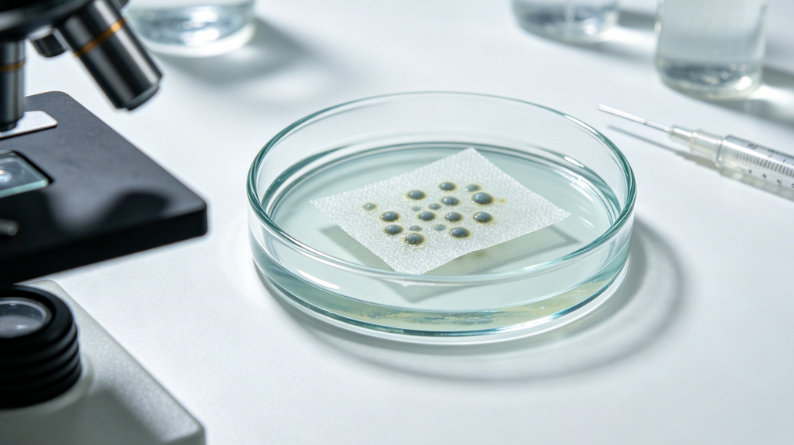
2.5 Subchronic & Chronic Toxicity
Subchronic (28 or 90 day) implantation/administration – assessment of target organ toxicity, histopathology, clinical chemistry, haematology, body weight, food consumption.
Chronic (6‑12 months) – for permanent implants.
2.6 Genotoxicity (ISO 10993-3)
Bacterial reverse mutation (Ames test) – Salmonella typhimurium and E. coli strains, with/without S9 metabolic activation.
In vitro mammalian cell gene mutation (mouse lymphoma assay – MLA).
In vitro chromosomal aberration (CHO cells or human lymphocytes).
In vivo micronucleus (mouse or rat bone marrow).
2.7 Carcinogenicity (ISO 10993-3)
Long‑term bioassays (rodent, 18‑24 months) – for materials with chronic implant or known genotoxic potential. Usually performed in specialized facilities; we coordinate via partnerships.
2.8 Reproductive & Developmental Toxicity (ISO 10993-3)
Embryotoxicity / teratogenicity – rat / rabbit (Segments I, II, III).
Fertility and general reproductive performance – Segment I.
Prenatal and postnatal development – Segment III.
In vitro embryotoxicity screening (EST, WEC) – by arrangement.
2.9 Implantation (Local Effects) (ISO 10993-6)
Subcutaneous, intramuscular, or bone implantation – for up to 12 weeks (or longer for chronic). Histopathological evaluation of local tissue response (inflammation, necrosis, fibrosis, encapsulation).
Biodegradation of absorbable materials – mass loss, molecular weight reduction, tissue reaction.
2.10 Blood Compatibility / Haemocompatibility (ISO 10993-4)
For devices contacting circulating blood (e.g., catheters, stents, heart valves, blood pumps):
Haemolysis (direct or indirect) – release of haemoglobin.
Thrombosis (platelet adhesion, clot formation).
Coagulation (PT, APTT, fibrinogen).
Platelet activation (β‑TG, PF4).
Complement activation (C3a, C5a, SC5b‑9).
Leukocyte activation.
2.11 Material‑Mediated Pyrogenicity & Endotoxin
Bacterial Endotoxin test (LAL – gel clot, turbidimetric, chromogenic) – ISO 10993-11, USP <85>, EP 2.6.14.
Rabbit pyrogen test (if required by regulation).
2.12 Chemical Characterisation (ISO 10993-18)
This is the cornerstone for biocompatibility – often performed before biological tests:
Extractable and leachable (E&L) studies – exhaustive extraction in simulated use solvents (water, ethanol, hexane, etc.).
Identification and quantification of leachables (GC‑MS, LC‑MS, ICP‑MS, FTIR).
Safety threshold assessment (TTC – Threshold of Toxicological Concern).
3. Standard Test Methods We Apply
All tests are performed according to ISO 10993 series, ISO 10993‑12 (sample preparation), and relevant FDA / OECD guidelines. Our laboratory is ISO/IEC 17025 accredited and GLP‑compliant (when required).
3.1 Cytotoxicity Standards
ISO 10993-5 (Biological evaluation of medical devices – Tests for in vitro Cytotoxicity).
USP <87> (Biological reactivity tests, in vitro).
MEM elution, direct contact, agar overlay – according to ISO 10993-5.
3.2 Sensitisation Standards
ISO 10993-10 (Tests for skin sensitisation).
OECD 406 (Guinea Pig Maximisation Test).
OECD 429 (Local Lymph Node Assay – LLNA).
OECD 442C (KeratinoSens) – in vitro.
3.3 Irritation Standards
ISO 10993-10 (Intracutaneous reactivity, skin irritation).
ISO 10993-23 (Tests for irritation – including in vitro methods).
OECD 439 (Reconstructed Human Epidermis for skin irritation).
OECD 437 / 438 (BCOP for eye irritation).
3.4 Systemic Toxicity & Pyrogenicity
ISO 10993-11 (Tests for systemic toxicity).
USP <151> (Pyrogen test).
USP <85> (Bacterial Endotoxins test – LAL).
EP 2.6.14 (Bacterial Endotoxins).
3.5 Genotoxicity Standards
ISO 10993-3 (Tests for genotoxicity, carcinogenicity, reproductive toxicity).
OECD 471 (Ames test).
OECD 487 (In vitro micronucleus).
OECD 473 (Chromosomal aberration).
OECD 476 (Gene mutation – mouse lymphoma).
3.6 Implantation (Local Effects) Standards
ISO 10993-6 (Tests for local effects after implantation).
ASTM F981 (standard practice for assessment of muscle and bone implants).
3.7 Haemocompatibility Standards
ISO 10993-4 (Selection of tests for interactions with blood).
ASTM F756 (Haemolysis of materials).
ASTM F2382 (Thrombogenicity).
3.8 Chemical Characterisation Standards
ISO 10993-18 (Chemical characterisation of materials).
ISO 10993-12 (Sample preparation and reference materials).
OECD Guidelines for extractable/leachable profiling.
4. Why Choose Our Third-Party Biocompatibility Testing Services?
As an independent laboratory with regulatory expertise, we provide reliable, auditable, and globally accepted results. Our advantages include:
ISO/IEC 17025 accreditation – and GLP compliance (when required) for studies supporting regulatory submissions.
Full ISO 10993 suite – we perform all relevant tests in‑house or via certified partners, ensuring seamless project management.
Regulatory guidance – our toxicologists help you select the optimal testing matrix based on device classification, contact duration, and target market (FDA, EU MDR, NMPA, PMDA, ANVISA).
Experience with diverse devices – orthopaedic, cardiovascular, dental, wound care, drug‑device combinations, biodegradable materials.
Fast turnaround – typical in vitro tests (Cytotoxicity, sensitisation screening) in 2‑4 weeks; subchronic studies 3‑6 months; we provide upfront timelines.
Detailed reporting – clear tables, histopathology images, dose‑response data, and pass/fail conclusions, ready for inclusion in Technical Files or 510(k) submissions.
Confidentiality – full protection of your device design and material composition.
Whether you are a startup with a novel biomaterial or an established manufacturer expanding into new markets, our biocompatibility experts will guide you through the biological safety evaluation – from chemical characterisation to the final toxicological risk assessment.
Get Started with Your Biocompatibility Testing Project
Contact our team with your device description, intended use, body contact site, and contact duration. We will provide a customised testing plan, a detailed quotation, and sample submission guidelines (including extraction conditions). Let us help you accelerate regulatory approval and bring safe, compliant medical devices to patients worldwide.
This article provides an overview of our biocompatibility testing capabilities. For specific test matrix, sample requirements, and pricing, please request a tailored service proposal based on ISO 10993‑1.