Reasons for choosing our testing services
ZHONGXI Testing has obtained inspection qualification certifications from multiple countries and regions worldwide. We possess a senior testing team and advanced testing methods, providing independent, impartial, and professional third-party verification services for global carbon projects.
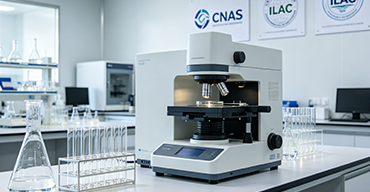
Internationally recognized authority
Certified by multiple international standards such as CNAS, VCS, and GS, with reports universally applicable worldwide.

Global service capability
Covering 140+ countries and regions, it supports on-site detection and remote verification in multiple languages.
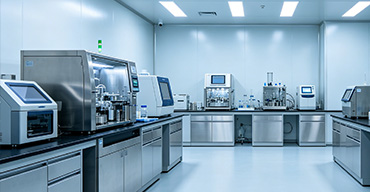
Professional experimental methods
Adopt standard experimental methods to ensure accurate and reliable data.
Aerospace Vehicle Aerodynamics Research & Testing: Wind Tunnel, CFD & Flight Performance Analysis
As an independent third-party research and testing service provider, we offer comprehensive aerodynamics analysis for aircraft, launch vehicles, re‑entry vehicles, unmanned aerial systems (UAS), and hypersonic platforms. Aerodynamic performance directly determines flight efficiency, stability, control, thermal loads, and structural integrity. Our services combine subsonic, transonic, supersonic, and hypersonic wind tunnel testing, high‑fidelity computational fluid dynamics (CFD), and flight data validation. We support aerospace OEMs, start‑ups, research institutions, and defence organisations in characterising lift, drag, moments, pressure distributions, heating, and flow phenomena. This article outlines our aerodynamics research capabilities – including scope, key test items, and standard methods – to help you optimise vehicle design and reduce development risk.
1. Our Research Scope for Aerospace Aerodynamics
We cover a wide range of flight regimes, vehicle types, and aerodynamic phenomena:
By flight regime: Subsonic (M < 0.8); Transonic (0.8 ≤ M ≤ 1.2); Supersonic (1.2 < M ≤ 5); Hypersonic (M > 5, including re‑entry).
By vehicle type: Fixed‑wing aircraft (commercial transports, business jets, fighters, UAVs); Rotary‑wing (helicopters, tiltrotors); Launch vehicles (rockets, reusable launchers); Re‑entry vehicles (capsules, lifting bodies, spaceplanes); Hypersonic glide vehicles; Missiles and projectiles; Supersonic and hypersonic drones; Urban air mobility (UAM) / eVTOL.
By aerodynamic discipline: Lift & drag characterisation; Stability & control derivatives (static and dynamic); Pressure & heat flux distribution; Boundary layer transition & separation; Shock‑wave / boundary layer interaction; Buffeting and flutter; Icing aerodynamics; Propulsion‑airframe integration; Store separation; Launch vehicle ascent & stage separation; Re‑entry aerothermodynamics; Sonic boom prediction; Aeroelasticity (static & dynamic).
2. Key Test & Analysis Items We Perform
Our aerodynamics research services are grouped into four main categories: wind tunnel testing, CFD simulation, flight data analysis, and coupled aero‑thermal‑structural studies.
2.1 Wind Tunnel Testing
Force & moment measurement (six‑component balance) – lift, drag, side force, pitch, roll, yaw moments across angle of attack and sideslip.
Pressure distribution (static pressure taps, pressure‑sensitive paint – PSP) – on wings, fuselage, control surfaces, inlet ducts.
Heat flux measurement (thin‑film gauges, infrared thermography) – for hypersonic and re‑entry vehicles.
Flow visualisation – schlieren, shadowgraph, oil flow, tufts, particle image velocimetry (PIV), laser Doppler anemometry (LDA).
Boundary layer transition detection (temperature‑sensitive paint, hot‑film).
Dynamic stability derivatives (forced oscillation, free‑to‑roll, magnetic suspension).
Store separation testing (captive trajectory system – CTS).
Model support systems: sting, blade, sidewall, or magnetic suspension.
Icing wind tunnel tests – ice shape accretion, droplet impingement, ice protection system validation.
High‑angle‑of‑attack (post‑stall) testing.
2.2 Computational Fluid Dynamics (CFD) Analysis
Full‑vehicle steady RANS (Reynolds‑Averaged Navier‑Stokes) – for lift, drag, moment, pressure, and temperature fields.
Unsteady RANS (URANS) / DES (Detached Eddy Simulation) – for vortex shedding, buffet, oscillating shocks.
LES (Large Eddy Simulation) – for transition, separation, and turbulence‑structure interaction (special order).
Hypersonic CFD (finite‑rate chemistry, thermal non‑equilibrium) – for re‑entry heating and shock interaction.
Optimisation (adjoint‑based shape optimisation) – for drag reduction, lift enhancement, or thermal load minimisation.
Multi‑body separation (stage separation, store release) – overset / chimera grids.
Propulsion integration – inlet distortion, nozzle expansion, jet interference.
Aeroelastic coupling (CFD + CSD) – static aeroelastic trim, flutter boundary.
2.3 Flight Data & Performance Validation
Post‑flight reconstruction – comparing telemetry (attitude, acceleration, surface pressures, temperatures) with pre‑flight CFD and wind tunnel data.
Drag polar identification from flight tests (climb, cruise, descent).
Stability derivative extraction (using system identification – output error / neural nets).
Buffet envelope definition (from flight accelerometers).
Sonic boom overpressure measurement (for supersonic aircraft).
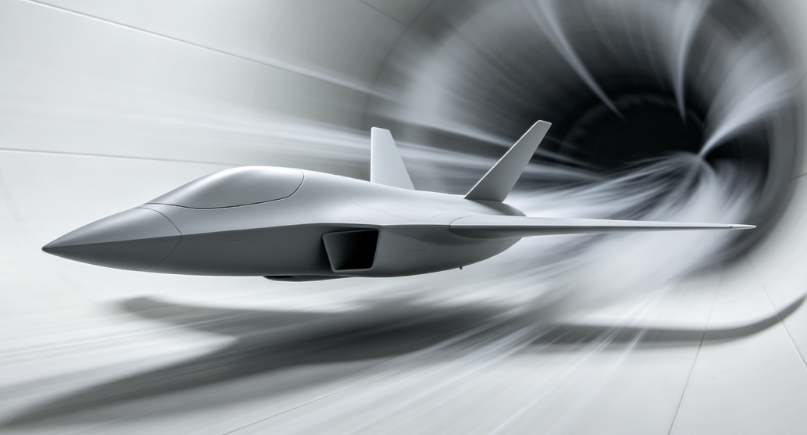
2.4 Aero‑Thermal & Aero‑Acoustic Studies
Aerodynamic heating (convective heat transfer coefficients, stagnation temperature, thermal protection sizing).
Thermal‑structural interaction (coupled CFD + FEA) – for wing leading edges, nose caps, control surfaces.
Aero‑acoustic noise (airframe noise, landing gear noise, cavity resonance) – measured with far‑field microphones or predicted via Ffowcs Williams‑Hawkings (FWH) integration.
3. Standard Test & Analysis Methods We Apply
All wind tunnel testing and CFD simulations are performed according to industry best practices and, where applicable, ISO/ASTM aerospace standards. Our wind tunnel facilities cover Mach 0.1 to Mach 10; our CFD team uses commercial (ANSYS Fluent, STAR‑CCM+, COMSOL) and open‑source (OpenFOAM, SU2) solvers with high‑performance computing clusters.
3.1 Wind Tunnel Test Standards
Subsonic / transonic testing: AGARD-AR-294 (force measurement calibration), AIAA R-091 (wind tunnel experiment practice).
Hypersonic testing: AIAA R-113 (hypersonic test facility characterisation), ISO 16861 (measurements in hypersonic flows).
Pressure‑sensitive paint (PSP) methods: AIAA J-2014 (guidelines).
Particle image velocimetry (PIV) in wind tunnels: ISO 9211, AIAA R-200.
Dynamic stability testing (forced oscillation): AGARD-R-776, AIAA guidance.
Icing wind tunnel (icing certification): 14 CFR Part 25 Appendix C / O, SAE AIR 5903, ASTM F320 (ice shape measurement).
3.2 CFD Methodology Standards & Validation
Grid generation best practices: AIAA G-077 (guide for verification and validation).
Verification & validation (V&V): ASME V&V 20, AIAA G-077C, ISO 15550 (uncertainty quantification).
Turbulence modelling (RANS, LES, DES): AIAA guide for turbulence model selection.
Hypersonic chemistry models: NASA SP‑3001 (thermochemical nonequilibrium).
3.3 Flight Data Analysis Standards
System identification for aerodynamic derivatives: AGARD-AG-300 Vol. 1-3, AIAA R-159.
Flight test instrumentation (pressure, temperature, attitude): SAE ARP 4986, ISO 18155.
3.4 Aeroelastic & Thermal Standards
Static aeroelasticity (CFD/CSD coupling): AIAA R-089 (aeroelastic test techniques).
Flutter prediction (CFD‑based): DLR guidelines, ISO 18431 (vibration and shock data).
Thermal protection material testing (combined aerodynamic heating): ASTM E285 (oxyacetylene), ISO 22007 (thermal conductivity).
4. Why Choose Our Third‑Party Aerospace Aerodynamics Research & Testing Services?
As an independent research organisation with no proprietary airframe bias, we provide objective, high‑quality, and confidential aerodynamic data. Our advantages include:
Multi‑scale wind tunnel access – from low‑speed (M=0.1) to hypersonic (M=10) blow‑down facilities, with force balances, PSP, schlieren, and high‑speed cameras.
High‑performance computing (HPC) – 10,000+ cores for large‑scale CFD (full aircraft, multi‑body separation).
Validated methods – our CFD and experimental results are cross‑validated against benchmark cases (NASA Common Research Model, DLR‑F6, F15, X‑43, etc.).
Fast turnaround – preliminary CFD analysis (2‑3 weeks); wind tunnel campaigns (4‑8 weeks including model design, testing, and reporting).
Detailed reporting – aerodynamic coefficient tables (CL, CD, CM at all α/β), surface contour plots (Cp, Cf, heat flux), flow visualisation images, and data files (CSV, Tecplot, CGNS).
Confidentiality – full protection of your vehicle geometry, performance goals, and proprietary design features.
Consultative engineering support – we help interpret results, recommend design modifications, and support certification documentation.
Whether you are developing a new supersonic business jet, a hypersonic glide vehicle, an eVTOL urban air mobility platform, or a UAV for high‑altitude long‑endurance (HALE) missions, our aerodynamics research team is ready to de‑risk your design and optimise performance.
Get Started with Your Aerodynamics Research Project
Contact our team with your vehicle concept (geometry files, target flight envelope, Mach numbers, altitude ranges, and key performance metrics). We will provide a customised study plan – combining wind tunnel, CFD, and flight analysis as needed – along with a detailed quotation and schedule. Let us help you achieve superior aerodynamic efficiency, stability, and safety for your aerospace vehicle.
This article provides an overview of our aerospace aerodynamics research and testing capabilities. For specific test methods, model scale, and pricing, please request a tailored service proposal.