Reasons for choosing our testing services
ZHONGXI Testing has obtained inspection qualification certifications from multiple countries and regions worldwide. We possess a senior testing team and advanced testing methods, providing independent, impartial, and professional third-party verification services for global carbon projects.

Internationally recognized authority
Certified by multiple international standards such as CNAS, VCS, and GS, with reports universally applicable worldwide.

Global service capability
Covering 140+ countries and regions, it supports on-site detection and remote verification in multiple languages.

Professional experimental methods
Adopt standard experimental methods to ensure accurate and reliable data.
Professional Chromium Content Analysis Service for Chromium-Enriched Saccharomyces cerevisiae
We understand that you are searching for chromium content testing in chromium-enriched yeast because you need to verify product quality, meet regulatory labeling requirements, or optimize your fermentation process. Whether you are a manufacturer of dietary supplements, functional foods, or animal feed additives, our specialized chromium speciation and quantification service provides far more than a simple total metal count. We deliver a complete chemical profile that distinguishes beneficial organic chromium from potential inorganic residues or toxic hexavalent chromium.
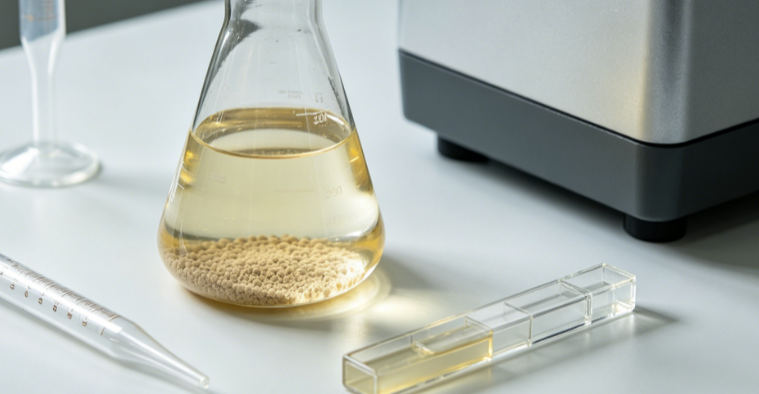
What We Measure – From Total Chromium to Full Speciation
Our standard analysis begins with total chromium quantification using inductively coupled plasma mass spectrometry (ICP-MS) with a detection limit of 0.05 μg/kg (0.05 ppb) in yeast matrix. But we go much deeper. Using high-performance liquid chromatography coupled to ICP-MS (HPLC-ICP-MS), we separate and quantify individual chromium species: Cr(III)-nicotinic acid complexes (the bioactive form), Cr(III)-histidinate, Cr(III)-picolinate, inorganic Cr(III) chloride, and – critically – Cr(VI) (hexavalent chromium, a known toxin). This speciation allows you to prove that your product contains the desired organically bound chromium(III) and is free from hazardous Cr(VI), a requirement for many export markets and pharmacopoeias.
Advanced Capabilities for Demanding Quality Control
We process intact yeast cells, dried powder, disrupted cell lysates, or extracted chromium fractions. Our sample preparation uses microwave-assisted acid digestion with sealed vessels to prevent chromium oxidation or loss. For speciation, we employ enzymatic hydrolysis (lyticase/protease) to release intracellular chromium complexes without altering their chemical form – a critical step that most labs skip, leading to artefactual inorganic chromium generation. We also perform size‑exclusion chromatography (SEC-ICP-MS) to determine the molecular weight distribution of chromium‑bound biomolecules (proteins, polysaccharides, nucleic acids). This tells you whether chromium is truly incorporated into yeast metabolism or merely adsorbed onto cell walls.
What You Receive – A Complete Chromium Profile
Your final report includes: total chromium concentration (mg/kg or μg/g) on dry weight basis, percentage of organic chromium vs. inorganic chromium, concentration of Cr(VI) if present, distribution of chromium among molecular weight fractions, and a calculated bioavailability index. For lot‑to‑lot consistency, we provide relative standard deviation (RSD) from triplicate analyses and a certificate of analysis (COA) compliant with USP <2232>, AOAC 2015.01, or Chinese Pharmacopoeia standards upon request. We also offer stable isotope dilution analysis (using ⁵³Cr spike) for highest accuracy in certification or dispute resolution.
Our Distinct Advantages in Chromium-Enriched Yeast Testing
1. Unmatched sensitivity and specificity: Our ICP-MS achieves sub‑ppt detection limits, and our HPLC-ICP-MS baseline separates Cr(III) species from Cr(VI) even when Cr(VI) is present at 0.1% of total chromium. 2. Yeast‑optimised extraction: We have developed a proprietary pressurised hot water extraction + enzymatic cocktail that recovers >95% of intracellular chromium complexes without altering speciation – validated by spike recovery and species stability tests. 3. High throughput: We can process up to 100 samples per week with a turnaround of 5‑7 business days for routine total chromium, or 10 days for full speciation. 4. Regulatory alignment: Our methods follow ISO 17025, EFSA guidance on chromium sources, and FDA recommendations. We provide data packages ready for regulatory submission. 5. Forensic capability: If your product fails a compliance test elsewhere, our orthogonal methods (ICP‑MS, HPLC‑ICP‑MS, X‑ray fluorescence) can identify the cause – whether it is inhomogeneous blending, Cr(VI) formation during drying, or fraudulent adulteration with inorganic chromium salts.
Why You Should Choose Our Service Over Routine Metal Testing Labs
Most routine labs only offer total chromium by ICP‑OES with a detection limit of 50‑100 ppb, and they cannot distinguish organic from inorganic chromium, let alone detect Cr(VI). This is insufficient for regulatory compliance and misleading for quality control. We give you the full chemical truth – how much chromium is truly bioavailable organic complex, whether any hazardous Cr(VI) has formed during processing or storage, and if the chromium is uniformly distributed within the yeast biomass. Our team includes fermentation technologists and inorganic biochemists who understand how chromium is incorporated during yeast growth; we can correlate analytical results back to your production parameters.
Ready to Verify Your Chromium-Enriched Yeast with Confidence?
Do not rely on incomplete metal assays that leave you exposed to regulatory rejection or customer complaints. Contact us today to discuss your product, batch numbers, and required specifications. We provide a free preliminary consultation, sample submission kits with stabilisation instructions, and a discounted pilot analysis for first‑time clients. Whether you need one‑off certification or routine batch release testing, our chromium speciation service will give you the trusted data you need to prove the quality and safety of your chromium‑enriched Saccharomyces cerevisiae.